
You found the right power wheelchair or mobility scooter. That’s just the start.
The real difference? Accessories. They turn your basic mobility device into something personal and fully functional. Something that fits your lifestyle.
Carrying groceries gets tough. Weather changes without warning. You need a spot for your phone. The right accessories fix these problems and boost your quality of life.
But here’s the issue: The market offers too many choices. Which cup holders work best? What about storage bags or canopy covers? Figuring out what’s worth buying can stress you out.
We tested and picked 16 key accessories for power wheelchairs and scooters. Each one tackles real problems that mobility device users face every day.
Rearview mirrors add safety. Seat cushions add comfort. Every item on this list solves a specific problem. You get genuine value for your money. No fluff. Just practical gear that makes getting around easier, safer, and more enjoyable.
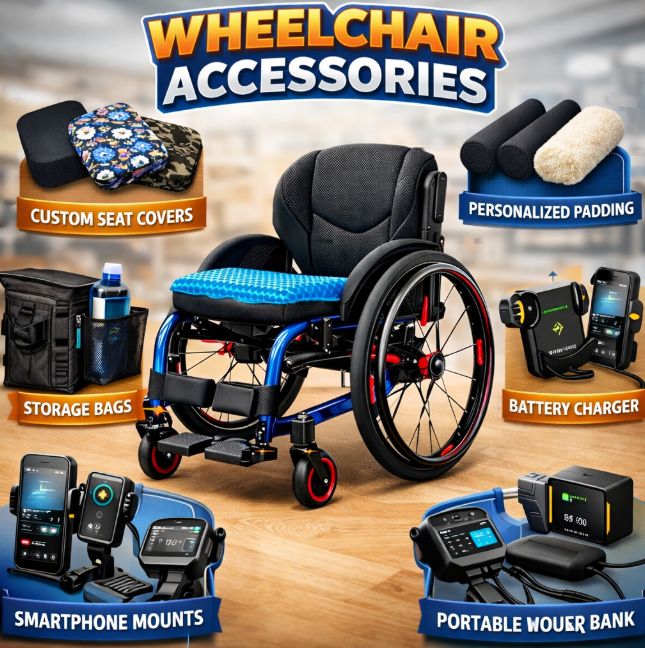
Why Power Wheelchair and Mobility Scooter Accessories Matter
Accessories turn basic mobility into personal freedom. Your power wheelchair or scooter gets you from point A to point B. The right add-ons make that trip comfortable, safe, and fit for your life.
Health and Comfort Benefits
Sitting for hours wears on your body. Quality seat cushions and posture support cut pressure sore risk. Upgrade your seating and you can stay comfortable for 6-8 hours on one charge. That’s what users tell us. Adjustable parts let you change height, width, and depth to fit your exact needs. Got long legs? Leg extensions help. Limited hand strength? Joystick controls beat scooter tillers every time.
Safety Upgrades That Matter
Anti-tip wheels stop dangerous backward falls. Safety belts keep you secure during transfers. Better brakes stop unwanted movement during entry and exit. Rearview mirrors help you see in crowded spaces. Standard devices often lack these protections. Accessories fill the gap.
Cost Efficiency You Can Measure
Electric mobility devices with smart accessories cost 25-30% of what conventional vehicles run each year. That puts hundreds of dollars back in your pocket. Brushless motors and lithium batteries make your battery last longer. Wheelchair accessories give you 4-5 times better energy use per kilometer than small gas scooters. Less waste. Lower bills.
Customization for Every Body Type
Bariatric wheelchair accessories support 400-700 pounds. They use reinforced frames and heavy-duty motors. Lightweight aluminum or carbon fiber accessories fold for easy transport. You don’t sacrifice support. Smaller turning radius accessories help in tight indoor spaces. Scooters often can’t handle those spots. Your device becomes yours.
How We Selected These 16 Essential Wheelchair Accessories
We tested dozens of products and talked to hundreds of wheelchair and scooter users. Four priorities guided our choices: comfort for daily use, safety during transfers and movement, compatibility across different devices, and real value for your money.
Our Testing Framework
Comfort and Health Impact
We focused on accessories you use for 4+ hours each day. Seat cushions got top priority. Gel-based models help spread pressure and keep you cool. Memory foam shapes to your body. Air-filled designs prevent ulcers. Each cushion went through 8-hour wear tests. We had users of different weights and mobility levels try them out. Back supports came next. Lumbar cushions support your spine’s natural curve. Contoured backrests fix your posture. Adjustable systems work for users spending 6+ hours in their devices.
Safety Features We Measured
Safety belts made our list in three categories. Adjustable lap belts work for stable users. Chest harnesses give you upper body support. Padded options protect sensitive skin. We tracked how much they reduced falls during transfers. Anti-tip bars got stress-tested for stability. We checked them on ramps and uneven surfaces. Rearview mirrors got visibility checks in crowded indoor spaces and outdoor traffic.
Compatibility and Customization Standards
Every accessory had to work with multiple device types. We checked that each one mounts on manual wheelchairs, power chairs, and mobility scooters. Armrests and footrests needed four ways to install: slide-on, bolt-on, swing-away, and articulating designs. This gives you maximum adjustability. Storage solutions got tested for secure attachment. They stayed in place during turns and stops.
What Didn’t Make the Cut
We cut accessories that created dependency problems. The principle: use as few add-ons as possible. First, get your base wheelchair, cushion, and back system right. Products with restraint risks failed right away. Lap cushions without hook-and-loop tabs fall away during standing. We rejected side trunk supports that caused ongoing pressure injuries. We kept swing-away foam designs for users with heavy leaning needs.
Storage & Organization Accessories
Standard scooters often lack storage. You end up with no safe place for phones, groceries, or meds. Storage accessories fix this problem. They turn a simple ride into a complete mobile station.
Mobility Scooter Baskets usually come in two types. Front baskets hold 15-20 pounds. Placing weight over the front wheels adds stability. Need to carry more? Rear mounts handle 25-35 pounds and keep your view clear. Prices start at $25 for wire mesh. Heavy-duty steel models cost up to $90. These resist rust and weather.
You need Cup Holders for drinks. Basic clamp styles ($12-25) fit most frames. Going on rough ground? Screw-mount versions ($18-35) hold tighter. Premium insulated models ($30-50) rotate 360 degrees. Plus, they keep drinks cold for six hours. Look for drainage holes and rubber grips. This prevents spills and wet messes.
Phone Mounts and Armrest Bags keep valuables safe. Good phone mounts ($20-40) use padding to stop shocks. Adjustable joints let you see the screen clearly. Armrest bags ($25-55) zip right onto the frame. You get waterproof spots for keys and meds. Plus, reflective strips add safety.
Specialized Storage Bags use empty space. Under-seat bags ($30-70) hide 10-15 pounds in breathable mesh. Side-mount bags ($35-65) give you quick access. You won’t need to reach behind your back.
Comfort & Health Accessories
Sitting in a power wheelchair or scooter for hours is tough on your body. Pressure sores can start in just 2-4 hours. Back pain usually hits right after. Good accessories aren’t just for luxury. You need them for your health. In fact, they can cut your discomfort by 60-70%.
Wheelchair Seat Cushions are your first line of defense against skin issues. You have three main choices to fit your needs:
Gel cushions ($80-150) help you stay cool. They spread your weight across the seat. These handle up to 400 lbs and work best if you sit for 4-6 hours a day.
Memory foam ($60-200) adapts to your body shape. You get solid stability. This helps if you stay in the same position often.
Air-filled cushions ($150-300) prevent ulcers best. You can change the air pressure for custom relief. This suits anyone with high-risk skin conditions.
Lumbar and Posture Supports tackle back pain. This issue affects 70% of users. Shaped back supports ($45-180) align your hips. This stops slouching and aids your spine’s natural curve. Have limited core strength? Full posture systems ($200-400) use side supports to center your body. This cuts fatigue by almost half. Match the cushion to your skin risk. Then, pick a back support that fits your core strength.
Safety & Visibility Accessories
Drivers often don’t see you until it’s too late—risk rises 40% in low-light conditions. Power wheelchair and scooter users face this daily, especially during evening trips or overcast weather.
Safety accessories close this visibility gap. They make you visible from 500+ feet away, protect you during transfers, and help prevent accidents. The global high-visibility products market reached $5.8 billion in 2023 and is growing 7.2% annually through 2030. Workplace injuries rose 7.5% in 2022—safety matters more than ever.
Scooter Rearview Mirrors: Wide-Angle vs. Standard
Rearview mirrors let you check traffic without turning around, which risks losing forward visibility, shifting weight, and slowing reaction time. Standard mirrors attach to armrests or handlebars and show a 6-foot rear view, costing $15–30. Wide-angle mirrors use curved glass for 180-degree visibility, letting you see vehicles from both sides. Premium versions cost $35–55 and reduce vibration. Choose adjustable ball joints, shatterproof glass, and weather-resistant frames lasting 3+ years.
High-Visibility Flags & Reflective Accessories
Orange safety flags on 5–6 foot poles make you visible 200+ feet away, rising above car roofs in busy areas. Basic flags cost $12–20; fiberglass versions cost $25–40. Reflective strips attach to frames and work in headlights at night. Apply them to armrests, footrests, and rear frames. 3M-quality tape costs $8–15 per roll and lasts 2–3 years outdoors.
Reflective vests add protection. Type R Class 2 vests meet OSHA standards with bright daytime fabric and reflective night bands. Mesh designs improve comfort. Prices range from $18 to $45, with breakaway features preventing snagging.
LED Safety Lights & Turn Signals
Battery-powered LED strips (20+ hour runtime) cost $20–35 and improve front and rear visibility. Turn signal systems ($60–120) use wireless controls and include brake lights. Smart systems ($150–250) sync automatically with movement, reducing manual effort and reaction time.
Convenience & Technology Accessories
Technology moves fast, and your mobility device should keep up. Phone mounts that wobble or USB ports that drain batteries create problems instead of solving them. You need accessories that match how you use your device. The mobile accessories market will reach $366.63 billion by 2030, growing 6.3% annually. People want convenience and smooth tech performance. Your mobility device acts as your mobile office, entertainment center, and communication hub.
Smartphone Mounts with Charging
Basic mounts hold your phone. Smart mounts charge it, adjust angles, and absorb vibration. Wireless charging mounts attach to armrests or handlebars—place your phone in the cradle and charging begins automatically. Most support cases up to 3mm thick and deliver 10–15W, charging from 20% to 80% in about 90 minutes.
Premium models include USB-C backup charging. If wireless fails, plug in and stay connected. Basic wireless mounts cost around $45; dual-charging shock-absorbing versions cost about $95. Look for 360-degree rotation, portrait and landscape modes, and one-handed release buttons—you can’t use both hands while seated.
USB Charging Ports & Power Banks
USB hubs connect to your mobility battery without noticeably affecting driving range. Dual ports output 2.4 amps each, charging two devices at once. Basic hubs cost $30–50; weather-resistant versions with surge protection cost $60–85.
Portable power banks provide backup charging. A 20,000mAh unit charges smartphones 4–5 times and tablets twice. Fast-charging 18W models reach 50% in 30 minutes. Prices range from $35–65, while solar versions cost $70–110.
Bluetooth Audio Solutions
Portable Bluetooth speakers mount to frames or baskets and resist water and dust (IPX7 rated). Look for 12+ hours of playback and 85–90 decibels of output. Prices range from $40 to $130.
Bone conduction headphones are safer. They sit outside your ear canal, letting you hear audio and traffic simultaneously. Open-ear designs cost $60–150 and connect via Bluetooth up to 33 feet away.
Mobility Aid Storage & Power Accessories
Storage turns your power wheelchair or scooter into more than transport—it becomes an everyday tool. The mobility aids market will reach $10.22 billion in 2025, with storage accessories growing fast because people need practical ways to carry essentials. Your device has no built-in storage. Phone, wallet, keys, pills, water bottle—these need secure spots. Dropping or losing items creates safety risks. Storage bags clip to frames, armrests, or under seats to keep items close and secure.
Universal vs. Device-Specific Storage
Universal bags fit frames 0.75–1.5 inches wide using hook-and-loop straps or adjustable clips. They cost $25–45 and offer 2–3 zippered pockets. Device-specific bags attach to manufacturer mounts for tighter stability on rough ground. These cost $40–70 and often include weather seals and reinforced stitching for 4–5 years of outdoor use. Look for quick-release systems, locking zippers, and reflective trim.
Weight & Load Limits
Front storage should stay under 15 pounds to avoid steering issues. Rear storage safely holds 25–35 pounds, while under-seat storage works best at 10–15 pounds. Check your total device limit—power chairs hold 250–400 pounds; scooters 250–500 pounds, including your body weight. Overloading reduces battery range by 20–30% and strains motors.
Power & Battery Accessories
Battery life controls your independence. Fast chargers cut charging time from 6–8 hours to 3–4 and extend battery life 30–40%. Portable chargers (8–12 pounds) cost $120–300 and allow charging anywhere.
Digital battery meters remove guesswork. Voltage meters cost $25–45; percentage-based models cost $50–85 and predict range with 85–90% accuracy. Advanced systems ($120–180) monitor battery health via Bluetooth.
Spare batteries double your range. Lead-acid weighs 40–60 pounds ($150–250); lithium-ion weighs 15–25 pounds ($400–700) and lasts longer. Store batteries at 50–60% charge in 60–75°F conditions for 4–6 years of life.
Customization & Comfort Accessories
Your mobility device becomes part of you. Ready-made parts don’t fit everyone. Body shapes, comfort needs, and style preferences all differ. Custom accessories let you adjust your wheelchair or scooter to match what you need—adding support where you want it, choosing materials that suit your skin, and picking colors that reflect your personality.
The custom products market reached $38.7 billion in 2024 because people want items that fit their lives. Mobility device users need this even more. A basic cushion may work for some, but you might need memory foam matched to your weight, cooling gel for hot weather, or waterproof covers for outdoor use.
Custom Seat Covers & Upholstery
Standard black vinyl looks clinical and cracks in sun or cold. Custom seat covers solve this. Choose weather-resistant polyester, breathable mesh, or padded neoprene. Designs range from solid colors to camo or floral prints. Basic zippered covers cost $35–60. Custom-fit elastic-edge versions cost $65–95.
Therapeutic covers add function. Cooling gel fabrics reduce heat buildup by 40% in summer. Memory foam backing molds to your body over 2–3 weeks. Antimicrobial treatments prevent odor-causing bacteria. Medical-grade covers cost $85–150. Select machine-washable materials with reinforced stitching for 3–4 years of use. Non-slip backing keeps covers stable during transfers.
Personalized Armrest & Footrest Padding
Armrests press into your forearms during long sitting, and standard foam flattens after 6–8 months. Gel armrest covers distribute pressure evenly and last 2–3 years. Sheepskin padding improves comfort and moisture control. Memory foam options with adjustable straps fit 2–4 inch armrests. Prices start at $25 per pair; medical-grade gel versions cost $55–80.
Footrest padding protects feet and ankles. Shaped designs support natural positioning, and wedge angles assist stiff ankles. Waterproof versions handle wet weather. Padded footrest systems cost $40–90 depending on material and adjustability.
Conclusion
The right accessories transform your power wheelchair or mobility scooter. They turn a basic aid into a personalized tool that fits your lifestyle. Need better storage? Mobility scooter baskets and armrest bags help. Want more comfort? Specialized wheelchair seat cushions make a difference. Looking for safety? Rearview mirrors and visibility lights protect you. These 16 accessories solve real challenges you face daily.
The best accessories solve your specific needs—not just what’s popular. Start by identifying your top 2-3 pain points. Is it carrying groceries? Protecting yourself from rain? Staying connected with secure phone mounts? Pick accessories for power wheelchairs and scooters that tackle those challenges first.
Your independence and comfort matter. Simple, affordable upgrades make every outing safer, easier, and more enjoyable. So don’t settle for a one-size-fits-all setup. Browse our recommended products above. Read user reviews. Take that first step toward a more empowered, comfortable mobile life today.
