China Wheelchair Factory: Wholesale & Custom Options

Wheelchair

China Wheelchair Factory: Wholesale & Custom Options

China makes 60% of the world’s wheelchairs — over 2.1 million units per year, from 70+ active manufacturers. That’s not a small detail. That’s where the global supply chain is built.

These factories cover every category: manual, electric, foldable, and heavy-duty power wheelchairs. Most exporters carry CE, ISO 13485, and FDA 510(k) clearance for US-bound shipments. The wholesale and custom production infrastructure is solid and ready. The real difference is who you choose to work with.

A few names worth knowing:

Satcon Medical (est. 2013) — CE + ISO 13485 + FDA; a strong match for distributors who need full compliance documentation

Yuwell Group (est. 1998) — large-scale, multi-category; a reliable choice for high-volume, stable procurement

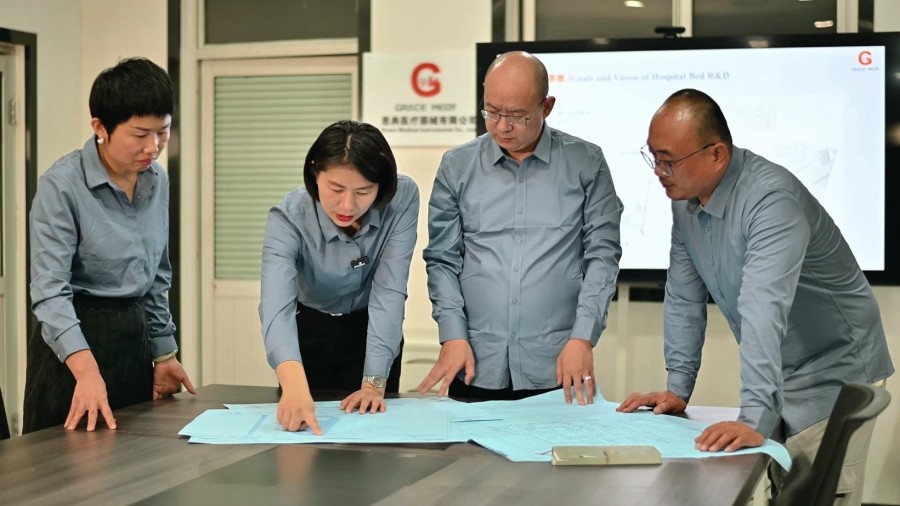
Grace Medy (est. 2009) — export-ready OEM solutions; you get direct factory access as a distributor

Wisking Healthcare (est. 2003) — power wheelchairs and scooters; well-established in Western markets

Each factory runs on its own terms. MOQs, lead times, and customization depth all change based on product type and order size. The next sections break each of these points down in detail.

China Wheelchair Factory Wholesale & Custom Options.jpg

Why Source Wheelchairs from a China Wheelchair Factory? (Cost & Scale Advantages)

The numbers are clear. Chinese wheelchair factories price 30%–50% lower than comparable sources in Europe or higher-cost Asian markets. That gap has nothing to do with cutting corners. It comes from three structural advantages built over decades — lower labor costs, large-scale production, and tight domestic supply chains.

Put those numbers in context. A manual wheelchair priced at $100–$200 through a mid-tier supplier? Sourcing factory-direct from China saves you $30–$100 per unit. On a 100-unit order, that’s $3,000–$10,000 back in your margin. On 1,000 units, you recover $30,000–$100,000 in cost — before a single discount gets negotiated.

Where the Savings Come From

Integrated supply chains — Most Chinese wheelchair manufacturers source frames, components, and upholstery from within China. Shorter supply lines cut input costs and reduce delays.

Economies of scale — Factories producing thousands of units each month spread fixed costs across larger volumes. You get that efficiency built into your unit price.

OEM/ODM agility — Need a private-label model or a market-specific configuration? Chinese factories are built for that. Custom tooling and branding adjustments don’t need a full redesign cycle.

This is how China’s wheelchair manufacturing infrastructure earns its reputation — not through flashy promises, but through the straight arithmetic of bulk procurement.

Wheelchair Product Range: Manual, Electric & Specialized Models

Seven distinct product categories. Dozens of configuration variables. One decision that shapes your entire procurement cycle.

Here’s what the actual product range looks like.

Quick Spec Comparison

Category

Weight

Load

FOB Range

Standard Manual

15–20 kg

100–120 kg

$45–$120

Lightweight Manual

8–13 kg

100–120 kg

$120–$350

Carbon Fiber Manual

5–9 kg

90–110 kg

$600–$1,500

Folding Electric

23–35 kg

100–120 kg

$450–$1,600

Heavy-Duty Electric

50–80 kg

135–180 kg

$1,500–$5,000

Bariatric Manual

25–35 kg

180–350 kg

$180–$450

Sports

6–12 kg

Custom

$700–$4,000

The range is wide. A distributor stocking hospital wards needs a very different spec sheet than a brand launching a premium lightweight line for active users. China’s manual wheelchair suppliers and electric wheelchair manufacturers build for both — often inside the same factory.

OEM & ODM Custom Wheelchair Manufacturing: How It Works

OEM and ODM seem similar at first. Most buyers don’t notice the real difference — until they’re six weeks into a project and realize they picked the wrong model.

image.png

OEM means you bring the vision. The factory brings the engineering platform, production setup, and compliance support. You define the branding, target market, and performance specs. They build to those specs. ODM flips the starting point. The factory already has a tested, validated design. You pick it, adjust what needs adjusting — logo, color, configuration — and launch faster with far less development cost.

One question drives the right choice: do you need market differentiation, or do you need speed?

Who Each Model Is Built For

OEM fits brand owners, medical distributors, and e-commerce sellers who want a product that’s truly their own — distinct look, custom performance specs, private packaging.

ODM fits buyers who want a faster, lower-risk launch. You start from an existing wheelchair platform that already passed certification.

What You Can Customize

The customization range in a real OEM wheelchair project covers more than most buyers expect:

Appearance: color, logo placement, retail packaging, branded accessories

Engineering: motor wattage, lithium vs. lead-acid battery, frame material, weight capacity rating

Function: seat dimensions, footrest configuration, controller sensitivity settings

High-end rehabilitation equipment factory projects that need patient-specific geometry go further. That means 3D scanning, CAD modeling, and additive manufacturing for custom seating components and head supports. That’s not standard OEM. That’s specialized clinical production — a different process entirely.

MOQ and What Drives It

There’s no fixed MOQ in wheelchair manufacturing China. It depends on what you’re customizing. Custom molds, new frame tooling, and upholstered patterns push minimum quantities higher — factories won’t cut new tooling for five units. Logo printing and box customization? Those limits are much more flexible and easier to negotiate.

Before you commit, confirm four things with your manual wheelchair supplier or electric wheelchair manufacturer: delivery cycle, payment terms, sample policy, and after-sales support structure. A factory with ISO 13485 certification and in-house R&D can handle engineering changes mid-project without falling apart. One without that setup often can’t — and that’s exactly where timelines break down and projects stall.

Quality Certifications & Compliance: CE, FDA, ISO Explained for Buyers

Three certificates. Three different jobs. Most buyers treat them as interchangeable proof that a factory is “legit.” That’s the mistake that becomes a compliance problem six months after the container lands.

Here’s what each one does — and what it doesn’t.

CE marking is a product declaration, not a quality badge. It tells EU customs that a specific wheelchair model meets the technical and safety requirements under EU MDR (Regulation (EU) 2017/745). It covers that product, in that configuration, for the 27 EU member states plus Norway, Switzerland, Iceland, and Liechtenstein. It does not certify the factory. It does not cover other models not listed on the certificate.

FDA 510(k) clearance works on a different logic. It confirms that a specific device matches a predicate device already on the US market — meaning it’s safe and effective enough to sell in the US. Most manual and electric wheelchairs fall under Class II (43% of all FDA-regulated medical devices). Key detail: many Chinese factories produce for American brands that hold the 510(k). The factory’s name isn’t on the clearance. You cannot use an OEM client’s 510(k) as the factory’s own authorization.

ISO 13485 is the quality management system standard. It covers how the factory designs, sources, produces, and controls its processes. It does not grant market access anywhere. A factory can hold a valid ISO 13485 certificate and still have no product registered in your target market.

How to Evaluate and Vet a China Wheelchair Supplier

Step 1: Confirm You’re Talking to a Factory, Not a Middleman

Step 2: Validate Production Capacity

Step 3: Verify Every Certificate on Your Own

Step 4: Pressure-Test Quality Claims

Step 5: Structure the First Order to Limit Exposure

Wholesale Wheelchair Pricing: MOQ, Bulk Discounts & Order Structure

Pricing from a Chinese wheelchair factory isn’t one number. It’s a structure. Understanding that structure separates buyers who get good deals from buyers who get burned.

Here’s how it works.

MOQ by Product Type

Minimum order quantities aren’t random. Tooling costs, production batch economics, and customization level all drive them.

Wholesale Wheelchair Pricing: MOQ, Bulk Discounts & Order Structure.jpg

Standard manual wheelchairs (steel/aluminum folding): 10–50 units per model, per color. Order across multiple seat widths (17″/18″/20″) and most factories want 50–100 units total — at least 10–20 units per size.

Electric wheelchairs (standard production models): 20–50 units per model is standard.

OEM/private label (logo + packaging, no structural changes): Around 50 units. Add custom paint colors, fabric, or box dimensions and that number climbs to 50–100 units. Factories need the volume to spread material setup costs.

Deep structural customization (new molds, new frames, controller reprogramming): Plan for 100–300 units minimum. Some factories require a 500-unit annual commitment just to cover tooling costs.

How Volume Moves the Unit Price

For manual wheelchairs around the $100/unit range, the price ladder is tighter but still real. 200+ units can get you 5–8% off. Add an annual volume commitment and some factories push that discount to 8–10%.

Seasonal timing adds another layer. Orders placed during peak procurement windows — Q2–Q4, as European and North American hospital tenders run — can unlock an extra 2–5% on top of volume discounts. Factories compete hard for production commitments during those periods.

Emergency restocks go the other direction. A 10–20 unit urgent top-up on a model you ordered before at 100+ unit pricing often gets repriced back to the low-volume rate.

FOB vs. CIF vs. EXW: Which Price You’re Comparing

Most published wholesale prices on trading platforms are FOB. That’s the useful baseline. It covers inland freight to port, export clearance, and pre-shipment port fees.

EXW strips all of that out. For electric wheelchairs, EXW runs $20–$40 less per unit than FOB. That gap closes fast once you add trucking, customs agents, and port handling on your end.

CIF adds ocean freight and insurance on top of FOB. For a full 20-foot container — around 120–180 standard manual wheelchairs or 60–100 electric wheelchairs — the CIF premium over FOB works out to just $3–$10 per unit. For LCL (less-than-container) shipments, that premium rises to $5–$15 per unit, depending on volume weight and route.

What’s Not Included in the Quoted Price

Three cost categories catch first-time importers off guard:

Custom packaging (color boxes, branded inserts): Expect a one-time plate/design fee of $50–$200, plus $0.50–$2 added per unit. This only makes sense at 50–100+ units.

Mold fees (new plastic parts, brackets, frames): Injection molds run $2,000–$8,000 per set. Welding fixtures run $500–$2,000. Some factories absorb this and spread it across your first 200–500 units as a per-unit add-on.

Sample fees: Standard manual wheelchair samples run $80–$150 EXW plus courier. Electric wheelchair samples run $250–$400 EXW plus courier. Most factories credit 50–100% of the sample cost back against your first production order once you hit MOQ.

Locking in Price Over Time

The buyers who get the best pricing from a China wheelchair factory aren’t always placing the biggest single orders. They’re the ones who give factories predictability. Quarterly rolling forecasts, clear product commitments, and payment terms that reward the factory for holding inventory — that’s what moves the real discounts.

Logistics, Lead Time & After-Sales Support for Wheelchair Imports

Three months. That’s your real window from placing an order with a Chinese wheelchair factory to having product ready to sell. Production runs 30–45 days. Ocean freight adds another 25–35 days. Customs clearance and last-mile delivery add 10–21 more. Plan around that number — not the optimistic one.

Production Lead Times by Order Type

Samples come first — and they take longer than most buyers expect. A standard manual wheelchair sample runs 7–15 days. Complex electric models with custom controllers push that to 20–25 days. Add more time if components need sourcing rather than pulling from existing stock.

Small first orders (20–100 units) need 25–35 days in production.

Full container orders (200–500 units) run 30–45 days under normal conditions.

Seasonal timing matters. August through October is peak production season across Chinese export factories. Lead times that run 30 days in February can silently stretch to 45–60 days in September. The same squeeze happens in the two months before Chinese New Year.

Conclusion

Buying wheelchairs from a China wheelchair factory is more than a cost decision — it’s a strategic move. You get factory-direct pricing, full OEM/ODM customization, and a supply chain that grows with your business.

Who you partner with makes all the difference. The wrong supplier wastes your time and money. The right one checks every box:

Certifications

Production capacity

Clear communication

You now have a solid framework to evaluate all three — no more months lost on the wrong factory.

So take action. Request samples. Ask for CE and ISO documentation upfront. Get a wholesale price quote based on your actual MOQ. Good factories respond fast. They answer every question without delay.

The right wheelchair manufacturing partner in China exists.

Send Your Inquiry

Looking for a reliable hospital bed manufacturer?