
Planning a trip to Hong Kong with a wheelchair? Or getting around as a local with mobility challenges? Either way, you probably have one key question: can you get on a bus?
The short answer is yes — but with caveats that could make or break your day.
Disability travel in Hong Kong has improved a lot. Major operators like KMB and Citybus now run low-floor buses with kneeling features and dedicated wheelchair spaces. That’s real progress. But “accessible” doesn’t always mean easy. There’s often a gap between policy and what you experience on the ground — and that’s where most travelers get caught off guard.
This guide covers what you need to know:
Which routes you can use without hassle
How to plan your trips ahead of time
How buses compare to Hong Kong’s other transport options
Use this to move through the city with confidence, not guesswork.
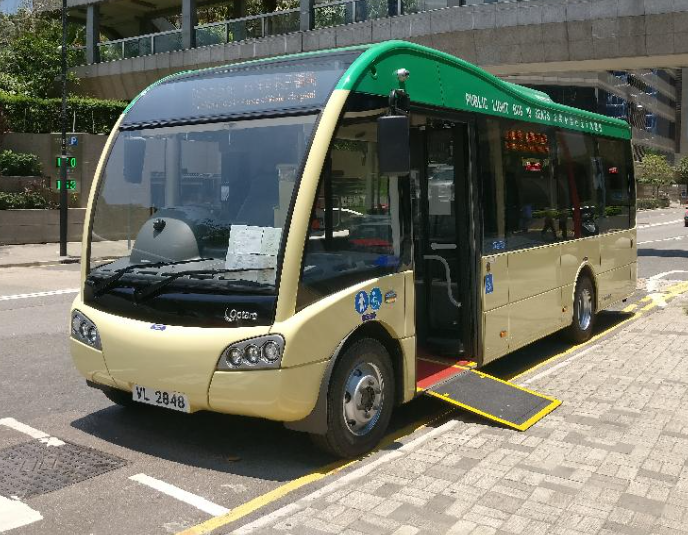
Are Hong Kong Buses Wheelchair Accessible? The Direct Answer
Partially accessible — that’s the honest answer, and it matters more than a simple yes or no.
80–90% of franchised buses run by KMB, Citybus, and NWFB now use low-floor, wheelchair-accessible models. Years of fleet upgrades made this happen. For anyone using a wheelchair or mobility aid in this city, that’s real, solid progress.
Here’s what those accessible buses offer:
Kneeling mechanism — lowers the entrance to 30cm from the ground, close enough to the curb for most wheelchair users to board without a steep climb
Retractable or manual ramps at front or middle doors, 80–90cm wide
Dedicated wheelchair space — 0.8m x 1.3m, with securement belts and a weight limit of 200–300kg
Foldable priority seats next to the wheelchair bay
Boarding is straightforward. Look for the yellow accessibility symbol at the bus stop. Signal the driver as the bus pulls in. Wait for ramp deployment, then secure your wheelchair in the reserved space. Crutches and wheelchairs ride free on all franchised services.Whether your vehicle is an electric wheelchair or manual wheelchair, getting in is easy.
But the gaps are real and worth knowing upfront.
Older high-floor buses still run on select rural and low-demand routes. Accessibility isn’t guaranteed across the whole city. Green minibuses are mostly off-limits — only around three timetabled routes offer any accessible options. Peak hours are tricky too. That one wheelchair space per bus fills fast. There’s no real-time app to check availability before you get on.
Between 2014 and 2018, complaints about barrier-free transport rose each year. Bus-related issues made up 20–30% of that total. The infrastructure has improved, but friction points remain for people who rely on it every day.
What Wheelchair Accessibility Features Do Hong Kong Buses Have?
Head to a bus stop in Kowloon or Causeway Bay, and you’ll spot something on the pavement — a yellow international accessibility symbol. That symbol is a promise. Here’s what it delivers.
The Physical Features You Can Count On
Modern franchised buses in Hong Kong — operated by KMB and Citybus — come with a solid set of accessibility features. These aren’t add-ons. They’re built into the vehicle design from the start.
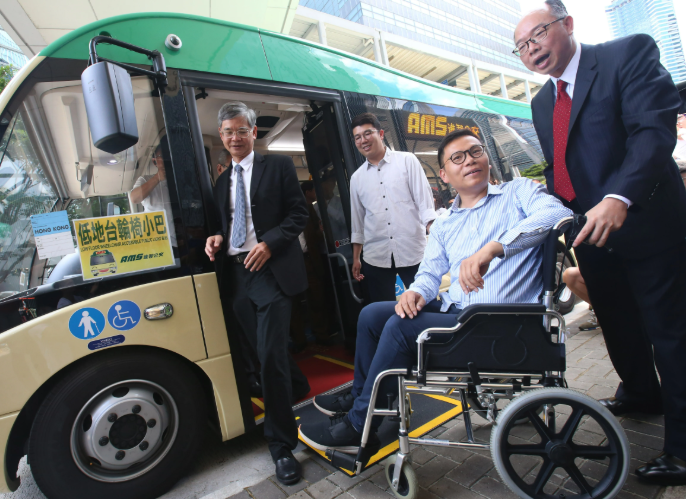
The kneeling mechanism drops the bus entrance down to about 30cm from the ground. For most wheelchair users, that gap between a standard step and a lowered entry point is everything — the difference between boarding and being left at the stop.
Ramp access is available at the front or middle doors. The ramp width runs between 80 and 90cm. That’s wide enough for most standard wheelchair frames. No awkward maneuvering at the curb needed.
Once you’re on board, the reserved wheelchair parking space gives you a dedicated spot to park and lock your chair. The space measures 0.8m x 1.3m. Securement belts are rated up to 200–300kg. Foldable priority seats sit right next to this bay — keeping the space open for wheelchair users and giving companions a place to sit nearby.
Boarding sequence follows a clear pattern:
Wait at the designated yellow symbol area — wheelchair users get priority at the head of the queue at select stops and public transport interchanges
Signal the driver as the bus approaches
Board via the ramp and head to the reserved wheelchair bay
Park and lock your wheelchair using the securement system
The bay is taken? Check if a priority seat is free instead
Crutches and wheelchairs ride free on all franchised services.
How to Find Wheelchair-Accessible Bus Routes in Hong Kong (Step-by-Step)
Find the right bus before you leave home. Not at the stop. Not while a driver waits and traffic backs up behind you. Do it here — with a screen, a plan, and enough time to adjust if something doesn’t work out.
Here’s how to do it.
Step 1: Start With the Official Transport Department Website
Go to td.gov.hk first. The Transport Department keeps route listings that include low-floor bus designations. These cover all franchised operators — KMB, Citybus, and NWFB. The interface isn’t the most intuitive, but the data is solid. Use it as your baseline before you check anything else.
Step 2: Use the Operator Apps to Confirm Vehicle Type
Each major operator has its own app. That’s where the useful detail lives.
KMB app: Route search includes low-floor indicators. Over 80% of urban routes show low-floor Volvo B9TL models or equivalent.
Citybus / NWFB app: Similar filter function — search your route, look for the wheelchair icon or “low floor” tag.
HKeMobility (Transport Department’s unified app): Pulls real-time arrival data across all operators. Accessibility icons show up right in the ETA feed. Download this one for trip days — it saves you from guessing.
Real-time arrival screens at major bus stops also show vehicle model. So you can check on-site before the bus pulls in.
Step 3: Plan 24–48 Hours Ahead — Not the Morning Of
Hong Kong’s public transport wheelchair access rating sits at 66.6%. That number sounds fine until you’re standing at a stop and the accessible route you needed runs on a high-floor bus three days a week.
Check your route a day or two out. Something looks unreliable? Build in a backup:
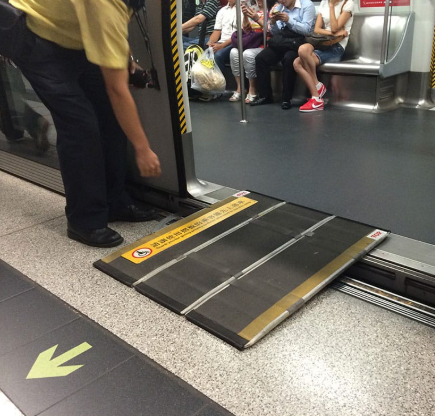
MTR: Close to 100% of stations have elevator or ramp access from street level. Portable ramps are available on request for platform gaps. It’s the most reliable accessible option in the city.
Rehabus: Door-to-door service, with wider coverage in areas like the Southern District. Advance booking is required, but it takes most of the uncertainty out of the trip.
Step 4: Time Your Journey Around Peak Hours
The 7–9 AM and 5–7 PM windows are high-risk for wheelchair users. Each bus has one wheelchair bay. It fills fast. There’s no live tracking to show you whether it’s taken before you board. Travel outside those windows if your schedule allows. It’s a small shift that cuts out a real variable.
A Practical Note on Route Coverage
Low-floor buses are standard on Kowloon and Hong Kong Island core routes. Rural and low-demand routes are less reliable — older high-floor models still run there. Your journey takes you outside the urban core? Confirm the route before you commit.
The tools are there. Use them with enough lead time so you’re making a choice — not scrambling for one.
Wheelchair Accessibility on Hong Kong Buses vs. Other Transport Options
Hong Kong’s transport network is one of the most complex in the world. Travel it in a wheelchair, and the gap between your options becomes very real. It’s the difference between a smooth harbour crossing and standing on a curb as three buses pass you by.
Here’s how each mode compares.
Matching the Right Mode to Your Trip
|
Transport |
Accessible Rate |
Best For |
Watch Out For |
|---|---|---|---|
|
Buses |
99% low-floor |
City sightseeing, routine urban routes |
One bay per bus; peak-hour competition |
|
MTR |
High (lifts widespread) |
Long cross-district trips, airport transfers |
Some lift shortages; platform gaps |
|
Taxis (WAT) |
~30% (~5,400) |
Door-to-door, flexible routing |
Uneven availability; book ahead |
|
Green Minibuses |
Trial routes only |
Hospital-specific corridors |
Long times; very limited coverage |
|
Trams / Ferries |
Data limited |
— |
Boarding difficulties; low convenience |
For airport transfers: Take MTR’s Airport Express — lifts are included. Pair it with a WAT for the last stretch. Buses aren’t suited for luggage.
For sightseeing: Franchised buses cover more of the city at street level. With 99% accessibility, you’re unlikely to get stuck. MTR covers the rest.
For hospital routes or longer hauls: Start with MTR. To fill the gaps, double-space buses and WATs both handle serious distances.
The options are there. The key is picking the right one for the trip at hand.
Practical Tips for Wheelchair Users Riding Hong Kong Buses
The difference between a frustrating ride and a smooth one comes down to preparation — not luck.
Hong Kong’s franchised bus network is more wheelchair-friendly than most visitors expect. 99% of 6,200 franchised buses are low-floor and accessible. Fixed ramps, handrails near exit doors, and priority waiting spaces at designated stops are standard across the fleet. That infrastructure is there. Knowing how to use it is what separates a good day from a wasted one.
Before You Board
Position matters. Priority waiting spaces are marked at bus termini and select en-route stops. Get there ahead of time and stand — or park — at that spot. Signal the driver as the bus approaches. Don’t wait until the doors open. Drivers look for that signal before they deploy the ramp.
One thing worth knowing: 490 buses in the fleet carry double wheelchair spaces. These run on hospital routes. Your route goes near a hospital? You’re on a bus built for higher wheelchair demand. That’s by design — not a coincidence.
Peak Hours
The single wheelchair bay on most buses fills fast between 7–9 AM and 5–7 PM. There’s no live feed showing whether the bay is taken before you arrive at the stop. That gap is real.
Two ways to work around it:
– Target hospital routes with double spaces — your odds improve a lot
– Travel outside peak windows when the bay is more likely to be free
The wheelchair space is taken? Priority seats near the bay are your next option. Most riders will move — just ask them straight away, before you settle in.
Riding in Bad Weather
Fixed ramps are standard on all franchised buses. Rain doesn’t change what’s available to you. What it does change is footing. Grip the handrails — they run near exit doors for exactly this reason. Wet ramp surfaces are a real hazard. Take your time. Move with care, not speed.
Sheltered priority stops exist across the network. Coverage isn’t the same in every district, though. Check your stop in advance on rainy days.
A Simple Boarding Checklist
Arrive at the marked priority waiting space — not the general queue
Signal the driver as the bus approaches
Board via the ramp; go straight to the wheelchair bay
Lock your wheelchair using the securement belts
Bay occupied? Ask nearby passengers to clear the priority seat
Crutches and wheelchairs ride free on all franchised services — no need to ask or explain at the fare point.
Conclusion
Getting around Hong Kong as a wheelchair user isn’t a gamble. It comes down to knowing the right routes, the right operators, and the right tools before you head out.
Low floor buses keep expanding across KMB and Citybus networks. The MTR stays your most reliable, accessible backbone. Add the right planning apps, and independent travel here is within reach.
The city isn’t perfect. Gaps still exist, and some days will push your patience more than others. But Hong Kong’s barrier-free public transport infrastructure is stronger than most visitors expect. It rewards those who plan ahead.
Your next move? Pull up the KMB or Citybus route planner. Filter for wheelchair accessible buses in Hong Kong. Map your first journey before you arrive.
The infrastructure is there. The confidence to use it? You just built that here.
