
Do Electric Wheelchairs Come in Different Sizes?
Yes — and the size differences are bigger than most people expect.
Electric wheelchairs range widely in size. The narrowest compact models measure just 22 inches wide. Heavy-duty frames can stretch beyond 40 inches. That gap isn’t just cosmetic. It reflects real differences in who the chair is built for, where it gets used, and what it needs to carry.
Here’s a quick breakdown of how core dimensions compare across categories:
Overall Width
– Narrow/Compact: 22–24 inches — ideal for tight hallways and smaller living spaces
– Standard: 25–26 inches — fits through most 30–32 inch doorways with room to spare
– Wide/Full-Size: 28–36 inches — suited to outdoor use and open environments
– Heavy-Duty: up to 40 inches and beyond
The short answer: electric wheelchairs come in real, measurable size differences — not minor variations. What follows is how to find the right fit for you.

The 3 Main Electric Wheelchair Size Categories Explained
Three categories. That’s all you need to understand before everything else falls into place.
Most electric wheelchairs — regardless of brand, price point, or feature set — fall into one of three size groups: compact/narrow, standard/full-size, and bariatric/heavy-duty. Pediatric models make up a fourth group, and we’ll cover those too. Understand the core three first. That gives you the foundation for every size decision after.
Category 1: Compact (Narrow) Electric Wheelchairs
Compact electric wheelchairs are built around one goal: fitting through spaces that standard chairs cannot.
Overall width: 22–24 inches (56–61 cm)
Seat width: 16 inches (40 cm)
Best for: Narrow hallways, tight apartment layouts, doorways as slim as 70–80 cm, crowded elevators
The tradeoff is seat room. At 16 inches wide, a compact chair fits smaller or average-framed users well — but it’s not built for larger body proportions. You live in an older home with narrow doorways? Or spend most of your time moving between rooms indoors? This is your category.
A quick rule: doorways at 70–80 cm wide mean a compact model isn’t just the better pick — it may be the one category that actually works.
Category 2: Standard Full-Size Electric Wheelchairs
Standard full size electric wheelchairs sit in the middle ground — and for most users, that’s the right place to be.
Overall width: 25–27 inches (64–68 cm)
Seat width: 18 inches (46 cm)
Overall length: 39–43 inches (100–110 cm)
Seat depth: 16–18 inches (40–45 cm)
Seat height: 18–20 inches (45–50 cm)
Turning radius: 80–100 cm
Best for: Mixed indoor/outdoor use, standard residential doorways (90–110 cm), everyday community mobility
The 18-inch seat width fits a wider range of body types than compact models. The overall footprint still clears most modern doorways and elevator openings without issue. A turning radius of 80–100 cm lets you move through living rooms, kitchens, and hallways without constant adjustments.
Not sure which category fits you? Start with standard. It’s the most flexible option — as long as your doorways are at least 90 cm wide.
Category 3: Bariatric (Heavy-Duty) Electric Wheelchairs
Bariatric wheelchairs aren’t just wider. The entire build is different from the ground up.
Overall width: 28–40 inches (71–102 cm)
Seat width: 20–22+ inches (51–56+ cm)
Best for: Higher weight capacities, broader body proportions, users who need stronger lateral stability
The reinforced frame, wider axle, and expanded seat platform work together. They spread weight across a larger surface and reduce the risk of side tipping — something that can happen when a larger user sits in a chair that’s too small. This isn’t about added comfort. It’s a safety need for the right user.
Doorway clearance is a real factor here. Most bariatric models need openings of 90 cm or wider. Some full-size bariatric chairs need even more than that.
A Note on Pediatric Electric Wheelchairs
Pediatric models match the narrow/compact category in overall width. But the design is built around smaller body dimensions — shorter seat depth, lower seat height, and in many cases, parts that adjust as the child grows. Placing a child in an adult compact chair is not the same as using a purpose-built pediatric frame. The proportions work differently for a child still developing posture and spinal alignment. That distinction matters.
Quick Size Reference
|
Category |
Overall Width |
Seat Width |
Minimum Doorway |
|---|---|---|---|
|
Compact/Narrow |
22–24 in |
16 in |
70–80 cm |
|
Standard |
25–27 in |
18 in |
80–90 cm |
|
Bariatric |
28–40 in |
20–22+ in |
90+ cm |
How to Measure Yourself for the Right Electric Wheelchair Size
Sit down on a firm, flat chair before you take a single measurement. Not your couch. Not your bed. A dining chair, a bench — something that doesn’t sink under your weight. Every number below needs to be taken while you’re sitting correctly. That starting point changes everything.
The Six Measurements That Matter
1. Seat Width
Sit upright and measure across your hips or buttocks at their widest point. Take that number and add 2 inches. That’s your target seat width. A 16-inch seat suits a narrow frame. An 18-inch seat fits most average-built adults. For a bariatric chair, you’re looking at 20 inches or more. Don’t skip the 2-inch addition — it’s not extra padding. It’s the room your body needs for safe lateral weight distribution.
(One practical note: measure with your coat on if you wear heavy winter clothing often. Bulk matters.)
2. Seat Depth
Measure from the back of your knee to your tailbone — the full length of your thigh while seated. Then subtract 2 to 3 inches. That gap stops the front edge of the seat from pressing into the back of your knees. Too much pressure there cuts circulation and creates sore spots over time. Standard depths run 16 inches (short), 18 inches (standard), and 20 inches (deep).
3. Seat Height
Measure from the floor to the top of your knee while seated. Electric wheelchair seats fall between 18 and 20 inches high. This number matters most for transfers — getting on and off a bed, toilet, or car seat. A mismatch here makes every transfer harder and riskier.
4. Armrest Height
Keep your shoulders relaxed and your elbows bent at 90 degrees. Measure from the seat surface up to your elbow. Add 1 inch. That’s your armrest height. With scoliosis or any pelvic tilt, measure both sides on their own — each side may need a different height setting.
5. Back Height
Measure from the seat surface to your underarm. Subtract 4 inches from that number. Active users do well with a 16-inch back height. Standard support sits around 18 inches. For postural or trunk support, go with 20 inches or higher.
6. Leg Rest Length
Measure from the back of your knee to the bottom of your foot. Add 1 to 2 inches for footrest clearance. Using a seat cushion? Check how much it compresses under your weight first, then finalize this number.
Your Measurement-to-Spec Conversion at a Glance
|
What You Measure |
Chair Specification |
Formula |
|---|---|---|
|
Hip/buttock width |
Seat width |
+ 2 inches |
|
Thigh length |
Seat depth |
− 2 to 3 inches |
|
Floor to knee |
Seat height |
Direct match (18–20 in range) |
|
Seat to elbow |
Armrest height |
+ 1 inch |
|
Seat to underarm |
Back height |
− 4 inches |
|
Back of knee to foot |
Leg rest length |
+ 1 to 2 inches |
These six numbers matter more than brand, more than color, more than any feature on the spec sheet. A chair with the wrong seat depth — even by two inches — causes pressure sores, poor posture, and daily discomfort that builds up fast. Getting this right at the start isn’t a detail. It’s the whole point.
Matching Electric Wheelchair Size to Your Living Environment
Your body measurements get you to the right seat. Your home decides whether that chair can move through it.
These are two separate problems. Solve the first without the second, and you end up with a well-fitted chair that gets stuck in the hallway every morning.

Room-by-Room: What Each Space Demands
Doorways are where most people start — and where most people stop. Residential doorways run 30–32 inches wide. ADA minimum is 32 inches of clear passage. A standard electric wheelchair at 65 cm (about 25.6 inches) clears that with ease. A compact model at 58 cm clears it with room to spare. A bariatric frame pushing 34 inches? That’s a separate conversation — one you need to have before purchasing, not after delivery.
Corridors and turning radius are the second problem people find too late. A turning radius of 80–100 cm is standard across most full-size models. On a corridor narrower than 48 inches, that radius works against you. Urban sidewalks under one meter wide need a turning radius of 80 cm or less. The chair that handles your street with ease may spin in place in your kitchen.
Elevators create a size ceiling that catches people off guard. Residential elevator car widths run 90–110 cm. A standard 65 cm wheelchair rolls in straight — no angling, no extra steps. Go wider than that, and you’re calculating angles before every trip to another floor.
Bedroom and bathroom floor space carry their own requirements. Transfers to beds and bathrooms need at least 60 inches of clear space nearby. For 95% of power wheelchairs to move without restriction, the floor area needs to reach 33 × 56 inches minimum — close to three feet beyond what standard accessibility guidelines require.
Your Environment Fit Checklist
Before locking in any size category, check these numbers:
|
Space |
Minimum Clearance |
Chair Specification to Match |
|---|---|---|
|
Doorways |
32 inches clear |
Chair width ≤ 30 inches |
|
Corridors |
48 inches wide |
Turning radius ≤ 80 cm |
|
Elevators |
90 cm wide |
Chair width ≤ 65 cm |
|
Floor space |
33 × 56 inches |
Covers 95% of power chairs |
|
Outdoor paths |
36 inches wide |
Turning radius < 100 cm |
|
Car trunk / travel |
— |
Folded dims ≤ 31 × 24 × 16 inches |
|
Bed/bath transfers |
60 inches nearby |
Factor into frame length |
Travel often? The folded dimension becomes its own spec to track. A travel-ready folding wheelchair collapses to 31 × 24 × 16 inches — small enough for most car trunks and compatible with airline guidelines. That same chair unfolds to 42 × 24 × 36 inches for full use.
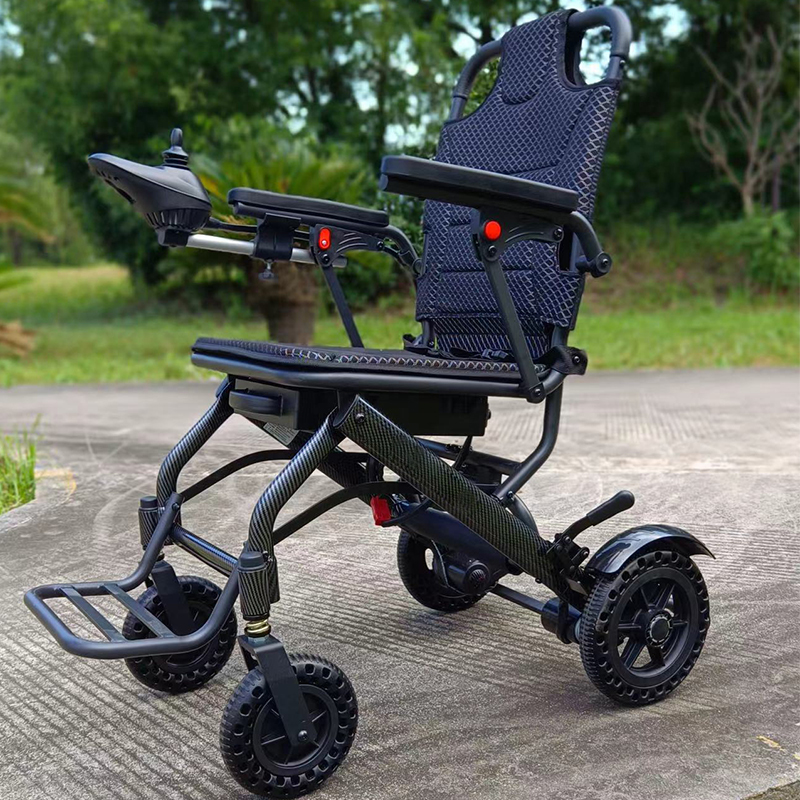
Measure your home before you measure your options. Walk through your tightest doorway with a tape measure. Check the corridor between your bedroom and bathroom. Note the floor space beside your bed. Those numbers will cut half the chairs off any product page — and point you straight toward the ones that will work.
Quick-Reference by User Type
|
User Type |
Primary Concern |
Critical Spec |
Watch Out For |
|---|---|---|---|
|
Standard Adult |
Daily mobility |
Seat width 18 in |
Turning radius ≤ 35 in |
|
Senior |
Stability & posture |
Backrest height 18–20+ in |
Adjustable seat height |
|
Bariatric |
Weight support |
Weight capacity + frame build |
Doorway clearance |
|
Tall |
Leg clearance |
Seat depth 20 in |
Footrest extension range |
|
Travel |
Portability |
Overall width ≤ 23 in |
Fold mechanism quality |
|
Pediatric |
Developmental fit |
Specialist sizing |
Growth accommodation |
Conclusion
The right electric wheelchair isn’t just a mobility device — it’s the difference between a life that feels restricted and one that feels free.
Electric wheelchairs come in a wide range of sizes because the people who use them are diverse. Need to move through tight hallways? A compact model covers that. Supporting a heavier frame? Bariatric power wheelchairs are built for that. Shopping for a growing child? There’s a size for that too. Every situation has a match.
Before you shop, know your measurements. Seat width, seat depth, and weight capacity aren’t just numbers on a spec sheet. They shape your comfort and safety every single day.
So don’t settle for “close enough.” Start with the sizing guidance in this article. Then browse Grace Medy’s electric wheelchair collection to find a chair built around you — not the other way around.
