
Got your new electric wheelchair? Wondering how to charge it right?
Thousands of users share your concern. They worry about damaging expensive batteries or creating safety risks.
Here’s what matters: how you charge impacts your battery’s lifespan. This could save you $500-$2,000 in replacements. Plus, it affects your independence and peace of mind.
You might have lithium-ion batteries. Or maybe sealed lead acid ones. Either way, the right charging steps take just minutes to learn. The payoff lasts for years.
This guide helps you understand those mysterious indicator lights. You’ll learn if overnight charging is safe. We break down each step in simple terms.
We cover everything. You’ll find your charging port. Spot common issues. Fix them fast.
The result? You power your mobility with confidence. Your battery lasts longer. No more guessing about your charging routine.
Basic Charging Steps: A Full Guide for Beginners
Here’s how to charge your electric wheelchair from start to finish.
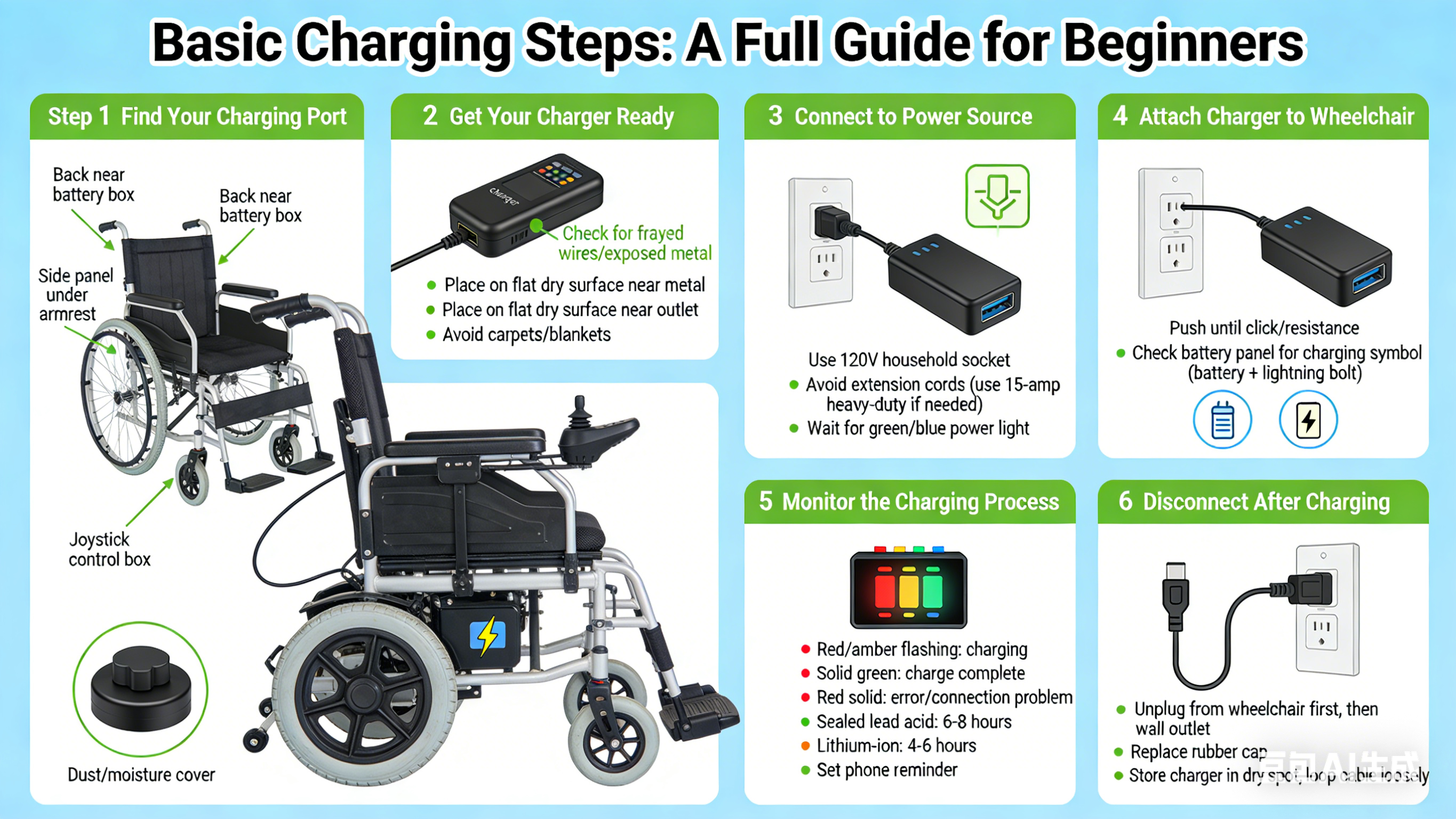
Step 1: Find Your Charging Port
The charging port is in one of three spots. Check the back of the wheelchair first, near the battery box. Some models put it on the side panel under the armrest. A few brands build it into the joystick control box.
Look for a small rubber cap or plastic cover. This keeps dust and moisture out. Flip it open to see the charging socket.
Step 2: Get Your Charger Ready
Your wheelchair has a charger made for your battery type. Never use a different charger, even if it fits the port.
Check the charging cable before each use. Look for frayed wires, exposed metal, or broken plastic. A damaged charger can cause fires and harm your battery.
Put the charger on a flat, dry surface near a wall outlet. Keep it away from carpets, blankets, or anything that blocks air. The charger gets hot and needs good airflow.
Step 3: Connect to Power Source
Plug the charger into a standard wall outlet first. Use a 120V household socket, the same type for lamps or phone chargers.
Skip extension cords if you can. They slow down charging speed. If you need one, pick a heavy-duty cord rated for at least 15 amps.
Wait for the charger’s power light to turn on. Most chargers show a green or blue light. This means the charger works.
Step 4: Attach Charger to Wheelchair
Put the charging cable plug into your wheelchair’s port. Push until you hear a click or feel resistance. The connection should feel tight and secure.
Don’t force the plug if it won’t go in. You might have it upside down. Turn the plug 180 degrees and try again.
Look at the wheelchair’s battery panel. Most models show a charging symbol—a battery icon with a lightning bolt. This means charging has started.
Step 5: Monitor the Charging Process
Your wheelchair’s display shows the battery status. A flashing light means charging is happening. Each brand uses different color codes.
Common indicator patterns:
– Red or amber flashing: charging now
– Solid green: charge complete
– Red solid: charging error or connection problem
Most sealed lead acid batteries take 6-8 hours to charge. Lithium-ion batteries charge faster, in 4-6 hours.
Set a phone reminder if you’re charging during the day. For overnight charging, plug in before bed and unplug in the morning.
Step 6: Disconnect After Charging
Once the light shows a full charge, unplug the charger from the wheelchair first. Then pull it from the wall outlet.
Put the rubber cap back over the charging port. This stops dirt and water from getting in.
Keep the charger in a dry spot. Loop the cable loose—tight coils break internal wires over time.
Your wheelchair is ready to go. A full charge gives you 15-25 miles of travel, based on your model and the ground you cover.
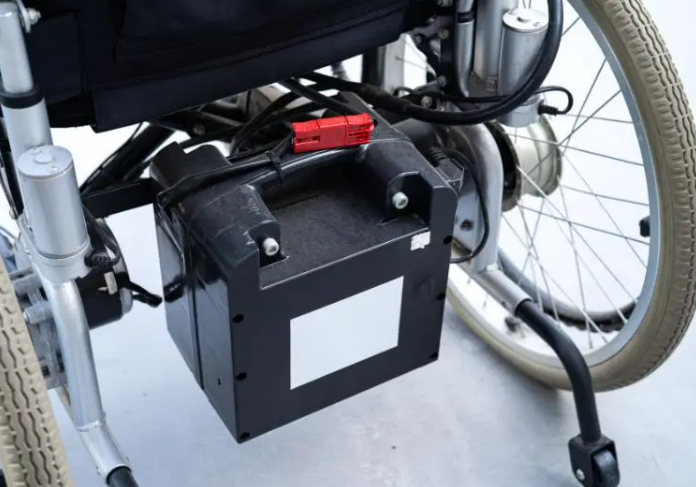
Different Charging Methods by Battery Type
Your battery type controls how charging works inside the pack. Electric wheelchairs run on two main battery types: lithium-ion and sealed lead acid (VRLA). Each type needs its own charging method.
Lithium-Ion Battery Charging
Lithium-ion batteries charge in two phases. The first phase delivers power quickly. It fills the battery to 80-90% capacity. This takes about half the total charging time.

The second phase slows down. The charger switches to a gentle “trickle.” This fills the final 10-20%. It prevents damage to the battery cells. Your charger handles both phases on its own—just plug in and wait.
Modern lithium chargers use a voltage limit of 4.2 volts per cell. The battery hits this limit. Then the charging current drops. The process stops once current falls to 5% of the starting rate.
Some advanced chargers use pulse charging. They send power in short bursts. Rest periods come between each burst. This method cuts charging time by 17% versus standard charging. Plus, it keeps the battery 46% cooler during the charge cycle.
Pulse charging gives you real benefits: After 1,000 charge cycles, batteries maintain 86.6% efficiency. Standard charging drops to 77.5% efficiency over the same period. That’s 100 extra charge cycles before performance loss shows up.
Sealed Lead Acid (VRLA) Charging
Lead acid batteries charge slower than lithium-ion. The charger pushes steady current until voltage hits 2.45 volts per cell. This first stage takes about 86 minutes for most wheelchair batteries.

The final 17% of capacity takes much longer—over 200 minutes in many cases. Lead acid resists the last bit of charging. Your battery also gets warmer during this phase.
Temperature matters with lead acid. Keep the battery below 45°C (113°F) during charging. Higher heat damages the internal plates. It shortens battery life. Touch the battery case after two hours of charging. It should feel warm, not hot.
Never use a lithium charger on lead acid batteries. The voltage settings don’t match. Overcharging creates gas buildup inside sealed cells. This causes permanent damage or battery failure.
Check your wheelchair’s manual to see which battery type you have. Match your charging method to your battery type. This simple step protects your investment and keeps you mobile.
Battery Care Tips to Extend Lifespan and Save Money
Your wheelchair battery loses 2.3% of its capacity each year on average. After eight years, you’re down to 81.6% power. Smart charging habits can slow this decline.
Studies tracked 22,700 electric vehicles. The data shows what protects battery health. Use these findings for your wheelchair. You could extend battery life by 3-5 years.
Keep Charging Sessions Simple and Slow
Fast charging wears batteries down faster. Users who charge overnight with standard chargers see just 1.5% annual loss. Their batteries hold 88% capacity after eight years.
Skip the quick-charge option if your wheelchair has one. Save it for emergencies. Stick with your regular charger for routine use. This one choice cuts battery wear in half compared to frequent fast charging.
Watch Your Battery Percentage Window
Keep your battery between 20% and 80% most of the time. Running below 20% or charging above 80% each day doubles wear rate to 2.0% per year.
Don’t panic if you hit these extremes sometimes. The damage comes from staying at very high or very low charge levels 80% of the time. Mix it up. Charge to 60-70% some days. Run down to 30% before plugging in other days.
Your battery management system gives you some protection. Modern wheelchairs stop charging before true 100%. They also shut down before true 0%. Still, staying in the middle range adds years to battery life.
Mind the Temperature
Hot weather costs you 0.4% extra battery loss each year. Arizona or Florida batteries age faster than Seattle batteries.
Park your wheelchair in shade during summer. Bring it inside during heat waves. The battery sits just a few inches off hot pavement. That heat soaks in.
Cold slows battery chemistry too. Charge indoors during winter. A warm battery accepts charge better than a frozen one.
Plan for the First Year
Expect faster capacity loss in your first 18,600 miles of use. The battery chemistry needs time to settle. It’s normal. After this break-in period, loss slows to the steady 1.5-2.3% annual rate.
Most wheelchair batteries keep over 80% capacity after 124,000 miles. That’s 10-20 years of typical use. Some 2015-era batteries still work strong at 18+ years.
Follow these care tips. You’ll hit the high end of that range. Your replacement cost stays in your pocket for years longer.
How to Avoid Overcharging Your Electric Wheelchair
Modern chargers have auto-shutoff tech that stops damage from overcharging. The charger switches to trickle mode once your battery hits 100%. It sends tiny power pulses—just enough to keep the full charge without harming the cells.
Still, leaving your charger plugged in for days creates risks. The connection point can arc. Heat builds up in the charging port. Your battery drains if the charger loses power. It pulls electricity from the battery itself instead of the wall.
Unplug When the Indicator Shows Full
Your wheelchair’s LED panel tells you when charging finishes. Most models show a solid green light. Some display a full battery icon without flashing.
Disconnect the charger right after you see this signal. Don’t wait hours or leave it overnight “just in case.” A full charge means the battery reached 100% capacity. Extra time on the charger adds zero range.
Safe unplugging sequence:
1. Switch off the mains power at the wall outlet
2. Remove the charger plug from your wheelchair port
3. Unplug the charger from the wall socket
4. Replace the rubber cap over the charging port
This order stops electrical arcing. Arcing creates small sparks inside the port. Over time, it damages the metal contacts. It also reduces connection quality.
Set a Maximum Charging Time
Charge for 8-12 hours maximum per session. This works for AGM, GEL, and hybrid batteries. These are the standard types in electric wheelchairs.
Never exceed 14 hours in a 24-hour period. Going past this limit speeds up capacity loss. Your battery loses its ability to hold charge faster than normal aging would cause.
Set a timer on your phone for 10 hours if you start charging at night. Unplug in the morning even if you’re busy. Better to unplug too soon than leave it connected all day.
Handle Extended Storage the Right Way
Planning to store your wheelchair for over 15 days? Disconnect the batteries. This stops the wheelchair’s computer system from draining them while parked.
Batteries stored at low charge levels suffer permanent capacity drops. Sometimes they lose 50% or more. Charge to 100% before disconnecting. Then top up with an 8-hour charge session every week during storage.
Charge lithium-ion batteries once a month. They self-discharge slower than lead acid types. Check your manual to confirm your battery type before using these intervals.
Conclusion
Charging your electric wheelchair isn’t just about plugging in a cable. It protects your investment. It keeps you safe. And it maintains the independence your wheelchair gives you. Follow the proper charging steps we’ve outlined. You can extend your battery life by years. This saves thousands of dollars in replacement costs. Plus, you avoid dangerous charging mistakes.
Three golden rules to remember: Always use the manufacturer-approved charger. Don’t let your battery drain completely before recharging. Never leave your wheelchair charging unattended longer than recommended. Sealed lead acid or lithium batteries? These basics work for both.
Your electric wheelchair is your freedom. Treat its battery with care. Start these wheelchair battery maintenance practices today. You’ll get reliable performance for years. Having charging problems even after following these steps? Contact your wheelchair provider or a certified technician. Your mobility matters too much to risk.
