
Shopping for a manual custom wheelchair? Prices are all over the map. You’ll see figures from under $1,000 to well over $10,000. This leaves most people confused about what to budget. Plus, you’re probably asking: is that premium customization worth the money, or just hype?
The answer isn’t simple. Price depends on several factors. Frame materials make a big difference—aircraft-grade titanium costs more than standard aluminum. Customization depth varies too. Basic sizing is one thing. Full biomechanical seating systems are another. Then there’s insurance. What your plan covers versus what you pay out of pocket changes everything.
First-time buyer mapping out your budget? Thinking about upgrading from a standard model? Dealing with Medicare wheelchair coverage rules? The choice you make now affects your next 5-10 years. Mobility, comfort, and independence all depend on this investment. Here’s what you need to know to decide with confidence.
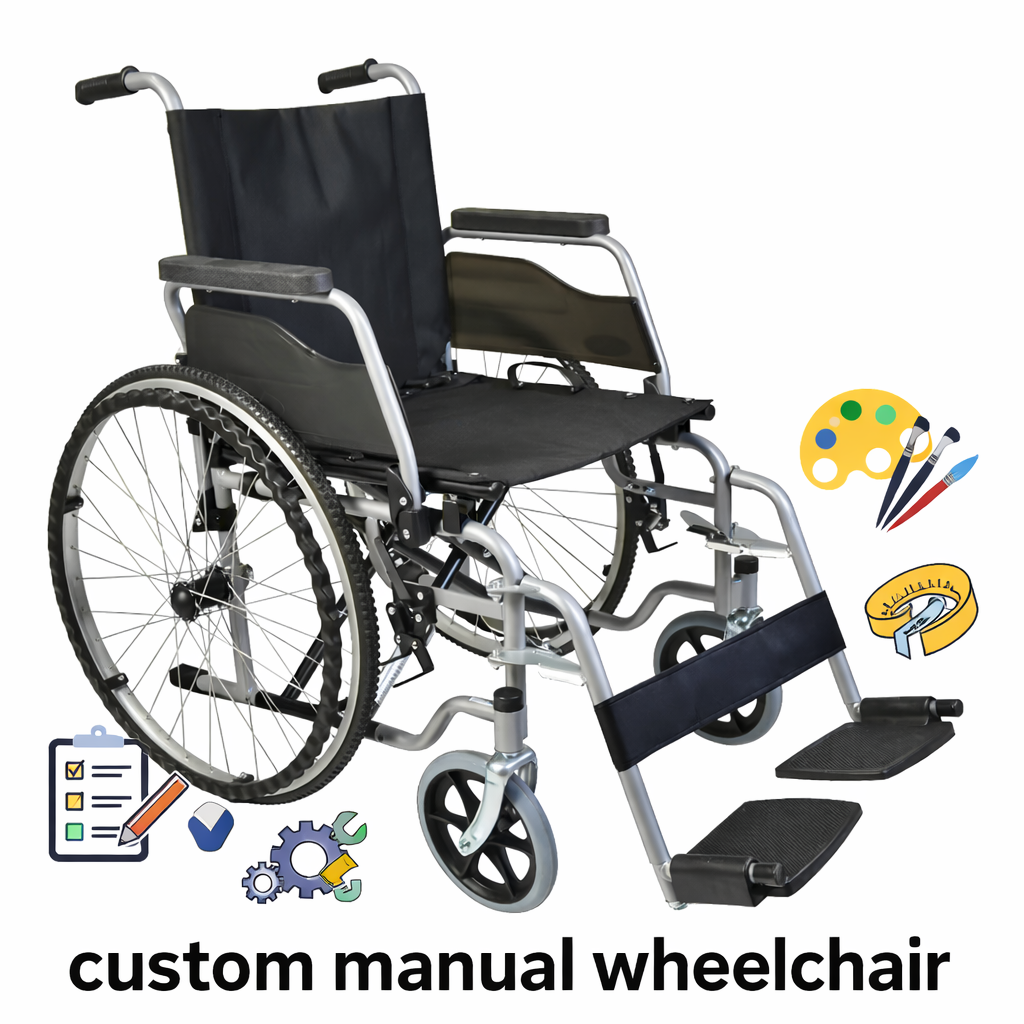
Manual Custom Wheelchair Price Ranges
Custom manual wheelchairs range from $1,000 to over $15,000. Why so wide? Customization varies from simple tweaks to full biomechanical design.
Entry-Level Custom Options: $1,000–$2,000
This tier gives you real personalization without high costs. Everyday-use manual wheelchairs with custom features often include:
Custom seat dimensions matched to your body
Specialized wheels or casters for your environment
Lightweight frame materials (standard aluminum alloys)
Basic color and upholstery choices
Restraint pins or positioning accessories
These models suit users who need specific measurements. You won’t get advanced pressure management or tilt systems here. Think “semi-custom”—you pick from proven options instead of building from scratch.
Mid-Range Custom Solutions: $2,000–$5,000
This bracket delivers strong customization. Advanced manual wheelchairs with specialized modifications might feature:
Seating systems built for your posture and pressure needs
Tilt-in-space or reclining options for position changes
Power-assisted wheels that cut arm strain on long trips
Medical-grade cushioning for all-day comfort
Adjustable parts that change as your needs shift
Many users find this range balances function and cost best. The customization handles tough mobility needs without premium pricing.
Premium Ultra-Light Models: $5,000–$15,000+
Top-tier custom wheelchairs use special materials and exact engineering. Carbon fiber frames and aircraft-grade aluminum drop weight below 10 pounds. This matters for users who self-propel long distances or transfer often. These models cost 25–40% more than standard custom chairs.
The investment pays off over years of use. You save energy every day. A lighter chair means less fatigue. You get fewer strain injuries. Plus, you gain more independence.
Cost Context Worth Knowing
Manual customs cost 60–80% less than powered wheelchairs. This makes them practical for most scenarios. Standard non-custom manuals run $100–$1,500 for comparison. But they lack the fit precision that stops long-term health problems.
The global manual wheelchair market hit $960 million in 2024. It projects to $1.34 billion by 2034. This shows demand for quality manual options keeps growing. Power chairs advance, but manuals stay strong.
What Drives Custom Wheelchair Cost
Several factors determine what you’ll pay for a custom manual wheelchair. Know these factors and you can spot where money goes. You can also adjust your budget without losing key features.
Frame Material Selection
Material choice affects both price and how you use the chair each day. Here’s the breakdown:
Steel frames cost the least but add weight. They’re durable and work fine for occasional use. Most basic models use steel construction. You’ll save money upfront. But you carry extra pounds every day.
Aluminum frames hit the middle ground. They weigh less than steel. They resist rust better too. Standard aluminum alloys work for most users. Aircraft-grade aluminum costs more. It drops weight further though. This material is popular in the mid-range custom market.
Carbon fiber and titanium are premium options. Carbon fiber frames can weigh under 10 pounds total. Titanium offers similar weight savings. Plus, it resists impact better. These materials add $2,000–$5,000 to your wheelchair cost. Athletes and full-time users often choose them. Less weight means less fatigue. Transfers get easier too.
Customization Depth and Complexity
Basic customization starts around $200 per change. This covers simple adjustments like custom seat width or custom armrest height. Add multiple features and costs climb fast.
Seating systems designed for your body add $500–$2,000. These systems map your pressure points. They figure out your support needs. They include custom cushions with gel or air cells. Good seating prevents pressure sores. Those sores cost thousands to treat later.
Tilt-in-space mechanisms let you shift position without moving your body. This feature costs $1,500–$3,000 extra. People who sit for long periods need this function. It keeps circulation going. It also lowers pressure ulcer risk.
Reclining backrests add similar costs. They work in a different way than tilt systems. Reclining changes your seat angle. Tilt moves your whole seated position. Some users need both functions.
Component Quality and Brand
Not all wheelchair parts perform the same. Component quality separates budget customs from premium builds.
Wheel and caster systems range from $150 to $800. Basic wheels work on smooth surfaces. High-performance wheels have sealed bearings. They roll easier. They last longer. They matter if you push yourself around each day.
Braking systems cost $50–$200 depending on type. Standard push-to-lock brakes come cheap. Ergonomic levers or attendant brakes cost more. Some users need both wheel locks and anti-tip devices for safety.
Cushion technology spans $100–$500. Foam cushions cost least but compress over time. Gel cushions spread pressure better. Air-filled cushions offer the best pressure control but need care. Your skin health depends on this choice.
Manufacturing and Assembly Methods
Made-to-order construction raises costs a lot. Custom builders take your measurements. They build one chair just for you. This takes skilled labor. It takes special tools too. You pay for precision that off-the-shelf models can’t match.
Standard production runs hundreds of identical chairs. Costs spread across volume. Custom builds make one unique chair. All setup costs hit your single unit.
Shipping and handling add $100–$300 for custom orders. Heavy-duty packaging protects your chair during transport. White-glove delivery and setup cost extra. But they ensure correct setup.
Design Features That Increase Price
Standing functions change manual wheelchairs in a big way. They add $3,000–$6,000 to base prices. Standing features need reinforced frames. They need locking parts too. Users gain health benefits from standing each day.
Elevating leg rests cost $200–$600 per pair. They support circulation. They reduce swelling. People after surgery often need this feature for a while.
Bariatric reinforcement supports higher weight capacities. Chairs rated for 300+ pounds need stronger frames. They need tougher components. This adds $500–$2,500 depending on capacity needs. Frame widths increase too.
Technology Integration Costs
Modern manual wheelchairs accept power-assist attachments. These devices add electric motors to manual frames. The wheelchair stays manual. But you get battery help on hills or long distances.
Power-assist wheels range from $2,000–$6,000 per pair. They change manual operation. You don’t need full power chair conversion. Battery packs add another $125–$300. Charging systems come included.
Smart sensors and tracking appear in premium models. GPS tracking costs $150–$400. Usage monitors help you find better seating positions. They track activity levels. Some insurance plans cover these features for clinical checks.
Specialized Use Cases
Sports and athletics demand specific designs. Racing chairs use different shapes than chairs for regular use. Basketball chairs need tight turning. They need stability. These special frames cost $2,000–$8,000 depending on sport needs.
Pediatric customization needs growth adjustment systems. Kids’ chairs need parts that expand as they grow. This flexibility adds $1,000–$3,000. But it extends how long you can use the chair. You don’t need to replace the whole chair. Just adjust it.
All-terrain builds handle outdoor spaces. Larger wheels, reinforced frames, and suspension systems cost $1,500–$5,000 extra. Beach wheels or snow attachments add more. Active users often buy multiple wheel sets for different places.
Standard vs Custom Manual Wheelchair: Cost-Benefit Analysis
Standard manual wheelchairs give you basic mobility for hundreds of dollars. Custom models cost thousands. They solve specific medical problems. This price gap creates real confusion. Which one makes sense for you?
Your usage pattern changes the math. Standard models work great for short-term recovery or occasional transport. Custom builds shine if you sit in your wheelchair 6+ hours each day. Let’s break down the real costs and returns.
Usage Scenarios That Favor Each Option
Choose standard:
– Recovery from surgery lasting under 6 months
– Occasional transport for someone who mostly walks
– Backup wheelchair for travel or emergencies
– Budget constraints make custom impossible right now
– Living space needs frequent folding and storage
Choose custom:
– Using wheelchair 4+ hours each day
– Medical conditions need specific positioning
– Active lifestyle needs efficient propulsion
– Previous wheelchairs caused pain or pressure issues
– Long-term use expected (2+ years)
Weight Capacity Considerations
Both types handle up to 300 pounds in bariatric configurations. Standard bariatric chairs cost $600–$900. Custom bariatric builds run $2,000–$7,000. The custom version spreads weight better. It reduces frame stress. It protects joints from too much wear.
Smaller users face different math. Standard chairs come in limited sizes. A 90-pound person uses the same frame as a 180-pound person. Custom builds match frame strength to actual load. You don’t carry extra material. Every ounce removed from the chair reduces push effort.
Return on Investment Reality
Calculate your return this way: Comfort each day × days of use × years of service. Standard chairs optimize purchase price. Custom chairs optimize the experience each day.
You’ll use your wheelchair for thousands of hours. Small efficiency gains add up. Better positioning prevents $15,000 pressure sore treatments. Reduced shoulder strain avoids $8,000 rotator cuff repairs. Proper support delays $30,000 spine surgeries.
The custom wheelchair costs more today. It may save more tomorrow. Your specific medical risks determine which math works better.
Get the Best Value When Buying a Custom Wheelchair
Buying a custom manual wheelchair? You must balance cost and function. A poor fit brings an 18% injury risk. So, use four strategies to get the most value: correct measurements, hard testing, smart funding, and picking the right features.
1. Measure Right
Accurate numbers stop expensive remakes and health issues. You need these key dimensions:
-
Thigh length (leave a two-finger gap).
-
Seat-to-footplate height (keep thighs level).
-
Seat-to-armpit height (support your trunk).
Wrong numbers cause skin breakdown and stop you from moving well. Get this foundation right.
2. Test Before You Buy
Over 33% of manual power-assist users are unhappy with their purchase. Don’t be one of them. Rent a demo unit for 1-2 weeks. Check if the chair rolls smooth and supports your back during long sessions. A small demo fee ($50–$150) costs way less than buying the wrong chair that hurts your routine.
3. Handle Funding Smartly
Insurance often rejects claims or takes forever. Start your application 3-6 months ahead. Have a backup plan ready. Or, just pay cash. A mid-range custom chair ($2,000–$3,000) might be easier to get than waiting months on insurance paperwork. Often, cash speed beats coverage hassle.
4. Focus on Features and Real Costs
Spend your budget on “must-haves” that stop medical problems. Think pressure-relief seating and lightweight frames, not just cosmetic upgrades. Also, look past the sticker price. Count ongoing upkeep costs—like tires and cushions. A custom build costs more now but stops expensive injuries like pressure sores. This provides better long-term value.
Conclusion
Buying a manual custom wheelchair isn’t just about upfront cost. You need to balance your medical needs, lifestyle, and budget.
Looking at an entry-level custom chair around $1,500? Or maybe a premium titanium frame over $10,000? Understanding wheelchair pricing factors and wheelchair customization features helps you make decisions that support your health and independence.
Overspending on features you don’t need? Or skipping critical customization? Proper assessment and professional guidance make the difference.
Ready to explore your options? Schedule a professional wheelchair fitting with our team at GraceMedy. You get a wheelchair that fits your body and your budget. Mobility shouldn’t require compromise.
