
Is a Full Electric Hospital Bed Covered by Medicare?
Medicare Part B does not cover full electric hospital beds under its standard durable medical equipment (DME) benefit. Many people assume all hospital beds qualify for coverage if they’re needed for medical reasons. That’s not how it works.
Medicare classifies bed features in specific ways. Semi-electric hospital beds? Covered as necessary equipment. Full electric beds? Not covered. The key difference is motorized height adjustment. Medicare doesn’t consider this feature necessary.
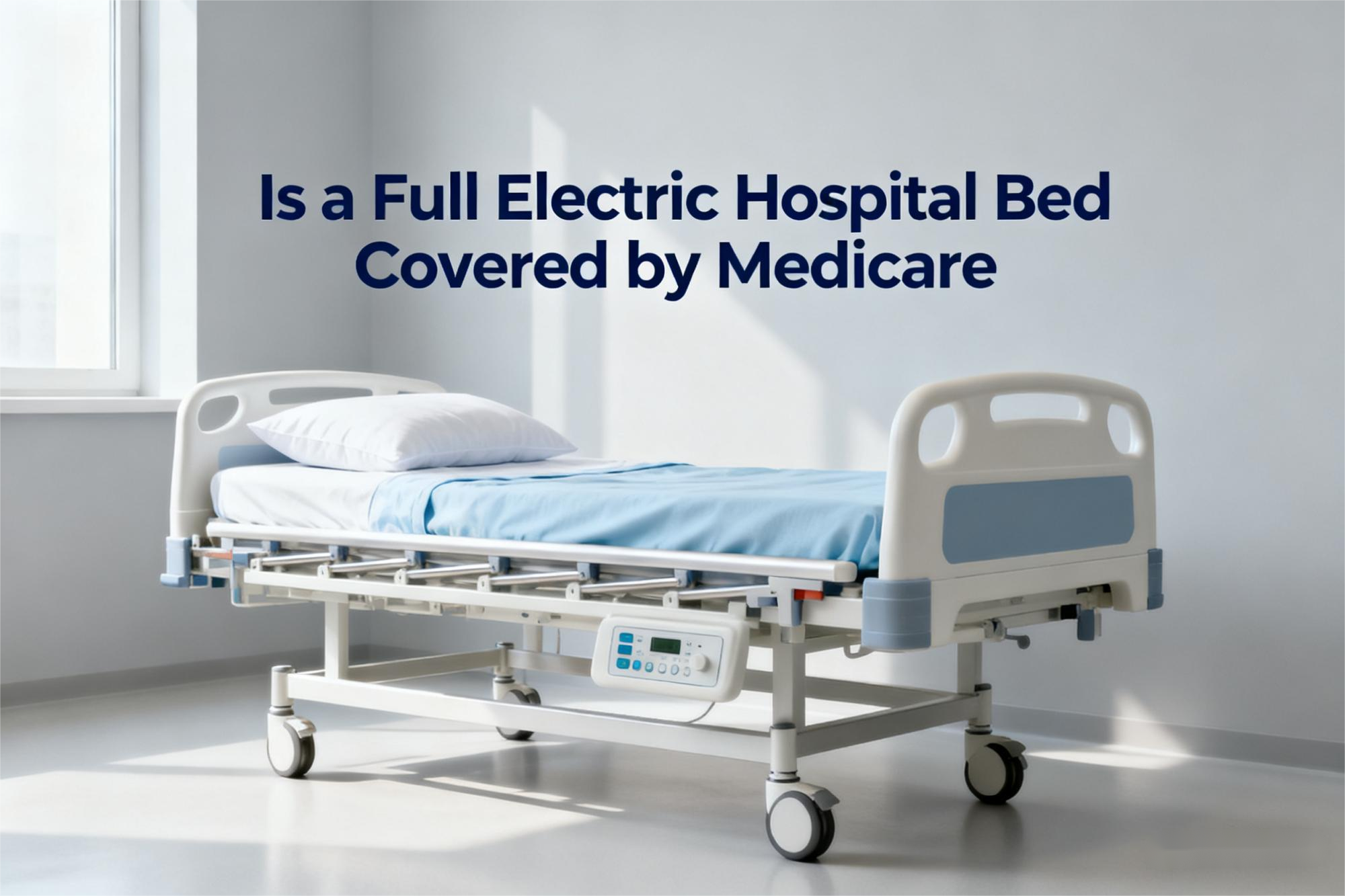
Why Medicare Excludes Full Electric Hospital Beds
Medicare bases hospital bed coverage on medical necessity, not comfort. The agency separates essential therapeutic functions from comfort features.
Covered features (found in semi-electric beds):
– Motorized head elevation
– Motorized foot elevation
– Manual height adjustment via hand crank
Non-covered feature (exclusive to full electric beds):
– Electric height adjustment controlled by remote or button
Medicare sees motorized height control as a convenience upgrade. It’s not considered a medical requirement. Their coverage guidelines state that semi-electric beds provide the same therapeutic positioning. Caregivers can adjust bed height using a crank mechanism.
Under What Conditions Might Medicare Cover a Full Electric Hospital Bed?
Medicare’s general exclusion of full electric hospital beds isn’t absolute. Specific medical situations can override the standard coverage limits. The key factor? Documented medical necessity that goes beyond typical needs.
Getting potential coverage means meeting strict clinical criteria. Medicare reviews each case on its own. They examine your medical condition, treatment needs, and why standard equipment won’t work.
Medical Documentation Your Doctor Must Provide
Strong physician documentation makes the difference between approval and denial. Your doctor’s prescription order must go far beyond a simple equipment request.
Required elements in the medical order:
Specific diagnosis that creates the medical need
Clear explanation of why a full electric bed is a medical necessity
Detailed reason showing why semi-electric or manual beds won’t work
Treatment goals the full electric bed will help achieve
Risk assessment documenting potential harm from using lower-tier equipment
Generic statements won’t pass Medicare’s review. Your physician needs to build a clinical case. They must show that motorized height adjustment is a medical requirement, not a convenience preference. This means connecting your condition to the need for electric height control.
Specific Conditions That May Qualify for Coverage
Certain medical situations create stronger reasons for full electric bed approval. Medicare recognizes these scenarios where standard beds present genuine medical risks.
Hi-low beds with full electric height adjustment may get coverage approval for patients with severe cardiac conditions or advanced lung disease. Why? These patients need specific bed positioning. Caregivers must adjust it often throughout the day. Manual cranking creates dangerous delays in emergencies. The electric height function allows fast position changes during breathing problems or cardiac events.
Bariatric full electric beds represent another exception category. Standard hospital beds—even semi-electric models—have weight capacity limits around 350 to 450 pounds. Patients exceeding these limits face serious safety risks. Medicare may approve bariatric full electric beds under these conditions:
Patient weight exceeds standard bed capacity
Medical records document the specific weight-related safety concern
A bariatric semi-electric option isn’t available or appropriate
Additional qualifying scenarios include conditions where:
Rapid bed height changes are needed for treatment protocols
Caregiver limits prevent safe manual height adjustment
Patient needs frequent transfers that demand precise height positioning
Medical issues make delays in bed adjustment dangerous
The coverage threshold stays high. You’ll need full medical documentation showing why the full electric feature addresses a specific medical risk rather than general convenience. Work with your healthcare provider to build this clinical case before submitting your DME request.
How Much Does Medicare Pay for Covered Hospital Beds?
Medicare Part B pays 80% of the Medicare-approved amount for covered hospital beds. This kicks in once you’ve met your annual deductible. You cover the remaining 20% coinsurance. That’s how Medicare handles durable medical equipment costs.
The 2025 Medicare Part B deductible is $257. Pay this amount first. Then Medicare coverage starts. After you meet this deductible for the year, the 80/20 split applies. This covers all your Part B services, including hospital beds.

Your Out-of-Pocket Costs
You’ll pay different amounts based on one choice: buy or rent the hospital bed. Both options use the same 80/20 coverage rule. But the total costs vary quite a bit.
Purchase scenario example:
A semi-electric hospital bed costs $1,000 from a Medicare-approved supplier. You meet your deductible first. Medicare pays $800. You pay $200 out of pocket. The bed is yours right away.
Rental scenario example:
The same bed rents for $300 per month. Medicare covers $240 each month. You pay $60 per month. Here’s a detail many people miss: after 13 months of continuous rental payments, ownership transfers to you. You’ve bought the bed through monthly payments.
Compare these options with care. A 13-month rental totals $3,900 ($300 × 13 months). Your portion equals $780 ($60 × 13 months). Buying the same bed outright costs you just $200 after Medicare’s contribution. Renting makes sense for short-term needs under one year. Buying beats renting for long-term or permanent needs.
Hospital Bed Types That Qualify
Medicare uses the 80/20 payment structure for these approved bed types:
Manual hospital beds with hand-crank adjustments
Semi-electric beds with motorized head and foot positioning
Extra-wide hospital beds with medical necessity
Bariatric beds with proper medical documentation
Full electric beds don’t qualify for any Medicare payment under standard coverage rules. The cost breakdown applies to Medicare-approved equipment types.
Covered Accessories and Add-ons
Medicare gives the same 80/20 coverage to necessary bed accessories. Approved items include:
Air-fluidized mattresses for severe pressure ulcers
Gel pressure mattress pads
Sheepskin or lambswool pads for skin protection
Trapeze pull bars for patient mobility
Bedside rails for safety
Each accessory needs separate medical documentation. Your doctor must show why each item addresses a specific medical need. Standard comfort items won’t qualify.
Reducing Your 20% Coinsurance
Several insurance options can lower or eliminate your 20% patient responsibility:
Medicare Advantage plans often include lower coinsurance rates for DME. Some plans cut your share to 10%. Others provide fixed copayments instead of percentage-based costs. Check your specific plan’s coverage schedule.
Medigap supplemental insurance fills coverage gaps in Original Medicare. Medigap Plan F and Plan G cover the 20% coinsurance in full. You pay just your Medigap premium each month. These plans cut your hospital bed cost to zero after meeting the Part B deductible.
Medicaid dual eligibility wipes out both the deductible and coinsurance for qualifying low-income beneficiaries. State Medicaid programs cover what Medicare doesn’t pay.
Budget for the full cost range. Home hospital beds span $500 to $10,000 based on features and size. Semi-electric beds usually fall in the $800 to $2,500 range. Bariatric models cost more, often reaching $3,000 to $7,000. Your 20% coinsurance scales with the total approved amount. Higher-cost beds mean higher out-of-pocket expenses even with Medicare coverage.
Other Ways to Get Help with Costs
Many programs help cut hospital bed costs beyond standard Medicare Part B. These programs cover different parts—from the 20% you pay to the cost gap for full electric beds.
Medicare Supplement Insurance (Medigap)
Medigap fills the gaps in Original Medicare. Plans F and G cover your full 20% share for Part B medical equipment. After you meet your yearly deductible, you pay nothing for this part.
This works for the Medicare-approved semi-electric bed rate. Your Medigap plan pays the $160 to $300 share. The full electric upgrade difference? You still pay that. But removing your share cuts your total costs a lot.
Medigap Plan N covers your share with one catch—up to $20 copay for some Part B services. Check your plan papers to confirm DME coverage details.
Medicare Advantage Plan Benefits
Medicare Advantage plans take the place of Original Medicare. Many MA plans cut DME cost-sharing below the standard 20%. Some plans offer:
Set copays instead of percentage shares ($50 to $150 flat fees)
Lower share rates (10% to 15% instead of 20%)
Better DME coverage with features Medicare doesn’t cover
A few Medicare Advantage plans cover full electric hospital beds at higher rates than semi-electric ones. Review your plan’s Evidence of Coverage document. Call your plan to confirm hospital bed coverage levels before ordering equipment.
Medicaid Dual Eligible Programs
Low-income Medicare users who qualify for Medicaid get full coverage through dual programs. State Medicaid covers:
Medicare Part B deductible
The 20% share
Parts of equipment upgrades in some states
Medicaid rules differ by state. Some states cover full electric beds for medical needs. Others limit coverage to Medicare-approved equipment. Call your state Medicaid office to verify hospital bed benefits.
Covered Accessories That Add Value
Medicare approves several hospital bed accessories under separate coverage. Each item gets the same 80/20 payment split for medical needs:
Trapeze bars for patient moving and transfers
Pressure-reducing mattress overlays to stop bedsores
Safety rails for fall prevention
Your doctor must show medical need for each item. These items don’t raise your hospital bed share. They bill apart from the bed. Using covered accessories can boost bed function without paying upgrade costs.
