
How To Choose A Manual Wheelchair?
Picking the right manual wheelchair can feel tough. You face dozens of models, conflicting advice, and specs you’ve never seen before. This choice affects your independence, comfort, and quality of life each day. It’s one of the most important buys you’ll make.
This guide shows you how to choose a manual wheelchair that matches your body, lifestyle, and future goals. You’ll find the key factors most people miss. Learn which features matter for your situation. Get the confidence to make a smart choice that works for years.
Assess Your Physical Needs and Mobility Level
Your physical abilities decide which wheelchair features work best for you. Check three key areas: upper body strength, balance control, and hand coordination. These shape wheel size and frame design.
Self-propulsion ability differs a lot between users. Some people push for hours without getting tired. Others get worn out after short trips. Some need full caregiver help. Be honest about your stamina. Can you push yourself through a grocery store? Through a whole workday? Or just down short hallways at home? Your answer decides the wheelchair’s weight and wheel setup.
Upper body strength affects how well you push. Strong shoulders and arms work great with bigger 24-inch wheels. These larger wheels go farther with each push. Weaker arms do better with smaller wheels or power-assist add-ons. Test different wheel sizes if you can. The right fit cuts down shoulder strain. It also stops repetitive stress injuries.
Balance and back support needs count just as much. Got good core stability? You might need only basic back support. Weak trunk control means you need higher backrests, side supports, or custom cushioning. Poor coordination makes it harder to steer through tight spots. It also affects speed control on hills. Try anti-tip bars if balance worries you while learning.
Track how your abilities shift during the day. Morning strength differs from evening tiredness. Pick a wheelchair that fits your lowest energy level, not just your best moments.
Determine the Primary Usage Environment
Where you spend most of your time shapes which wheelchair works for you. Indoor spaces need different features than outdoor terrain. Getting this match right prevents frustration.

Tight indoor spaces need compact wheelchairs. Narrow doorways, small bathrooms, and crowded kitchens require frames under 25 inches wide. Look for a turning radius of 30 inches or less. Standard wheelchairs turn in 32-36 inches. That extra space blocks many hallways and rooms. Removable armrests help you slide closer to tables and desks.
Outdoor use calls for durability and stability. Sidewalk cracks, gravel paths, and uneven grass need larger front casters. Get 8-inch casters instead of 5-inch ones. Pneumatic tires absorb shock better than solid rubber. They roll smoother over rough ground. Anti-tip wheels prevent backward falls on slopes.
Most people need mixed-use designs. You’ll go from carpet to concrete several times each day. Quick-release wheels make car transfers easier. Adjustable footrests handle different terrains. Test the wheelchair on surfaces you’ll face often before buying. What works in a showroom might fail on your home’s thick carpet. It might also struggle on a bumpy driveway.
Choose the Right Wheelchair Type for Your Lifestyle
Manual wheelchairs come in three main types. Each fits different needs and routines. Standard, lightweight, and transport models give you different levels of control over your movement.
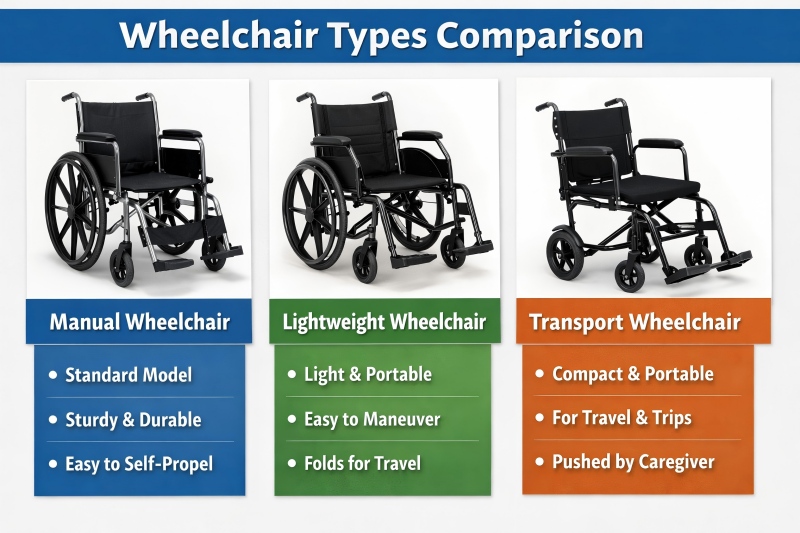
Standard manual wheelchairs work well for everyday use. These weigh 35-50 pounds. Steel frames last for years. You get fixed armrests, basic footrests, and 24-inch rear wheels you can push yourself. They’re great for part-time users recovering from surgery or handling short-term injuries. The extra weight keeps them stable on flat ground. They fold up for simple storage. Insurance covers these models with little hassle. You’ll pay $150-$400 out of pocket after coverage. The catch? That weight tires you out on long trips. Getting them in and out of cars gets tough. Slopes and rough ground become a real challenge.
Lightweight wheelchairs change the game for active users and people who travel often. Aluminum or titanium frames bring the weight down to 15-30 pounds. Strength stays the same. Quick-release wheels come off in seconds for car storage. You can adjust seat height, backrest angle, and footrest position as things change. You’ll go farther with less strain on your shoulders. These shine on planes, shopping trips, and long work days. They cost more at first—usually $800-$3,000. But they stop injuries from lifting every day. Sports fans and working people love this type.
Transport wheelchairs need someone to push you. Small 8-12 inch rear wheels mean you can’t move yourself. The compact build weighs just 15-25 pounds. It fits through tight spaces with ease. You save money with prices around $100-$300. Pick this type if someone helps you all the time. You’ll depend on others for every move.
Pick Frame Material: Strength vs. Weight
Frame material decides how much energy you use pushing and lifting each day. Steel and aluminum alloy are your two main choices. Each one offers different gains in strength, weight, and how long it lasts.
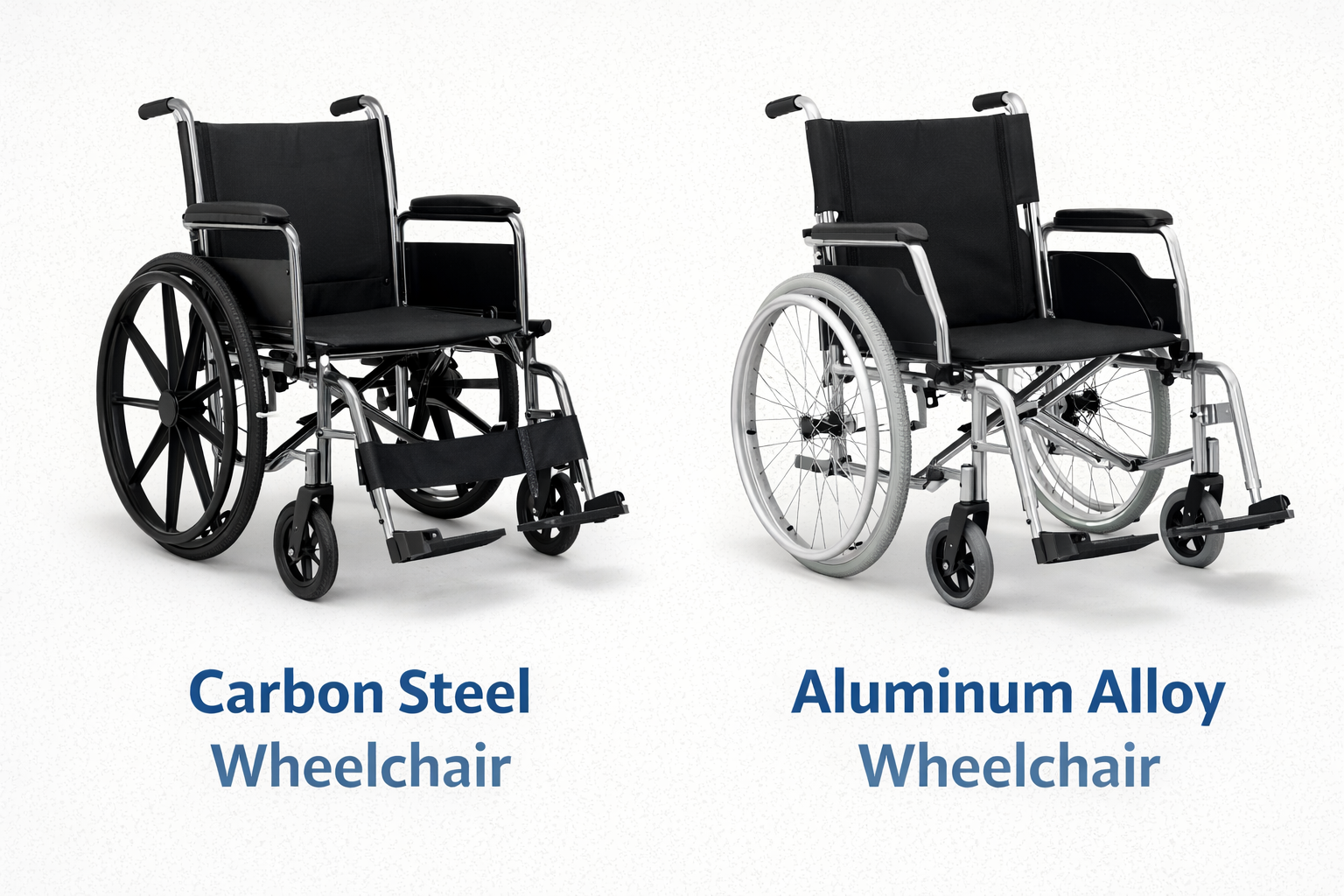
Steel frames give you top durability at the lowest price. These frames take heavy use without bending or cracking. They hold more weight—often 300+ pounds. Here’s the catch: steel wheelchairs weigh 35-50 pounds total. That extra weight puts more strain on your shoulders as you push. Longer trips tire you out faster. Getting a steel frame into your car trunk needs two people. But say budget is your top concern and you’re not self-propelling long distances—steel gives solid value. Repairs cost less. Most local shops carry steel parts.
Aluminum alloy frames weigh 40-60% less than steel. A complete aluminum wheelchair runs 15-30 pounds. You push farther using less effort. Car transfers turn into one-handed moves. After months of use, your shoulders feel the difference. Less weight doesn’t mean it’s weak—aircraft-grade aluminum handles everyday stress well. Active users who self-propel most of the day gain the most. You’ll pay $800-$2,500 more upfront. That extra cost stops the repetitive strain injuries that hit steel frame users within two years.
Evaluate Wheel and Tire Options
Rear wheel size changes how fast you move and how much effort each push takes. Wheels come in three sizes: 20-inch, 24-inch, and 26-inch. The 24-inch wheel is the standard choice for pushing yourself. One push gets you farther. Flat surfaces and gentle slopes become easier. This size works great for all-day use. Smaller 20-inch wheels fit better in cars and tight spaces indoors. You get exact control around furniture and tight corners. You’ll need more pushes to go the same distance. This trade-off works well for people in crowded homes or offices. Some racing chairs use 26-inch wheels. These are built for speed and long rolls.
Tire choice shapes your comfort more than you might think. Solid rubber tires never go flat. No upkeep needed. They last 2-3 years with regular use. The downside? Every bump hits your body hard. Your arms feel every crack in the pavement. Air-filled tires work like car tires. They absorb shocks and smooth out rough spots. Gravel, cobblestone, and door bumps feel gentler. You’ll fix or swap them every 6-12 months based on where you roll. Check the air pressure each week. Active outdoor users choose air-filled tires for extra comfort. People who stay indoors save time with solid tires.
Check Weight Capacity and Bariatric Needs
Weight capacity ratings protect you from frame failure and injury. Standard manual wheelchairs hold 100-120 kg (220-265 pounds). This limit includes your body weight plus everything you carry—bags, medical equipment, or shopping. Go over the rated capacity? The frame bends over time. Wheels move out of line. Welds crack. The chair becomes unsafe within months instead of lasting years.
Bariatric wheelchairs solve weight concerns for larger users. These models support 160-230 kg (350-500 pounds). Strong steel frames handle the extra load. Seat widths range from 20-30 inches instead of the standard 16-18 inches. Heavy-duty axles and double cross-braces add stability. Wider frames need more space for turning. Check your doorways before ordering. Most bariatric models cost $600-$1,500 more than standard chairs. This investment stops collapse and gives you confidence in regular use.
Always pick a wheelchair rated 10-15 kg above your actual weight. This safety margin covers weight changes and gear you’ll carry. Your body stays safe. The frame lasts longer.
Pick Comfort and Pressure Relief Features
Sitting for hours without proper cushioning damages your skin and soft tissue. Pressure sores develop in just 2-3 hours once blood flow gets blocked. These wounds take months to heal. The right seat cushion and back support prevent this.
Foam cushions give basic pressure relief for $30-$100. High-density foam holds its shape for 1-2 years. Memory foam molds to your body but traps heat during summer months. Gel cushions spread pressure across a wider area. They cost $150-$300 and stay cool against your skin. Air-filled cushions let you adjust firmness by adding or releasing air. You customize the support based on weight changes or comfort needs. These run $200-$500 but need pressure checks each week.
Cover fabrics that breathe prevent moisture buildup and skin irritation. Mesh materials allow airflow between you and the cushion. Your skin stays drier during long sitting periods. Waterproof covers protect the cushion but block airflow. Pick covers you can remove and wash each week.
Backrest support shapes how your spine aligns during the day. Backrests with adjustable tension let you lean back without tipping. Fixed backrests keep your torso upright. This gives better arm movement while pushing. Higher backrests support weak core muscles. Lower backrests give active users more freedom to twist and reach. Lumbar support pads fill the curve in your lower back. This stops slouching that causes pain after hours of sitting.
Test cushions for 20-30 minutes before buying. Your pressure points tell you what works.
Think About Moving and Storing Your Wheelchair
Folding ability matters. It decides if a wheelchair fits your life or not. Foldable frames collapse to half their width in seconds. A 24-inch wide chair folds down to 10-12 inches. This compact size fits in car trunks, closets, and tight storage spots. Rigid frames stay at full width. They don’t fold. You get lighter weight and smoother pushing. The downside? You need more storage room and a bigger vehicle.
Measure three spaces before buying: your car trunk (depth and width), home storage areas, and the narrowest doorway you use each day. Standard car trunks hold folded wheelchairs that are 30-36 inches long. Compact cars need chairs under 28 inches when folded. Write these numbers down. Take them with you when you shop.
Quick-release wheels make storage even smaller. Pop off both rear wheels without tools. The frame gets 8-10 inches narrower. You can pack it down in under 30 seconds after some practice. Airplane travelers love this feature. So do people in small apartments. Each separated piece weighs less, making lifting easier.
Weight matters most if you’re alone. Lifting 35-50 pounds into a trunk hurts your back. Lightweight aluminum models weigh 18-25 pounds. You can move them with one hand. Count how many times you load and unload each day. That number tells you which weight range keeps you safe from injury.
Check Adjustability for Long-Term Use
Your body changes over time. An adjustable wheelchair adapts with you instead of becoming useless. Seat width adjustments handle weight changes of 10-15 pounds. You won’t need to buy a new frame. Just loosen four bolts and slide the seat panels to widen or narrow the fit. This feature helps teenagers who are still growing. It also helps adults managing health conditions that affect body size.
Armrest height and angle adjustments prevent shoulder and neck pain. Fixed armrests lock your body into one position all day. Adjustable models let you raise them 2-4 inches for desk work. Then lower them for pushing. Flip-back or removable armrests make side transfers easier. Your mobility skills improve over months of use, and these armrests adapt with you.
Footrest flexibility keeps your legs supported right as your posture shifts. Swing-away footrests move out of the way for standing transfers. Height adjustments match leg length changes. These happen from surgery recovery or muscle changes. Angle settings stop feet from sliding off during the day.
Wheelchairs with these adjustable features cost $200-$500 more upfront. But they last 5-7 years instead of 2-3 years. You skip the expense of replacing the entire chair. Just one measurement changes, and you adjust instead of buying new.
Conclusion
Your wheelchair choice shapes how you move through the world every single day. Frame material matters. Wheel size matters. Cushioning and how you can adjust the chair—these details support your independence. Rush this decision and you’ll deal with shoulder pain, skin damage, or a chair that doesn’t match your routine.
Measure your body before you shop. Measure your home doorways. Measure your vehicle. Test several models on the surfaces you’ll use most. Ask about weight capacity margins. Ask about adjustment options you can use long-term. Check if your insurance covers the features you need, not just basic models.
The right manual wheelchair investment pays off for 5-7 years. You’ll push with less energy. You’ll avoid strain injuries. You can join in work and social activities without limits. Start with your physical needs. Consider your environment. Let those facts guide you to a wheelchair that expands your freedom.
