
How To Import Electric Medical Beds From China Safely
Importing electric medical beds from China seems simple at first. Then the paperwork hits.
You need ISO certifications. FDA clearances. CE markings. Plus, each country has its own rules. These rules change fast—too fast to keep up.
Most importers focus on price and finding a good supplier. That feels like enough.
Here’s the part that surprises everyone: quality management systems matter more than you think. They’re not just boxes to check. They decide if your shipment clears customs or gets stuck in a warehouse. And stuck shipments? They cost you money every day.
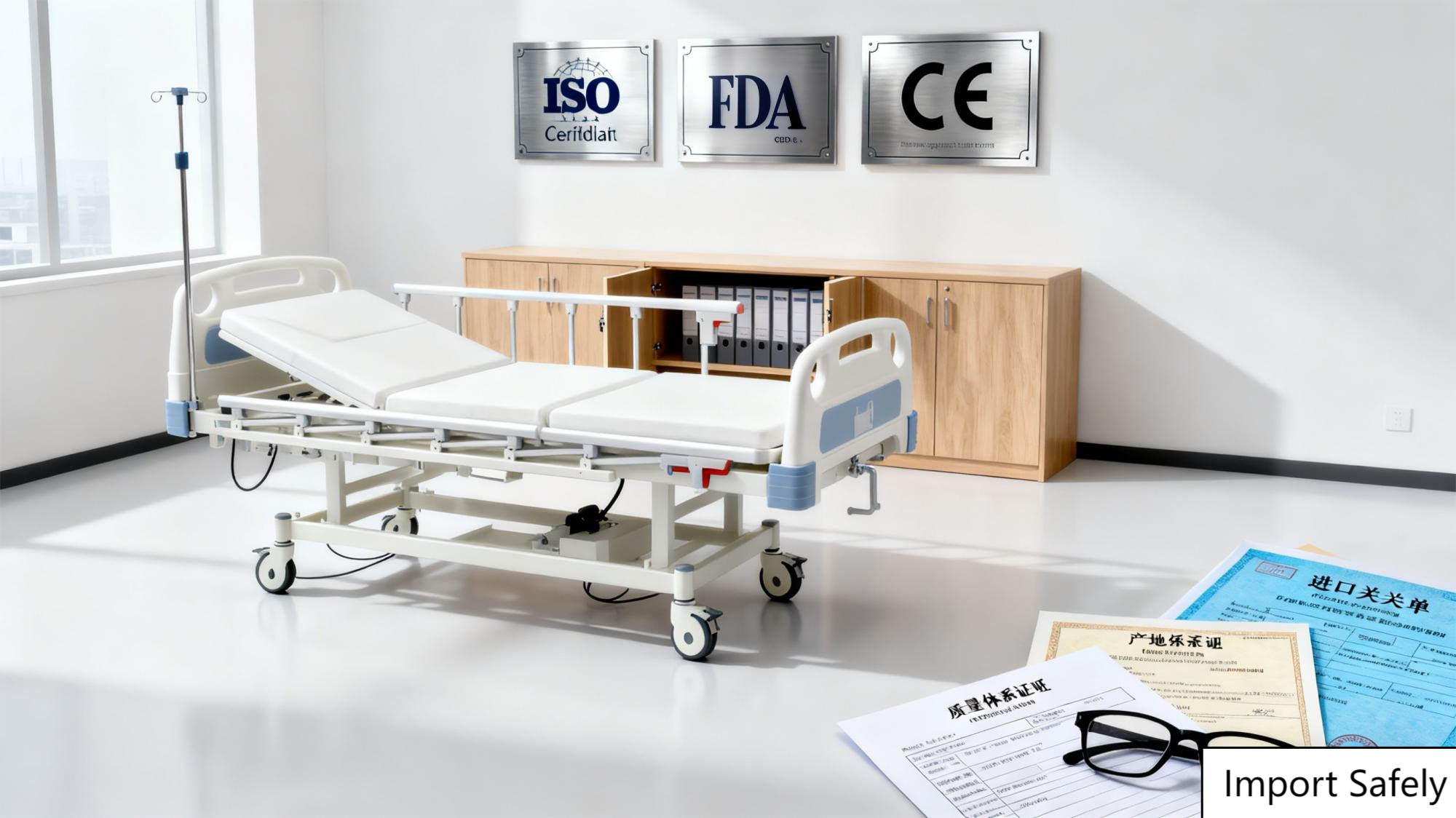
Quality Management System Requirements for Importing Electric Medical Beds
We need to meet both international and Chinese Quality Management System (QMS) requirements to import electric medical beds from China. These requirements matter for product registration, regulatory clearance, and post-market safety checks.
Key QMS Regulations and Compliance
China asks for the global standard ISO 13485:2016. But that’s not all. You also need to follow Good Manufacturing Practice (GMP) for Medical Devices (YY/T 0287-2017).
China GMP goes beyond ISO 13485. It focuses on specific features like electrical safety and sterility for medical beds.
By 2025, all manufacturers, registrants, and import filers must:
Build a QMS specific to their devices.
Certificates and Documentation Checklist
Request and verify these documents from your Chinese supplier:
ISO 13485 certificate or similar QMS documentation.
China Medical Device Registration Certificate.
Global certifications like CE (Europe) and FDA clearance (U.S.) are acceptable. You still need Chinese documentation too.
Regulatory Audits and Practice
Every local Chinese manufacturer must pass on-site QMS audits. This happens before devices get registered and sold.
Overseas manufacturers can use their ISO 13485 certificates. But they still need to meet China GMP requirements. This means doing gap analysis and system upgrades.
Audits typically check these areas: design records, supplier management, process verification, sterility/testing data, traceability, distribution, and complaint handling.
Annual Compliance and Reporting
Annual self-inspection of QMS is required. This applies to Class II and Class III medical device importers.
File inspection reports with local NMPA offices before March 31.
You must maintain quality documentation and keep improving for ongoing compliance.
Major QMS Requirements Table
|
Requirement |
International Standard |
|---|---|
|
QMS Certification |
ISO 13485:2016 |
|
Documentation |
QMS records, certification |
|
Audits |
ISO audits |
|
Additional Certs |
CE, FDA (by market) |
|
Lifecycle Oversight |
Design, production, QA |
|
Reporting |
Audit cycle |
Practical Recommendations
Use trusted third-party auditors (SGS, TÜV) for pre-shipment QMS and product checks.
Make sure product packaging guards against moisture, shock, and contamination.
Put clear quality standards and QMS duties in all supplier contracts. Specify required certificates and after-sales support.
Strong QMS compliance, proper documentation, and local reporting keep your electric medical bed imports safe, legal, and up to date with Chinese regulations.
Production Standards for Electric Medical Beds
China’s electric medical beds follow the national standard GB 9706.1-2020 “Medical Electrical Equipment Part 1: General requirements for basic safety and basic performance.” This applies to all units made from May 1, 2023. It replaces the earlier IEC 60601-1:2012 standard. Skip this rule and face harsh penalties. Fines range from 30% to 300% of revenue. Your certificate gets pulled. Production bans can last up to 10 years.
Core Production Requirements
Raw Materials:
All materials need proper documentation. Recycled or reprocessed ABS plastics are banned. This keeps safety and hygiene standards high.
Size and Ergonomics:
Bed sizes come from real population data. This works for all patient groups.
Manufacturing Process:
Design:
Beds focus on safety, ease of use, and comfort. Each model goes through prototype testing. Real-world tests happen before mass production starts.
Frames:
Cold-rolled steel or top-grade aluminum forms the structure. Three-phase spray finishes coat the frames. This stops corrosion.
Standard Features:
-
Adjustable backrest (0–75°), footrest (0–45°)
-
Detachable head/foot boards
-
Central locking castors
-
4–8 function electronic controller
-
Built-in mattress
-
I.V. pole and drainage hooks
-
LCD display and weighing system
Testing:
Every bed passes load tests and electrical safety checks. Full inspections verify GB 9706.1 compliance.
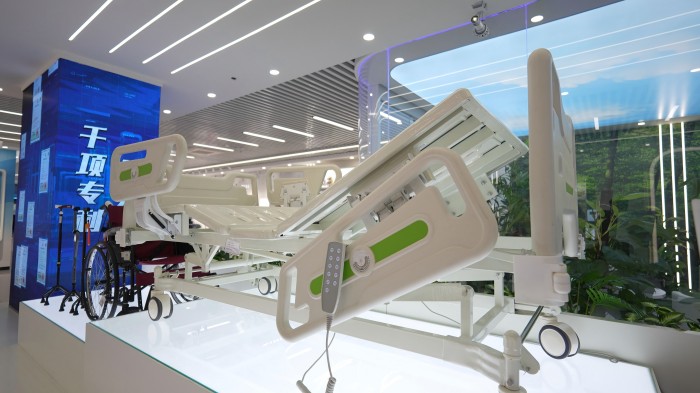
Finding Reliable Manufacturers of Electric Medical Beds in China
You need electric medical beds from China. Finding a reliable maker is key for safety, compliance, and smooth delivery. Here are practical steps and criteria for your search:
Key Criteria and Verification Steps
Check Certifications:
Insist on valid ISO 9001, ISO 13485, CE, and FDA certifications. Request the documents. Verify them through international registries.
Example: Grace Medy, Hope-Full Medical, Jiangsu Saikang, and Better Medical all show compliance. They have proven export experience.
Use Trusted Online Platforms:
Search for suppliers on Alibaba, Made-in-China, and 1688. Filter for “Verified Supplier,” export records, and certification badges.
Try keywords like “electric medical bed manufacturer” or “FDA medical bed supplier.“
Demand Audit Evidence:
Ask for recent audit reports. Get factory images and product test certificates. Good firms have these ready.
Evaluate Capacity and Lead Time:
Large makers can produce 500 beds daily
Standard lead time: within 15 working days
Grace Medy and Jiangsu Saikang offer OEM/ODM services
Assess Export Track Record:
Pukang Medical: exports to 108 countries
Grace Medy and Saikang: strong presence in Southeast Asia and the Middle East
Baiyang Medical: wins major hospital tenders often
Review Product Range and Innovation:
Check their offerings. Look for ICU beds, patient trolleys, and smart beds.
Request Cost and Contract Terms:
Get detailed quotations and profit margin calculations
Negotiate MOQ—10–50 units per shipment is typical
Confirm after-sales service, warranty, and client testimonials
Supplier Comparison and Data Highlights
Made-in-China lists over 536 certified suppliers. They offer 1,608 medical bed products.
Key export markets: Europe, Middle East, South America, Africa, Southeast Asia
Common Mistakes to Avoid
Don’t skip factory location and legal status checks
Always verify certificates
Negotiate well. Poor deals mean missed savings or surprise charges.
Direct Contact Tips
Ask for a complete company profile and latest product catalog
Request a physical sample or prototype
Test how fast they respond. Fast traders like Grace Medy answer in under 3 hours.
Leading Chinese Electric Medical Bed Manufacturers
Grace Medy: 15+ years, exports to 108 countries, leading volumes
Hope-Full Medical: 20+ years, ISO, CE, and FDA certified
Jiangsu Saikang Medical: 18+ years, strong in Middle East/Africa export
Use these data points and steps to pick reliable Chinese suppliers. This ensures safe electric medical bed import.
Import Requirements by Destination Country
Electric medical beds from China face different rules in each country. Each market sets its own compliance, certification, and documentation needs. Miss these requirements? You’ll face shipment delays, money loss, or complete bans.
United States: FDA, Quality, and Tariffs
FDA Registration & Clearance: Register all electric medical beds with the U.S. Food and Drug Administration (FDA). Most models need 510(k) FDA clearance before you can import them.
Quality Standards: You need ISO 13485 certification. UL Certification for electrical safety is also a must.
Tariffs & Scrutiny: Chinese-made beds often face extra tariffs. Expect tighter checks for authenticity and compliance.
European Union: CE Marking and MDR Compliance
CE Marking: Electric medical beds need a CE mark. This proves they meet EU Medical Device Regulation (MDR).
India: CDSCO and Local Registration
Regulatory Oversight: The Central Drugs Standard Control Organization (CDSCO) controls this. They operate under the Drugs and Cosmetics Act.
Key Documentation: You’ll need manufacturer’s authorization and certificate of analysis. CE/FDA certificates are required. Local registrations may also be needed.
Canada: Health Canada and Importer Licensing
Medical Devices Regulations: Importers must follow these rules. You might need a Medical Device Establishment License (MDEL).
Certifications Sought: Got FDA or CE approval? Your devices will clear customs faster.
Kazakhstan & Kyrgyzstan (EAEU): Technical and Dossier Demands
Kazakhstan: Get your importer license ready. You need EAEU Technical Regulation compliance. A certificate of conformity with full customs declaration is required.
Kyrgyzstan: Register through the Ministry of Health. The process needs a technical dossier. It takes up to 90 days. Foreign suppliers must name a local representative.
Russia: Strict Registration and Market Segmentation
Documentation: You need Ministry of Health registration. Get a certificate of conformity and hygienic certificate.
Market Focus: Government buyers take new beds alone. Private clinics drive most of the demand.
South Africa: Importer Certificates and Product Compliance
Importer’s Certificate: This is required for all imports.
International Certifications: You need FDA approval, CE marking, or both in most cases.
Examples of Import Restrictions
Banned Used Equipment: Brazil, Egypt, and Peru don’t accept used or refurbished beds.
Philippines: Private-sector imports dominate here. Extra restrictions apply to beds with built-in radiation-emitting features.
Global Documentation Requirements
Basic Documents: Prepare your commercial invoice, packing list, bill of lading/air waybill, and certificate of origin.
Certifications: Product certification is standard. You’ll need ISO 13485, CE, FDA, or UL.
Local Docs: Get an importer’s license. Prepare a technical file or product dossier. For used equipment in some EU countries, you need maintenance agreements too.
Key Takeaways: Universal Themes
Get the right product certification and registration for each country.
Keep complete documentation. Follow all local and international rules.
Know the bans on used/refurbished beds. Prepare technical files and service agreements where needed.
Key Documentation and Planning for Importing Electric Medical Beds from China
You need proper paperwork to import electric medical beds from China. Good documentation helps you pass customs and meet regulatory requirements.
Essential Documentation for Safe Import
Manufacturing License: A copy that proves the manufacturer’s regulatory status in their home country.
Plant Master File & Device Master File: Technical files that cover production processes and quality controls.
Overseas Manufacturing Site Registration: Notarized certificate from home authorities.
ISO 13485 Certificate: Shows the manufacturer meets international medical device quality standards.
Free Sale Certificate: Proves the bed can be sold in the country of origin.
Quality Certificates: Includes CE type examination, UL certification (for electrical safety), and product assurance.
Declaration of Conformity: A notarized statement that confirms compliance with all standards.
Latest Inspection/Audit Report: From a notified body or national authority. Must be dated within the last 3 years.
Power of Attorney (POA): Required if you use an agent. Must meet MDR requirements.
Product Identification Consistency: Product names and model numbers must match on every document. Check your POA, certificates, and labels.
Additional Technical Documents: CE design certificate, specs, warranty, and product details.
Registration and Planning: Example for India
Register on the CDSCO SUGAM portal.
Prepare and notarize all documents. Follow the guidelines.
Fill out Form MD 14 for the import license. Provide details for the product, manufacturer, and agent.
Upload documents. Pay all required fees.
Check your review status. Respond fast to any regulator questions.
Critical Planning Steps & Risk Management
Supplier Due Diligence: Visit or verify factories. Check authenticity on platforms like Alibaba or Made-in-China. Examine certifications.
Customs Logistics: Work with specialized brokers. They handle efficient clearance, correct HS codes, and tariff management.
Incoterms: Document responsibilities for shipping, insurance, and risk transfer.
Warranty and After-Sales: Set clear warranty and support terms upfront.
Avoiding Common Documentation Pitfalls
Check all document details for accuracy and completeness.
Make sure agent and product information match everywhere.
Use certified agents. Get all documents notarized.
Specialized logistics partners can prevent errors. They save time too.
Confirm supplier audits, ISO, CE, and FDA certificates before you order.
Summary
Proper planning and complete documentation protect you from customs delays, fines, and regulatory problems. You can’t skip these steps for safe and legal import of electric medical beds.
