
Top 5 Lightest Folding Electric Wheelchairs In The UK
The UK market now stocks ultra-lightweight models that weren’t available five years ago. Aviation-grade aluminium and carbon fibre changed what’s possible. Manufacturers now make chairs under 20 kg that still hold up strong.
Weight affects your life every day. A 15 kg chair fits in overhead aircraft storage. A 25 kg model needs check-in but gives you longer battery life. This matters when you lift it into your car boot three times a day. Or when you move through train platforms on your own.
What drives the UK demand for lighter chairs?
Older people want to stay independent longer. Business travellers need mobility that works on airlines. City residents need compact storage in small flats. These features aren’t extras anymore. They’re basic accessibility needs.
The engineering challenge is real. Cutting weight while keeping strength means using top-grade materials. That’s why lightweight folding electric wheelchairs cost more than regular models. You pay for aerospace-grade frames. You get lithium batteries that weigh half what old lead-acid ones do. Plus, you benefit from careful engineering that keeps you safe at lower weight.
Below, we look at five models that show the best of lightweight electric wheelchair design in the UK right now. Each one balances easy transport with real-world toughness, battery power, and comfort. The lightest option isn’t always your best pick. Your specific needs decide the right balance between weight and features.
1. Quickie Q50 R Carbon (14.5 kg)
The Quickie Q50 R Carbon is the lightest folding electric wheelchair you can buy in the UK right now. At just 14.5 kg, it weighs less than most checked luggage. That’s the complete chair. Frame, motor, and battery all included.
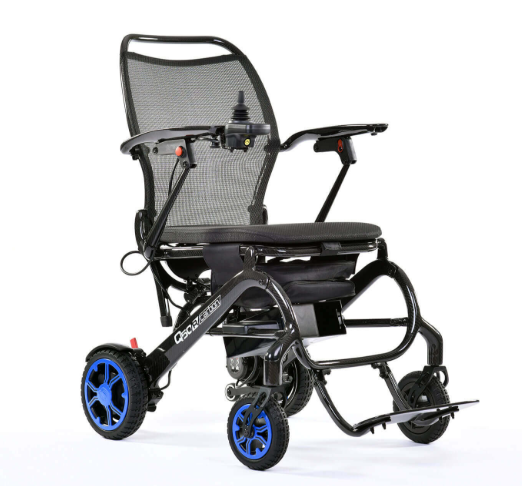
Carbon fibre makes the difference. This material comes from aerospace engineering. It’s the same stuff in Formula 1 race cars and premium road bikes. The Q50 R Carbon uses it throughout the frame. The result? Maximum strength at minimum weight. You get a chair that won’t buckle under regular use. Plus, you can lift it with one hand.
Who needs a 14.5 kg chair? Three user groups stand out. First, frequent flyers who travel each week for work or leisure. The Q50 R Carbon fits in most aircraft overhead bins. No more gate-checking your mobility aid. Second, people who live alone and move their chair multiple times each day. Car boot. Train carriage. Restaurant entrance. Every lift counts after ten times a day. Third, users with limited upper body strength who can’t handle heavier models.
The folding mechanism works well. Pull one lever. The frame collapses in under 10 seconds. No tools needed. No complex steps to remember. The compact fold fits tight car boots and narrow hallway storage. Unfold it just as fast once you’re ready to move.
Low weight means better energy use. Less mass means the motor works less hard. Battery range extends further than heavier chairs with similar battery capacity. You cover more ground per charge. Fewer charging sessions. More spontaneous trips without range anxiety.
Premium pricing reflects premium materials. The Q50 R Carbon sits at the top end of the lightweight folding electric wheelchair market in the UK. You’re paying for carbon-fibre engineering, not just a lighter ride. For users who need maximum portability and airline compatibility, few alternatives match this performance-to-weight ratio.
Mobility retailers stock this model for travel-ready needs. It answers the question: “Will this work on planes?” with a clear yes.
2. Grace Medy Ultra-Light (16 kg)
Grace Medy designed the Ultra-Light electric wheelchairs for export markets. This electric wheelchair manufacturer focused on what distributors need most. That is a mid-priced chair with real portability.
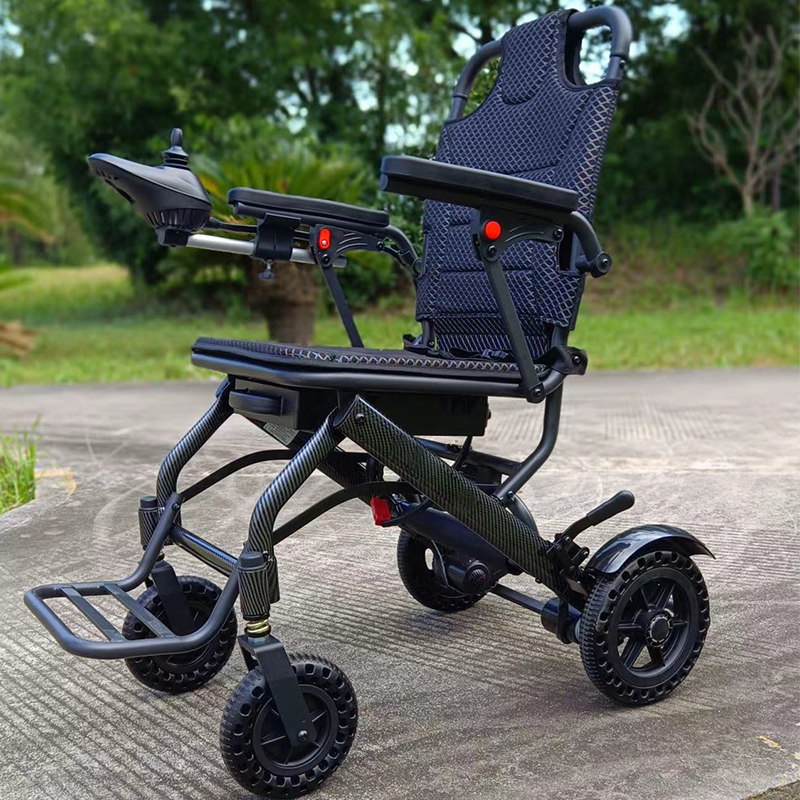
The total weight is only 16 kg. This gives users easy lifting and transport. It costs much less than full carbon fiber models. Users get near-premium portability without a high price. Many buyers need a light chair for daily travel. They do not need the lightest frame on the market. This balance makes the Ultra-Light a smart choice.
The frame uses aluminum alloy with a carbon-fiber transfer finish and matte black coating. It stays light but also strong. The welded bent-tube footrest adds extra support. The joints remain stable after many folds. The frame can handle bumps and daily use. It works well both indoors and outdoors.
Two 180W brushless motors provide steady power. The wheelchair has five speed levels. The top speed is 6 km/h. It can climb slopes of up to 10 degrees. This makes it suitable for ramps and sidewalks. PU foam tires help reduce vibration. They also improve comfort.
The seat and backrest use waterproof PU leather. They are supported by a rigid frame. The armrests use soft PU foam. The seat height is 53 cm. This makes sitting and standing easier.
This 16 kg model suits many users. It works for indoor and outdoor movement. It fits easily in a car trunk. It is ideal for daily errands. The small weight difference is not important in real use.
The value is clear. Compared with carbon fiber chairs, it is much cheaper. You give up only a little weight. You save a lot of money.
Folding is simple. The single-lever system is easy to use. The chair folds in seconds. It stores well at home or in a car.
For UK wholesalers and mobility shops, the Grace Medy Ultra-Light fills an important gap. It sits between heavy budget chairs and high-price premium models. It offers true portability at a price buyers can afford.
3. Foldalite Standard (25 kg)
Foldalite Standard takes a different approach. This folding electric wheelchair gives up some portability. You get all-day reliability instead. At 25 kg, it’s heavier than ultra-light models. But here’s what you gain: stronger motors, longer battery life, and solid build quality for regular use.
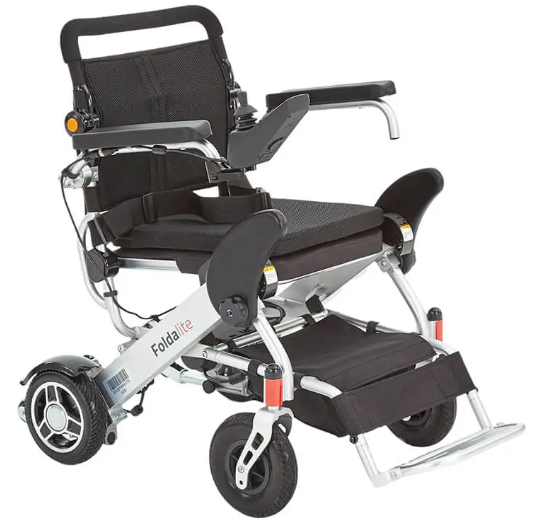
This chair focuses on endurance, not minimal weight. Cover 15-20 km each day? You need more than a light frame. You need motors that climb steep hills without struggle. Battery power that lasts through full workdays. A frame stable enough for rough outdoor ground. The Foldalite Standard provides all this. The tradeoff is extra weight.
Who picks this 25 kg model? Active users with long travel needs. People who commute to work. Those moving around large university grounds or business parks. Users who spend hours outside and can’t afford a dead battery mid-trip. For these situations, an extra 10 kg isn’t a problem. It’s needed capacity.
The motor output shows real differences. Foldalite Standard tackles slopes that lighter chairs can’t handle. Power stays steady even with shopping bags or a backpack on board. The battery holds up better under stress. You end the day with charge left.
The extra frame weight adds stability. Higher speeds feel safe. Rough paths and grass don’t shake the chair much. The ride feels like mid-weight electric wheelchairs made for outdoor use. Kerb drops go smoothly. Bumpy ground won’t hurt your back.
Yes, it still folds. The folding works like lighter models. One lever collapses it. You can store it in a car boot, but lifting 25 kg multiple times needs help. This isn’t a chair for solo air travel. It’s made for users with car access or help at home.
UK sellers stock Foldalite Standard for specific buyers. These customers know they need range over easy carrying. They’ve tried lighter chairs. The battery or motor fell short. Price falls between cheap heavy models and premium ultra-lights. You pay for strong performance, not fancy materials.
For lightweight folding electric wheelchair buyers who want long-term active use, the 25 kg weight matters less than what it delivers: reliable all-day movement without constant charging or power limits.
4. Foldalite Pro (26.5 kg)
The Foldalite Pro weighs just 1.5 kg more than the Standard model. That small weight difference brings big upgrades. Better suspension. Higher weight capacity. Stronger motors. This folding electric wheelchair suits users who push their chairs hard. Think varied terrain, not just flat indoor routes.
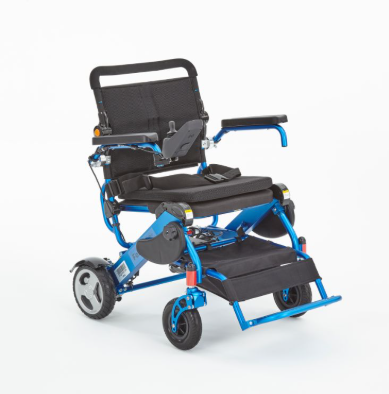
The suspension upgrade helps outdoor users most. Standard models work fine on smooth pavements. The Pro absorbs shock from uneven surfaces. Cobblestone streets. Gravel paths. Cracked tarmac. Park trails. The better suspension cuts down vibration to your body. Your back strains less after hours of use. Bumps that shake lighter chairs? The Pro smooths them out.
Motor power gets a real boost. The Pro climbs steep inclines without slowing down. Hills that drain lighter models? The Pro tackles them at steady speed. Shopping centres with multi-level car parks. Hilly areas. Sloped access ramps. You keep moving where weaker motors lose steam. Plus, battery efficiency holds up better under load.
Weight capacity goes beyond the Standard version. Carry more shopping. Add a heavy backpack. Transport work equipment. The stronger frame handles bigger loads without losing stability. Larger users get better support. The structure stays solid even at maximum capacity.
Who needs the Pro over the Standard? Users in hilly areas where motor power counts. People who carry work supplies or shopping often. Those who spend lots of time on rough outdoor surfaces – country paths, beaches, parkland. The extra 1.5 kg gives you performance gains that lighter models can’t deliver.
UK mobility retailers stock Foldalite Pro for tough environments. Yes, it still folds for car boot storage. But this isn’t about minimal weight. It’s about getting the most capability from a lightweight folding electric wheelchair. You give up a bit of portability. You get durability and power for active outdoor living.
The price reflects the better parts inside. You’ll pay more than the Standard model. Less than ultra-premium carbon options. Fair price for what you get: reliable strength for users who need their chair to perform, not just move them around.
5. Lith-Tech Smart Chair X (27 kg)
Lith-Tech built the Smart Chair X around one question: what happens when you add real technology to a folding electric wheelchair? At 27 kg, it’s the heaviest model here. But that weight gets you something different. Advanced control systems. Premium comfort features. Intelligent driving help that lighter chairs can’t match.
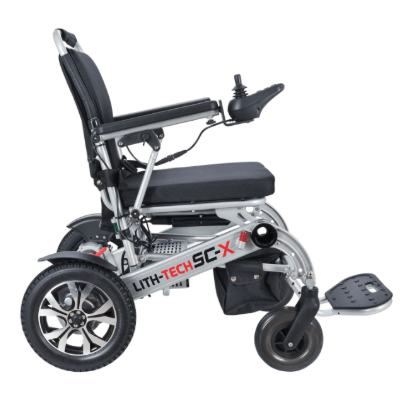
The “smart” label isn’t just marketing. This chair has real tech upgrades. Intelligent braking adjusts to slopes on its own. Precision controls smooth out jerky movements. App connectivity tracks battery health and usage patterns. Extra sensors and processing units add the weight. Users who want advanced features over ultra-light weight will appreciate the trade-off.
Comfort gets serious attention here. The frame fits better padding without hurting fold mechanics. Seat depth adjusts to different body types. Armrests move higher or lower. Back support angles change for different postures. Spend six hours in this chair? Your body feels the difference compared to basic lightweight models. The design focuses on long-term comfort, not just short trips.
Drive quality beats lighter competitors. Smooth acceleration without sudden jerks. Stable turns at higher speeds. Quiet motor that doesn’t draw attention in quiet spaces. The controls feel refined. Small joystick movements create precise chair movements. This helps in crowded shops, narrow hallways, or tight indoor spaces.
Who picks the heaviest option on this list? Tech-savvy users who want smartphone links and data tracking. People who value ride comfort over lifting it alone often. Those with help for car transfers who don’t handle the full weight solo. Premium buyers looking for the most advanced lightweight folding electric wheelchair features in the UK market.
Yes, 27 kg still counts as easy to transport. The fold mechanism works like other Lith-Tech models. Car boot storage stays practical with help. You won’t carry this onto planes with ease, but car journeys work fine. UK retailers aim this at buyers ready to move past basic mobility needs into feature-rich options.
The Smart Chair X shows that “lightweight” doesn’t always mean fewer features. Sometimes the best choice adds capability, even if it costs a few extra kilograms.
Weight and Performance Balance Analysis
The five models we’ve covered span 13 kg of difference. That range isn’t random. Each weight level serves different user needs and lifestyles.
Ultra-light models (14.5-16 kg) focus on easy carrying. The Quickie Q50 R Carbon and Grace Medy Ultra-Light lead this category. These lightest folding electric wheelchairs solve real problems: airline travel, solo car transfers, and tight storage spaces. You give up battery power and motor strength. This trade-off works for typical trips of 5-8 km on smooth surfaces. Business travellers who fly often benefit most. City residents using taxis and public transport need this weight reduction for independent living.
Mid-weight models (25-27 kg) offer better power and longer range. The Foldalite Standard, Foldalite Pro, and Lith-Tech Smart Chair X fit here. Battery life reaches 15-20 km. Motors handle hills with ease. Frame stability gets better at higher speeds. These electric wheelchairs suit active users who spend hours outside each day. Think university students covering large campuses. Or professionals getting to work. Or shoppers bringing home groceries. The extra weight doesn’t matter for reliable all-day use.
The performance gap shows in three areas. First, slope climbing: heavier models keep speed on 8-10% hills. Ultra-lights slow to walking pace. Second, ride comfort: better suspension in 25+ kg chairs cuts body fatigue on rough ground. Third, battery life: longer range means fewer charging stops and more freedom.
For UK wholesalers and retailers, stock balance matters. Ultra-light folding electric wheelchairs attract 30-40% of buyers. These buyers want travel ease and compact storage. Mid-weight models serve the other 60-70%. These users want reliable performance each day over minimum weight. Match your stock to local areas. Urban spots need lighter models. Suburban and rural areas need stronger ones. This weight-to-performance link helps you stock better and keep customers happy across the UK market.
Conclusion
The right lightweight folding electric wheelchair changes your independence and travel options. The ultra-premium Quickie Q50 R Carbon weighs just 14.5 kg. The practical Lith-Tech Smart Chair X comes in at 27 kg. Each model in this roundup fits different mobility needs and budgets. The sweet spot? Think about your real use case. Airport travelers might justify the carbon-fiber Quickie. Occasional users could find great value in the mid-range Foldalite options.
Weight matters, but it’s just part of the story. Battery range counts. Seat comfort counts. Real-world portability counts too. Can you lift it into a car boot yourself? Before you decide, book test drives with at least two models from this list of the top 5 lightest folding electric wheelchairs in the UK. Most reputable dealers offer home demos. Take advantage of this. Experience how each chair handles your specific environment. Test it through your doorways. Try it in your routines. Your perfect match is out there. Choose well and reclaim your mobility.
