
Preventing Patient Falls and Injuries
What is a Stryker bed used for? Patient falls are one of the biggest safety problems hospitals face. 30–50% of all inpatient falls result in injury. This means longer hospital stays, lower quality of life, and higher healthcare costs. Stryker beds tackle this problem head-on. They use built-in safety tech and design features made to cut fall risk.
Low bed height is one of the best ways to prevent injuries. 26.5% of hospital falls happen when patients roll or slip from a bed. Less distance to the floor means less severe injuries. Stryker beds sit very close to the ground. This creates a key safety buffer for at-risk patients.
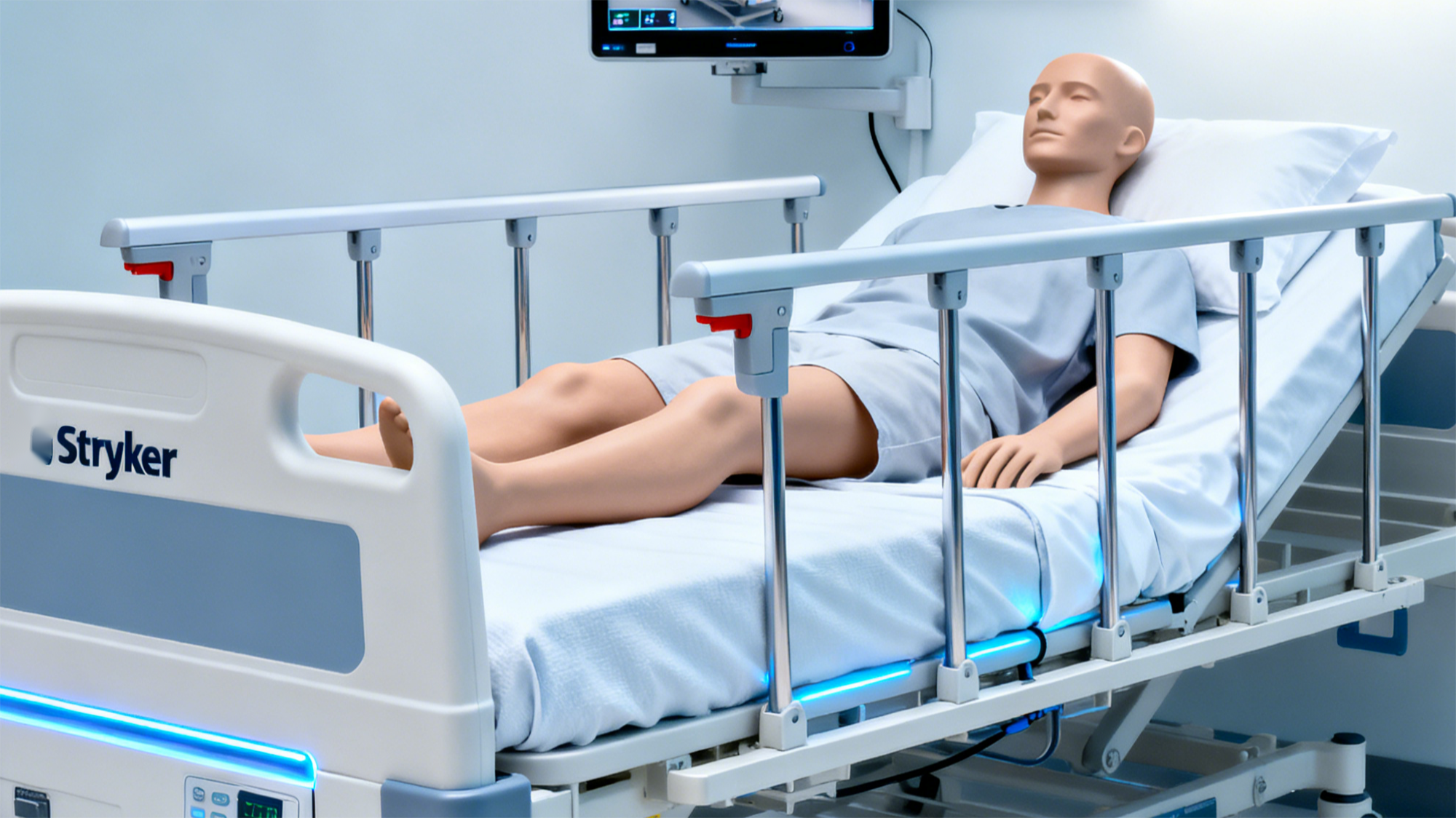
Advanced side rails with middle positions add another layer of safety. These adjustable rails make it easier and safer for patients to get in and out of bed. They also stop accidental falls during sleep or when patients shift position. The StayPut bed frame tech keeps patients in place during bed adjustments. No need for manual repositioning that often raises fall risk.
Built-in bed exit alarms and zone monitoring send instant alerts. They trigger when at-risk patients try to leave the bed without help. These systems link to staff devices and nurse call systems without wires. Staff get real-time alerts that let them step in fast. Feedback from pilot programs has driven ongoing improvements. Both function and staff satisfaction keep getting better.
Improving Patient Recovery and Mobility
Get patients moving soon after admission. This transforms recovery outcomes. Stryker beds keep patients safe. Plus, they speed up healing through smart design and mobility features backed by solid clinical data.
Hospitals with early mobility programs using Stryker beds see remarkable results. Fall rates drop by 53%. Pressure injuries decrease by 25–74%. Accidental falls plummet by over 50% with progressive mobility strategies. Hospital efficiency improves too. ICU length of stay shrinks by more than 22%—from 5.4 days down to 3.9 days. This happens because patients get mobilization support sooner.
Features That Drive Recovery Forward
Adjustable medical bed positioning lets patients find the best rest angles. You can sit safe, stand upright, and even exercise in bed. Head, foot, and height adjustments reduce spasticity risk. Movement becomes easier and more natural.
The one-touch cardiac chair position works with foot and knee adjustments. This enables both active and passive exercises. This feature is critical for respiratory and cardiac function recovery—essential foundations for safe mobility.
Supportive side rails help patients move themselves. The ‘nose-over-toes’ movement cue gives patients independence during transfers. Less caregiver dependence means fewer risky bed-to-chair transfers. Injury rates drop for both patients and staff.
Pressure redistribution mattresses protect skin health during extended bed rest. These systems lower pressure injury rates by up to 74%. Immobile patients stay comfortable and free from complications.
Integrated mobility protocols include visual assessment tools and built-in reminders. These boost therapy adherence. Staff follow standard approaches with fewer errors. Hospitals pair these systems with skilled mobility technicians and safe patient handling programs. This creates maximum effectiveness.
Preventing Immobility Complications
These mobility features combat the dangers of prolonged bed rest. Think functional decline, deep vein thrombosis, pneumonia, delirium, pressure injuries, urinary tract infections, extended hospital stays, and reduced post-discharge quality of life. Stryker beds mobilize patients sooner and more safe. You get measurable improvements in recovery speed, discharge readiness, and long-term mobility outcomes.
Providing Critical and Intensive Care (ICU)
Critical care needs technology that responds as fast as the clinical team. Stryker beds deliver precision control, real-time monitoring, and emergency-ready features built for ICU environments. Seconds matter here. Patient conditions change without warning.
Continuous Monitoring and Protocol Enforcement
iBed Awareness technology tracks safety parameters around the clock. It monitors head-of-bed angle, siderail position, bed height, brake settings, and bed exit risk. The system alerts caregivers the moment any parameter drifts from established protocol. This isn’t passive monitoring—it’s active intervention. It supports intensive care standards without adding to staff workload.
The Chaperone® Bed Exit System creates up to three alarm zones. Digital protocol reminders run all the time. Audible alerts trigger the moment patients attempt unsafe movements. A built-in history and event manager tracks compliance data. ICU teams can review patterns and identify risks ahead of time. They maintain documentation without extra admin work.
Precision Positioning for Medical Intervention
ICU patients need frequent position changes. These happen for procedures, ventilation adjustments, and diagnostic imaging. Stryker beds offer advanced electric positioning with surgical-level precision. The backrest adjusts from 0° to 70°. Knee gatch moves 0° to 15°. Trendelenburg and reverse Trendelenburg positions reach ±12°. These exact angles matter. You need them for managing ventilated patients. You need them for rapid postural shifts. You need them for emergency interventions.
Emergency Response and Clinical Efficiency
Critical situations demand instant action. Stryker beds include a single-handed CPR pedal and headboard release. Staff can flatten the bed and access the patient in seconds. Electric and mechanical brakes lock the bed tight during procedures. Full battery backup keeps things running during power failures—a vital safety net in high-acuity settings.
Design Built for ICU Workflows
Multi-sided control panels on all four bed sides give rapid access from any angle. Nurse-call interface and lockout features boost both speed and safety. The Zoom motorized drive system helps nurses move patients throughout the ICU without physical strain. This matters most during transport of ventilated or unstable patients.
Better Efficiency and Safety for Caregivers
Caregiver injuries cost hospitals billions each year. Patient handling causes most workplace injuries in healthcare. Musculoskeletal problems top the list. Stryker beds solve this problem with smart engineering that protects patients and staff.
97% of hospital nurses see patients struggle to get out of bed on their own. Even worse, 75% have seen patients hurt themselves trying. This creates two problems at once. Patients face risks. Caregivers get stuck in dangerous, hard physical work.
Smart Design Cuts Physical Strain
Powered positioning removes manual cranking and heavy lifting. Electric controls adjust bed height, backrest, and leg sections with one touch. Nurses don’t twist, bend, or strain to move patients anymore. The Zoom motorized drive system moves beds across units. No pushing or pulling needed. One caregiver can now transport patients who used to need two or three staff members.
Height adjusts from 16″ to 33″. This brings patients to good working levels. Nurses do wound care, bathing, and checks at comfortable heights. No stooping. No overreaching. Back injuries drop. Staff work at safe heights.
Faster Workflow and Response Time
Control panels on all four sides save seconds during emergencies. Staff can reach controls from any angle. No need to move around the bed. Foot pedals with multiple functions let you adjust things hands-free. Great for sterile procedures or times you’re holding equipment.
Battery backup and constant monitoring mean fewer equipment checks. Fewer maintenance calls too. Touch-screen interfaces link straight to nurse call systems and hospital IT networks. You can document right at the bedside. Charting gets faster. Response times improve.
Keeping Staff Safe from Workplace Hazards
Brake locks and stability features stop the bed from moving during transfers. Side rails give patients secure spots to grip for moving themselves. Patients who can reposition on their own mean caregivers skip risky manual help. This prevents shoulder, back, and wrist injuries.
These tech upgrades and better design change how work gets done each day. Staff get less tired. Injury rates drop. Efficiency goes up. Patient care quality stays strong.
Supporting Long-Term and Rehabilitation Care
Recovery takes time. Patients healing from strokes, major surgeries, or chronic conditions often stay weeks or months in nursing homes and rehab centers. Stryker beds support these extended care needs. They’re built to last and include features that help patients heal.
