
Primary Purpose
These two bed types differ in what they’re made for and how they work.
Hospital beds are built for medical care. They help patients who need constant monitoring, regular position changes for health reasons, or help with basic movement. These beds become necessary tools for someone dealing with:
Recovery from surgery or serious injury that requires long bed rest
Chronic conditions that need special positioning to avoid problems
Limited mobility that makes regular bed use unsafe or difficult
Need for medical equipment like IV poles, monitoring devices, or ventilators
Healthcare facilities use hospital beds because they make caregiver work easier while keeping patients safe. Every feature ties to medical protocols—raising the head reduces aspiration risk, adjusting height makes transfers safer, and locking side rails prevents falls.
Adjustable beds focus on daily comfort and lifestyle. These beds appeal to homeowners who want better sleep quality, relief from minor aches, or custom relaxation positions. The typical user isn’t recovering from medical trauma. They want to:
Elevate their legs after a long day on their feet
Find the right angle for reading or watching TV in bed
Reduce snoring by sleeping with head raised a bit
Create a zero-gravity position that takes pressure off key points
Adjustable bed marketing highlights luxury, personal choice, and aging at home—letting people stay in their homes as they get older and less mobile. The focus is on convenience features like massage functions, under-bed lighting, and wireless remotes. Clinical needs take a back seat.
This difference in purpose shapes everything else. It affects how these beds are built, regulated, and sold.
Design & Appearance
You can tell these two bed types apart right away. One looks like it belongs in a hospital. The other fits a bedroom.
Hospital beds look like medical equipment. That’s what they are. Heavy metal frames dominate the design. You see exposed adjustment parts. Industrial-grade components are everywhere. The frame focuses on medical-grade strength, not looks. Large wheels sit at each corner. They’re usually 4-6 inches across. This makes the bed easy to roll between rooms during emergencies or cleaning. Side rails run the full length on both sides. You can’t remove them. This creates that classic hospital bed look. Some models have removable footboards. These make patient transfers easier.
The overall look screams “medical facility.” No maker tries to hide what these beds do.
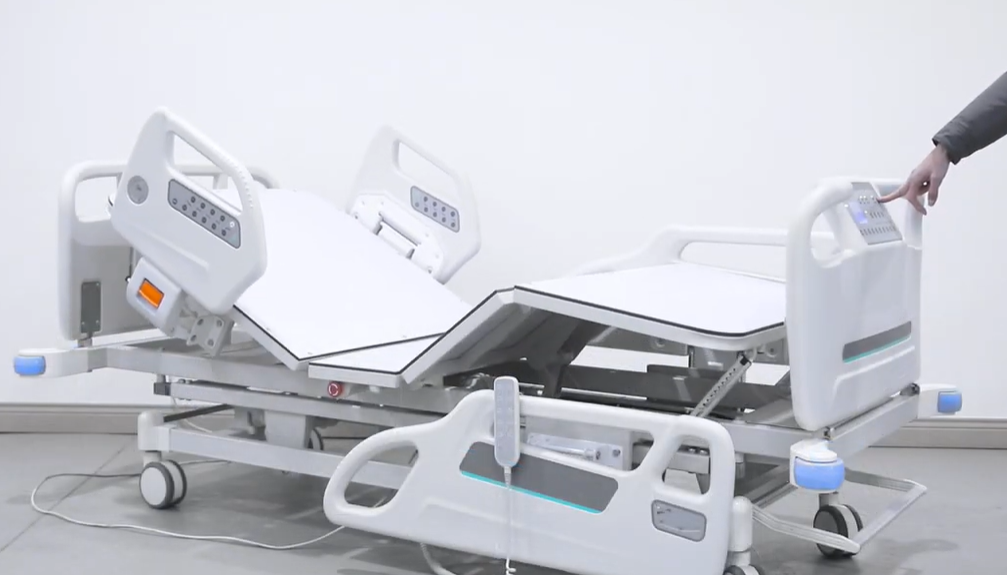
Adjustable beds work differently. Frame designs copy regular furniture. Many come wrapped in fabric panels or finished wood. They match bedroom décor. The adjustment motors hide inside the base. You won’t find wheels. These beds stay put like traditional bedroom furniture. Many models skip permanent safety rails. Instead, they offer optional half-rails. These attach at the upper portion. They help you get in and out of bed. But they don’t give that hospital vibe.
The custom options show the consumer focus. Buyers pick mattress types. They choose fabric colors. They select headboard styles and base finishes. Some makers add LED under-bed lighting. Others include built-in speakers or massage features. Hospital beds stick to standard setups. They follow a “one-size-fits-all” medical spec. Personalization is minimal.
This design gap matters beyond looks. Many people avoid hospital beds at home. The reason? The mental impact. The clinical look reminds them of illness or disability. This affects their mental health.
Adjustability Options
Medical beds and adjustable beds both change position. But they don’t work the same way. The range of movement differs. So does the control method. The types of positions each one creates are different too.
Medical beds adjust in three main ways. The head section tilts up and down. The foot section does the same. Here’s what sets these beds apart: the entire frame moves up and down. This height change matters for medical care. Caregivers raise the bed to waist level for changing dressings. They do the same for giving medications or helping patients move. This protects their backs during long shifts. Lower positions make it safer for patients to get in and out. The bed drops close to the floor. This reduces fall injuries.
Electric medical beds handle all these movements with button controls. The patient or caregiver pushes a button. Motors do the work. Manual and semi-electric models still exist in some facilities. These need hand cranks for some adjustments. The physical effort is big. Staff must turn cranks many times to change positions. This takes time and energy during emergencies.
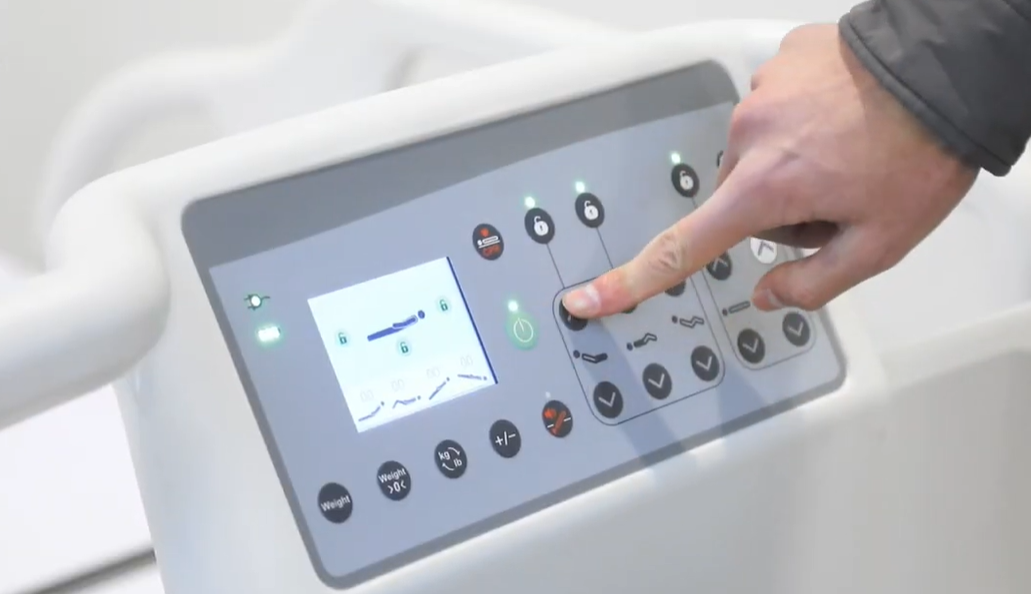
Medical beds also offer special clinical positions. Trendelenburg position tilts the bed so feet are higher than the head. This helps with shock treatment and some surgeries. Reverse Trendelenburg does the opposite. The head stays raised above the feet. This position helps digestion. It also reduces acid reflux in bedridden patients. You won’t find these angles on consumer models.
Adjustable beds stick to simpler movements. Head up. Foot up. That’s the core function. The base doesn’t raise or lower. These beds sit at one fixed height. This matches standard bed frames at 20-25 inches from the floor.
Modern adjustable beds come with wireless remotes. Many add smartphone apps. You can create custom positions and save them as presets. One tap brings the bed to your preferred reading angle or zero-gravity position. Some high-end models include massage motors. These offer different intensity levels and targeted zones.
The customization goes further with programmable memory settings. Each side of a split-king adjustable bed can store different positions. Partners don’t compromise. One person raises their head to reduce snoring. The other keeps their side flat. Hospital beds don’t often offer this level of customization. They follow standard medical protocols.
Safety Features
Falls and caregiver injuries create the biggest safety gaps between these two bed types.
Hospital beds drop lower than standard beds. Most models go down to 7-10 inches from the floor. Some ultra-low models from providers like Grace Medy reach as low as 7 inches. This matters for someone with limited mobility getting out of bed. Their feet reach the ground easier. The shorter distance means less impact during a fall. Studies show fall-related injuries drop when bed height decreases. A fall from 24 inches causes more damage than one from 8 inches. Broken hips, head trauma, and fractures become less severe at lower heights.
Adjustable beds can’t do this. The frame sits fixed at 20-25 inches high. That’s standard bedroom furniture height. It looks normal but creates more fall risk for people with weakness or balance problems. You can’t lower it during nighttime bathroom trips. That’s exactly the time falls happen most.
Hospital beds protect caregivers too. The height adjustment prevents constant bending. Nurses and family members raise the bed to waist level. This puts patients at a comfortable working height. Caregivers can change bedding, help with bathing, adjust positions, and give medications. No hunching over required. Back strain causes more workplace injuries among healthcare workers than any other issue. The ability to raise the bed stops this constant physical stress.
Home caregivers face the same risks with adjustable beds. The fixed height forces them to bend over and over throughout the day. After weeks or months of care, chronic back pain develops. This can make continuing care at home impossible.
Side rails add another layer of protection. Full-length hospital bed rails prevent patients from rolling out during sleep. They also provide grab points for repositioning. Adjustable beds either skip rails or offer short assist rails that don’t prevent falls.
Control Systems
The buttons you press and response speed set these two bed types apart in everyday use.
Electric hospital beds use wired pendant controls. These handheld devices attach to the bed frame with a cord. The cord stops the control from getting lost during emergencies. Large buttons with clear labels cover basic functions. Head up. Head down. Foot up. Foot down. Full bed height adjustment. Each button links to its own motor. Push the button. The bed responds right away. Response time counts in medical settings. A patient struggling to breathe needs the head raised now, not in 30 seconds. Staff can make quick position changes. No need to help the patient reach for controls. No need to explain complicated menus.
The pendant meets medical-grade standards. Waterproof or water-resistant build protects against spills and cleaning chemicals. Some models include lockout features. Staff can disable patient access to certain functions. This stops confused patients from putting themselves in dangerous positions. Consumer beds don’t have these safety locks.
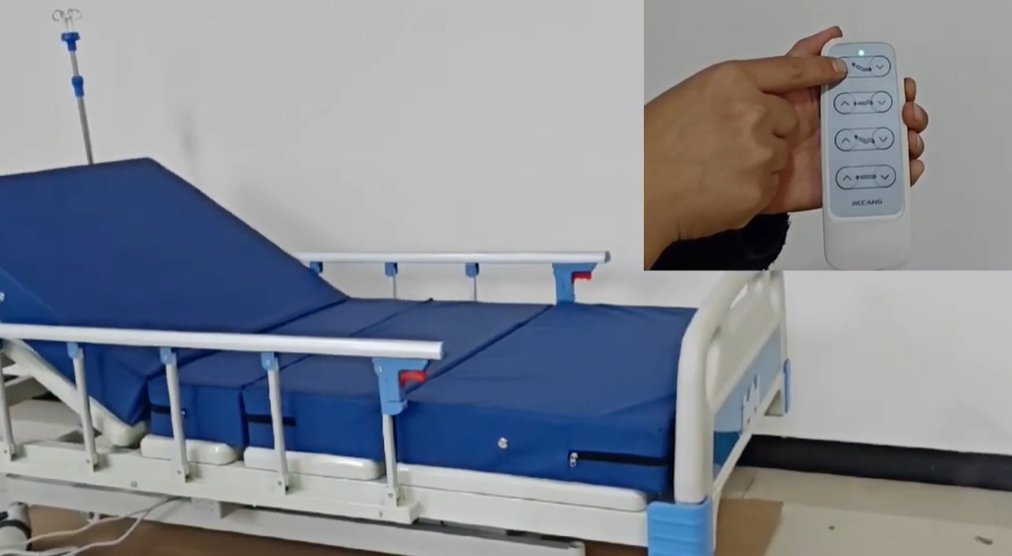
Adjustable beds offer wireless freedom. Bluetooth remotes sit on nightstands. Users pick them up as needed. No cords trail across the bed. The controls include more lifestyle features. Preset buttons for reading position, zero gravity, TV watching, and anti-snore modes. Memory functions store favorite positions for each partner in split-king setups. Some remotes add backlit displays for nighttime use.
The adjustment speed differs too. Hospital bed motors focus on consistent, controlled movement. They’re built for thousands of cycles per day across years of institutional use. Consumer adjustable bed motors move a bit slower. They don’t expect the same use frequency. A home user might adjust positions 5-10 times per day. A hospital bed serves multiple patients making dozens of adjustments across three shifts.
Mobility
Hospital beds roll anywhere you need them. Adjustable beds stay put.
Hospital beds have four large locking wheels built into the frame. These heavy-duty wheels are 4-6 inches across. They come standard on every hospital bed. No exceptions. The wheels do critical jobs in medical care. Staff roll beds between rooms fast during emergencies. Patients move to different treatment areas without switching beds. Cleaning crews push beds aside to clean floors. Each wheel has a brake pedal. Step on it and the bed locks. Step again and it rolls.
The wheels make these beds heavier to push. But hospitals need them. One caregiver can move the bed. Just release the brakes and push from the footboard. This saves time during emergencies. Seconds matter. The bed rolls to the hallway or treatment room. No lifts needed. No extra staff required.
Adjustable beds stay in one place. They sit on fixed legs or platforms like regular bed frames. No wheels on the base. You set up an adjustable bed in your bedroom. It stays there. You can’t roll it aside for cleaning. You can’t push it to another room later.
This creates different uses. Hospital beds fit places where patients move often. Adjustable beds work for permanent bedroom setups. The fixed design makes them furniture, not medical gear. Many buyers want this. The stationary setup says “home comfort” not “medical need.”
Cost
Price tags separate these two bed types just as much as their features do.
Hospital beds cost more upfront. Basic manual hospital beds start around $500-$800. You turn hand cranks to adjust them. Semi-electric models run $800-$1,500. They use motors for head and foot positioning. But you still crank the height manually. Electric hospital beds do everything with buttons. These range from $1,500 to $4,000. High-end bariatric models or specialty ICU beds push past $5,000.
The price shows what you’re getting. Heavy-duty motors built for constant use. Medical-grade steel frames tested for 450-600 pounds. Waterproof parts that handle harsh cleaning chemicals. Height systems strong enough for thousands of cycles. Full-length safety rails. Locking wheels. These aren’t regular consumer parts. They’re built for years of nonstop hospital use.
Adjustable beds offer lower entry costs. Basic models start at $800-$1,200 for a queen size. Mid-range options with wireless remotes and preset positions run $1,500-$2,500. Premium models pack in massage functions, split-king setup, and smartphone controls. These reach $3,000-$5,000. Top luxury brands sometimes exceed $6,000 with all upgrades.
Several factors push prices up or down:
Brand reputation – Known medical equipment makers charge more than generic brands
Motor count – Each extra motor adds $200-$500 to the base price
Custom options – Fabric picks, wood finishes, and colors bump up costs
Build quality – Solid hardwood bases cost more than particle board frames
Mattress needs – Some models need specific mattress types sold on their own
Looking back, I realize that choosing between these beds isn’t really about features or price tags. It’s about honestly facing where you are in life right now. I’ve learned that the right bed supports not just your body, but also your dignity and independence. Whether you need clinical support or just better sleep, your choice should match your actual needs—not what looks better or costs less. Trust yourself to know the difference.
