
Picking a mobility solution can feel tough. You see power assist wheelchairs and power wheelchairs, and the names sound alike. But knowing the difference between these two can change your independence, comfort, and budget.
Both use electric power to help you move. Yet they work in very different ways. One boosts your own pushing strength. The other moves you completely on its own. This changes how much energy you use each day. It also affects whether you can fit your chair in a regular car.
This guide covers the key differences. We’ll look at performance, cost, how easy they are to move, and real-world use.
What Is The Difference Between A Power Assist Wheelchair And A Power Wheelchair?
Power assist wheelchairs are manual chairs with small electric motors that boost your push. You still grip the handrims and push forward yourself. The motor just multiplies your effort. Think of it like pedal-assist on an e-bike—you’re still the driver, just with less physical strain.
Power wheelchairs run on battery-powered motors. You control movement using a joystick, touchpad, or head control. Your hands never touch the wheels. The chair does all the work for you.
Here’s the core difference: power assist boosts your existing strength. Power wheelchairs replace it.
What Is a Power Assist Wheelchair?
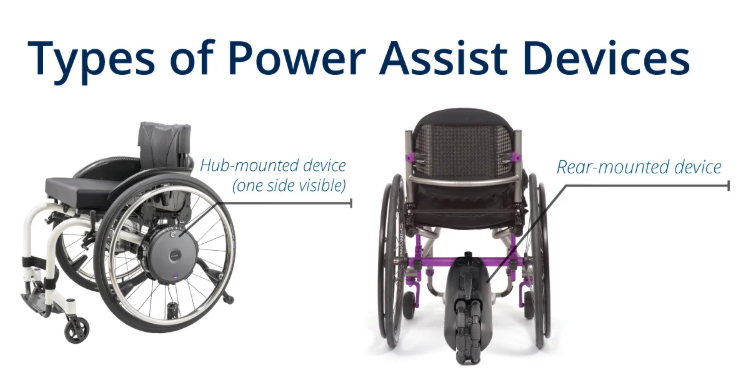
A power assist wheelchair starts with a standard manual wheelchair. Electric motors attach to the wheels. The motors don’t move the chair alone. They boost the force you put in through the handrims.
Here’s how it works: sensors pick up your push. The motor kicks in right away to boost that effort. You push with 30% of your normal strength. The motor adds the rest. You still steer and control speed through your own movement. Just with much less physical work.
Who Benefits Most from Power Assist Wheelchairs?
Active users with weak upper-body strength fit this chair best. You might have arthritis. Or shoulder muscles still healing. Or chronic fatigue. You can still push, but long trips or slopes tire you out fast. Power assist gives you that range back. Your arms won’t wear out.
Rehab patients rely on these chairs during recovery. Physical therapists recommend them often. You’re still using your muscles. The motor doesn’t do all the work. This keeps your arm strength up. Plus, you avoid pushing too hard during healing.
Care facilities like power assist models for their light weight. Staff can lift and store them easier than full power wheelchairs. They fold down like regular manual chairs. Transport in normal vehicles? Simple. No ramps or lifts needed.
The big plus? You keep the small, easy-to-carry design of a manual wheelchair. Motor support extends your independence. Physical strain throughout the day drops way down.
What Is a Power Wheelchair?
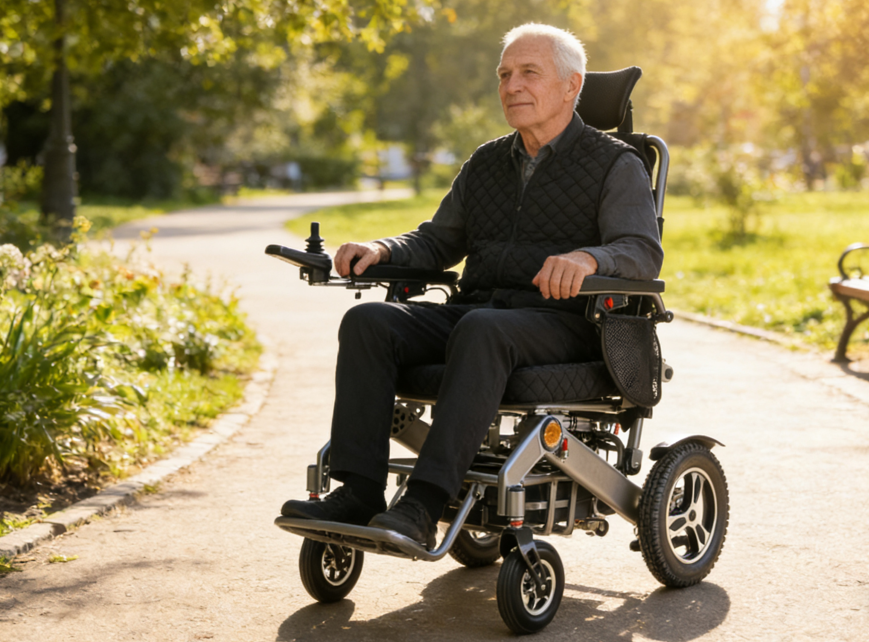
Motors and batteries run the system. A power wheelchair removes manual pushing. No more pushing by hand. You sit. You use the joystick or control panel. The chair moves where you direct it. Zero physical effort from your arms or upper body.
The control system links to motors on each wheel. Tilt the joystick forward? The chair rolls ahead. Push it left? Instant turn. You adjust speed, direction, and braking—all through fingertip control.These work for users with severe mobility limits.
Who Relies on Power Wheelchairs?
Users with little to no upper body strength depend on these chairs every day. Think advanced ALS, muscular dystrophy, severe spinal cord injuries, or stroke paralysis. Manual pushing becomes impossible. Power wheelchairs give back mobility. No physical strain required.
Long-term care facilities give residents power wheelchairs as arm function fades. Staff don’t push patients around anymore. Residents move through hallways, dining areas, and outdoor spaces on their own. Independence stays intact.
Home care settings get all-day reliability. Battery life runs 8–15 hours on one charge. Users move through tight indoor corners. They shift to outdoor terrain with ease. Grass, gravel, slight inclines—the motors handle it all. No fatigue.
Performance stays the same across surfaces. Indoor tile, outdoor pavement, carpeted rooms—motor power adjusts on its own. You don’t slow down. You don’t get tired. The chair gives you the same smooth ride from morning until night.
Key Differences: Power Assist vs Power Wheelchair
These two wheelchair types differ in four main ways: movement system, user effort, build quality, and speed control.
Drive Method and Core Mechanics
Power assist wheelchairs add motors to a manual frame. You push the handrim. Sensors pick up that push. Motors boost your effort right away. The chair needs your input to move.
Power wheelchairs run on their own motorized systems. Two motors drive the wheels on their own. You don’t touch the rims. The joystick sends signals to the motors. The chair moves without any push from you.
Physical Effort Required
Power assist needs some upper body strength. You use your arms, shoulders, and core with each push. The motor cuts down the strain. You burn calories. Your muscles stay active all day.
Power wheelchairs remove all physical effort. You move a joystick with your finger. That’s all. No arm strength needed. No endurance required. People with full upper body paralysis can use chin controls, sip-and-puff systems, or head arrays to operate these chairs.
Frame Construction and Weight Distribution
Power assist units keep the light manual wheelchair frame. Motors attach to the wheel hubs. Most models weigh under 50 pounds total. The frame still folds. One person can lift it into a car trunk.
Power wheelchairs use heavy frames built for the motor and battery pack. Weight starts at 100 pounds. Some bariatric or custom models reach over 300 pounds. The frame doesn’t fold. Batteries sit low for balance. Wheels sit wider apart for outdoor terrain. You need ramps, lifts, or accessible vehicles to transport them.
Speed and Control Systems
Power assist uses pressure sensors and torque detection. Push harder, get more boost from the motor. Let go of the rim, the chair slows down. You control speed by how hard you push—like a regular manual chair, but easier.
Power wheelchairs have programmable joystick controls. You set max speed through software. Tilt forward to go forward. Tilt sideways to turn. Speed stays the same on any terrain. High-end models let you adjust acceleration, turning response, and braking strength.
Comfort and Ride Quality Comparison
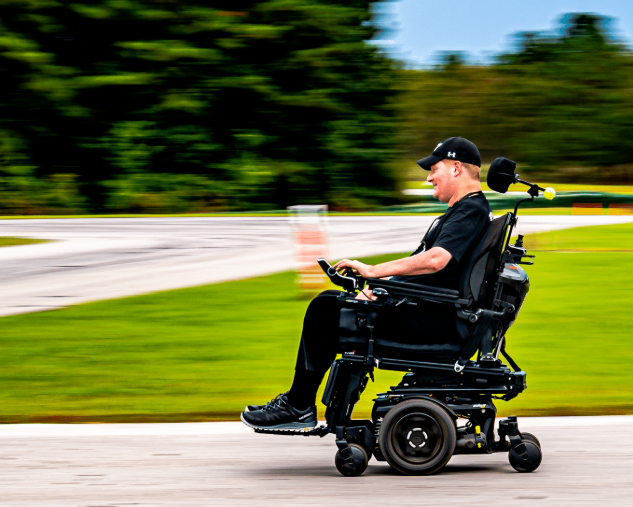
Ride smoothness sets these two wheelchair types apart. Power wheelchairs give you better comfort through built-in suspension systems. The motors soak up shock from bumps, cracks, and rough pavement. Spring-loaded casters and cushioned wheel mounts cut down jarring movements. Your body stays stable on rough outdoor ground.
Seating options grow wide with power models. Tilt-in-space functions shift your weight without changing how you sit. Recline features let you adjust backrest angles through the day. Leg rests that lift reduce swelling. Power seat lift brings you to eye level for talks or kitchen work. These adjustments happen with button controls. No manual repositioning needed.
Power assist wheelchairs have the same ride quality as manual chairs. Comfort depends on your cushion pick and tire type. Air-filled tires soften bumps better than solid rubber. Top-tier gel or air cushions spread pressure across your seat. But the frame itself doesn’t soak up shocks. You feel every crack in the sidewalk through the stiff manual frame.
People who travel long distances notice the gap fast. Power wheelchairs keep you comfortable through eight-hour days. Power assist models work well for short trips. Long use can cause discomfort. The manual frame sends road shakes straight to your body. Pick based on how many hours you’ll sit each day.
Portability and Transportation
Moving your wheelchair between locations affects your freedom. Vehicle storage, trunk space, and lifting weight matter just as much as how the chair performs on the ground.
Power assist wheelchairs keep the manual chair advantage—compact size and light build. Most models weigh 35–50 pounds total, including the motor units. Remove the battery pack and wheel motors, and you drop another 10–15 pounds. The frame folds flat in seconds. Slide it into a standard sedan trunk. No vehicle modifications needed. One person can lift and load the chair without strain. This setup works perfect for families using regular cars, frequent travelers, or users who move between multiple locations each day.
Power wheelchairs need serious transport planning. Base weight starts at 100 pounds. Add custom seating, upgraded motors, or larger batteries—you hit 200–300 pounds fast. The frame doesn’t fold. Wheels stay fixed wide apart. You can’t fit these chairs in normal trunks.
Most users install vehicle ramps or hydraulic lifts. Wheelchair-accessible vans run $40,000–$80,000 new. Portable ramps cost $200–$2,000 depending on weight capacity and length. Some power chairs break down into 3–4 pieces for transport. Even then, each section weighs 40–70 pounds. You still need help loading.
Travel frequency decides which option fits your life. Running errands in a regular car? Power assist wins. Using accessible transport that’s already available? Power wheelchairs deliver stronger performance without the portability tradeoff.
Cost Comparison
Budget planning? Start by looking at two different price setups.
Power assist wheelchairs cost $2,000–$5,000 upfront. This lower price works well for short-term rehab or mild mobility issues. Maintenance is easy. Wheel motors need replacing every 3–5 years. Battery packs cost $150–$300 each. Most users spend under $200 per year on service. Parts last longer because the manual frame handles most of the wear.
Power wheelchairs start at $4,000 for basic models. Mid-range units with tilt and programmable controls run $8,000–$15,000. Want custom seating, advanced joystick systems, and terrain-ready motors? Prices go past $30,000. Batteries need replacing every 18–24 months at $400–$800. Motor repairs cost $500–$1,500 per wheel. Electronics and control boards? Add another $300–$1,000 in possible repair costs.
Insurance changes everything. Medicare and private insurers often cover 80% of power wheelchair costs. You just need proper medical documentation. Power assist models? Coverage is less reliable. Many insurers call them “convenience upgrades” instead of medical needs.
Long-term value? Power wheelchairs win for full-time users. The higher upfront cost pays off across years of all-terrain use.
Making the Right Choice: Decision Framework
Three questions help you pick between power assist and power wheelchairs.
First: How much physical effort can the user provide? Can they push a manual wheelchair for short distances but get tired fast? Power assist works well. No upper body strength or bad fatigue? Power wheelchairs give full freedom.
Second: Where does use happen most? Mostly indoors with some outdoor trips? Power assist handles this. All-day outdoor use across different terrain? Power wheelchairs work better on grass, gravel, and slopes.
Third: Does portability or freedom matter more? Travel often in regular vehicles with tight storage? Power assist folds and lifts with ease. Need steady, long-distance movement without physical strain? Power wheelchairs make up for their size with better range and control.
Medical teams at Grace Medy use this framework to help B2B partners match devices to end users. Physical therapists, care facility managers, and medical equipment distributors rely on these questions to guide buying choices. Clear answers mean better results. Users get the right mobility solution from day one, not after expensive trial and error.
Conclusion
Your choice between a power assist wheelchair and a power wheelchair depends on three things: your lifestyle, physical ability, and how much independence you want.
Power assist wheelchairs work great if you have upper body strength. You stay active in moving yourself. The electric support kicks in on hills or rough ground. They’re lighter and easier to transport. Plus, they cost less.
Power wheelchairs give you full motorized control. You get complete independence without effort. This suits people with limited upper body strength or low stamina. Reliable mobility all day long—no physical strain.
Neither type is “better.” They just serve different needs.
