
What Is The Difference Between A Power Wheelchair And A Motorized Wheelchair?
A power wheelchair is a medical device built for people who can’t push a manual chair. Electric motors handle all the movement. The design meets strict medical standards. Safety tests, durability checks, and clinical trials are all part of the process.
A motorized wheelchair covers more ground. Any wheelchair with a motor fits this term. Basic powered units? Yes. High-tech smart models? Those too. Everything between also counts.
Here’s what separates them:
Power wheelchair: Needs medical certification. Meets FDA standards in the U.S. Made for clinical settings. Insurance companies call it durable medical equipment (DME).
Motorized wheelchair: Broad category. Medical standards? Maybe yes, maybe no. This includes fun models, short-term aids, and budget picks without medical papers.
From a factory view, every power wheelchair is a motorized wheelchair. But flip that around? It doesn’t work. Many motorized wheelchairs don’t hit the quality marks needed for medical-grade power chairs.
Your sourcing choices depend on this difference. Hospitals want power wheelchairs only. They need proof of medical compliance. Retail stores can carry motorized wheelchairs for casual users or short-term needs. Prices between these two can differ by 40-60%. Know what your market needs. This saves you from expensive mistakes in stock planning and approval processes.
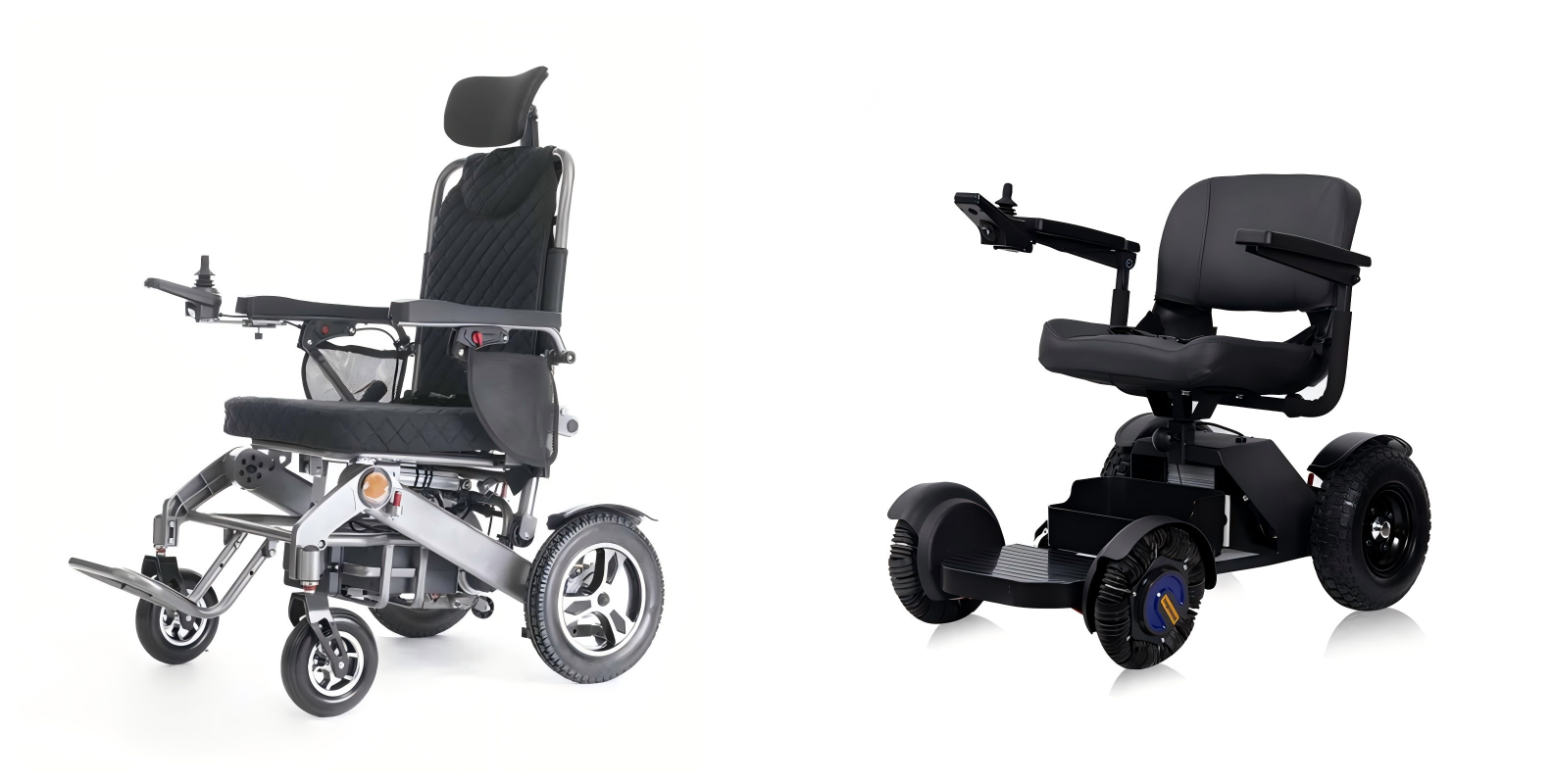
Power Wheelchair: Definition, Features & Core Characteristics
A power wheelchair runs on dual motors, electronic controls, and rechargeable batteries. Medical facilities use it as durable medical equipment (DME). It’s built for patients who can’t push manual wheelchairs due to limited upper body strength or endurance. The design focuses on clinical reliability, not recreational features.
Core components include:
Dual motor system: One motor powers each drive wheel. This gives balanced power and tight turns. You can navigate narrow hospital hallways with ease.
Programmable controller: A digital interface adjusts speed, acceleration, and braking sensitivity. Therapists set these based on what you can handle.
Battery configuration: Most units use two 12-volt deep-cycle batteries. Combined capacity runs from 50 to 80 amp-hours. Medical use requires this power reserve.
Safety brake system: Electronic brakes engage the moment you release the joystick. Mechanical parking brakes provide backup on slopes.
The seating system does more than provide comfort. Adjustable parts serve therapeutic needs. Seat depth affects your hip position. Backrest angle impacts your spinal alignment. Armrest height can reduce shoulder strain. Footrest placement controls leg circulation. Physical therapists set these measurements during prescription evaluations. A proper fit prevents pressure sores—a serious problem for full-time users.
Standard medical-grade features:
Weight capacity verification: Clinical models support 250-450 lbs. Bariatric versions handle up to 600 lbs. Each range goes through separate load testing.
Obstacle clearance: Ground clearance sits between 2-3 inches. Front casters are sized for door thresholds and minor curbs.
Turn radius: Compact models turn within their own footprint (zero-point turn). This helps in bathroom transfers and tight exam rooms.
Speed settings: Maximum speeds reach 4-6 mph. Speed limiters stop accidents in crowded clinical spaces.
Hospitals and rehab centers stock power wheelchairs because they meet FDA Class II medical device rules. Manufacturers document compliance through 510(k) clearance processes. Quality control includes fatigue testing (ISO 7176 standards), electrical safety checks, and electromagnetic compatibility tests. These certifications set medical equipment apart from consumer mobility products.
For B2B buyers, this medical-grade construction explains the price gap. A basic motorized wheelchair might cost $800-1,200. A certified power wheelchair starts at $2,500 and goes up to $15,000+ for specialized rehab models. The difference comes from engineering standards, not profit margins.
Motorized Wheelchair: Smart Technology Features
Modern motorized wheelchairs pack features that feel futuristic. Smartphone apps control your chair from across the room. GPS systems track routes and keep you from getting lost. Smart sensors spot obstacles before you hit them. Caregivers can help from far away with remote controls. These aren’t test models—you can buy them today.
The tech shift happened around 2018. Traditional power wheelchairs kept their focus on medical needs. Motorized wheelchair makers started adding everyday tech features. The focus changed from pure medical use to fitting daily life.
Current smart features include:
Mobile app control: iOS and Android apps link via Bluetooth. You can set speed limits, check battery life, and lock the chair from your phone. Some apps save different user profiles with custom control settings.
GPS navigation modules: Built-in GPS chips track where you are in real-time. Geofencing sends alerts to caregivers if you leave safe areas. Families can check route history to see daily travel patterns.
Collision avoidance sensors: Sound wave or light sensors scan the path ahead. The system slows down or stops when objects appear within 2-3 feet. This stops wall crashes and helps users with vision issues.
Voice command systems: You can connect with Alexa or Google Assistant for hands-free control. Just say “forward,” “stop,” or “turn left” instead of using a joystick. Speech recognition works right 95%+ of the time in quiet spaces.
Automatic folding mechanisms: Electric folding systems collapse the chair in 15-30 seconds. One button press does the whole job. Travel models fold small enough for car trunks—just 24 x 28 inches.
Weight cuts drive these new designs. Traditional power wheelchairs weigh 150-300 lbs. They use heavy medical-grade steel frames. Smart motorized wheelchairs use aircraft aluminum or carbon fiber. Total weight drops to 50-90 lbs without batteries. This makes air travel possible and one person can handle car transfers.
Motor tech got better too. Brushless DC motors took over from older brushed types. Efficiency jumped up 25-35%. Battery life went from 8-10 miles per charge to 15-25 miles. Lithium-ion batteries charge faster—full power in 4-6 hours versus 8-12 hours for lead-acid types.
As an electric wheelchair manufacturer, we see B2B buyers split two ways. Medical distributors want certified power wheelchairs with proven track records. Retail and online partners want smart motorized wheelchairs that pull in tech-loving customers. The price shows this split: basic smart models start at $1,800-2,500. Advanced units with full sensor packages reach $4,000-6,500. Neither type is “better”—they serve different markets with different needs.
Real-World Selection Criteria: Medical & Lifestyle Factors
Your target market shows you which wheelchair type to stock. Medical facilities follow different rules than retail customers. Map out buyer profiles. Usage patterns become clear.
Clinical & Long-Term Care Settings
Hospitals and nursing homes stock power wheelchairs only. Patients sit in these chairs 10-16 hours each day. The medical-grade build handles constant use. Seat pressure mapping stops tissue damage during long sitting periods. Programmable controls adjust as mobility declines.
Staff training covers power wheelchair maintenance. Therapists change seating positions every 2-3 months. This depends on patient needs. Electronic checks catch motor problems early. Repair parts arrive the next day from medical suppliers. Consumer-grade motorized units don’t have this support system.
Insurance coverage drives the choice too. Medicare and Medicaid need medical proof. FDA-cleared power wheelchairs count as durable medical equipment. The 80% reimbursement makes $8,000 rehab chairs affordable for patients who qualify. Families can’t afford special seating systems without this coverage.
Travel & Active Lifestyle Users
Portable motorized wheelchairs lead the travel market. Cruise ship passengers need chairs that fit cabin storage. Airport travelers want battery packs under 300 watt-hours. These meet TSA rules. Weekend shoppers like units that fold for car trunks in 30 seconds.
Weight becomes the key factor. A 65-lb folding motorized chair works for couples. One spouse can help the other. Both handle car transfers without paid help. The 200-lb power wheelchair needs vehicle lifts or accessible vans. That’s a $3,000-8,000 upgrade most families skip.
Active seniors choose motorized wheelchairs for part-time help. They walk short distances. But they need support in large stores or theme parks. Battery range of 15-20 miles covers full-day trips. Smartphone apps let adult children check location and battery status from anywhere. Medical-focused power models lack these lifestyle features.
Matching Products to Distribution Channels
Medical equipment distributors need certified power wheelchairs. Complete compliance papers matter. Buyers include VA hospitals, rehab centers, and insurance-contracted suppliers. Purchase orders list ISO testing reports and FDA clearance numbers. Price talks start at wholesale costs of $1,800-4,500. Features affect the final price.
E-commerce and retail partners stock motorized wheelchairs that photograph well. These ship without hassle. Product listings show portability, tech features, and quick setup. Customer reviews talk about vacation use and short recovery periods. Retail margins run 35-50% on units priced $2,200-5,500. Fast shipping and easy returns bring customers back.
Split your sourcing strategy 70-30 or 60-40. Base this on your channel mix. Medical distributors buy fewer units. But they reorder steadily. That’s 12-24 chairs every three months per account. Retailers move higher volume. Seasonal spikes hit around holidays and summer travel. Both markets grow. But product needs never overlap.
Common Misconceptions About Terminology
The biggest mistake buyers make? They treat power wheelchair and motorized wheelchair as perfect synonyms. Yes, they describe similar products. But the terms carry different weight in medical documentation, insurance claims, and international trade.
Misconception #1: “They’re identical products with different names”
Reality: A power wheelchair is always a medical device. It meets FDA or CE certification standards. A motorized wheelchair might be medical-grade. Or it might be a consumer product without clinical testing. The name signals regulatory status, not just motor type.
Insurance adjusters reject claims because of this confusion. You submit paperwork for a “motorized wheelchair” but Medicare requires “power wheelchair” documentation. The claim gets denied. Customers blame you. The issue wasn’t coverage—it was terminology mismatch.
Misconception #2: “Motorized means cheaper and lower quality”
Reality: Pricing doesn’t follow terminology. Premium smart motorized wheelchairs with lithium batteries and app controls sell for $5,000-6,500. Basic medical power wheelchairs start at $2,500. Quality depends on build specs, not naming convention. High-end motorized models use aircraft aluminum and brushless motors. Budget power chairs still use steel frames and brushed motors.
Misconception #3: “All powered wheelchairs qualify for insurance”
Reality: Insurance companies fund power wheelchairs that meet medical necessity criteria. Your doctor must prescribe them. A face-to-face evaluation proves need. Motorized wheelchairs marketed as lifestyle or travel products don’t qualify—even if they’re well-built. The classification matters more than features.
Conclusion
Power wheelchair and motorized wheelchair are the same thing—just different names for electric mobility equipment. The real choice isn’t about what you call it. It’s about finding features that fit your medical needs, lifestyle, and where you go each day.
You might need to move through tight indoor spaces. Or tackle outdoor terrain. Maybe you’re managing changing mobility limits. Focus on these eight key areas: control systems, customization options, portability, terrain capabilities, battery performance, insurance coverage, cost structure, and long-term maintenance. These factors decide if a wheelchair gives you real independence or becomes a frustrating letdown.
