
Manual wheelchairs cost serious money—especially for bulk orders at medical facilities, supplier evaluations, or inventory planning. But here’s what most buyers miss: How long will these mobility devices last?
Wheelchair lifespan changes a lot. Construction quality matters. So do usage patterns and maintenance. A basic folding model might work for 2-3 years. A premium ultralight frame? It could stay functional for over a decade.
Knowing what affects a manual wheelchair’s life expectancy protects your budget. It keeps users safe. You make smarter purchasing decisions—balancing upfront costs with long-term use. Here are the real numbers, material differences, and key factors that separate wheelchairs that fail early from ones built to last.
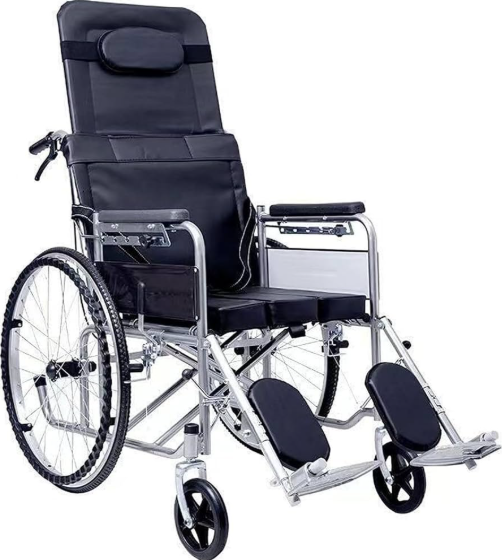
What Is The Life Expectancy Of A Manual Wheelchair?
Most manual wheelchairs last 3 to 7 years under typical usage. That’s the industry baseline. But this number shifts based on specific factors. Wheelchair manufacturers, wholesalers, and medical equipment suppliers need to understand these factors.
Industry data shows manual wheelchairs deliver 3 to 10 years of functional service life. This wide range reflects real differences in construction standards and usage conditions across the market.
Entry-level wheelchairs last 3-5 years. These models use standard materials and basic manufacturing processes. They work fine for occasional use or temporary mobility needs. But daily use pushes these frames to their limits faster. Buyers on a budget often choose these for short-term needs or facilities with planned replacement cycles.
Mid-range models last 5-7 years. Better welding techniques matter here. Manufacturers upgrade to improved alloys. The frame geometry gets more attention. Connection points use reinforced designs. These improvements give you extended service life without premium pricing.
High-quality wheelchairs reach 8-10 years or longer. Premium construction explains this longevity. Precision welding creates stronger joints. Advanced materials resist fatigue better. Load-bearing parts handle repeated stress cycles. Every design choice aims at durability.
The manufacturer’s quality standards matter more than buyers realize. Two chairs with identical material specs can have different lifespans. The difference lies in engineering rigor, production tolerances, and testing protocols before units ship.
Understanding these factors helps procurement teams match wheelchair specs to actual use cases. Match expected usage intensity with appropriate quality levels. This approach optimizes both budget allocation and user satisfaction over the equipment’s full service life.
Manual Wheelchair Lifespan by Type and Material
Your material choice determines how long a manual wheelchair works. The frame material controls weight spread, stress handling, and damage resistance. Different wheelchair types use different materials. Each has its own lifespan.
Standard Steel Wheelchairs
Steel frames give you proven strength at good prices. Hospitals, rehab centers, and rental places pick steel models. They trust the strong structure. A standard steel manual wheelchair lasts 4-6 years with everyday use. Good maintenance adds more time.
Steel takes impacts well. The frame absorbs shocks without cracking. But weight is a problem. Steel wheelchairs weigh 15-20 kg. This extra weight tires users who push themselves. Steel also rusts in humid areas or near the coast. Check the frame often to spot rust soon. Powder coating protects the surface.
Big buyers like steel wheelchairs for institutions. The low price helps manage replacement budgets. Weight matters less here. Caregivers do most of the pushing.
Lightweight Aluminum Alloy Wheelchairs
Aluminum changes everything about weight. These frames weigh 40-50% less than steel models. Aluminum manual wheelchair life hits 5-8 years in normal conditions.
Aluminum resists rust well. This gives it a big edge. The material grows a protective layer on its own. This blocks damage in wet places. Coastal medical centers get longer use from aluminum frames. Export markets want aluminum for this reason. The wheelchairs survive different climates during shipping and storage.
Less frame weight means less stress on joints. Lower weight creates less force on bearings. Stops and starts are easier. Wheel hubs wear down slower. Axle joints hold up longer. Parts across the wheelchair last longer.
There’s a trade-off with material wear over time. Aluminum gets harder with repeated bending. Bad aluminum frames crack faster than steel. Good manufacturing fixes this. Makers use the right alloy mix and heat treatments.
Folding Wheelchairs
Folding wheelchairs focus on easy transport. These models fold up for storage and moving. A folding manual wheelchair lasts 4-7 years. Build quality affects this number.
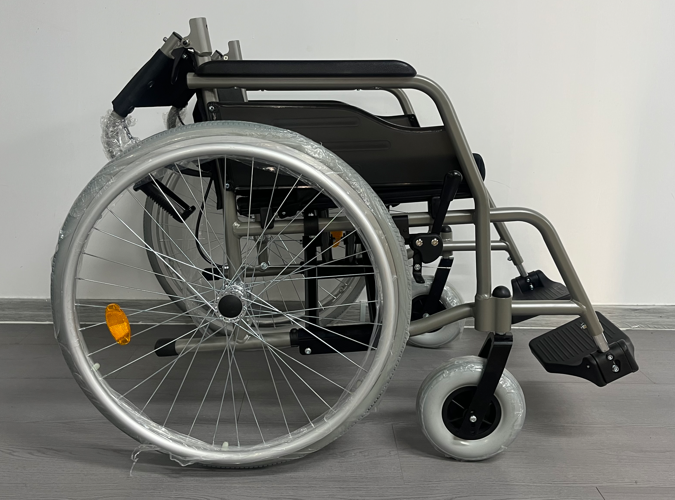
Hinges are the weak spots. Each fold stresses these points. Top folding wheelchairs use strong hinge systems. You can replace the bushings. Cheap models don’t have these features. The hinges wear out fast and get loose.
Frame thickness at fold points matters most. Makers build these spots with extra material. The tubes get thicker near hinges. Cross-bracing helps support. These choices split chairs that last from those that break down fast.
Medical equipment sellers must match folding wheelchairs to real use. A wheelchair folded twice each day for car trips wears differently than one folded ten times each day in a busy clinic.
High-End Custom Wheelchairs (Carbon Fiber / Titanium)
Premium materials take manual wheelchair lifespan past normal limits. Carbon fiber and titanium models give you 8-10+ years of active use. Some units go past 12 years with good care.
Titanium fights wear and tear extremely well. The material takes repeated stress without tiny cracks. Rust isn’t a problem. Titanium stays stable in almost any setting. Weight falls to 6-8 kg for complete chairs. Strong and light together means the higher price makes sense for serious long-term users.
Carbon fiber gives you the best strength-to-weight ratio. Advanced building methods create frames that soak up vibration and stay stiff. These wheelchairs handle impacts better than metal options. The material doesn’t rust or break down.
Premium wheelchairs work for active users and special medical needs. Sports medicine programs buy these for athletes. People with long-term disabilities get more from the longer life. The total cost over ten years often beats cheaper options.
Key Factors That Determine Wheelchair Longevity
Four key factors control whether a manual wheelchair lasts its full lifespan or breaks down too soon. Material quality and construction standards interact with these factors to affect real-world durability.
Usage Frequency and Intensity
How often someone uses a wheelchair matters more than most buyers expect. A wheelchair pushed across smooth indoor floors twice per day experiences minimal stress. The same model navigating outdoor terrain for 8-12 hours per day wears out much faster.
Outdoor usage speeds up wear and tear in multiple ways. Uneven pavement creates constant impact stress on frame joints. Curb drops shock the entire structure. Gravel and rough surfaces force wheels and bearings to work harder. Frames vibrate more. Fasteners loosen faster.
Indoor wheelchairs avoid these problems. Climate-controlled facilities protect materials. Smooth floors reduce impact forces. Stable temperatures prevent metal expansion and contraction cycles that weaken connections over time.
Active users create different wear patterns than passive users. Someone who pushes themselves puts direct force on handrims, wheel assemblies, and axle connections. Caregiver-pushed wheelchairs handle stress in a different way. The frame handles less repetitive pushing motion. But it absorbs more turning and maneuvering forces.
High-use situations demand better specs. Facilities serving active populations should invest in reinforced models. The extra cost delivers better value than replacing basic units often.
Environmental Conditions
Where you store and operate a manual wheelchair impacts its life expectancy. Environmental factors attack different parts through different methods.

Humidity causes multiple failure modes. Moisture gets into bearings and reduces how well they stay lubricated. Water speeds up rust on steel frames. Even powder-coated surfaces develop weak points where rust starts. Fabric parts like seats and backs absorb moisture. This creates conditions for mold growth and material breakdown.
Coastal environments present special challenges. Salt air attacks metal surfaces hard. Aluminum handles this better than steel. But connection hardware still corrodes. Stainless steel fasteners become essential in these locations. Regular washing removes salt deposits before they cause permanent damage.
Sand and dust create rough wear. These particles work into bearing assemblies. They act like grinding compound, wearing down smooth surfaces. Wheel hubs develop rough spots. Folding mechanisms lose precision. Sealed bearing systems protect against this, but they cost more upfront.
Temperature extremes stress materials in different ways. Repeated freeze-thaw cycles in cold climates make plastic parts brittle. High heat breaks down rubber tires faster and softens vinyl upholstery. UV exposure from sunlight breaks down both metal finishes and fabric materials.
Material selection should match where you’ll use the wheelchair. Aluminum alloy frames make sense for humid or coastal regions. Upgraded sealed bearings justify their cost in dusty or sandy conditions. Storage methods matter too. Indoor storage between uses extends lifespan much more than leaving wheelchairs exposed.
User Weight and Load Capacity
Operating near maximum rated capacity reduces manual wheelchair life expectancy a lot. Every wheelchair has an engineered weight limit. Exceeding this limit—or even approaching it often—causes faster wear across the entire structure.
Frame stress builds up at connection points. Welded joints handle designed loads with safety margins built in. Push beyond those margins and metal fatigue speeds up. Tiny cracks develop faster. What should last seven years might fail in three.
Bearing life relates to load. Wheel bearings, caster bearings, and axle assemblies all carry user weight plus the forces from movement. Heavier loads create higher contact pressures inside bearing races. This grinding action wears down smooth surfaces. Wheels that should roll well for years develop roughness and resistance.
Upholstery breaks down faster under higher weight. Seat slings stretch. Stitching experiences greater tension. Back supports lose their shape. These aren’t just comfort issues. They affect proper positioning and can lead users to shift weight in ways that stress the frame in an uneven way.
Smart spec matching prevents these problems. Choose wheelchairs rated 25-30% above actual user weight. This buffer zone provides longevity insurance. The frame operates well within design parameters. All parts last longer. Total cost of ownership drops because replacement cycles extend.
Maintenance Quality
Preventive maintenance separates wheelchairs that reach their full lifespan potential from those that fail too soon. Regular service fixes small problems before they become structural failures.
Cleaning removes harmful materials. Dirt holds moisture against metal surfaces. Spills create rust-causing conditions. Clean with mild soap each week to prevent buildup. Dry well after cleaning, especially in joints and crevices where water hides.
Fastener inspection prevents big failures. Vibration loosens bolts and screws over time. Check all connection points each month. This takes fifteen minutes. Tighten anything loose. Replace missing fasteners right away. One loose bolt creates uneven stress that damages surrounding areas.
Wheel maintenance extends mobility. Check tire pressure each week. Under-inflated tires increase rolling resistance. Users work harder and parts wear faster. Inspect treads for cuts or embedded objects. Clean debris from caster wheels. These simple steps prevent bearing damage and extend tire life.
Lubrication reduces friction wear. Moving parts need regular lubrication: folding mechanisms, wheel bearings, brake pivots. Use appropriate lubricants for each application. Too much lubrication attracts dirt. Too little causes grinding wear. Follow manufacturer specs.
A documented maintenance schedule adds years to manual wheelchair service life. Facilities that use structured preventive maintenance programs achieve lifespans 40-60% longer than those relying on reactive repairs. The time investment pays for itself many times over through delayed replacement costs and improved user safety.
Why This Matters for Wholesalers and Importers
Understanding manual wheelchair life expectancy gives distributors a real edge. This knowledge goes beyond basic product specs. Your sourcing choices affect warranty costs, customer retention, and profit margins across your entire product line.
Warranty claims cut into profits fast. A wheelchair that breaks at year three costs you more than one lasting to year five. You face return shipping costs. You need replacement inventory. Customer service time adds up. Stock models built for 7-8 year lifespans instead of 3-4 year basics. Warranty claims drop 40-60%. These savings are predictable. You can factor them into your pricing strategy.
Brand reputation builds over time. Medical facilities track which suppliers deliver reliable equipment. They remember. A physical therapy center buys twenty wheelchairs. They expect those units to serve patients for years. Durable units make your company their go-to vendor. Frames crack or wheels fail too soon? They switch suppliers. Durable products create buying relationships that last decades.
Inventory planning gets smarter with real-world lifespan data. Stock premium titanium models for active users and long-term care facilities. Keep mid-range aluminum options for general institutional needs. Reserve basic steel frames for short-term rental operations. Match product durability to actual use cases. This cuts overstocking of wrong specifications.
Total cost of ownership drives hospital buying decisions. Hospital buyers calculate five-year costs, not just sticker prices. A $450 wheelchair lasting seven years costs less per year than a $280 model needing replacement at year three. Show buyers this math. You justify premium pricing and close bigger orders.
We’re a manual wheelchair manufacturer. We engineer every frame joint and material choice for maximum durability. Our factory tracks field performance data across global markets. Partner with quality-focused manufacturers like us. You get access to this intelligence. Product selection shifts from guesswork to data-driven strategy. This protects your margins and builds market position.
Conclusion
Manual wheelchair life expectancy isn’t just numbers. It helps you make smart buying choices that protect your profits and serve customers better. You might source lightweight aluminum models lasting 3-5 years. Or you pick heavy-duty steel chairs built for 7+ years. Real value comes from matching quality with purpose.
This knowledge helps wholesalers and importers buy smarter. Pick suppliers who focus on durable materials, strong build quality, and solid quality control. Compare upfront costs with how long chairs last. You’ll replace fewer units. Plus, you build trust in your market.
The smartest move? Work with makers who know manual wheelchair lifespan shapes customer satisfaction and your brand’s reputation. Ask for detailed material specs, warranty terms, and real durability test data before your next bulk order. Your customers need mobility equipment they can count on. Make sure your chain delivers that reliability.
