
What Is The Proper Slope For A Wheelchair Ramp?
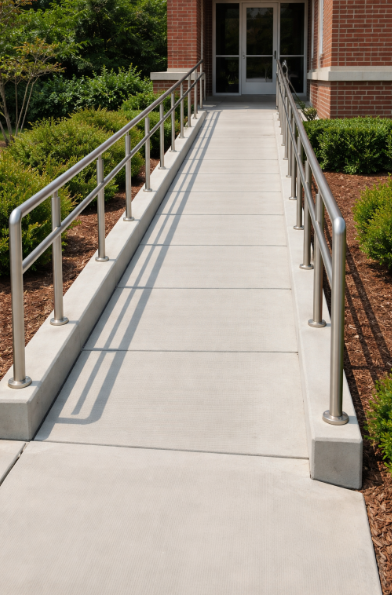
The accepted standard slope for a wheelchair ramp is 1:12. This means 1 inch of vertical rise for every 12 inches of ramp length.
This ratio is now the gold standard for accessibility guidelines around the world. The Americans with Disabilities Act (ADA) set it as the baseline for commercial use. Most international building codes now use similar standards.
Why 1:12 Became The Universal Standard
This specific ratio wasn’t picked randomly. Years of research and user testing showed that 1:12 hits the sweet spot. It balances usability with practicality.
For manual wheelchair users, this slope allows independent travel. You won’t strain your arms too much. You can push yourself up without help or frequent breaks. The angle stays gentle enough to control your descent.
For powered wheelchairs, the 1:12 ratio supports stable climbing. It won’t overload the motor. Battery life stays reasonable. The chair keeps consistent traction on the ramp surface.
For caregivers, this slope reduces the physical effort needed to push someone uphill. It cuts the risk of losing control on the way down.
The Balance of Space and Accessibility
The 1:12 standard balances accessibility with space use and construction cost. Steeper slopes save space but hurt safety. Gentler slopes boost comfort but need more real estate and materials.
Most facilities find that 1:12 fits their property limits. It delivers real accessibility.
ADA Commercial and Public Ramp Requirements
Commercial and public facilities follow strict federal rules. The Americans with Disabilities Act sets a maximum slope of 1:12 for all wheelchair ramps. This is law, not a suggestion. Break it, and you face real penalties.
Core ADA Slope and Dimension Standards
The ADA sets clear measurements for every commercial ramp:
Maximum slope: 1:12 ratio (one inch of rise per 12 inches of ramp length)
Maximum rise per ramp run: 30 inches before requiring a landing
Minimum clear width: 36 inches between handrails or curbs
Landing requirements: Level platforms at both top and bottom, minimum 60 inches long
Handrail mandate: Required when the rise exceeds 6 inches
All these measurements work as one system. You need to follow every rule.
What Buildings Must Comply
ADA ramp rules cover any facility open to the public or with employees. Here’s what that includes:
Healthcare facilities: Hospitals, medical clinics, rehab centers, nursing homes
Schools: Public and private schools, universities, training centers
Transportation hubs: Airports, train stations, bus terminals, parking garages
Government buildings: Courthouses, post offices, city offices, libraries
Commercial properties: Retail stores, restaurants, offices, hotels, entertainment spots
Your building might be older than the ADA (passed in 1990). You still need to upgrade accessibility during renovations. Old buildings don’t get a pass on structural changes.
ADA Slope Exceptions For Existing Buildings
Older buildings don’t always have enough space for ramp construction. The ADA understands this. So it gives limited options for existing structures that face real space limits.
Steeper Slopes – Two Allowed Cases
Buildings can use steeper slopes in two situations where a full 1:12 slope won’t fit:
1:10 slope – Allowed for vertical rises up to 6 inches maximum
1:8 slope – Permitted for short rises up to 3 inches maximum
These aren’t general alternatives you can pick at will. They’re emergency provisions. Structural limits must make standard compliance impossible. You’ll need to document why the 1:12 slope won’t work before using these options.
Real Problems With Steeper Slopes
Don’t see these exceptions as easy fixes. Manual wheelchair users struggle on 1:8 or 1:10 slopes. The steeper angle needs much more upper body strength for every foot of travel.
Electric wheelchairs face different challenges. Heavy power chairs can lose grip on steep inclines, more so when wet. Motors work harder. Batteries drain faster. Descent becomes harder to control.
Use these exceptions rarely. They’re meant for occasional access points. Not primary entrances with regular traffic. A 1:8 slope might work for a loading dock side entrance. But it’s a poor choice for your main facility entrance. Dozens of wheelchair users pass through that entrance each day.
Space limits got you stuck? Consider other solutions first. Platform lifts or vertical wheelchair lifts often give better access than a steep ramp squeezed into tight quarters.
Residential Wheelchair Ramp Slope Guidelines
Home wheelchair ramps don’t face the same strict federal rules as commercial properties. Residential projects need to balance accessibility with real limits like yard size, budget, and existing building design.
The 1:12 Ratio Remains The Best Practice
Most accessibility experts recommend the 1:12 slope for home ramps. This ratio gives the safest, most comfortable experience for wheelchair users. Your family member can move on their own. They won’t get tired or need constant help.
Physical therapists see that manual wheelchair users have better control on 1:12 slopes. They also have more stamina. Powered wheelchair batteries last longer too. The gentler angle puts less wear on motors and drive systems.
Local Building Codes Control Residential Flexibility
The ADA doesn’t govern private homes. Your local building department does. Many cities write residential ramp codes based on ADA principles. But they allow small changes.
Some areas permit slopes between 1:12 and 1:10 for homes with documented space limits. Others stick to the 1:12 standard. Always check with your local building inspector before you finalize ramp plans.
Permit applications usually require:
– Detailed slope calculations and measurements
– Site photos showing available space
– Documentation explaining why gentler slopes won’t work (if requesting exceptions)
Space Constraints In Real Homes
Urban homes and properties with small yards struggle to fit long ramps. A 36-inch entrance height needs a 36-foot ramp at 1:12. That’s a lot of space. Many homeowners don’t have it.
Space won’t accommodate 1:12? Consider these alternatives before going steeper:
– Switchback ramps with 90-degree or 180-degree turns and level platforms
– Vertical platform lifts for very tight spaces
– Gentler slopes like 1:14 or 1:16 if you have extra room to work with
Steeper residential slopes sacrifice user independence. The person using your ramp may need help every time they come and go.
How To Calculate Ramp Length For Proper Slope
Math drives every successful ramp project. Get your measurements wrong, and you’ll waste money on materials that don’t fit your space.
The Basic Formula
Ramp length uses a simple equation:
Total Vertical Rise × Slope Ratio = Required Ramp Length
For the standard 1:12 slope, take your vertical rise in inches and times it by 12. This gives you the minimum ramp length in inches.
Step-by-Step Calculation Process
Step 1: Measure Your Vertical Rise
Start at ground level. Measure straight up to your entrance threshold. Don’t measure the diagonal distance. You need the pure vertical height difference.
A typical residential doorway sits 24 inches above ground. Commercial loading docks range from 48 to 60 inches.
Step 2: Use The Slope Multiplier
-
1:12 slope – Times your rise by 12
-
1:10 slope – Times your rise by 10
-
1:8 slope – Times your rise by 8
Step 3: Convert To Usable Measurements
Your calculation gives you inches. Divide by 12 to get feet.
Real-World Examples
Example 1 – Standard Residential Entry:
– Vertical rise: 24 inches
– Calculation: 24 × 12 = 288 inches
– Final length: 24 feet
Example 2 – Commercial Loading Dock:
– Vertical rise: 48 inches
– Calculation: 48 × 12 = 576 inches
– Final length: 48 feet
Example 3 – Small Threshold:
– Vertical rise: 6 inches
– Calculation: 6 × 12 = 72 inches
– Final length: 6 feet
Account For Landings In Your Total
ADA requires a landing every 30 inches of rise. Each landing platform adds 60 inches minimum to your total ramp system length.
A 60-inch rise needs two ramp runs plus one landing: (30 × 12) + 60 + (30 × 12) = 780 inches or 65 feet total.
Get your calculations right the first time. This prevents expensive redesigns. Plus, you can budget materials better and confirm your property has enough space before building starts.
Gentler Slopes: 1:16 to 1:20
Slopes like 1:16 or 1:20 go beyond ADA minimums. They deliver real benefits in specific settings. These ratios mean 16 or 20 inches of ramp length for every inch of vertical rise. The result? You get longer ramps. They take more space and materials. But they provide better accessibility.
Where Gentler Slopes Work Best
Hospitals and rehab centers are prime spots for 1:16 to 1:20 slopes. Patients healing from surgery or injury don’t have full strength. Physical therapists say gentler inclines cut strain during recovery. Patients can stay independent without wearing themselves out.
Long ramp runs that cover big vertical distances work better with reduced angles. A 60-inch rise at 1:16 needs 80 feet of ramp. Compare that to 60 feet at 1:12. The extra length means less effort per foot traveled. Manual wheelchair users feel way less arm fatigue across long distances.
Users with limited upper-body control have trouble on standard 1:12 slopes. Conditions like muscular dystrophy, cerebral palsy, or arthritis make steeper angles hard to use. Sometimes impossible to use alone. A 1:20 slope can mean the gap between doing it yourself and needing help.
Heavy electric wheelchairs put big demands on motors and batteries. Power chairs often weigh 300-400 pounds before you add the user. Gentler slopes reduce motor strain. They extend battery range. They cut down maintenance needs. Facility managers find that wheelchair repair costs drop with 1:16 or 1:20 slopes.
The Trade-Off: Space and Budget Versus Performance
Gentler slopes need much more construction length. Property owners must have enough space for the extended run. Material costs go up in proportion. A 1:20 slope uses 67% more decking than a 1:12 slope for the same height.
Premium care facilities see this as a smart investment. The better user experience makes it worth it. Lower injury risk adds value. Reduced long-term maintenance covers the upfront cost. Budget-tight projects may struggle with the space and cost needs.
Pick 1:16 to 1:20 slopes if your priority is top comfort and safety over small construction space. These ratios are best-in-class accessibility standards.
Conclusion
Getting the right slope for a wheelchair ramp goes beyond meeting code requirements. It creates safe, dignified access for everyone who uses it. You might install a commercial ramp that meets the ADA’s 1:12 ratio. Or you design a residential solution with more flexibility. Either way, understanding slope calculations helps you balance accessibility, space limits, and user safety.
Steeper isn’t better for ramp design. Users with limited upper body strength need gentler slopes. Powered wheelchair users benefit too. Slopes like 1:16 or 1:20 make navigation much easier. They also cut down on fatigue. Facility managers, contractors, and B2B buyers need ramp systems that work. Partner with manufacturers who value both code requirements and user experience. Your investment will serve the community for years.
