
Picking a mobility aid feels tough. You see two popular choices that look alike but work differently.
Electric wheelchairs and mobility scooters both give you independence and freedom. But their design and features are quite different. Each one suits different people.
This guide covers everything. You’ll see how each performs indoors and outdoors. We compare comfort and how easy they are to move.
Both electric wheelchairs and electric scooters have strong points and limits. You’ll find out which one fits your lifestyle, physical needs, and budget. This way, you invest in a mobility tool that makes life easier every day.
Which Is Better, An Electric Wheelchair Or An Electric Scooter?
Neither option wins every time. The best choice depends on who uses it and where.
Medical distributors and care facilities see clear patterns. Hospitals stock electric wheelchairs for patients with severe mobility loss. Rehab centers pick scooters for people getting their strength back after surgery.
Your physical condition matters most. A person with muscular dystrophy needs a wheelchair’s full support. Someone with arthritis who tires fast gets more from a scooter’s temporary help.
What Is an Electric Wheelchair?
An electric wheelchair uses battery power to move. A joystick mounted on the armrest controls direction and speed. Push the stick forward to go ahead, pull back to reverse, and tilt sideways to turn.

The design centers on full-time support. The seat provides strong back and neck support. Armrests hold your weight during long sitting periods. Footrests keep your legs in the right position.
Core features include:
-
Powered wheels – Electric motors drive the wheels without manual pushing
-
Control systems – Joystick, head controls, or sip-and-puff devices match different abilities
-
Adjustable seating – Tilt, recline, and leg rest positions you can change
-
Medical-grade stability – Wide wheelbase stops tipping on slopes
Most models work best indoors. The turning radius fits through standard doorways (32 inches wide). You can move around furniture. You can go through kitchens. You can access bathrooms without hitting walls.
Battery life runs 8 to 15 hours per charge. This covers a full day of movement around your home or workplace. Heavy-duty batteries power up to 20 miles on outdoor models.
Electric wheelchairs serve people who cannot walk or have severe weakness. Spinal cord injuries need this support. So do cerebral palsy, ALS, and advanced MS. Users spend 8 to 16 hours seated each day.
The device becomes an extension of your body. You depend on it for every movement from morning until bedtime.
What Is an Electric Scooter (Mobility Scooter)?
Mobility scooters look like mini vehicles, not medical gear. A tiller or handlebar steers the front wheels. Twist the throttle to go. Press the brake lever to stop.
This design works if you can sit without extra support. Your back stays upright on its own. Your hands grip the controls and turn the tiller left or right. Your feet rest on a flat platform, not elevated footrests.
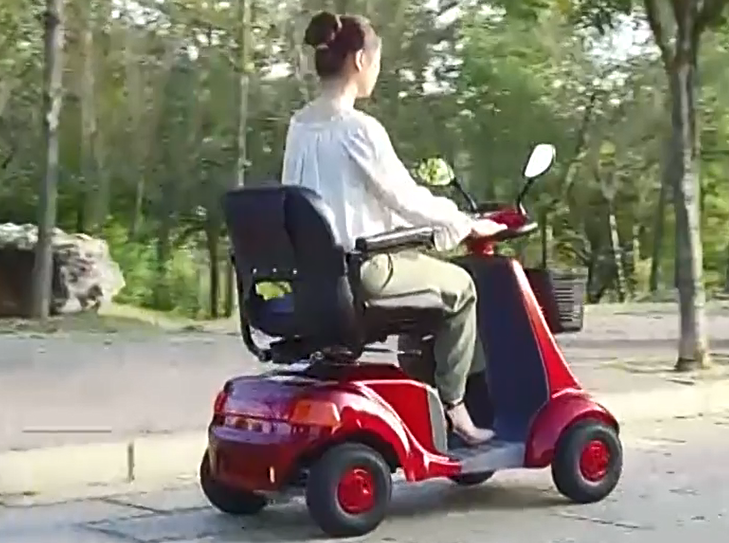
Key design elements:
-
Three or four wheels – Three-wheel models make tight turns. Four-wheel versions stay stable on rough ground.
-
Swivel seat – Rotate to get on and off from the side. No need to climb over armrests.
-
Front-mounted controls – Tiller, speed dial, and horn sit in front like a motorcycle.
-
Storage basket – Carry groceries, bags, or personal items in the front basket.
These scooters work great outdoors. Ride to the mailbox. Visit neighbors down the street. Get through parking lots at shopping centers. Sidewalks and paved paths? No problem.
Battery range hits 15 to 30 miles based on the model. Charging takes 6 to 8 hours overnight. Heavy-duty versions carry up to 350 pounds. They handle gentle slopes too.
Who needs one? People who walk short distances but tire fast. Arthritis limits how far you can go. Breathing problems make long walks hard. Balance issues raise fall risks on long trips.
You still walk around your home. The scooter waits in the garage for trips and errands. It’s your backup, not your daily ride. Distance gets tough? That’s where it helps.
Indoor Maneuverability: Tight Spaces vs Open Areas
Electric wheelchairs work best in tight indoor spaces. Most models have a turning radius of 24 to 30 inches. You can spin around in a hallway without backing up. A narrow bathroom doorway at 32 inches wide? Done in one smooth motion.
The joystick gives you precise control. Ease past furniture corners. Line up with tables and desks. Stop right where you need to be. This precision helps in apartments or older homes with small rooms.
Hospitals stock electric wheelchairs for good reason. Patient rooms measure 10 by 12 feet on average. Beds, medical equipment, and visitor chairs fill the space quickly. Wheelchairs move around all these obstacles easily. Nursing home corridors stay busy with staff carts and walkers. The tight turning radius prevents traffic jams.
Electric scooters need 54 to 60 inches to complete a full turn. That’s double what wheelchairs need. Three-wheel scooters turn tighter than four-wheel versions. But they still need more room. Your living room works fine. Open floor plans pose no challenge. But a narrow hallway? You’ll reverse and adjust multiple times.
Scooters shine in open indoor settings. Shopping mall aisles run 60 to 72 inches wide. Grocery stores offer even more space. Big box retailers give you room to cruise. The scooter’s speed advantage shows here. You can cover ground faster between departments. No fatigue.
Outdoor Performance: Range, Speed, and Terrain Handling
Speed makes a big difference outdoors. Electric scooters travel 5 to 8 mph on average. Some heavy-duty models hit 10 mph on flat pavement. That’s fast enough to keep up with pedestrian traffic on sidewalks. You can cruise through parks without feeling left behind.
Electric wheelchairs top out at 3 to 5 mph. Safety comes first in their design. The lower speed keeps you stable on turns and slopes. You won’t tip over during sharp direction changes.
Want to cover distance? Scooters win here too. Battery range stretches 15 to 30 miles per charge. Run errands across town. Visit friends in the next neighborhood. A full day of outdoor activities won’t drain the battery.
Standard electric wheelchairs give you 8 to 12 miles. That works fine for local trips around your block or nearby stores. Outdoor power wheelchairs offer 15 to 20 miles. But those cost a lot more.
Terrain handling depends on wheel size and suspension. Scooters mount 8 to 12-inch pneumatic tires. Air-filled wheels soak up bumps from cracked sidewalks. Grass, gravel paths, and gentle dirt trails become accessible. Four-wheel scooters beat three-wheel versions on uneven ground. The extra stability helps on slopes and rough surfaces.
Electric wheelchairs use smaller solid wheels. Most measure 6 to 8 inches. They roll well on pavement. But tree roots, potholes, and loose gravel cause problems. The chair bounces and shakes. You feel every bump through the seat.
All-terrain power wheelchairs do exist. Larger wheels, stronger motors, and tougher frames set them apart. These models tackle hiking trails, beach sand, and light off-road conditions. But expect to pay $8,000 to $15,000. That’s double what standard models cost.
Parks, shopping centers, and city sidewalks suit scooters best. Their speed and range fit outdoor activities. Electric wheelchairs work better for mixing indoor precision with occasional outdoor trips.
Comfort and Postural Support: All-Day Use Considerations
Sitting for 8 to 12 hours straight puts serious stress on your body. Pressure builds on your tailbone, spine, and hips. Without proper support, pain starts within 2 to 3 hours. Skin breakdown becomes a real risk for people with limited mobility.
Electric wheelchairs solve these problems with medical-grade seating systems. The cushions use high-density foam or gel inserts. These materials spread your weight across the seat surface. Pressure points disappear. Your tailbone and hip bones don’t carry all the load.
Adjustable Positioning Features
The backrest tilts and reclines on most power wheelchair models. Tilt shifts your whole seating angle backward. Your hip position stays the same. This relieves spine pressure. You won’t slide forward. Recline opens the angle between your seat and backrest. Your lower back gets a break from sitting upright all the time.
Elevating leg rests lift your feet and calves. Swelling goes down after hours of sitting. Blood flow improves. Some wheelchairs offer power adjustments. Press a button to change positions throughout the day. No manual lifting needed. No repositioning required.
Headrests provide neck support during long sitting periods. Lateral supports on the sides keep your torso centered. Custom contoured cushions fit your exact body shape. These features matter if you sit 10+ hours each day.
Scooter Seating Limitations
Mobility scooters mount a padded captain’s chair. The seat swivels and includes basic cushioning. Armrests flip up for easy transfers. That’s about it for adjustability.
The backrest stays fixed at one angle. No tilt. No recline. No pressure relief options. Your spine holds the same position for your entire ride. An hour feels fine. Three hours gets uncomfortable. All-day use creates real pain.
Scooter seats work well for 2 to 4 hour outings. Shopping trips stay comfortable. So do errands or visiting friends. But medical appointments that last all day? Extended outdoor events? You’ll feel it in your back and hips.
Got a job that requires 8-hour shifts? Need to stay seated during long gatherings? Electric wheelchairs give you the postural support your body needs. Scooters work better for part-time mobility needs.
Conclusion
An electric wheelchair or an electric scooter? There’s no universal winner here. Pick what fits your lifestyle, physical needs, and how you spend your day.
You need solid back support? Spend most time indoors? Want comfort for long hours of sitting? An electric wheelchair works better for you.
Got strong upper body strength? Travel outdoors a lot? Want longer range and faster speeds? A mobility scooter serves you better.
The right choice changes how independent you feel each day. It affects your quality of life too.
Talk to a healthcare professional before you buy. An occupational therapist can check what works for your situation. Many medical suppliers let you try devices first. Test both options where you’ll actually use them.
The best mobility device? It’s not about fancy features or the cheapest price. It’s the one you’ll use every single day with confidence. The one that expands your world instead of limiting it.
Your mobility, your choice, your freedom.
