
Medicaid Policy on Hospital Beds as DME
Medicaid treats hospital beds as durable medical equipment (DME). You get coverage if a bed is needed for medical reasons. A physician’s prescription defines medical necessity. Supporting documents must show the equipment is essential. This could be to protect life, manage serious illness, prevent disability, or ease severe pain.
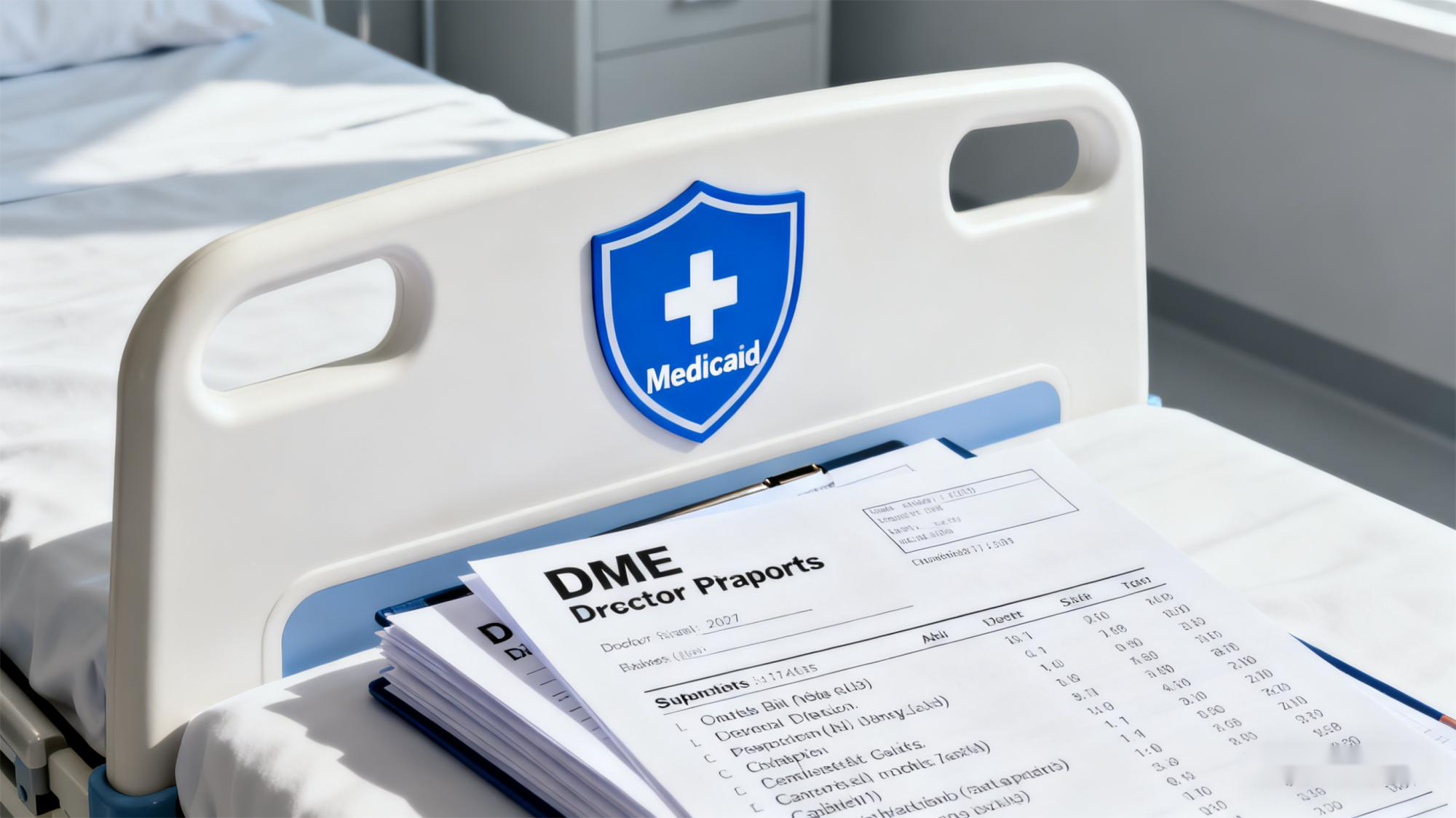
Medical Necessity Requirement for Medicaid Hospital Bed Coverage
Medicaid covers hospital beds when there’s clear medical need. The bed must be vital for diagnosing, treating, or managing a health condition. Regular beds won’t work for these situations.
Key Criteria for Medical Necessity
Physician’s Prescription and Documentation:
A Medicaid-enrolled doctor must state why you need the hospital bed.
The paperwork specifies your condition (like mobility problems or severe illness) and what bed features you require.
Qualifying Health Conditions and Functional Needs:
Common qualifying conditions:
Severe arthritis
Stroke with loss of mobility
Muscular dystrophy
Paralysis or spinal cord injuries
Chronic lung or heart disease that requires bed adjustments
Multiple limb amputations
You can’t use a regular bed without risk or difficulty.
Functional Assessment:
Medicaid needs proof you can’t do basic tasks. Getting in or out of bed without special equipment is an example.
Types of Requirements and Documentation
Documentation must include:
A medical necessity statement with detailed diagnosis
A review of your daily living activities
Previous equipment use history (if any)
A specific prescription showing what bed type and features you need
A home environment check to confirm the equipment fits
Medical necessity sits at the core of Medicaid hospital bed coverage. You must have documented, essential health needs to get approval for this equipment.
Physician Prescription or Order for Medicaid Hospital Bed Coverage
A physician’s prescription or order is the foundation for Medicaid and Medicare to cover a hospital bed for home use. This step ensures the bed is provided when there’s a medical need and proper documentation.
What the Doctor’s Prescription Must Include
Patient’s Diagnosis: The order must specify the medical condition. This could be severe arthritis, spinal cord injury, limb amputation, heart disease, or complex fractures. The diagnosis shows why a hospital bed is needed at home.
Medical Necessity: The doctor must explain why a standard bed won’t work. They need to state how a hospital bed helps with treatment, recovery, or patient safety.
Special Features Requested: Any special attachments or bed features must be included. For example, elevation helps with heart disease. Immobilization supports fracture healing.
Weight Documentation: For bariatric (heavy-duty) beds, a recent patient weight is often required. This weight must be documented in the prescription.
Duration of Use & Physician Details: Expected length of use should be listed. The prescribing physician’s identification and contact information go here too.
Medicaid and Medicare require clear physician documentation for hospital bed coverage. This includes all supporting details and supplier participation. Patients get the equipment they need for safe, effective home care.
Examples of Qualifying Medical Conditions for Medicaid Hospital Bed Coverage
Medicaid covers hospital beds based on medical necessity. A physician’s prescription proves this need. Detailed medical documentation is also required.
Common Qualifying Medical Conditions
Chronic obstructive pulmonary disease (COPD)
Congestive heart failure
Muscular dystrophy
Parkinson’s disease
Severe arthritis that limits mobility
Multiple sclerosis
Chronic lung conditions (asthma, chronic bronchitis, emphysema)
Diabetes with complications that affect mobility or healing
Stroke with paralysis or major weakness
Pressure ulcers or bedsores that need regular repositioning and pressure relief
Recent major surgery that requires extended home recovery
Older adults with frailty who cannot get in and out of regular beds without help
Intellectual or developmental disabilities that limit physical mobility
Physical injuries that restrict mobility (spinal cord injuries, severe limb fractures)
Multi-Condition Group Approvals
Medicaid often approves hospital beds for patients with a combination of conditions, such as:
– Diabetes plus chronic heart failure
– Chronic heart failure plus cardiovascular disorders
– Diabetes plus cardiovascular disorders
– Stroke combined with heart or vascular disease
Groups Most Often Approved
Low-income adults
Older adults (65+)
People with major physical disabilities
Children with complex medical needs who meet medical necessity and state income requirements
Key Takeaway
Medicaid looks at both the medical condition and functional limits. Physician documentation and home circumstances matter. Getting a hospital bed requires meeting strict criteria for medical necessity. Staff must properly assess the patient’s need.
Patient Costs and Co-Pays for Medicaid Hospital Bed Coverage
Medicaid covers hospital beds based on your state’s program rules. Your out-of-pocket costs vary. Common expenses include co-pays, rental fees, and extra charges for certain models or features. You might also pay for upgrades.
Typical Patient Payment Scenarios
Co-Pays:
Most states require a small co-pay for durable medical equipment (DME). Hospital beds fall under this category. The fee runs between $3 and $5 per item. Some states skip these co-pays for children. People with both Medicare and Medicaid (dual eligibles) often get waivers too. Check with your local Medicaid office for the exact amount.
Deductibles:
Medicaid doesn’t use deductibles for hospital beds in most cases. Medicare does, but Medicaid is different. You just pay the co-pay, if your state requires one.
Specialty Beds and Features:
Medicaid covers standard semi-electric or manual hospital beds. These must meet medical necessity requirements. You want a model with luxury features? You’ll pay the price difference for extras not deemed medically essential. Enclosed beds serve special medical needs. They cost between $3,789 and $19,438. Medicaid might not cover the full price. This happens often if the cost exceeds standard model reimbursement rates.
Accessory Costs:
Mattresses, rails, and extra features need coverage approval. A physician must document medical necessity. No documentation? These become out-of-pocket expenses.
State Policy Variations and Reimbursement Issues
Coverage Varies:
Each state’s Medicaid program sets its own co-pay limits. Most states cap total co-pay costs at about 5% of household income for all services. What you pay per hospital bed transaction? That’s much less.
Pricing and Markup Concerns:
Medicaid’s hospital bed reimbursement changes by state and supplier. Markups affect high-end beds and specialty models. Your personal cost goes up if Medicaid limits reimbursement amounts.
Check Your Coverage:
Medicaid coverage for hospital beds isn’t the same nationwide. Consult your state Medicaid manual or local agency. They’ll explain which bed types get covered. You’ll learn what features are excluded. Plus, you’ll find out your exact cost responsibility.
Key Points for Medicaid Patients
Expect small co-pays. Most children and dual enrollees are exempt.
No deductibles for DME in most Medicaid programs.
You pay the difference for non-covered features or models.
Rental co-pays exist unless your local policy waives them.
Out-of-pocket costs run much lower with Medicaid than private insurance. But differences exist between states.
Your hospital bed request comes with costs. These depend on documented medical need and your state’s Medicaid coverage rules.
Application Process Overview
-
Get a physician’s prescription. This states the medical need.
-
Complete all required authorization forms and documents. File them promptly.
-
Check coverage with your state Medicaid office.
-
Arrange the bed with a Medicaid-approved DME supplier.
Medicaid policies aim to ensure fair access to essential hospital bed equipment. This supports the health, safety, and quality of life for people with serious medical or mobility challenges.
