
Sports Wheelchair Vs Daily Use Wheelchair: Performance And Design Comparison
Two wheelchairs can sit side by side in a showroom and look almost identical. Same wheels. Same frame silhouette. Completely different machines.
The gap between a sports wheelchair and a daily use wheelchair isn’t about looks — it’s about purpose. One is built for peak output: explosive turns, low center of gravity, aggressive camber angle, zero energy wasted. The other is built for endurance: all-day comfort, easy transfers, trunk storage, and surfaces that range from hospital linoleum to cracked sidewalks.
Design intent shapes every specification:
Frame geometry — optimized for propulsion efficiency vs. stability across varied terrain
Seat angle adjustment — tuned for athletic positioning vs. postural support
Weight capacity and durability targets — matched to very different day-to-day demands
Knowing which category solves your problem is the whole game. Everything else — budget, fit, performance — follows from getting that one distinction right.

What Makes a Sports Wheelchair Different From a Daily Use Wheelchair
Purpose is the dividing line — and it goes deeper than most buyers expect.
A sports wheelchair has one job: performance. Basketball, tennis, track racing — these sports demand explosive acceleration, sharp directional changes, and a chair that feels like part of the athlete’s body. Every component cuts resistance and pushes output to the limit.
A daily use wheelchair faces a different set of demands. It has to handle everything a typical Tuesday brings: a grocery run, a doctor’s visit, a cracked sidewalk, an elevator with a tight door. You need comfort across hours, not minutes. Reliability matters more than raw speed.
That difference in purpose produces two distinct machines at the engineering level:
Sports wheelchairs prioritize control, low weight, and instant responsiveness
Daily wheelchairs prioritize durability, all-surface stability, and comfort across long hours of use
Neither type is better than the other. They solve different problems. Mixing them up leads to expensive mistakes.
The line between these two categories is starting to blur. Some adaptive sports equipment manufacturers — including brands like Grace Medy — now build ultra-lightweight chairs that deliver real wheelchair propulsion efficiency without giving up the practicality that daily users need. These hybrid designs still make up a small slice of the market. But they point clearly to where things are headed.
Frame & Material Design: Lightweight Rigid vs Durable Foldable
The frame isn’t just the skeleton of a wheelchair — it’s the engineering statement about how you’ll live your life.
For sports wheelchairs, that statement is rigid. No hinges. No fold points. No flex in the joints. A rigid frame wheelchair pushes every ounce of force straight into forward motion. That’s what a basketball player needs when cutting across the key in the final quarter. Build that frame from aircraft-grade aluminum, titanium, or carbon fiber, and you get a chair that’s both featherweight and rock-solid.
Low mass matters more than most buyers first expect. Shaving half a kilogram off a lightweight sports wheelchair isn’t just an elite-level gain. It cuts shoulder strain across thousands of push strokes every day. That adds up fast.
Daily-use wheelchairs work from a different starting point. The folding wheelchair daily use design solves one real problem: your life doesn’t happen in one room. A chair that folds flat fits in a car trunk, squeezes into a narrow elevator, and doesn’t eat up space in a small apartment. Foldability isn’t a trade-off — it’s the whole point.
There is a structural cost, though. Each fold point adds a small amount of flex. That flex eats some of your push energy. Fine for a daily commute. A problem on a fast break.
Durability needs split here too. Daily chairs take on cracked sidewalks, door thresholds, and years of hard transfers. High-strength aluminum alloys absorb that wear without the premium price of titanium. Grace Medy built their daily-use line around this balance — frames that stay solid where it counts and keep the overall weight light enough for real-world use.
Wheel Configuration & Camber Angle: How They Affect Maneuverability and Stability
Look at the wheels before anything else. They tell you everything.
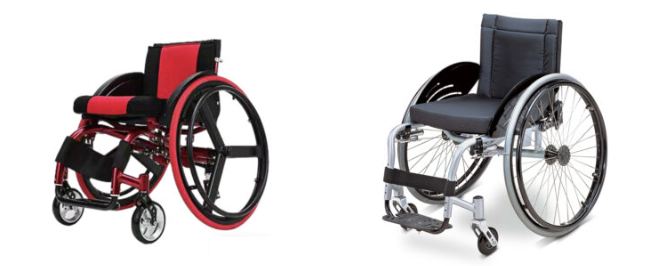
The rear wheels on a sports wheelchair aren’t vertical. They angle outward from the seat — that’s the wheelchair camber angle. It does two things at once. First, it drops the chair’s center of gravity. That plants it lower and makes it harder to tip. Second, it widens the base. The athlete gets a natural hand position that generates more power per stroke.
On a basketball court, that geometry isn’t just visual. A cambered setup absorbs contact from collisions. It holds the line through sharp cuts. It keeps the chair upright when two players go shoulder-to-shoulder at full speed. Anti-tip wheelchair design at this level lives in the geometry itself — not bolted on as an afterthought bracket.
The front casters on sports chairs run small and tight. Less wheel on the floor means less rolling resistance. Less resistance gives you faster acceleration off the line.
Daily Use Chairs Work From the Opposite Set of Trade-offs
Daily use wheelchairs run near-vertical rear wheels with minimal or zero camber. The reason is simple. Camber takes up horizontal space. Most of daily life happens in spaces that weren’t built for wheelchairs. Narrow doorways, tight elevator cabs, crowded clinic corridors — a wide-base chair struggles in all of these.
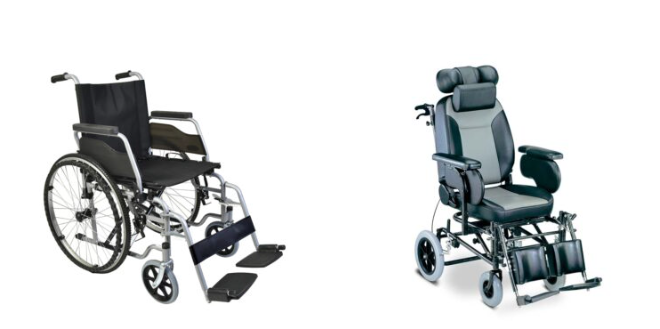
The front casters on daily chairs tend to run larger. That extra diameter rolls over door thresholds, sidewalk gaps, and uneven pavement. You don’t get that sudden stop or the rider pitching forward.
Wheelchair maneuverability means something different here than it does on a court. It’s about predictable control across uneven surfaces — not explosive direction changes.
Grace Medy applies this same wheel-configuration logic to their electric mobility line. They balance caster size and drive-wheel placement to hold stability without giving up tight-space agility.
The wheel setup isn’t a minor detail. It’s the core engineering decision that determines which environments a chair was built to handle.
Seat Design & Cushioning: Performance Fit vs All-Day Comfort
Spend eight hours in a sports wheelchair. Your body will tell you exactly what the design is built for.
That discomfort isn’t a flaw. It’s the point.
Sports wheelchair seats are built tight — snug against the body, close to the frame, with nothing soft in between. The fit is often molded to the athlete’s exact body shape. That precision isn’t about comfort. It’s about stability. A basketball player cutting hard and taking contact from another chair needs the seat to hold them in place. Any shifting is a liability. A loose seat at that moment costs the athlete control.
The backrest sits low on purpose. A lower backrest frees the upper body to rotate, reach, and drive through each push stroke. Every centimeter you drop the backrest is a centimeter of range the athlete gets back.
Cushioning? Minimal. Extra padding adds weight and eats up energy that should go into forward motion.
Daily Use Seats Are Solving a Different Problem
Eight hours in a chair changes everything. Pressure on the body builds. Posture starts to break down. The seat isn’t just a place to sit — it’s where your whole day takes place.
Daily wheelchairs handle this differently:
Thicker cushioning to manage pressure over long periods
Ergonomic backrests shaped to support the lumbar region
Adjustable armrests to cut shoulder and neck strain throughout the day
These aren’t extras. They’re must-haves for users who transfer in and out multiple times a day across all kinds of surfaces.
Grace Medy brings this thinking into their electric mobility line. They build ergonomic seat systems into lightweight frames, so portability and long-term comfort don’t have to fight each other. That balance is harder to get right than it sounds.
Performance Comparison: Speed, Agility, and Stability Across Real-World Scenarios
Here’s what most product pages won’t tell you: a sports wheelchair and a daily use wheelchair are not built for the same world. They never were.
Put a lightweight sports wheelchair on a basketball court and it does what it was built to do — accelerate hard, cut sharp, hold position under contact. That rigid frame wheelchair construction, paired with an aggressive wheelchair camber angle, produces a chair that responds in fractions of a second. The athlete pushes once. The chair moves like it already knows where to go.
Now take that same chair down a cracked city sidewalk at 8 a.m. The geometry that makes it so sharp on the court starts working against you. The narrow casters that reduce court resistance catch every gap in the pavement. The steep seat angle that frees your shoulders for explosive strokes becomes a problem across two hours of real-world movement.
Speed: Built-In, Not Bolt-On
Wheelchair propulsion efficiency in sports chairs starts with the frame. Lighter materials — aluminum, titanium, carbon fiber — mean less mass to move with every stroke. Less rotating weight at the wheels means faster acceleration off the line. A well-tuned sports chair doesn’t just feel faster. It is faster, and that gap grows across every minute of play.
Daily chairs don’t aim for that number. Their top speed sits lower by design — built around control and consistency across mixed terrain, not peak output.
Agility and Stability: Two Different Definitions
Wheelchair maneuverability means something specific on a court — instant direction change, zero hesitation, full response at contact speed. On a daily commute, the same word means something different: predictable handling through a doorway, steady tracking down a ramp, no surprises on wet pavement.
Daily use wheelchairs are built around that second definition. They hold stability across the environments real life throws at you — uneven sidewalks, tight hallways, ramps, and everything in between.
For users who need strong mobility without the physical output, Grace Medy’s ultra-light power wheelchairs fill that gap. Compact enough to transport. Capable enough to handle the full range of daily situations where neither a sports chair nor a standard model quite fits.
Can You Use a Sports Wheelchair for Daily Use?
The short answer is yes. The honest answer is: not for long.
A sports wheelchair is built for short, intense effort — thirty minutes on a basketball court, an hour on a tennis court. That’s the environment it thrives in. Take it through a full Tuesday — morning commute, errands, a doctor’s appointment, then home — and the design starts working against you.
The narrow seat and low backrest free your shoulders for powerful strokes. That’s great on the court. By hour four of a regular day, it’s a different story. Pressure builds in places a molded sport seat was never built to handle. What felt sharp and responsive in the morning turns punishing by afternoon.
This isn’t a flaw. It’s a design honest about its priorities.
Most users who compete at a high level solve this with two chairs. One sport model for athletic activity. One lightweight chair for everything else. That split costs more upfront. It saves far more in physical wear over time.
Grace Medy builds for both sides of that. Their lineup covers performance-focused adaptive sports equipment alongside practical daily-use models. Users don’t have to sacrifice one set of needs to meet the other.
The two-chair approach isn’t a niche solution. For active wheelchair users, it’s become the standard way to go.
How to Choose Between a Sports Wheelchair and a Daily Use Wheelchair
Four questions. Answer them straight, and the right chair becomes obvious.
1. Where does most of your time go?
Not where you wish it went. Where it goes. Training three days a week and competing on weekends? A sports chair earns its place. Your day is built around work, appointments, errands, and getting home? A daily chair is the one doing real work for you. Match the chair to the life you’re living — not the one you’re planning.
2. How often does the chair need to travel with you?
A rigid sports frame doesn’t fold. That’s a feature on the court. It’s a problem in a car trunk. For most daily users, portability matters. A folding wheelchair daily use design handles that. So does an ultra-light electric model. A sports chair won’t solve this — ever.
3. How many hours will you spend in it?
One hour is a different demand than eight. Wheelchair seat angle adjustment, cushion depth, lumbar support — these details feel invisible in a showroom. After hour three, they’re unavoidable. Long days need chairs built for long days. That’s not a small distinction.
4. How much work does your upper body do?
Limited shoulder strength or a progressive condition makes fighting a manual chair through a full schedule exhausting — and unnecessary. Electric mobility options exist to fill this gap. They’re light enough to transport and capable enough for real terrain. Adaptive sports equipment serves a different purpose. Daily function needs a different tool.
Talk to a specialist supplier. A good wheelchair manufacturer or distributor reads your situation faster than any spec sheet. That conversation costs nothing. The wrong chair costs a lot more.
Conclusion
The right wheelchair doesn’t compromise — it commits.
A sports wheelchair commits to performance. You get a rigid frame, an aggressive camber angle, and every gram trimmed for peak wheelchair propulsion efficiency. A daily use wheelchair commits to endurance. It stays stable across surfaces, comfortable across hours, and practical in the spaces where real life happens.
Neither chair is better than the other. They serve different priorities. That’s what makes each one work.
Your decision comes down to one clear question: what does your actual day demand? Think honestly about that. The right category becomes clear on its own.
Brands like Grace Medy are narrowing the gap. They build lightweight adaptive sports equipment and ultra-light everyday models that deliver real performance without giving up practicality. The options today are stronger than they’ve ever been.
Choose the chair that fits your life. Then go live it.
Conclusion
A sports wheelchair and a daily use wheelchair are built for very different lives. The choice isn’t about which one is “better.” It’s about which one fits your life.
Court athletes feel the difference in every gram of frame weight. Every degree of camber angle adds up to real competitive edge. For travel, work, and daily routines, you need solid comfort and easy folding — a chair that keeps pace without draining you.
The good news? You now understand what separates these two categories — frame structure, mechanics, and real-world use. That knowledge puts you ahead of most buyers who go in without a clue.
Next step: Visit the gracemedy.com wheelchair catalog and filter by your primary use case. Not sure which fits your situation? Try the product comparison tool. Or reach out to our mobility specialists — we’re happy to help you sort it out.
