
Picking the wrong wheelchair isn’t just an inconvenience — it’s a real safety risk. Most people don’t think about it until something goes wrong.
Searching for the weight limit on a lightweight manual wheelchair? That’s the right question to ask. The honest answer: it depends on more than you’d expect.
Most standard lightweight models top out between 250 and 300 lbs. But that’s just part of the picture. Frame material, structural design, and daily use patterns all affect what’s safe for a specific person.
Shopping for yourself, a parent, or a patient? This guide breaks down what the numbers mean — and how to use them to make a safe, confident choice.
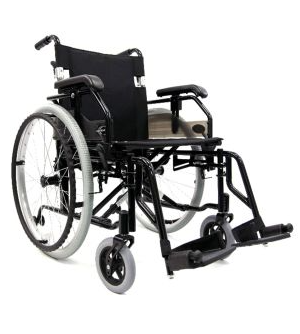
What Is The Weight Limit For A Lightweight Manual Wheelchair?
The number on a spec sheet isn’t the whole story — but it’s a good place to start.
Most lightweight manual wheelchairs hold between 250 and 300 lbs. That’s the standard range across the majority of models. Go wider or heavier-duty, and some chairs reach 350 lbs.
Seat width is one of the clearest predictors of capacity:
|
Seat Width |
Typical Weight Capacity |
|---|---|
|
16″ |
250 lbs |
|
18″ |
300 lbs |
|
20″ |
300–350 lbs |
Here’s the key pattern: wider seat = higher capacity. But the chair’s own weight tells you very little about how much load it can carry. Don’t use those two numbers interchangeably — they measure different things entirely.
Standard Weight Limits for Lightweight Manual Wheelchairs: The Full Range Breakdown
Weight capacity numbers don’t exist in a vacuum. They connect to how a wheelchair is classified, what it’s built from, and who it serves.
The lightweight manual wheelchair category isn’t a single thing. It’s a spectrum. Each tier on that spectrum carries its own load limits.
The Three Tiers That Matter
Ultra-lightweight wheelchairs (under 30 lbs) sit at the top of the performance range. These chairs work best for full-time users who need a precise fit and easy portability. Weight capacity runs 220 to 250 lbs — tighter than you’d expect for a premium product. That tradeoff is by design. The frame stays light and adjustable, but it gives up some raw load capacity to get there.
Standard lightweight wheelchairs (30–35 lbs) are the workhorses of the category. They serve the widest range of buyers and hold 250 to 300 lbs as a solid standard. Most chairs you’ll find in a medical supply catalog or hospital discharge order fall into this tier.
High-strength lightweight wheelchairs — listed under Medicare’s K0004 code, under 34 lbs — sit in a useful middle ground. They’re built for active users who put the chair through heavy use each day. Capacity matches the standard lightweight range, but the frame itself is stronger and more durable.
Here’s a quick breakdown:
|
Wheelchair Classification |
Chair Weight |
Typical Capacity |
|---|---|---|
|
Ultra-Lightweight (K0005) |
Under 30 lbs |
220–250 lbs |
|
Standard Lightweight (K0003) |
Under 36 lbs |
250–300 lbs |
|
High-Strength Lightweight (K0004) |
Under 34 lbs |
250–300 lbs |
|
Standard Manual (K0001/K0002) |
36–50+ lbs |
250–450 lbs |
The Frame Material Connection
Standard manual wheelchairs use steel frames — heavy, but built for high capacity, reaching up to 450 lbs on bariatric models.
So here’s the key point: a lighter chair is not a weaker chair by default. Ultra-light frames do carry tighter weight ceilings, though. Check which tier you’re buying before you assume a featherweight frame can handle a heavier user without issue.
Key Factors That Determine a Lightweight Wheelchair’s Weight Capacity
Frame Material: The Starting Point for Every Capacity Calculation
Frame Design and Structure: Where the Load Goes
Seat Width: The Underrated Capacity Driver
|
Seat Width |
Typical Weight Capacity |
|---|---|
|
18″ |
250–300 lbs |
|
20″ |
300–350 lbs |
The Portability Trade-Off Nobody Mentions
What Happens If You Exceed the Weight Limit — Real Safety Risks Explained
The weight limit on your wheelchair isn’t a suggestion. It’s the point where engineering stops protecting you.
Go over it — even by 20 or 30 lbs — and the chair starts working against you. The damage isn’t always visible. It builds up until something fails.
What Breaks First
Lightweight aluminum and titanium frames handle stress within a set range. Push past that range, and the damage won’t announce itself. It builds up in silence.
Here’s what happens at the structural level:
Weld joints weaken over time. The frame flexes with every movement. Under too much load, those small flexes don’t spring back. Over weeks, the metal wears down and fatigues.
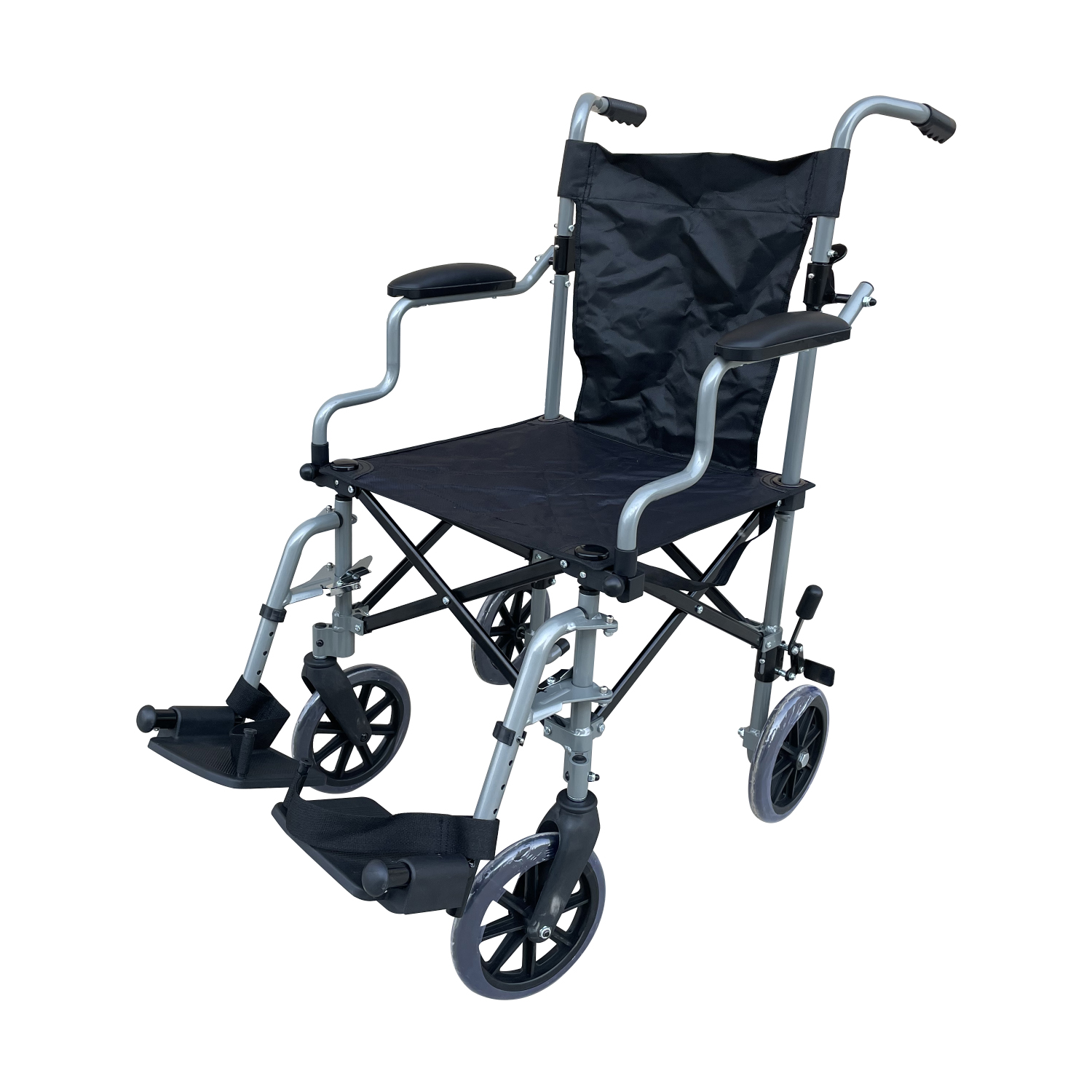
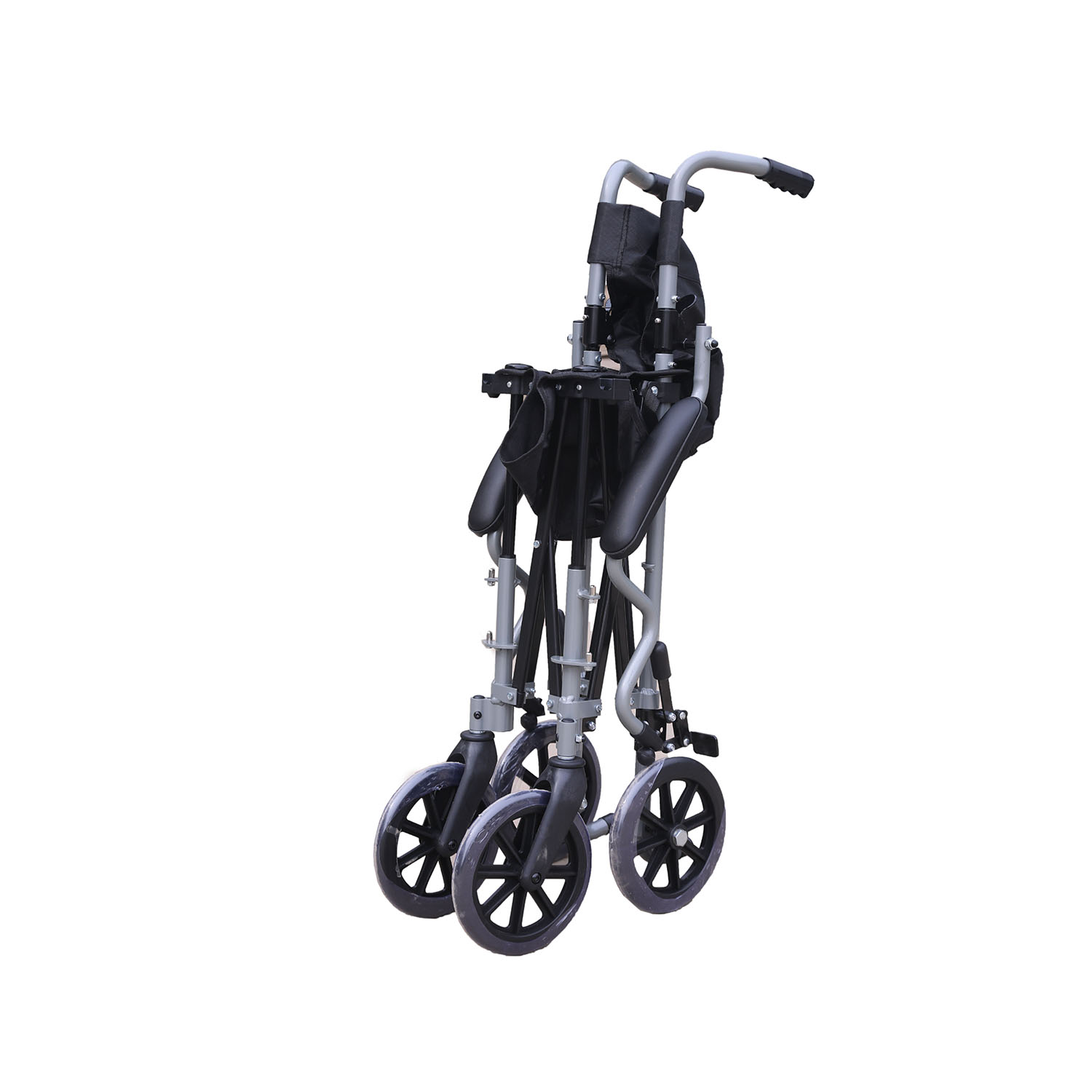
Crossbars and folding mechanisms bend out of shape. Folding wheelchairs use hinged cross-braces to spread weight across the frame. Too much load throws off that balance. Parts that weren’t built to bend start bending.
Wheel axles fall out of alignment. A misaligned axle doesn’t roll straight. It drifts. On a ramp or uneven surface, that drift becomes a fall.
None of this looks serious in the early stages. That’s exactly what makes it dangerous.
The Collapse Risk Is Real — and Sudden
Overloaded wheelchair frames rarely give a warning before they fail. Joints stressed past their rated capacity can give out — mid-transfer, on a slope, or crossing a curb. For older users or post-surgical patients, a sudden collapse from seated height is not a minor incident. It’s a fall with real injury potential.
Transport models and folding chairs carry the highest risk. Their lighter tubing and compact joints — the same features that make them easy to carry — leave the least room for extra load.
The Practical Rule: Add a Safety Buffer
Don’t pick a wheelchair that just matches your weight. Pick one that goes beyond it.
A 10–15% buffer above the user’s body weight is the standard baseline most experts recommend. Say the user weighs 250 lbs — look for chairs rated at 275–300 lbs minimum. That buffer covers clothing, shoes, a bag on the back, and the extra load created by movement. All of that adds real weight the frame has to absorb.
|
User Weight |
Minimum Recommended Capacity |
|---|---|
|
200 lbs |
220–230 lbs |
|
250 lbs |
275–290 lbs |
|
300 lbs |
330–350 lbs |
|
350 lbs |
385–400 lbs |
Stay close to or above 300 lbs on a regular basis? A standard lightweight chair is the wrong fit for your needs. That’s where bariatric lightweight options come in — frames rated at 400 lbs or higher, built on reinforced aluminum, are the right place to start looking.
Conclusion
Your weight. Your wheelchair. Your safety. These three things are non-negotiable — and now you have the knowledge to get all three right.
Lightweight doesn’t mean “light on limits.” A folding wheelchair with a 300 lb capacity and a bariatric lightweight wheelchair pushing 450 lbs are very different products. The right fit means matching your body’s needs to the frame’s real engineering. A product photo or a price tag won’t tell you that.
Here’s your next step: don’t guess. Don’t assume the chair that looks right is right. Browse Gracemedy’s full wheelchair collection and filter by weight capacity. Still unsure? Reach out. Their team is there to help you find the right match.
The best wheelchair isn’t the lightest one. It’s the one that holds you — day after day, without fail.
