Sourcing a surgical table affects patient safety, OR workflow, and your capital budget for the next decade. Most buyers find themselves choosing between China’s cost-competitive manufacturing and Europe’s precision-engineered, heavily regulated supply chain.
Neither region fits every facility. What works for a high-volume orthopedic center in Southeast Asia can easily fail the requirements of a specialized cardiac unit in Germany.
Here, we examine the leading surgical table suppliers across both markets, compare the technical and regulatory differences buyers often overlook, and calculate total cost of ownership beyond the purchase price. By the end, you will know which supplier matches your clinical needs, budget, and risk tolerance.
Top Surgical Table Suppliers In China
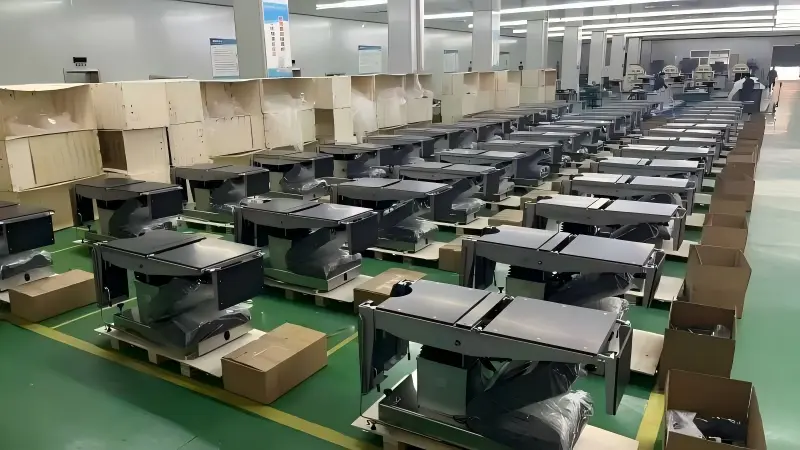
China’s surgical table manufacturers range from export-ready factories building to strict specs to companies outfitting complete operating rooms. Three suppliers stand out when buyers compare technical documentation, clear certifications, and pricing.
Jiangsu Yigao Medical Equipment Technology Co., Ltd. operates a 7,600-square-meter facility in Rugao, Jiangsu, with an in-house R&D team. Their catalog covers electric, hydraulic, and electro-hydraulic tables, including the 4-function electric table, YGD02 multi-functional electric model, and YGDH04G electro-hydraulic unit. Several models work with C-arms, kidney bridges, and orthopedic traction attachments. Yigao holds ISO 9001, ISO 13485, ISO 14001, and ISO 45001 certifications, and markets its tables as CE-compliant. They provide OEM and ODM services, covering custom designs, functional modifications, and private labeling for hospitals, distributors, and medical contractors. The YGD02 lists around US$1,160–1,260, with platform minimum orders starting at one carton. Certified mid-range electric tables from Yigao run US$1,200–2,000, which suits distributors testing the market or outfitting small-to-mid-sized hospital projects.
Hochey Medical builds electric multi-functional tables, orthopedic tables, and stainless-steel electric models, alongside surgical lights, pendants, and hospital furniture. Their documentation references CE, FDA, FSC, TÜV test reports, and ISO 13485. Certificate coverage is not always broken out by individual model, so ask for model-specific CE and ISO files before committing. Prices range from US$400–500 for basic stainless-steel electric models to US$2,000–3,500 for orthopedic electric tables. Platform reviews average 4.9/5 with a 13% repurchase rate, though across a limited sample size.
Grace Medy, based in Zaoqiang County, Hebei, supplies complete operating room equipment solutions. Their catalog bundles general surgical tables, orthopedic and gynecological models, and veterinary tables. Whether you are outfitting a new facility or upgrading an existing one, you can also source essential LED surgical lights and medical pendants through them.
The company does not publish its exact factory size or output volume, but their paperwork lists CE, ISO 13485, and FDA registration. You will need to ask them for model-specific load capacities, lift strokes, and exact certificate scopes. They do not post per-model prices online. Use China’s mid-range electric table benchmark of US$1,200–3,500 for planning, but expect higher quotes for specialized orthopedic, C-arm-compatible, or full OR packaged configurations.
What To Request Before Ordering
Model-level CE declarations and ISO 13485 certificate scope
EN 60601 test documentation
Load capacity and lift stroke specs
Warranty terms, spare parts lists, and packaging/container loading details
Contacts: Yigao — +86-187 9576 7533 | Grace Medy — +86-193-3372-3988, supplier@gracemedy.com
Top Surgical Table Suppliers In Europe
European surgical table makers compete on regulatory compliance and engineering precision instead of unit price. Across the continent, six brands dominate hospital tenders and specialist procurement.
Headquartered in Ravensburg, Germany, SternMed builds its ONEX series at home. These manual and electro-hydraulic tables hold up to roughly 300 kg and adapt to general surgery, orthopedics, trauma, neurosurgery, spine, gynecology, urology, ENT, cardiovascular, ERCP, and bariatric procedures with add-on kits. German production and full CE documentation make them a practical fit for EU public tenders and regional hospitals buying in volume.
Part of Sweden’s Getinge Group, Getinge/Maquet runs the continent’s largest manufacturing and distribution network. Its Meera, Yuno II, Lyra, Corin, and Betaclassic platforms cater directly to university clinics and large tenders. The Yuno II model alone covers hip replacements, hip arthroscopy, tibial nailing, shoulder work, fracture repair, and neurosurgery.
Finland’s Merivaara and Leeds-based Brandon Medical focus on the mid-to-upper tier. Both package tables alongside lighting, pendants, and control systems for standard operating rooms instead of niche subspecialties. Brandon Medical carries UKCA marking, which does not replace EU CE compliance, so verify their EU authorized representative and importer before you submit a bid.
Schaerer Medical (Switzerland) and BRUMABA (Germany) specialize in high-end positioning. Their tables carry 200–300 kg load ratings and store preset configurations for prone, lateral, Trendelenburg, lithotomy, and beach-chair setups. Both brands suit neurosurgery, spine, and maxillofacial centers that need clean fluoroscopic clearance and can overlook higher upfront costs.
What To Verify Before Bidding
Model-specific EU Declaration of Conformity and notified body certificate number
ISO 13485 certification and MDR 2017/745 classification
IEC 60601-1, IEC 60601-2-46, and EMC test reports
UDI-DI, EU authorized representative, and importer details
Manufacturers rarely publish list prices. Quotes for European hospitals usually bundle the base table, accessories, five years of maintenance, and guaranteed spare-parts response times into one package.
China vs Europe:Comparison of Key Differences
Price is where most buyers start, and the gap is real. Chinese-manufactured surgical tables usually run 30–60% cheaper than comparable Western European or North American units. Lower labor rates, factory overhead, and consolidated parts sourcing drive that difference on the China side, while European pricing reflects brand equity, clinical validation, regulatory maintenance, and local service networks.
Certification demands closer scrutiny than price. A “China CE” mark does not mean self-declaration covers every device. Under MDR, manufacturers can self-declare only low-risk Class I non-sterile, non-measuring devices. Class IIa, IIb, and III units require a notified body whether they are built in China or Europe. Timelines and costs scale with the risk class:
|
Risk Class |
Approval Timeline |
Estimated Cost |
|---|---|---|
|
Class IIa |
9–15 months |
€50,000–150,000 |
|
Class IIb |
12–18 months |
€100,000–300,000 |
|
Class III |
18–36 months |
€200,000–500,000+ |
Delivery and after-sales support follow a similar pattern. Standard Chinese models often ship within weeks, though custom builds, export certification, and ocean freight add time. European suppliers generally deliver faster within the EU, but high-end configurations require longer installation and validation cycles. Spare parts bring trade-offs as well. Standard Chinese components are inexpensive and widely available, but proprietary controllers or batteries can tie you to the original manufacturer. Lock in spare-parts pricing and a 5–10 year supply commitment in your contract, regardless of region.
Performance differences depend on the specific model rather than geography. Compare static and dynamic load capacity, radiolucent tabletop dimensions, C-arm clearance, positioning range, IEC 60601 compliance, and material durability before assuming one region builds a better table.
Choose China if you work with tight budgets, need OEM customization, and can review MDR files directly. Choose Europe if local service coverage, clinical traceability, and tender-ready brand recognition outweigh upfront savings. Either way, base your purchase on total cost of ownership rather than the invoice price alone.
Supplier Recommendations by Application Scenario
Operating rooms do not all need the same table, and surgical specialties should not all buy from the same vendor pool. Matching the table to the specific procedure protects your budget and prevents procurement headaches.
Orthopedic Trauma And Spine
Cost-sensitive orthopedic and spine departments do well with Chinese suppliers. Pair a domestic manufacturer with your existing C-arm or fluoroscopy setup, and buy a premium European brand only when implant-system compatibility or advanced positioning justifies the extra cost.
Neurosurgery
Neurosurgical suites demand tighter precision tolerances. You can start with a mid-tier Chinese electro-hydraulic or electric table, then move to a European platform once CT/MRI fusion, intraoperative registration, or fine positioning becomes a clinical requirement.
Gynecology And Urology
Documentation tends to be thin across both regions for these specialties. Prioritize tables with electromagnetic-tracking-compatible mounting points, reusable accessory kits, and verified CT/MRI/ultrasound clearance rather than relying on brand reputation alone.
Image-Guided Surgery And Hybrid OR
Hybrid rooms require tables engineered to work alongside Siemens, GE, or Philips imaging infrastructure. A Chinese base unit can work alongside Western imaging hardware, but verify radiolucent clearance and C-arm compatibility before committing.
Procurement guidance across all four scenarios:
Require Class III NMPA registration for China-market use. Treat CE, FDA, and ISO 13485 certifications as supporting documentation rather than substitutes for local clearance.
Benchmark European public procurement data against your own quotes. One EU tender for comparable imaging-compatible equipment listed pricing near €373,740, which explains why tight capital budgets often favor Chinese sourcing.
Conclusion
Your choice between Chinese and European manufacturers comes down to your budget, your regulatory requirements, and how fast you need equipment delivered. Chinese suppliers hold the edge on upfront cost and lead times, while European manufacturers justify their higher prices with established compliance records and support networks that are difficult to replicate.
Neither option is right for every situation. The best fit depends on your facility’s volume, budget flexibility, and risk tolerance around certification timelines.
When evaluating surgical table suppliers in China and Europe, look beyond spec sheets. Request references from facilities similar to yours, verify current CE or FDA certifications with the issuing bodies, and calculate the total cost of ownership over a 7-10 year equipment lifecycle rather than the initial purchase price.
Shortlist 3-4 suppliers from this guide, request detailed quotes with clear warranty terms, and ask the hard questions before you sign anything.