
What Are The Most Reliable Power Wheelchairs For Full-Time Users?
The most reliable power wheelchairs for full-time users share a clear profile:
Strong power wheelchair motor quality that holds up under pressure
Proven electric wheelchair durability through daily, heavy use
Power wheelchair battery life that fits your schedule — not the other way around

The 5 Critical Factors Full-Time Users Must Evaluate Before Buying
Before you commit to any model, run it through these five filters.
1. Battery Range and Charging Speed
Full-time use requires a minimum of 19 miles of real-world range per charge. Not manufacturer-ideal-conditions range — actual range. Lithium batteries have a clear edge over sealed lead-acid: lithium cells hold up through 500–800 charge cycles before capacity drops, while lead-acid batteries start fading after 300. Fast-charging matters to most schedules. Confirm the model supports it before you buy.
2. Weight Capacity and Frame Durability
Standard frames handle up to 300 lbs. Heavy-duty models push to 450 lbs and beyond. Years of vibration expose the difference between materials. Aircraft-grade aluminum holds up against fatigue fractures better than steel under long-term stress. Match the frame to your actual body weight, then add a margin.
3. Drive System and Terrain Fit
Three configurations exist, and each comes with real trade-offs:
Mid-wheel drive — tightest turning radius, best for indoor use
Rear-wheel drive — fastest and most stable at speed, built for outdoor terrain
Front-wheel drive — strongest ramp performance, less common
Your main environment should decide this. Think about where you spend 80% of your time.
4. Suspension Quality
For users with spinal cord injury or high pressure sore risk, suspension is not a comfort upgrade. It’s a medical need. Systems like Active-Trac suspension and Dynamic Load Compensation cut the impact your body absorbs on rough surfaces. Repeated jarring adds up over time. A solid suspension system takes that load off your body, every single day.
5. Service Network and Parts Availability
A chair that breaks down and sits unrepaired for six weeks is not a reliable chair — no matter how well it’s built. Before picking a brand, ask these questions:
How many authorized repair centers are in your region?
What’s the average wait time for a service appointment?
Do dealers stock motor and controller components on-site, or do parts ship from overseas?
Brands with thin service networks create real risk. No spec sheet will flag that for you.
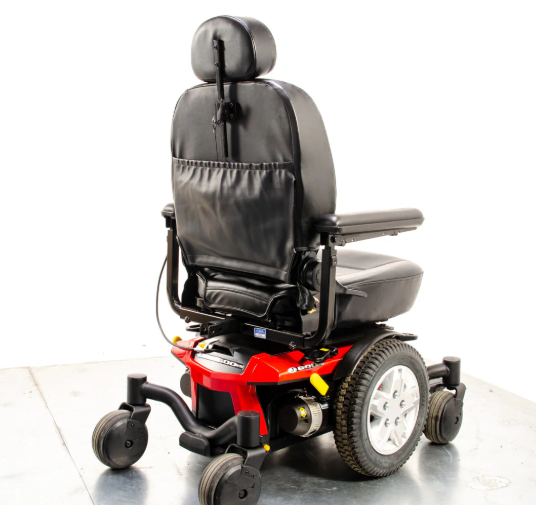
Pride Mobility Jazzy 600 ES — Best All-Around Daily Driver for Indoor/Outdoor Use
The Jazzy 600 ES earns its reputation the hard way — not through spec-sheet promises, but through real daily performance in the spaces where most wheelchairs fall short.
Most full-time users split their day between two worlds: tight indoor corridors and unpredictable outdoor terrain. The Jazzy 600 ES is built for that split.
The technology starts with six wheels on the ground at once. Pride’s Active-Trac suspension system keeps all six contact points stable on uneven surfaces. That matters a lot on a cracked sidewalk after a morning spent in a narrow bathroom. The turning radius sits between 20 and 24 inches. That’s tight enough for standard residential hallways — and still stable outdoors.
Real-World Range and Weight Capacity
The stated range of 19 miles holds up under mixed daily use — about 70% indoor, 30% outdoor. That matches how most full-time users move through their day. This is not a best-case number. It’s an honest one.
For users at or near the 300 lb weight capacity, long-term comfort feedback is strong. The seating system spreads load well across extended use. That’s important for anyone managing pressure injury risk.
Pride Mobility Jazzy EVO 614HD — Top Pick for Heavy-Duty Full-Time Reliability
The 614HD exists because one number kept coming up in user feedback: 300 pounds wasn’t enough.
Full-time users at 250 lbs and above often carry extra gear — a backpack, a ventilator, or everyday equipment. A standard-capacity chair doesn’t just underperform for them. It wears out faster. It strains the motor under continuous load. That stress builds into a reliability problem that gets worse over time. The EVO 614HD was built to fix that.
The frame supports up to 450 lbs. It also delivers a stated range of 21.5 miles per charge. That pairing is rare in the power wheelchair market. Most heavy-duty frames give up range to handle load stress. This one holds both.
What “Heavy-Duty” Means Over Time
Long-term users at higher body weights report steady motor performance well past the two-year mark. That’s the point where cheaper frames and underpowered drive systems start showing fractures and controller errors. The 614HD’s reinforced chassis handles vibration in a different way. It absorbs it — not just pushes back against it.
Terrain performance here is real. The 614HD takes on grass, inclines up to 6 degrees, and wet pavement with solid stability. Outdoor use becomes a regular part of your day, not something you plan around.
How It Compares to the Jazzy 600 ES
The 600 ES is the better choice for users under 300 lbs who move between indoor and outdoor spaces. The 614HD serves a specific purpose: sustained heavy-duty full-time reliability. It’s built for users whose weight, terrain, and daily distance go past what standard chairs handle well.
Your weight pushes higher. Your terrain is rough. Your daily distance is long. The 600 ES won’t cover that. The 614HD will.
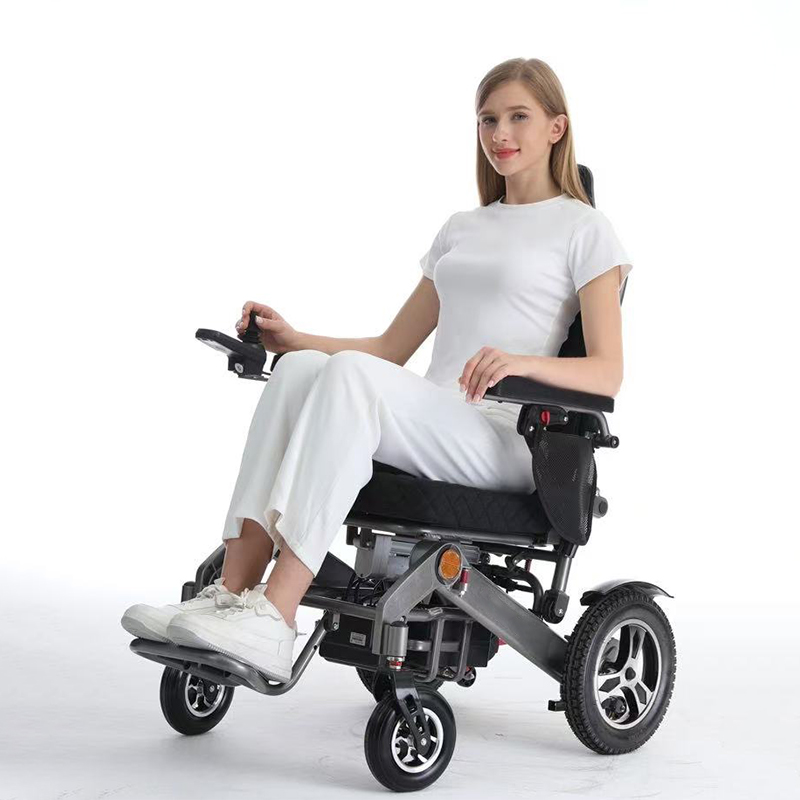
Grace Medy Reclining Wheelchair — Most Reliable for Smooth Terrain Daily Commuters
Some wheelchairs are built for chaos. The Grace Medy reclining wheelchair is built for something quieter — and just as essential. Think the steady rhythm of home hallways, hospital corridors, and smooth indoor surfaces that define full-time indoor use.
Most buyers miss that distinction when comparing specs. It matters more than it looks.
Spend most of your day inside? An aggressive outdoor suspension system just adds bulk and mechanical weight you don’t need. The Grace Medy cuts all that out. What’s left is a clean, stable platform built for the indoor environment full-time users live in every day.
Where It Earns Its Spot on This List
The standout feature isn’t speed or range. It’s the power reclining seating system.
Full-time users dealing with pressure injury risk, spinal cord injury, or conditions that need postural repositioning throughout the day need more than a comfortable seat. They need a chair that plays an active role in their care routine. With the Grace Medy’s reclining mechanism, you can shift pressure distribution without a transfer. That cuts skin breakdown risk during long seated hours.
That’s a clinical benefit baked into the everyday user experience.
Key strengths for smooth-terrain commuters:
Reclining backrest — supports pressure relief and postural management with no manual assistance needed
Stable low-profile base — holds steady on flat surfaces like tile, hardwood, and paved indoor paths
Power wheelchair seating comfort — built for long stretches of daily use, not just short trips
Compact frame — fits through standard doorways and residential layouts with no constant adjustment
Your primary environment is controlled and smooth. Your biggest demand each day is comfort and pressure management over distance. The Grace Medy is built to meet exactly that.
Merits Health P326A Vision Sport & P327 Vision Super — Best for Stability-Dependent Users
Stability isn’t a preference for some users — it’s the entire point.
For people living with spinal cord injury, ALS, or balance disorders, a shifting chair isn’t just uncomfortable. It’s unsafe. Merits Health built the P326A Vision Sport and P327 Vision Super around one core engineering commitment: six points of ground contact at all times.
That’s not a marketing line. It’s a structural decision. Six-wheel contact spreads your weight across a wider base than standard four-wheel platforms. On uneven pavement, on low thresholds, on any surface that isn’t level — the chair stays planted. Your body may not be able to do the stabilizing work. This chair does it for you.
Power Wheelchair Reliability Comparison: Side-by-Side Specs for Full-Time Users
Numbers tell part of the story. The rest comes from knowing which numbers matter most — especially when you live in the chair every day.
|
Model |
Range |
Weight Capacity |
Turning Radius |
Top Speed |
Wheelchair Weight |
Best For |
|---|---|---|---|---|---|---|
|
Pride Jazzy 600 ES |
19 mi |
300 lbs |
20–24 in |
4 mph |
135 lbs |
Indoor/outdoor everyday use |
|
Pride Jazzy EVO 614HD |
21.5 mi |
450 lbs |
22 in |
4 mph |
155 lbs |
Heavy-duty full-time users |
|
Grace Medy Reclining |
15 mi |
300 lbs |
18 in |
3.7 mph |
118 lbs |
Smooth terrain, pressure management |
|
Merits P326A Vision Sport |
18 mi |
300 lbs |
20 in |
4 mph |
128 lbs |
Stability-dependent users |
|
Merits P327 Vision Super |
18 mi |
450 lbs |
22 in |
4 mph |
160 lbs |
High-weight, heavy terrain |
|
Golden LiteRider Envy |
13 mi |
300 lbs |
19 in |
3.7 mph |
54 lbs |
Travel, secondary chair |
|
ComfyGo IQ-9000 |
15 mi |
330 lbs |
21 in |
3.7 mph |
58 lbs |
Travel comfort, long seated hours |
Best-fit user tags at a glance:
– Spinal cord injury → Merits P326A, Grace Medy Reclining
– ALS / MS → Jazzy 600 ES, Merits P326A
– Larger body frame → Jazzy EVO 614HD, Merits P327
– Frequent travelers → Golden LiteRider Envy, ComfyGo IQ-9000
– Older adults, indoor-primary → Grace Medy Reclining
Conclusion
Picking the right power wheelchair for full-time use goes beyond a purchase. This decision touches every single day of your life.
Each model covered here tells a different story. The battle-tested Pride Jazzy 600 ES. The heavy-duty EVO 614HD. Grace Medy’s smooth-terrain reliability. The compact LiteRider Envy built for easy transport. They all answer the same core question: What does independence look like for you?
Ready to move forward? Don’t shop by price alone. Start with your terrain. Then check your weight capacity needs. Factor in how far you travel each day. Match all of that against the specs. Talk to your rehab specialist too — their input carries real weight.