Top Long-Range & Durable Electric Wheelchair Manufacturers In Australia

Wheelchair

Finding an electric wheelchair that keeps up with Australian life is harder than it should be. Rough terrain, long distances, unpredictable weather — these challenges push most chairs to their limits.

The wrong choice costs you more than money. You end up cutting trips short, waiting on repairs, or losing the independence you’ve worked hard to maintain.

That’s why knowing which top long-range and durable electric wheelchair manufacturers in Australia are worth your trust matters so much. It changes how you move through the world.

The brands covered here — from Magic Mobility’s rugged all-terrain builds to Shoprider’s impressive speed and range — were chosen for one reason: real-world performance. These are local and Australia-serving brands that hold up where it counts.

Comparing specs? Just starting your search? Either way, what follows saves you hours of research and helps you move forward with confidence.

Top long range durable electric wheelchair manufacturers in australia.png

Magic Mobility – Australia’s Leading All-Terrain Power Wheelchair Manufacturer

Since 1994, Magic Mobility has been building what most wheelchair manufacturers never deliver — real freedom of movement. Every chair is designed and assembled right here in Melbourne.

Based in Croydon South, VIC, Magic Mobility holds a rare position in the global market: leader in off-road and all-terrain power wheelchairs. That’s not a marketing claim. Three decades of engineering chairs that perform where others fail backs that up — on rugged bush trails, uneven urban footpaths, and everything in between.

Here’s what makes that distinction meaningful:

Each wheelchair is custom-built at the Melbourne facility to match each user’s specific needs

The in-house R&D team doesn’t just test chairs — they push them to the point of failure, then redesign from scratch

Engineering, clinical, and production teams work side by side. So the person fitting your chair knows exactly how it was built

In 2018, Sunrise Medical acquired Magic Mobility. The brand’s reach grew far wider — but it never left Victoria. The Melbourne operation stayed intact. The management team stayed. The commitment to local manufacturing stayed too. Sunrise Medical’s global network added real reach: distribution across North America, Europe, Asia-Pacific, the Middle East, and Africa, plus dedicated support offices in the US and Canada.

image.png

Built for a Market That Needs It

The numbers tell a clear story. Australia’s electric wheelchair market was valued at USD 34.0 million in 2023. It’s projected to reach USD 56.9 million by 2030, growing at a 7.6% CAGR. Over 180,000 Australians depend on wheelchairs every day. More than 25,000 of them need powered mobility solutions.

Magic Mobility serves the most demanding end of that group — people whose lives don’t stop for difficult terrain.

What sets them apart from international competitors entering the Australian market? They understand Australian conditions because they’ve been engineering for those conditions from day one. The bush, the coast, the sprawling outer suburbs — these environments shaped their design approach from the very start.

For Australians who need long-range capability and real all-terrain durability, Magic Mobility is the benchmark. Other manufacturers in this space are still working to catch up.

Grace Medy – Electric & Manual Wheelchair Manufacturing for Australia

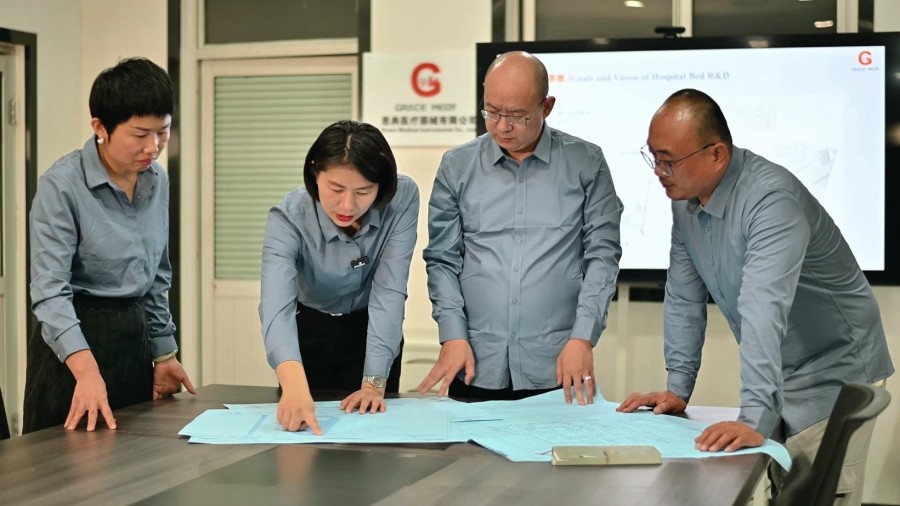
Grace Medy has been building wheelchairs since 2009. Over that time, they’ve grown into one of the most respected global suppliers serving Australia’s mobility market.

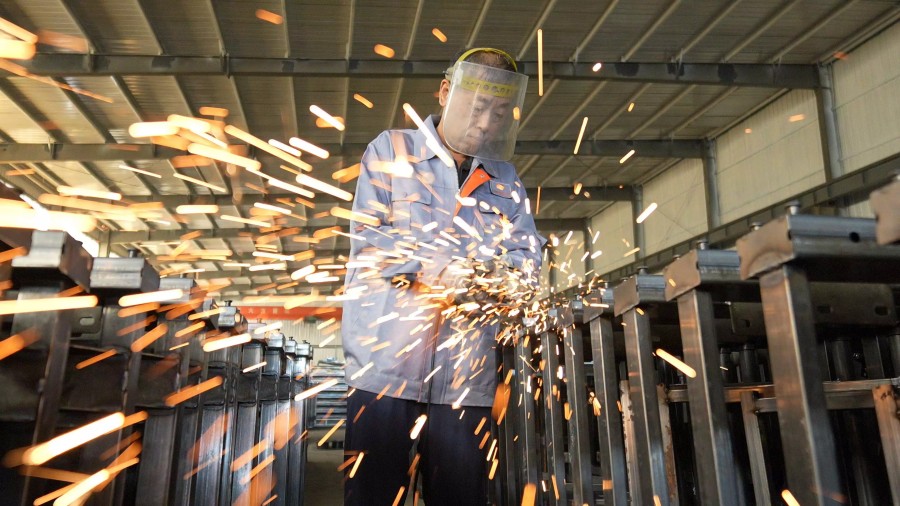
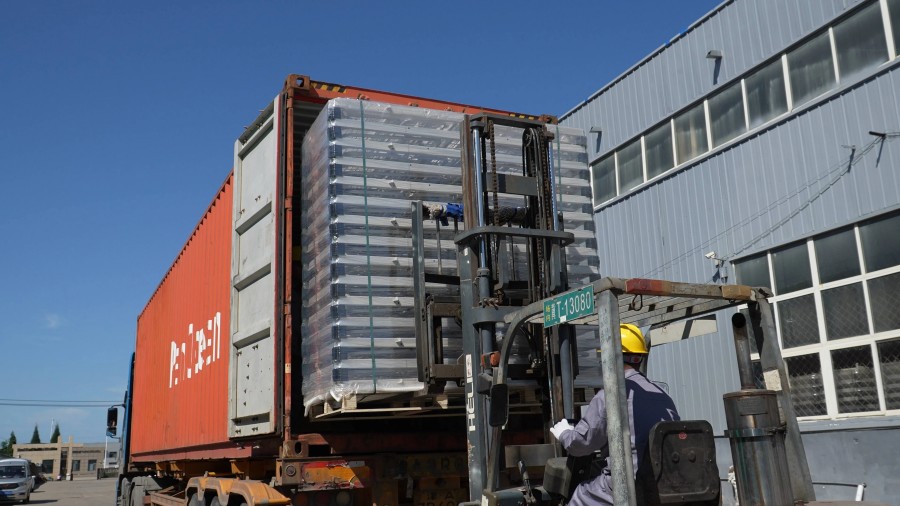
The numbers speak for themselves. A 32,000 square meter factory, production capacity of up to 5,000 units per month, and exports reaching over 120 countries — this is full-scale industrial manufacturing. The infrastructure is there to back up every claim on a spec sheet.

electric wheelchair manufacturers.png

What They Make

Grace Medy covers the full range of wheelchair types:

Manual wheelchairs — lightweight builds with customizable configurations

Standard electric wheelchairs — built for easy, straightforward operation

Smart wheelchairs — with connectivity features and assisted driving functionality

Battery choice is a key decision point in the electric wheelchair range. Grace Medy offers three options, each with a clear difference in performance and cost:

Battery Type

Wholesale Price (Per Unit)

Best For

SLA (Lead-acid)

~$40–50

Budget-conscious buyers

AGM

$60–80

Mid-range performance (most popular)

Lithium

$200–350+

Premium range and longevity

Lithium costs $200–350 more upfront than base models. For users who need long-range capability and fewer charge cycles, that extra cost pays off fast.

Quality Control — Four Layers Deep

Grace Medy holds ISO 9001, ISO 13485, CE, and FDA certifications. That’s real compliance, not just paperwork. Their quality system runs four checkpoints: IQC, PQC, FQC, and OQC. Every unit goes through incoming inspection, process monitoring, final review, and outgoing verification before it leaves the facility.

After-sales support is solid too. You get a one-year warranty, five-year maintenance coverage, and ten years of spare parts supply. That last point is significant. Most manufacturers won’t commit to a decade of parts availability — Grace Medy does.

Since 2018, Grace Medy has worked with Korean manufacturing partners to strengthen their production processes. That’s an active R&D investment, not a company coasting on an older design.

Australian healthcare providers and individual buyers sourcing internationally will find a manufacturer here with real scale, strong certification, and dependable after-market support. Grace Medy is worth a serious look.

Shoprider – High-Speed Long-Range Electric Wheelchairs for Australian Users

Shoprider builds electric wheelchairs that refuse to slow you down. You’ll find their chairs across Australia through NovitaTech, Liberty Healthcare, Active Mobility, and Daily Living Products. The lineup runs from high-speed everyday chairs to compact portable models that fit in the back of a car.

The range is broader than most people realise. Each model is built around a specific use case, and the specs prove it.

image.png

Speed and Range That Delivers

The Cougar 14 is Shoprider’s top performer. It hits 9.6km/h and covers up to 40km on a single charge. The mid-wheel drive platform gives you a tight 1020mm turning circle. That means it handles well indoors and holds its own outside. You also get an 8° climb angle — solid enough for inclines that would stop other chairs cold.

The Cougar 10 sits right behind it. You get 8km/h, 35km of range, and a 136kg weight capacity. High/low speed settings keep it flexible. Finger-operated control makes it easy to manage. Plus, transport tie-down points mean it travels safely — a practical choice for Australian users who need performance and everyday reliability.

Need serious load support? The Puma 14HD carries up to 205kg — the highest capacity in the Shoprider range. It still covers 35km per charge, with 14-inch drive wheels that grip well on varied surfaces.

Built for Portability Too

Not every user needs a full-size powerchair. The Como breaks down into three pieces for easy transport. It weighs 47.4kg complete, and the heaviest single piece is just 18.4kg. Twin 0.5hp motors push it through 12–18km of range per charge.

The UL8 Venice takes compactness further. It has a 400mm turning circle, a phosphate-based lithium iron battery, and a footprint of just 725mm × 545mm. Small enough to go where larger chairs can’t.

Shoprider’s lineup gives you speed without cutting range, and portability without dropping capability. That balance is harder to find than it sounds.

Bettercaremarket Australian Brands – EagleHD & Navigator for Durability & Range

Two chairs. Two very different jobs. Both built to handle what Australian life throws at you.

Bettercaremarket is a registered NDIS provider. Their in-house brands — the EagleHD and the Navigator — sit at opposite ends of the durability-and-range spectrum. Each one holds its own without cutting corners. You’re looking for top long-range and durable electric wheelchair manufacturers in Australia? These two models are worth a serious look.

EagleHD – Heavy-Duty Frame, Rough Terrain Ready

The EagleHD has one job: take punishment. The frame uses stainless steel parts combined with aerospace alloys — the same material approach found in industries where things simply cannot break. No maintenance required. That’s built into the design.

image.png

Key specs worth knowing:

180 kg max user weight

26.5 kg total (including batteries)

48 cm seat width — comfortable for larger builds

Folds in seconds: remove battery, squeeze levers, push down

Folded dimensions fit a standard car boot: 78cm × 59cm × 48cm

2-year frame warranty, 12 months on batteries

Uneven ground. Outdoor terrain. Tough everyday conditions. The EagleHD handles all of it. You don’t need to treat it gently. That’s the whole point.

The Navigator is built for distance and freedom. Real-world testing confirms 40 km per charge. It runs on dual 250W brushless motors with 10 AH batteries. From full speed, it stops within 1 metre. That braking performance on its own shows the level of engineering behind it.

image.png

What stands out beyond the range:

24.4 kg without batteries; each battery pack is just 1.8 kg

7 km/h top speed

5.9 cm ground clearance with 30.5 cm polyurethane rear tyres

Airline and cruise travel approved — rare for a chair this capable

Same 180 kg weight capacity as the EagleHD

Both models carry ISO, FDA, and CE certifications, with MSDS-certified batteries. Both are NDIS approved.

Feature

EagleHD

Navigator

Total Weight

26.5 kg (incl. batteries)

24.4 kg (excl. batteries)

Max Load

180 kg

180 kg

Range

High (outdoor/terrain use)

40 km tested

Best For

Rough terrain, heavy-duty use

Travel, city, long range

Travel Approval

Car boot compatible

Airline approved

The right choice comes down to where you spend your time. Rugged outdoor conditions? Go with the EagleHD. Long distances, travel, and city use? The Navigator is the one.

Top Gun Tranzforma – Power & Extended Battery Performance

Dual 200W motors. A 25Ah lithium battery. Thirty-five kilometres on a single charge. The Top Gun Tranzforma puts up numbers that demand attention — and backs every one of them up.

This chair is built around one idea: go further, stay out longer, and don’t give ground when the terrain gets tough.

image.png

The Battery System That Changes the Equation

The Tranzforma runs on a 24V 25Ah lithium pack — light, long-life, and built to push every charge as far as it can go. That 35km range isn’t a lab figure. You get it from a system with regenerative braking built in. Every time you ease off the throttle, kinetic energy feeds back into the battery. Small gains. Consistent gains. They add up across a full day of use.

The battery indicator keeps you in the loop:

Green — strong power, keep going

Yellow — getting low, find a charger soon

Red — charge now, don’t push it

Full recharge takes 8–12 hours via a 24V 2A charger. Red light means charging. Green means ready. No guesswork.

Power Save Mode kicks in on its own when the pack runs low, pulling extra distance from what’s left. The reset button handles overload cutoffs too. Hit a steep grade, let the motor rest for a moment, press the button, and keep going.

Built to Hold Up Under Pressure

Top speed sits at 9 km/h, with a 10° maximum climbing grade. The controller switches between PG 70A scooter mode and PG 60A wheelchair mode based on your setup. Electromagnetic braking engages the instant the throttle centres or power cuts — no rolling, no drift.

All four tyres are puncture-proof PU solid. Front units run 8″ and 6″. Rear units are 9″. Keep them at 30–35 psi and they’ll chew through cracked footpaths and rough outdoor terrain without issue. Ground clearance is 5cm, matching groove-crossing ability of the same depth.

The chair weighs 43kg in wheelchair configuration — 47kg with the battery fitted. Scooter mode loaded comes in at 54kg. Neither is light. But the dual-mode design earns that weight.

Where to Find It in Australia

You can pick up the Tranzforma through NovitaTech, Disability Shop, Bairnsdale Mobility, AskNed, Sleep Doctor, and Mobility & Wellness — all Australian (.au) retailers. Select stockists offer free delivery. The 5-year warranty is standard across the range. That’s one of the stronger coverage commitments you’ll find at this price point.

Need long-range electric wheelchair performance without the bulk of lead-acid battery systems? The Tranzforma is a solid, well-built option. It sits right alongside what the best durable electric wheelchair manufacturers serving Australia are putting out right now.

How to Choose a Long-Range & Durable Electric Wheelchair in Australia

Six questions. That’s what separates a chair that transforms your life from one that collects dust in a corner.

Picking a long-range, durable electric wheelchair in Australia isn’t complicated. But you do need to be honest about how you live day to day — not how you wish things worked.

Here’s a practical framework to cut through the noise.


1. Match the Range to Your Real-World Route

Manufacturers quote range under ideal conditions. Real-world performance lands at 70–80% of the rated figure once you factor in hills, rider weight, and surface type.

Here’s what the benchmarks look like across the market:

10 km — entry-level portables (e.g., Ultra-Lite Air, 5.2AH lithium, 100 kg load)

20–25 km — solid mid-range performers for urban use

30–40 km — heavy-duty and long-range models suited to full-day outings

45 km — top-end configurations like the Easwe L10 running dual batteries

A 13° incline on your route will cut a rated 20 km down to 14–16 km before you’re back at the charger. Test on real slopes. Don’t trust the brochure.


2. Assess Frame and Durability Before Anything Else

Frame material is where durability is decided — not in the marketing copy.

Frame Material

Best For

Trade-off

Carbon fibre

Ultralight builds (from 19 kg net)

Higher cost

Aluminium alloy

Balanced weight and strength

Mid-tier pricing

Steel, powder-coated

Maximum load, rough terrain

Heavier overall

On tyres: 16″ pneumatic rear tyres absorb uneven ground better than solid ones. You spend time on cracked footpaths, gravel, or outdoor terrain? That difference shows up every day.

Also check for brushless dual motors (250W+), electromagnetic braking, and compliance with AS 3695:1992 — Australia’s own safety and function standard. These aren’t optional extras. They’re the baseline for a chair built to last.


3. Weigh Portability Against Performance

Lighter and more foldable almost always means less capacity somewhere. That trade-off isn’t a flaw — it’s physics.

Practical numbers to keep in mind:

Net weight: 19–31 kg is the realistic portable range; heavier chairs start at 43–47 kg

Folded dimensions: Look for profiles close to 42 × 83 × 77 cm if car boot storage matters

Weight capacity: Chairs rated under 130 kg narrow your options fast — go for 130–150 kg or above for solid long-term reliability

Check airline-approved battery certification too, especially if you travel. Some folding models carry it. Many don’t.


4. Test Manoeuvrability for Your Specific Environment

Turning radius runs from 29 inches (73 cm) at the compact end up to 110 cm for larger platform chairs. Indoor use versus outdoor use changes what you need here.

For inclines and mixed terrain, target dual motors that handle 12–13° gradients at minimum. Single-motor setups struggle once the ground stops being flat — and in Australia, flat ground is the exception, not the rule.


5. Confirm NDIS Funding Eligibility Early

Don’t wait until you’ve found the right chair to check whether it qualifies.

ISO 7176 certification is a strong indicator of NDIS compatibility

Bariatric models supporting up to 295 kg can qualify under custom rehab categories

An allied health assessment is required for assistive technology approval — get this sorted before you start comparing specs

Some models may also attract private health or Medicare coverage; check with your provider


6. Don’t Skip the Accessories Checklist

The chair itself is one part of the picture. Run through these before you finalise anything:

Anti-tip wheels for incline stability

Flip-up armrests and footrests for transfers

Recline functionality for longer trips

SAA-approved charger (240V AC / 24V DC output) — required for Australian compliance

CE and SAA battery approvals — non-negotiable for safety

The right electric wheelchair for Australian conditions isn’t the one with the longest spec sheet. It’s the one that still performs at kilometre 30, holds together on rough terrain, and fits the life you’re living — not the version manufacturers build their brochures around.

Conclusion

Finding the right electric wheelchair isn’t just a purchase — it’s a step toward reclaiming your independence, on your own terms.

Australia’s market has grown a lot. Manufacturers like Magic Mobility, Grace Medy, and Bettercaremarket’s EagleHD prove you don’t have to choose between long-range performance and tough durability. Need an all-terrain powerhouse? There’s an option for that. Want a solid daily companion with a long battery life? The top long-range and durable electric wheelchair manufacturers in Australia have that covered too. These options are built for Australian landscapes and the way Australians actually live.

Your next move? Start with the comparison table above. Use it to narrow down your shortlist. Then reach out to manufacturers for demos or trial periods. A spec sheet tells you numbers — but how a wheelchair feels on real ground tells you everything else.

The best wheelchair isn’t the most expensive one. It’s the one that keeps up with your life, every single day.

Send Your Inquiry

Looking for a reliable hospital bed manufacturer?