
Common Misconceptions About Manual Wheelchairs
Most misconceptions stick around not because they make sense, but because no one stops to question them. Here are the ones that do the most harm.
“Manual wheelchairs take away independence.” The opposite is true for many users. People choose a manual chair to stay in full control of their movement — no battery to charge, no technician to call, no waiting around. With the right fit and setup, you can handle daily life with little or no outside help.
“All wheelchair users can’t walk at all.” That’s not accurate. Some people use a wheelchair for longer distances, to save energy, or to manage pain. Many get in and out of their chair on their own. Others use it part-time. This is far more common than most people think.
The wheelchair doesn’t define the limitation. The assumptions do.
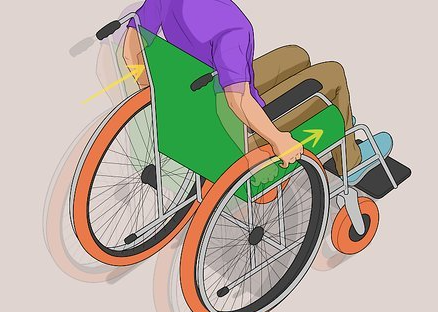
Myth #1: Manual Wheelchairs Are Only for People Who Can’t Walk at All
Most people have never heard this term: ambulatory wheelchair user. It means someone who can walk — but uses a wheelchair anyway. And it covers far more people than you’d think.
Rehabilitation professionals split users into two clear groups:
Ambulatory wheelchair users — can walk, but need a chair for longer distances or during symptom flare-ups
Non-ambulatory wheelchair users — cannot walk at all
Both groups have solid, medically valid reasons for using a wheelchair. The difference is that only one group gets believed.
So what drives a wheelchair prescription? Function, fatigue, pain, and safety. Not a simple test of whether someone can take a few steps. A person with multiple sclerosis might walk fine on Tuesday and need a wheelchair by Thursday. Someone with rheumatoid arthritis might handle short trips at home just fine. Push through a full shopping center on foot, though, and they risk real joint damage.
For these users, the wheelchair isn’t a last resort. It’s a pacing tool. It protects limited energy. It guards against further injury. It makes everyday life possible.
That’s where this myth gets it wrong. It treats wheelchair use as a yes-or-no question. Clinicians don’t see it that way. They assess it as a spectrum of mobility needs matched to real-world demands.
Seeing someone stand up from a wheelchair isn’t proof of fraud. It’s proof the system is working.
Myth #2: Using a Manual Wheelchair Means Losing Independence
The logic seems simple — you’re sitting down, someone else might push you, you need special routes. So of course that feels less independent. But that kind of logic is the most misleading. It feels true, so no one questions it.
Here’s what’s really going on. For most manual wheelchair users, the chair doesn’t take control away. It gives control back.
Think about the alternative. Without a mobility aid, someone with limited stamina or chronic pain has to rely on other people just to get around — a hand to hold, an arm to lean on, a caregiver to coordinate. The wheelchair cuts that dependency. You move when you want. You stop when you want. No one else’s schedule is part of the equation.
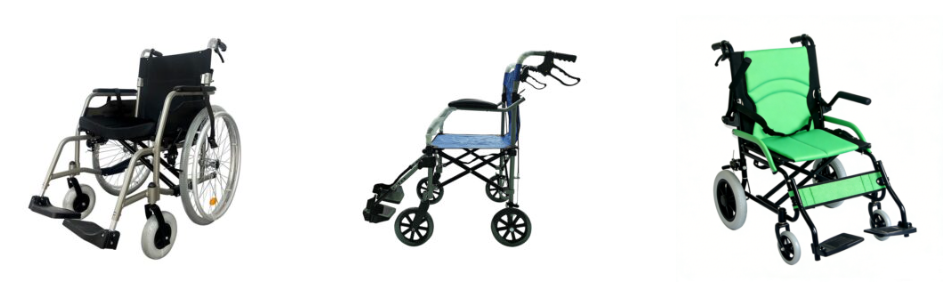
Modern manual wheelchairs are built to support that kind of independence:
Lightweight frames — aluminum, titanium, and carbon fiber bring weight down from the old 50+ lbs standard to around 25 lbs. That’s a big drop in how hard you have to push.
Ergonomic hand rims — textured or angled designs take the strain off your wrists during self-propulsion.
Transfer-friendly features — removable armrests, swing-away footrests, and adjustable seat height make getting in and out of bed, cars, and chairs something most users do on their own.
Adjustable seating systems — seat depth, backrest angle, and armrest height can all be tuned to cut fatigue and hold posture through long days.
These aren’t extras. They’re the core design logic behind chairs built for long-term daily use — commuting, working, running errands, socializing.
“A wheelchair is a tool that empowers independence — not a symbol of weakness.”
That reframe matters. The fear of “giving something up” by using a wheelchair makes sense. But the evidence points in the other direction. Mobility aids expand freedom. They don’t shrink it.
Myth #3: All Manual Wheelchairs Are Bulky, Uncomfortable, and Hard to Push
Traditional steel frames ran 50+ lbs. Today’s aluminum, titanium, and carbon-fiber designs bring that number down to around 25 lbs — sometimes less. That’s not a small tweak. It’s a completely different physical experience.
Weight is just one piece of it. What makes a chair harder or easier to push comes down to a few specific factors:
Axle position — moving the rear axle closer to the user’s center of gravity cuts the force needed to get rolling
Tire pressure and condition — flat tires and worn bearings create drag that makes every push harder than it should be
Frame material — lighter materials reduce total mass and make self-propulsion manageable across a full day
Bearing maintenance — clean, lubricated bearings keep resistance low; neglected ones build up extra effort over time
Comfort works the same way. A bad-fitting chair feels punishing. A good-fitting one — with an ergonomic backrest, pressure-relief cushion, and seat height set to your body — fades into the background. You stop noticing it. The discomfort most people connect with wheelchairs comes from a fit problem, not a design flaw.
The bulky, uncomfortable, hard-to-push wheelchair isn’t a myth — it’s just an early version of the product. Judging modern manual wheelchairs by that standard is like judging today’s smartphones by a 1995 Nokia.
Myth #4: Manual Wheelchairs Don’t Always Cause Shoulder Injuries
This statistic gets repeated so often it feels like a law of nature: use a manual wheelchair long enough, and your shoulders will break down. But a closer look at the evidence tells a different — and more hopeful — story.
Yes, shoulder pain is common. Studies report that 30% to 84% of manual wheelchair users develop shoulder pain at some point. Permobil states it clearly: about half of manual wheelchair users will experience some type of shoulder pain. That’s a real number worth taking seriously.
But here’s the part that gets left out: it can be prevented.
Shoulder injury doesn’t come from using a manual chair. Three specific mechanisms drive the damage — repetitive rotator cuff wear during propulsion, overhead lifting, and improper transfers. Reduce those stressors, and the risk drops by a lot.
The variables that drive shoulder damage are:
Rear axle position — a more forward axle cuts rolling resistance and lowers the force needed per push
Propulsion stroke pattern — semicircular and double-loop strokes put the least strain on shoulder muscles
Wheelchair weight — lighter frames (titanium, aluminum, carbon fiber) mean less force per stroke, and that adds up over thousands of pushes each day
Seat fit — incorrect seat width or depth shifts your arm angle to the pushrim, which builds impingement risk slowly over time
One piece of evidence goes straight against the “inevitable damage” model. Adults who started using wheelchairs in childhood showed more years of propulsion but less shoulder pain than those who started later. More use didn’t mean more damage. Technique, conditioning, and setup made the difference.
The shoulder isn’t fragile. It’s underprepared. Stretch daily, strengthen your rotator cuff every other day, and learn proper transfer mechanics. Those steps target the real problem. The wheelchair isn’t the threat — weakness and imbalance are.

Myth #5: Manual Wheelchairs Are a “Sedentary Sentence”
Self-Propulsion Is Measurable Physical Work
Moving a manual wheelchair is not passive. At a moderate pace of 4–5 km/h on flat ground, oxygen demand hits 3–5 METs — the same as a brisk walk. For a 70 kg user, that means 3–7 calories burned per minute. Add up a full day of commuting, errands, and normal movement, and you reach 100–300+ calories — the same range as an average person’s walking for the day.
The cardiovascular response is real. Heart rate climbs. Breathing gets faster. You can manage short sentences, but longer ones become a challenge. Exercise scientists use exactly that pattern to define moderate-intensity physical activity.
The Real Risk Isn’t Activity — It’s Inactivity
For people with spinal cord injuries, full physical inactivity brings serious health consequences. Cardiovascular complications rank among the leading causes of early death in that group. A manual wheelchair used for movement — for getting around, joining the community, or playing sport — works against that risk.
The key word is: used. A chair sitting in the corner does nothing. A well-fitted lightweight frame, pushed with good technique on a regular basis, turns into a cardiovascular training tool you can access every single day.
The sedentary sentence was never handed down by the wheelchair. People just assumed it was.
Myth #6: Children Are Too Young for Manual Wheelchair Use
Children as young as 18 months can learn to operate a wheelchair on their own — and most do so within two to four weeks of training. That single fact should end the debate. It doesn’t, because the assumption feels protective. Keeping a young child out of a wheelchair seems cautious. The evidence says it’s the opposite.
Pediatric rehabilitation clinicians are clear on this point: getting children mobile early supports brain development, social skills, and sensory learning. A child who can explore their environment — on their own terms, at their own pace — builds cognitive and motor foundations that passive transport cannot provide. Waiting isn’t neutral. It has a real cost.
There’s another misconception worth addressing. Many parents worry that introducing a wheelchair will discourage a child from learning to walk. Clinicians don’t support that concern. A wheelchair doesn’t replace walking potential. The child later develops the strength, endurance, and coordination to walk — that training continues alongside chair use. The chair is a parallel tool, not a closing door.
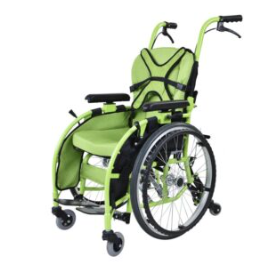
Modern pediatric manual wheelchairs reflect this thinking in their design:
Ultralight frames — older models were scaled-down adult chairs, heavy and poorly suited for children; today’s pediatric models are built for small bodies and limited upper-body strength
Custom fit — seat depth, width, and backrest angle are set to the child’s actual measurements, which improves control and cuts down on fatigue
Smaller footprint — a tighter turning radius makes them practical inside homes and classrooms
Adjustable growth components — well-designed pediatric wheelchairs grow with the child, so you’re not replacing equipment every year
The clinical signal is clear. A child who can’t crawl on their own, hold a seated position, or keep up with peers even using a walker — that’s the point to evaluate mobility equipment. For children with cerebral palsy, spina bifida, or muscular dystrophy, chair-based mobility gets built into functional goals early. It doesn’t wait for some later milestone to be crossed first.
Start mobility early. The benefits build on each other.
Myth #7: Any “Hospital Wheelchair” Will Do for Long-Term Use
That standard steel chair parked in the corner of every hospital ward? It was built to move patients from one room to another — not to carry someone through eight to sixteen hours of life, year after year.
The difference matters more than most people realize.
Hospital wheelchairs are transport equipment. They’re designed for short trips — hours, maybe a few weeks. Steel frames, fixed dimensions, thin foam pads. They weigh 18–22 kg. Seat depth, backrest angle, armrest height — all locked in place. There’s almost nothing to adjust.
Long-term prescription wheelchairs solve a different problem. Aluminum, titanium, or reinforced alloy frames bring weight down to 8–14 kg — 30 to 60 percent lighter. Seat width and depth can be dialed in to within 1–2 cm of your measurements. Rear axle position, seat tilt, backrest height — all adjustable. All matched to how your body sits and moves.
That gap in design creates real consequences. Use the wrong chair long-term, and here’s what happens:
Pressure injuries
Spinal and pelvic deformity
Shoulder breakdown
The fix isn’t complicated. It does require some intention. Plan to use a wheelchair for more than four to six hours a day? Or for longer than a year or two? Start with a formal seating assessment from a physical or occupational therapist. Test at least two or three frame-and-cushion combinations. Measure seat width against your actual hip width. Get a chair built for the life you’re living — not the hallway you’re being wheeled through.
Myth #8: Manual Wheelchairs Are Inferior to Power Wheelchairs in Every Way
The “inferior in every way” idea falls apart once you look at the specifics.
On cost, a solid manual chair runs $300–$600. A mid-range power wheelchair starts around $1,500 and can climb past $5,000. Maintenance follows the same pattern. Manual chairs need tires and bearings. Power chairs need battery replacements, motor repairs, and diagnostic services.
On portability, a modern aluminum or titanium frame weighs around 25 lbs and folds in seconds. Most power chairs weigh three or four times more. They also need ramps, lifts, or a second person just to move them.
On health, pushing yourself gives you real cardiovascular exercise. For users with enough upper-body strength, that’s not a downside. It’s a regular physical workout that supports heart health and muscle function over time.
Power wheelchairs solve real problems for people who need them. But this was never a comparison between a good tool and a bad one. These are two tools built for different jobs. Using the wrong one for your situation doesn’t make it inferior. It just means fit matters more than rankings.

How to Choose the Right Manual Wheelchair: Cutting Through the Confusion
Choosing a manual wheelchair comes down to four questions. Answer them straight, and the decision gets a lot simpler.
How much can you push — and for how long? This is the most important question, and most people skip it. Pushing a chair over 18 kg across a room causes shoulder strain for many users. Start with a lightweight model (13–16 kg) or an ultralight (8–12 kg) instead. A quick check: place your hand at the top of the pushrim. Your elbow should bend between 100° and 120°. Outside that range, the seat height or wheel size is off — and every push costs you more than it should.
Where will you use it most? An 18-inch seat adds 18–20 cm of total width once wheels and armrests are included. That puts most chairs at 66–71 cm wide. Measure your doorways before you order.
Who’s doing the pushing? A caregiver handling most of the pushing changes what you need. Check that the chair has push handles. Also confirm each component stays under 12–15 kg after disassembly. That makes loading and transport far easier.
Should you call a professional instead of choosing on your own? Sitting more than four to six hours a day is a clear sign to get expert input first. The same goes for existing shoulder or spinal issues, or needing insurance coverage. Book an OT or PT assessment before you buy. They measure what matters, match the chair to your body, and write the documentation your insurer needs. Skipping that step often means buying twice.
Conclusion
The truth about manual wheelchairs isn’t complicated. It’s just buried under decades of outdated assumptions.
Eight myths. Eight moments where fear, misinformation, or a well-meaning but uninformed opinion pushed someone toward the wrong decision. The real cost isn’t measured in dollars. It shows up in the independence someone gave up too soon. The shoulder injury that could have been avoided. The child who waited years for equipment they needed at age six.
The evidence is clear: a well-fitted, lightweight manual wheelchair isn’t a concession. It’s a precision tool for wheelchair user independence. The wrong chair holds you back. The right one doesn’t.
Check out Gracemedy’s manual wheelchair collection — built around real mobility needs, not outdated stereotypes.
The best wheelchair fits your life. Go find it.