
Manual Vs Lightweight Wheelchair
Weight is where everything starts. The gap between these two chair types is bigger than most people expect.
A standard manual wheelchair weighs 36–45 lb (16–20 kg). Some heavy-duty steel models push closer to 55 lb. A lightweight manual wheelchair comes in at 25–34 lb. Ultralight models go even lower — as light as 14 lb.
That difference isn’t just a number on a spec sheet. One caregiver throws out their back loading a wheelchair into a minivan. Another lifts the same task with ease, twice a day, for years. The weight is what separates them.
Manual Wheelchair vs Lightweight Wheelchair: Head-to-Head Comparison
Six parameters separate these two wheelchairs. Get clear on them, and the right choice becomes obvious.
|
Parameter |
Standard Manual Wheelchair |
|
|---|---|---|
|
Typical Weight |
36–45 lb; steel models up to 55 lb |
28–34 lb typical; ultralight as low as 14 lb |
|
Frame Material |
Durable steel or standard aluminum |
Aircraft-grade aluminum, titanium, carbon fiber |
|
Weight Capacity |
Up to 250 lb (standard models) |
Similar range; heavy-duty versions reach 300–850 lb |
|
Propulsion Effort |
Higher — harder on slopes and uneven terrain |
Lower — built for efficiency and ease |
|
Transport Ease |
Harder to lift into cars over and over |
Built for frequent car loading and unloading |
|
Best Use Case |
Intermittent or caregiver-assisted use |
Full-time independent self-propulsion |
Propulsion Effort & Physical Strain: The Weight Difference That Matters
Here’s something the spec sheet won’t tell you: cutting 15 pounds off a wheelchair frame matters far less than where those remaining pounds sit.
That’s not intuition. The research backs it up — and it should change how you think about wheelchair weight.
Keep front-end weight minimal. Bags, oxygen hardware, and accessories mounted near the casters push weight forward — and forward weight kills propulsion efficiency.
A lighter aluminum wheelchair with proper rear-axle positioning will outperform a heavier steel chair. But a well-configured lightweight frame will outperform a badly set-up ultralight one. Weight matters. Setup matters more.

Portability & Travel: Which Wheelchair Wins for Car Trips and Flights?
Loading a wheelchair into a car trunk is one of those tasks that reveals everything — fast.
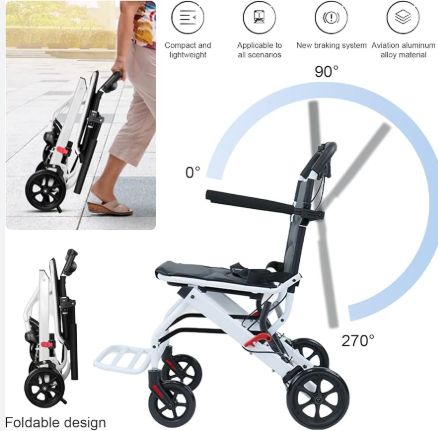
A lightweight aluminum travel wheelchair folds down to 70–80 cm long × 25–30 cm wide and weighs as little as 15–29 lb (7–13 kg). One person handles it in under 20 seconds. It slides into a mid-size sedan alongside two carry-on bags without drama. A standard steel chair is heavier and bulkier. The footrests don’t pop off clean. That same task now needs two people and a game of trunk Tetris you’ll lose more often than not.
Folding Speed and Trunk Space: The Numbers That Matter
Most lightweight folding wheelchairs follow the same simple steps: pull the center strap, let the frame collapse inward, then flip or remove the footrests. Done. Ten to twenty seconds once you know the wheelchair. Add quick-release rear wheels, and the folded width drops enough to stack it beside luggage — taking up about 30–40% of a standard 450–500L trunk.
Standard non-travel chairs can fold too, but the design never had your trunk in mind. The folded profile is wider. The footrests fight removal. The armrests catch on everything. They eat the same trunk space as a power chair — without any power-assisted propulsion to show for it.
Airline Travel: Where Lightweight Chairs Have a Clear Edge
Airlines treat personal wheelchairs as free checked equipment — no per-bag fee, no weight surcharge in most cases. You ride your own chair to the gate. Ground crew takes it from there.
But your booking confirmation won’t tell you this: the U.S. Department of Transportation recorded 11,389 damaged or lost wheelchairs and scooters in 2022 alone — 949 per month. Ground crew under time pressure grab whatever part is closest. A heavier, harder-to-handle chair gets rough treatment. A compact, quick-fold travel chair is easier to stow and easier to brace in the cargo hold.
Lightweight Wheelchair for Seniors: Is It the Right Choice?
For most seniors, the answer is yes — but the details matter.
Age changes wheelchair selection in real, measurable ways. Upper body strength drops. Balance gets less steady. Mental sharpness varies from person to person. A chair that works well for a 45-year-old with a spinal injury may perform very differently for a 78-year-old dealing with both arthritis and mild cognitive impairment. The wheelchair stays the same. The user’s needs do not.
The Weight Advantage Is Real — and Significant
A standard steel manual wheelchair weighs 16–20 kg. A lightweight aluminum model comes in at 8–12 kg. That gap — 40–60% less total weight — means less push effort on every single stroke.
Where Lightweight Wins for Family Caregivers
The caregiver side of this deserves real attention. Many seniors are cared for by a partner in their 60s or 70s, or by adult children who have their own physical limits.
Switching to an 8–12 kg folding lightweight cuts each lift by close to half. Add a foldable backrest and removable footrests, and the chair fits into a compact car with no second person needed.
Matching Wheelchair Type to Senior Profile
|
Senior Profile |
Recommended Chair Type |
|---|---|
|
Good cognition, adequate arm strength |
Lightweight self-propelled (8–12 kg, 22–24″ rear wheels) |
|
Frequent outings, family-assisted transport |
Ultralight folding wheelchair (≤10 kg, foldable back) |
|
Poor balance or weak trunk control |
Lightweight transport wheelchair with caregiver brakes |
|
Cognitive impairment, facility-based care |
Standard manual (facility use) + personal lightweight for outings |
The Fit Details That Make or Break Comfort
Weight is only part of the picture. For seniors, a few fit details decide whether the chair supports daily life or slowly works against it:
Seat width: Aim for hip measurement plus 2–3 cm. A seat wider than hip width by 5 cm or more reduces side stability and raises the risk of leaning, skin friction, and fatigue during self-propulsion.
Footrest height: Knees should rest at about 90°, with feet flat on the footplate. Too low pulls the pelvis into a backward tilt. Too high puts too much pressure under the thighs, raising the risk of pressure sores over long sitting periods.
Armrest style: Flip-back armrests make side transfers easier. Desk-length armrests let seniors pull up close to a dining table or workspace — a small detail that has a big impact on day-to-day independence.
Braking: For seniors with limited hand dexterity, a 2-in-1 handbrake placed within easy reach removes the need to lean forward and lock the rear wheels by hand.
A lightweight wheelchair for elderly users delivers real value — but only when the fit is right and the chair matches the user’s profile. Get both of those right, and you see genuine gains in independence. Miss either one, and the lighter weight means very little.
How to Choose the Right Wheelchair: A Decision Guide by Use Case
The right wheelchair isn’t the lightest one, the cheapest one, or the one your neighbor recommended. It’s the one that fits your actual life — how many hours you’re in it, who’s doing the pushing, and where you’re going.
Work through these four scenarios. One of them is yours.
Daily Independent Use (4+ Hours, Self-Propelled)
Full-time users need a fully configurable ultralight wheelchair in the 8–15 kg range. Not a starter model. Not something you’ll “upgrade later.”
Caregiver-Assisted Use
A caregiver doing most of the pushing changes the whole priority. Self-propulsion is no longer the focus. Go with a transport wheelchair — small rear wheels, caregiver-controlled handbrakes at the push handles. That’s the right starting point.
Travel and Frequent Car Use
Check the folded dimensions against your actual trunk before buying anything. Most standard trunks top out around 50–60 cm in height — measure yours first. For users loading the chair on their own, keep total weight at ≤ 12–15 kg. Quick-release rear wheels bring the heaviest single piece down to a 7–9 kg frame. That’s a big difference for solo travelers.
Solid or foam-filled tires need no maintenance. Yes, rolling resistance is slightly higher. But that trade-off makes sense on trips where finding a pump isn’t an option.
Short-Term or Post-Surgery Recovery
Under two to three hours of use per day, for weeks rather than months? A standard folding manual wheelchair handles this well. Renting is a real option here — it keeps costs down and skips the storage problem once you no longer need the chair.
Frequently Asked Questions
These questions come up all the time — from first-time buyers, overwhelmed caregivers, and longtime users who think their current chair might not be the best fit.
Q: Is a lightweight wheelchair good for long-term use?
Yes — with the right frame, fit, and habits. Active users put in 4–10 hours daily in lightweight chairs with no problems. Three things matter most:
A rigid or high-strength aluminum frame (not a basic transport model)
A pressure-relief cushion
Weight-shifting every 15–30 minutes to cut pressure sore risk
You’ll use about 20–30% less propulsion effort compared to standard steel. Also look for adjustable rear axle, backrest angle, and seat depth — those details add up over years of daily use.
Q: What is the lightest manual wheelchair available?
Premium ultralight rigid frames reach 4–5 kg (under 11 lb) without wheels or cushion. Most mainstream folding lightweight chairs come in at 11–14 kg (24–31 lb) complete. Carbon fiber and titanium frames are 30–40% lighter than steel at the same load rating.
One detail to watch: check whether the published weight is frame-only or total transport weight. That gap can reach 2–5 kg — a big difference.
Q: Can a lightweight wheelchair support 300 lbs?
Many can. Chairs rated for 136 kg (300 lb) exist well under 13 kg (29 lb) with a heavy-duty or bariatric-capable label. For users near that weight limit, look for:
A reinforced cross-brace and double cross-tubes
A wider seat (20–22″)
Anti-tippers for added stability
Never go past the manufacturer’s stated load limit. Also factor in your cushion, backpack, and any medical accessories — those add real weight.
Q: What’s the easiest wheelchair to lift into a car?
A rigid ultralight frame with quick-release wheels. Split into parts, each piece stays under 6–7 kg (13–15 lb). That’s a huge difference from a standard folding chair at 18–20+ kg all at once.
Caregivers with shoulder concerns do best with no single piece above 10 kg (22 lb). A fold-down backrest and swing-away footrests let the frame sit low enough to clear a standard trunk opening without struggle.
Q: How durable are lightweight wheelchairs compared to steel?
High-quality aluminum and titanium frames hold up for 5–10 years with routine maintenance. Here’s a rough service schedule:
Tires: replace every 12–24 months
Bearings and casters: every 2–4 years
Upholstery: every 3–5 years
Most frame failures come from overloading or rough use — not the lighter material itself. For users above 110 kg (240 lb), get a yearly check on welds, axles, and caster forks. That’s where stress builds up first.
Conclusion
Picking between a manual and a lightweight wheelchair isn’t about finding the “better” wheelchair. It’s about finding the right fit for users’ life.
Ready to find your match? Browse Gracemedy’s wheelchair collection to compare folding wheelchair options, aluminum frames, and transport models built for real-world use. Grace Medical offers a variety of wheelchair configuration solutions, allowing for wholesale orders with a choice of different models.The right wheelchair doesn’t just move you — it moves with you.