
Largest Manual Wheelchair Manufacturers You Should Know
Serious buyers filter by four key factors: years in market, multi-country production footprint, product breadth, and CE/FDA/ISO compliance. Every manufacturer on this list meets all four.
Who Are the Largest Manual Wheelchair Manufacturers in the World?
The global wheelchair market ships over 11.8 million units every year. Manual wheelchairs make up 60–70% of that volume. That’s not a niche. That’s an industry.
The market splits into two distinct camps. Serious buyers need to understand this split before making any decisions.
Camp One: Western brand manufacturers. Names like Invacare, Sunrise Medical, Ottobock, and Drive DeVilbiss hold FDA, CE, and ISO 13485 certifications. They run global distribution networks. They set premium prices. Many of them outsource production to factories in China, Eastern Europe, or Mexico — but keep the brand equity on their side of the Pacific.
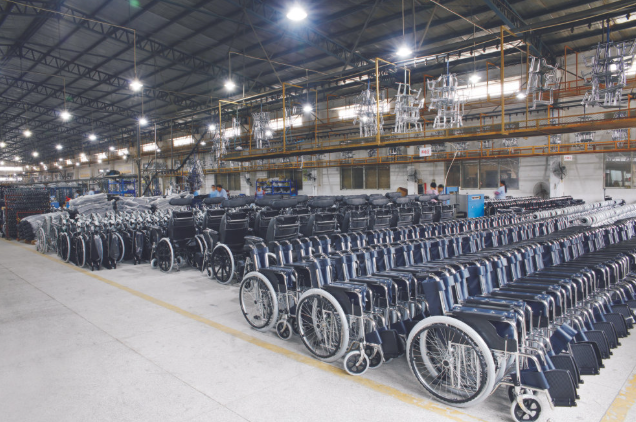
Camp Two: Asian OEM/ODM production powerhouses. Factories sit in Jiangsu, Zhejiang, and Guangdong provinces. Each facility produces hundreds of thousands of units per year. These manufacturers drive the actual global volume — standard steel-frame chairs that fill markets across Latin America, the Middle East, and Sub-Saharan Africa.
Geography drives everything here. North American and European brands lead the high-margin custom and ultralight segment. Asian manufacturers lead on raw output and cost-competitive sourcing. You can’t ignore either side — not if you’re making serious procurement or partnership decisions.
1. Invacare Corporation — Global Volume Leader with 60+ Country Presence
Founded in 1885, Invacare has had more time to get this right than almost anyone else in the industry.
That track record speaks for itself. Today, Invacare sells millions of medical products each year across Europe, Asia-Pacific, and North America. Its export footprint now covers more than 60 countries. For institutional buyers and DME distributors sourcing large-scale manual wheelchairs, that level of global reach is hard to match.
What the Product Line Covers
Invacare’s manual wheelchair catalog spans the full range. That matters for multi-tier procurement:
Standard/basic wheelchairs — steel or aluminum frames, 16–20 inch seat widths, fixed armrests, swing-away footrests. Built for hospital bulk tenders, rental fleets, and basic insurance supply
Lightweight folding wheelchairs — aluminum frames, community mobility focus, targeting mid-spec reimbursement codes in both US (HCPCS) and EU markets
Complex rehab configurations — tilt-in-space, recline, multi-axis adjustments, paired with Invacare’s own seating and positioning accessories
You can consolidate across multiple contract tiers — from low-cost hospital tender to high-end rehab facility — under one supplier. That cuts sourcing complexity and simplifies contract management.
Corporate Structure After Restructuring
Invacare filed for Chapter 11 in 2023 and came out of it in 2024. Since then, ownership split into two separate structures:
MIGA Holdings LLC — took over the North American business in late 2024
DHCare (Rhône Capital-backed) — merged Invacare Europe & APAC with Direct Healthcare Group in January 2026, now running with direct presence in 16 countries and 50+ export markets
For B2B buyers, this restructuring is not a warning sign. It points to dedicated regional capital and tighter operational focus in each territory. Each business unit now has clear ownership and a defined market scope.
Certifications to verify: ISO 13485, CE marking (EU MDR), FDA registration, and ISO 7176 series for wheelchair-specific testing.
2. Grace Medical Instrument Co., Ltd. — OEM/ODM Full-Range Manual Wheelchair Manufacturer
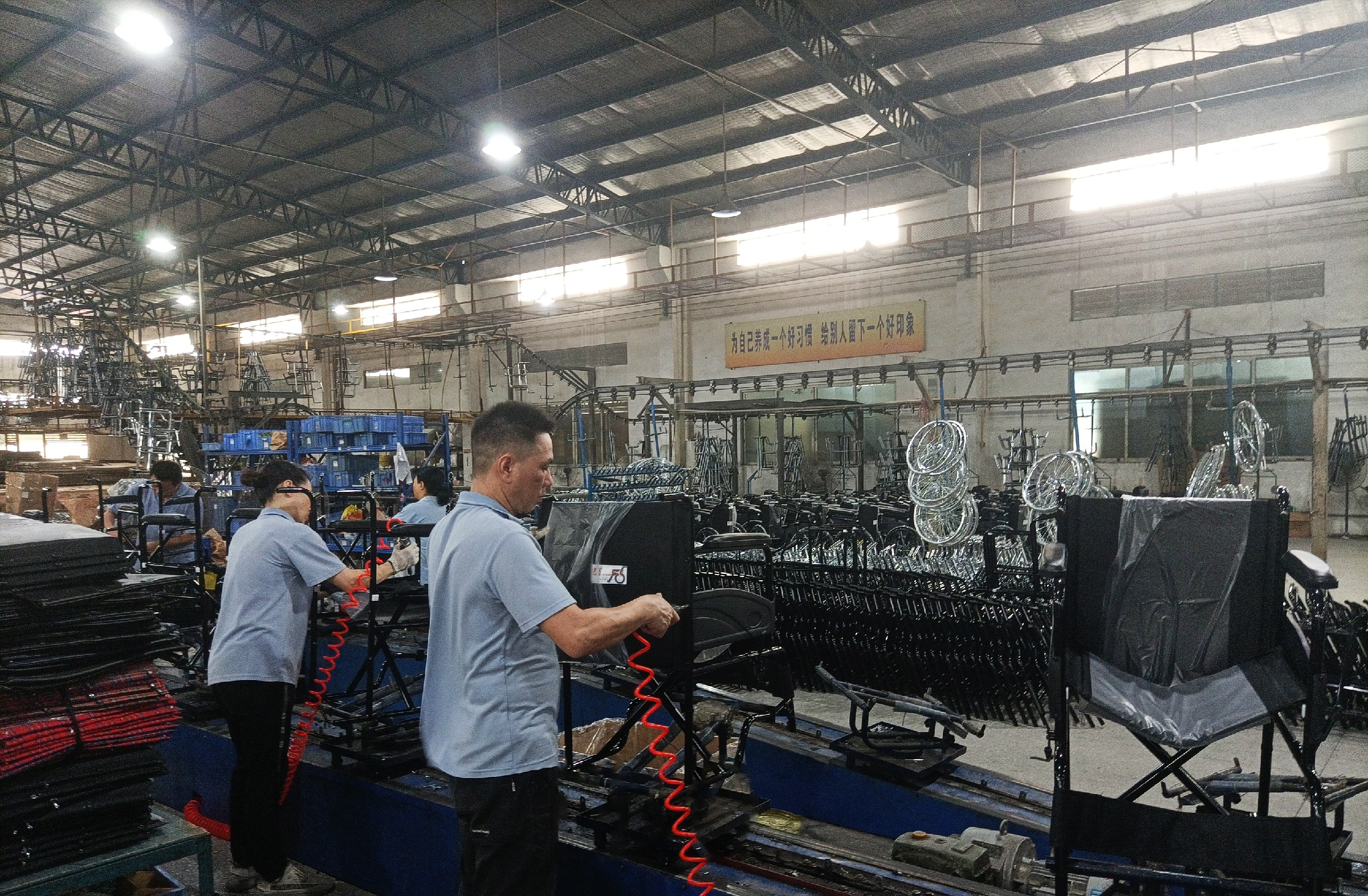
Based in Hengshui City, Hebei Province, Grace Medical Instrument Co., Ltd. has built a complete manual wheelchair product range under one roof. That’s exactly what serious OEM buyers want to see.
Their catalog covers every major wheelchair type. That means standard manual wheelchairs, foldable lightweight models, reclining configurations, and pediatric wheelchairs. Not a partial lineup. The full range.
That depth is why Grace Medy deserves a serious look in any B2B sourcing conversation.
What OEM Buyers Should Focus On
The product lineup splits into four clear tiers:
Foldable manual wheelchairs — aluminum frames, lightweight builds, aimed at price-sensitive markets
Reclining wheelchairs — built for institutional and home care buyers who need extended positioning support
Pediatric wheelchairs — smaller frames and lower load ratings designed for younger users
Standard manual aluminum wheelchairs — the core SKU for bulk tenders and distributor volume orders
Grace Medy also makes hospital beds and medical nursing beds. So if you’re sourcing across multiple equipment categories, you can consolidate vendors here instead of splitting orders across suppliers.
Key Questions to Ask Before Committing
Grace Medy runs an active B2B export operation through Alibaba International and its own website. Before placing any order, get these specifics locked down with their team at (+86) 19333723988:
MOQ — ask for a breakdown by model, frame color, and packaging configuration
Lead time — get separate timelines for samples, trial orders, and bulk production
Certifications — request original CE and ISO 13485 certificates with model-level correspondence
Customization scope — confirm what’s available: logo, frame finish, seat material, brake system, wheel diameter, and packaging
Private label brands, regional distributors, and hospital procurement teams looking for cost-competitive Chinese wheelchair OEM suppliers should put Grace Medy on the shortlist. It’s a direct factory source worth verifying.
3. Permobil & TiLite — Premium Titanium & Custom-Fit Manual Wheelchairs
Titanium changes everything here.
Most manual wheelchair sourcing talks focus on price, MOQ, and lead time. TiLite — Permobil’s high-performance manual wheelchair sub-brand — plays a different game. The buyer isn’t chasing the lowest unit cost. They’re specifying a chair built for one person’s body. Welded once, to their exact measurements.
That’s not a product. That’s a clinical instrument.
Price Point and Target Buyer Profile
The titanium TR/TRA series starts at US$3,000–5,000+ in North American retail channels. High-spec builds push past $6,000. Compare that to the aluminum TiLite X at around US$1,908 base. The price gap is real, and it’s there by design.
This pricing fits a specific buyer profile:
Active spinal cord injury or paraplegia users who need full-day community mobility
Rehabilitation hospitals and spinal cord injury centers that specify chairs for high-activity discharge patients
Disability sport programs and athletic rehabilitation facilities
Private-pay or insurance-supplemented buyers in North America and Western Europe
Standard long-term care facilities and hospital rental fleets don’t fit this market. This is complex rehab territory.
Distribution Model: North America Core, Selective Global Reach
Permobil’s TiLite channel runs through certified Complex Rehab Technology (CRT) dealers. These distributors employ ATPs, handle insurance documentation, and run physical showrooms with trial units. In the US, that includes national partners like Numotion and NSM.
European coverage is solid across the UK, Germany, Scandinavia, and France. TiLite operates there through local subsidiaries and authorized channels connected to public reimbursement systems.
Asia-Pacific coverage is more selective. Australia, Japan, Singapore, and Hong Kong are the core accessible markets. In emerging markets — Southeast Asia, parts of China, India — TiLite titanium chairs reach mostly high-income private users and top-tier rehabilitation centers.
For B2B buyers checking sourcing partners: TiLite is not a volume OEM supplier. It’s a premium brand benchmark. Your market serves active, high-need manual wheelchair users with clinical support infrastructure? Then TiLite belongs on your competitive reference list — even if your sourcing points somewhere else in the end.
4. Drive DeVilbiss Healthcare — High-Volume Value-Oriented Supplier for Institutions
Drive DeVilbiss Healthcare was built for the volume game — and it shows.
The company launched in 2000. Then in 2015, it acquired DeVilbiss Healthcare and expanded its reach. Today, Drive operates across the US, Europe, Canada, Mexico, Latin America, the Middle East, and Asia. That’s not just a distribution footprint. That’s a full procurement infrastructure.
Their own positioning says it straight: “better value and aggressive pricing” for healthcare partners. That’s not accidental language. It’s a direct signal to institutional buyers running large DME contracts where unit cost drives margin.
What the Product Range Covers
Drive DeVilbiss is not a wheelchair-only supplier. That’s the point.
Manual wheelchairs and transport chairs are part of a much larger catalog. You’ll also find:
Hospital beds
Bariatric mobility aids
Respiratory devices
Bathroom safety equipment
Patient room fixtures
Electrotherapy units
For a procurement manager running a hospital system or long-term care network, that breadth means one thing: vendor consolidation.
Instead of splitting orders across five suppliers, your institution can standardize 70–80% of its DME spend through Drive. That covers basic steel-frame wheelchairs, standard homecare beds, and walkers. You source higher-spec SKUs elsewhere only where clinical need requires it.
Price Positioning and Institutional Fit
Drive operates in the value-to-mid tier. Basic manual wheelchair models land in the USD 150–350 range at distribution level. Standard homecare bed packages sit around USD 600–1,200. These aren’t premium numbers. They’re structured for high-volume contract negotiation, with tiered breakpoints at truckload or container scale.
5. Karman Healthcare — Lightweight & Ultralight Manual Wheelchair Specialist
Thirty years of building chairs people keep coming back to — that’s Karman Healthcare’s real story, and it checks out.
Since 1994, Karman has built a clear identity in the manual wheelchair market: lightweight and ultralight models for users who need full-day mobility without dragging around a heavy frame. That focus is a choice. The brand doesn’t chase every segment. It holds the weight-sensitive end of the market and builds everything around that goal.
The key number is 14.5 lb. That’s the starting weight on Karman’s ultralight ergonomic lineup — and it’s a big deal. Most standard manual wheelchairs can’t get close. That one spec puts Karman in the ultralight tier, not the standard-chair category.
What the Product Line Covers
Karman’s manual wheelchair range breaks into five segments: lightweight transport, standard, lightweight, ultralight, and ergonomic. Here are the standout models worth looking at:
Ergo Flight — T6 aluminum frame, S-style ergonomic seat, optional quick-release rear wheels. You’ll find it listed and reviewed on major U.S. reseller platforms, including 1800wheelchair
LT800-T — an active retail model with its own dedicated product video
Ultralight series — ergonomic seat frame, antibacterial cushion, folding design, quick-release wheels
T6 aluminum is the confirmed core material. No titanium specs show up in the available data. Aluminum ultralight is the right procurement benchmark to use here.
Who This Brand Fits
This brand works well for home-care distributors, rehab-focused e-commerce buyers, and regional dealers sourcing lightweight manual wheelchair brands for active or home-mobility users. For B2B questions on MOQ and private-label terms, reach out to Karman — the channel flexibility signals are there, even if published minimums aren’t listed.
Manual Wheelchair Manufacturers Comparison Table
Side-by-side data cuts through confusion faster than any amount of prose. Here’s what you need to see before committing to a supplier or making a final brand call.
|
Brand |
Origin |
Price Tier |
OEM/ODM |
Core Markets |
Best For |
Lightweight |
Sports |
Basic/Transport |
|---|---|---|---|---|---|---|---|---|
|
Invacare |
USA (global) |
Broad range |
Limited public info |
Global |
Institutional, everyday users |
✓ |
— |
✓ |
|
Sunrise Medical / Quickie |
USA (global) |
Mid–Premium |
Modular platform |
Global |
Performance, adjustable regular use |
✓ |
✓ |
✓ |
|
TiLite / Permobil |
USA (global) |
Premium / custom |
Custom-fit builds |
North America, EU |
Active users, SCI, clinical rehab |
✓ |
✓ |
— |
|
Drive DeVilbiss |
USA |
Value–Mid |
Not emphasized |
North America, EU |
Bulk institutional, DME contracts |
— |
— |
✓ |
|
Karman Healthcare |
USA |
Mid–Premium |
Not emphasized |
North America |
Home care, rehab retail |
✓ |
— |
— |
|
Medline |
USA |
Affordable |
Not emphasized |
North America |
Value-tier healthcare sourcing |
— |
— |
✓ |
|
Grace Medy |
China (Hebei) |
Competitive OEM |
Full OEM/ODM |
Global B2B |
Distributors, private-label, hospitals |
✓ |
✓ |
✓ |
For OEM/ODM sourcing, Grace Medy is the strongest fit in this group. TiLite and Sunrise Medical set the quality benchmark on the consumer side. Invacare and Drive cover the high-volume end. Pick your lane based on the problem you’re solving.
Conclusion
The global manual wheelchair market has plenty of options. But the right manufacturer is the one that fits your volume needs, quality standards, and long-term goals.
Each manufacturer covered here brings something different to the table. Invacare leads with a broad global distribution network. Grace Medical stands out with flexible OEM/ODM capabilities. Together, they represent some of the most reliable and scalable partners in the industry.
Sourcing lightweight aluminum frames in bulk? Building a private-label mobility brand from scratch? Knowing who actually builds the world’s wheelchairs puts you ahead of most buyers out there.
Don’t let your next sourcing decision come down to a Google search and a guess.
Use this guide as your starting shortlist — then dig deeper:
Request samples before committing to any supplier
Compare certifications to confirm compliance with your target markets
Ask direct questions about MOQ, lead times, and production capacity
The best supplier relationships are built on solid information. Start there.