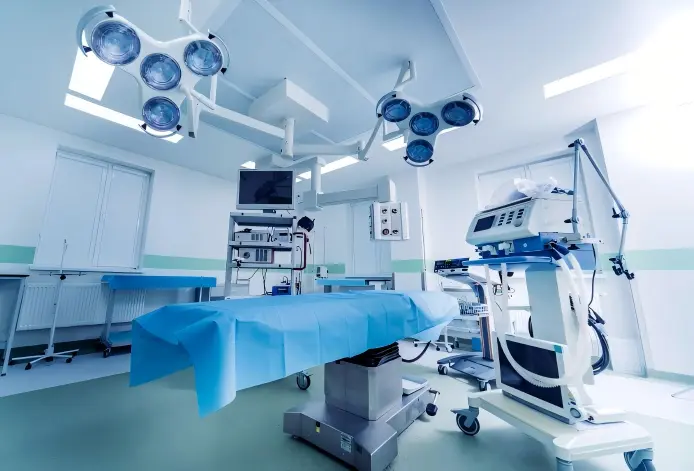
The moment you step into an operating room, the chill hits you first. It’s sharp and clinical — almost startling. You might wonder whether someone forgot to adjust the thermostat. That thought is more common than you’d think.
The truth behind why surgical rooms are so cold sits at the crossroads of human biology, infection science, and engineering. Operating room temperature is not a random choice. It’s a deliberate decision that protects every person in that room — including you.
This breakdown covers the real science behind those frigid temperatures. It separates the myths from the evidence. And it explains why that cold air may be one of the most important safety measures in modern medicine.
Why Are Surgical Rooms So Cold
Surgeons don’t dress light. Under those surgical lights — which throw off a lot of heat — they wear gowns, gloves, masks, hats, and sometimes heavy lead aprons. That room feels freezing to a patient in a thin hospital gown. To someone layered up like that? It feels just fine.
That’s the real reason operating rooms run cold. Staff comfort drives the temperature, not tradition.
The standard operating room temperature range sits between 68°F and 73°F (20°C–23°C). Some facilities adjust within an 18°C–22°C window based on the procedure. Surgeons and anesthesiologists don’t even agree on the ideal number — one study found surgeons prefer around 19°C, while anesthesiologists lean toward 21.5°C.
There’s also a sterility reason. Cooler air keeps the surgical team dry. Sweat hurts fine motor control. It also breaks down the sterile environment the team works hard to protect.
The OR’s HVAC system adds another layer. Engineers design it to push airborne contaminants out of the surgical suite. Most systems use HEPA filtration to keep the air as clean as possible.
The Surgical Team Works Under Conditions That Generate Serious Heat
Standard operating room temperatures sit between 68°F and 73°F — but that number only tells part of the story.
Burn surgery is different. The thermostat gets pushed far past comfortable. A global survey of 33 burn surgery clinicians across 15 countries recorded intraoperative temperatures reaching 24–45°C (75–113°F). Temperatures above 30°C are not rare in burn theatres. They are standard — driven by the patient’s urgent need for warmth to survive massive tissue loss.
The surgical team stands inside that heat. Fully gowned. Gloved. Masked. Their surgical gowns trap body heat against the skin like a sealed envelope. Heart rates climb. Core temperatures rise. Fluid loss increases. Every physical marker of strain moves in the wrong direction.
Researchers studied real burn surgery teams working in hot theatres versus cooled ones. They found strong effects on thermal sensation, thermal comfort, and perceived exertion — with p-values of .002, <.001, and <.001 for each measure. Fatigue scores were much higher. Workload felt heavier too.
What surprised researchers most was what happened to the mind, not just the body.
Heat Doesn’t Just Exhaust Surgeons — It Slowly Erodes Their Thinking
Researchers ran controlled simulations at 30–32°C, held steady over several hours. Surgical staff showed clear drops in executive functioning, verbal reasoning, spatial planning, and mental rotation. The longer the exposure, the worse the scores. Response times slowed. Accuracy dropped.
Add psychological stress on top of the heat, and the effects get worse. Working memory fell further, with an effect size of g = 0.38. Processing speed slowed more. Perceived workload climbed even higher.
Here’s the part that stings most: the cognitive tasks hit hardest — executive function, spatial planning — are the exact ones a surgeon relies on most during a complex case.
The irony is hard to ignore. The room runs hot to protect the patient. That same heat steadily wears down the team working to save them.
Operating Room Temperature Standards: What the Numbers Say
Read through operating room guidelines from a few different countries. One thing stands out fast: nobody agrees on a single number.
That’s not a flaw in the system. It’s just the reality of regulating something as variable as human surgery.
In the United States, ANSI/ASHRAE/ASHE Standard 170 is the foundational document most facilities build their policies around. It sets adult OR temperatures at 68–75°F (20–24°C), with relative humidity between 20–60%. AORN follows the same range. The Joint Commission applies it to Class B and C operating rooms as well.
Canada tells a slightly different story. Alberta Health Services specifies 18–23°C with humidity at 30–60%. The WHO lands at 18–22°C. A literature review by Knaepel argued the floor should be no lower than 22°C. Wilke et al. proposed 18–21°C. Dascalaki et al. pushed higher, at 22–24°C.
The table below shows how much variation exists at the official level:
|
Standard / Source |
Temperature Range |
Humidity Range |
|---|---|---|
|
ASHRAE/ASHE 170 (U.S.) |
68–75°F (20–24°C) |
20–60% RH |
|
Alberta Health Services |
64–73°F (18–23°C) |
30–60% RH |
|
WHO |
64–72°F (18–22°C) |
20–60% RH |
|
Pediatric ORs |
72–75°F (22–24°C) |
50–60% RH |
|
Obstetric surgery (WHO) |
≥77°F (≥25°C) |
50–60% RH |
The numbers reveal something else too: procedure type overrides every baseline standard. Neonatal cases need ≥24°C — no exceptions. Cardiac surgery environments can drop as low as 17°C. Burn theatres can climb to 27°C or higher.
There is no universal “correct” temperature for a surgical room. There is the right temperature for this patient, this procedure, this moment.
Does Cold Air Actually Prevent Infections? (The Myth vs. The Evidence)
Let’s be clear about a belief that has circulated for decades — in waiting rooms, family group chats, and pre-op conversations: cold air does not prevent infections. The evidence points in the opposite direction.
This ranks among the most stubborn myths in operating room folklore. It matters too, because believing it creates a dangerous gap in understanding what keeps patients safe during surgery.
The Myth, Stated Clearly
No controlled human study has ever shown that cold ambient air reduces infection rates. Historical experiments put volunteers in chilling conditions — without direct virus exposure — and found no rise in illness. That confirmed one clear point: cold neither causes nor prevents infection on its own. Pathogens do the infecting. Cold air just leaves the body less equipped to stop them.
Modern clinical consensus is direct: cold is a risk amplifier, not a protective shield.
In the operating room, this changes the picture. The cold surgical suite isn’t a sterile environment in any microbiological sense. The real infection-control work comes from:
-
HEPA filtration
-
HVAC airflow engineering
-
Sterile technique
-
Careful wound care
Temperature alone doesn’t do it. The thermostat is set for the surgeon’s focus — not for stopping bacteria.
How OR HVAC and Ventilation Systems Work (And Why Cool Air Supports Them)
Behind every sterile surgical field, there’s a ceiling doing more work than anything else in the room. You just never look at it.
OR ventilation systems aren’t fancy air conditioning. They are precision-engineered environments. They run non-stop and recalibrate in real time. A standard operating room cycles its entire air volume 20 to 25 times every hour. High-risk orthopedic suites push that to 25–30 ACH. For context: a typical office building turns over its air about 6 times per hour. The OR runs at close to four times that rate.
Here’s how the air moves:
Outdoor air enters first — at least 20% of total supply. Modern high-risk ORs often run 100% outside air to cut out any recirculated contaminants. That air passes through pre-filters, then secondary filters, then a HEPA filter rated at 99.97% efficiency at 0.3 microns. By the time air reaches the surgical field, it has been stripped of almost everything.
Then comes the cooling coil — and this is where temperature becomes engineering, not comfort.
Why Patients Feel Cold — And How the Surgical Team Prevents Hypothermia
Most patients don’t expect the cold to follow them home. It does, though — showing up as shivering, chills, and a bone-deep chill that can last for hours after waking from anesthesia.
Here’s what’s happening inside the body.
Anesthesia starts, and the hypothalamus — the brain’s internal thermostat — loses its grip. Anesthetic drugs dilate blood vessels. Heat that was held in the body’s core spreads outward toward the skin. That shift alone drops core temperature by 1–1.5°C within the first hour. The OR’s ambient air doesn’t cause this. The anesthesia does.
Skip any warming measures, and a patient going through a long abdominal procedure can arrive in recovery with a core temperature around 34.5–35.5°C. That puts them inside the range clinicians call mild hypothermia (34–36°C). The safe zone — normothermia — sits between 36–37.5°C.
The shivering that wakes patients in recovery isn’t random. The body is doing what it’s built to do — generating heat through muscle movement after peripheral vasoconstriction kicks in. Shivering can happen even with a small temperature drop. Sometimes it’s triggered by anesthetic drugs or pain, not cold itself.
What the Surgical Team Does About It
The goal is clear: keep core temperature at ≥36°C before, during, and after surgery.
The team works on several fronts at once:
-
Forced-air warming blankets go on at induction for any procedure lasting more than 30 minutes. They push warm air at 38–43°C straight onto the skin.
-
Warmed IV fluids and irrigation solutions run near 37°C. This stops large-volume infusions from cooling the core from the inside out.
-
Continuous temperature monitoring uses esophageal, nasopharyngeal, or bladder probes to track core temperature in real time.
-
Non-operative areas stay covered with drapes and warm blankets. This cuts the radiation and convection losses that cause most heat loss during surgery.
The results back this up. Active forced-air warming cuts mean time to normothermia by 32 minutes compared to warmed cotton blankets — and by 89 minutes compared to unwarmed ones.
In recovery, intense shivering calls for a targeted response. IV meperidine at 6.25–12.5 mg is the most proven pharmacologic option. It stops shivering within minutes. Pair it with forced-air warming, and you have the gold-standard approach for postanesthetic shivering.
The cold in the OR was never meant for you. The team at that table puts in serious effort to make sure it stays that way.
Cold Room, Warm Patient: Why the Combination Is the Gold Standard
Two things are true at the same time inside an operating room. The room sits at a deliberate 68–73°F (20–23°C) — cool enough to keep the surgical team sharp and dry under heavy gowns and blazing lights. At the same time, the patient on the table is being warmed the entire time.
That’s not a contradiction. It’s the system working as designed.
Keeping the patient’s core temperature at ≥36.0°C (96.8°F) isn’t just good practice. It’s a formal Surgical Care Improvement Project (SCIP) quality metric. The target is clear: reach normothermia within 15 minutes of leaving the OR. Miss that window, and infection risk climbs. Wound healing slows. The immune response that should protect the patient starts to fall back.
The warming happens in layers:
-
Pre-operatively: Forced-air warming blankets run for at least 30 minutes before the patient enters the cold room. This cuts the temperature drop during surgery.
-
Intraoperatively: IV fluids are warmed to 37–39°C, irrigants match body temperature, and underbody warming blankets, head caps, and double socks are used throughout.
-
Post-operatively: Active warming continues in recovery. Staff check temperature every 15 minutes until normothermia holds steady.
Forced-air warming has earned its place as the gold standard for perioperative hypothermia prevention. Not because it’s the sole tool — but because it performs best as part of a multimodal bundle. Each layer of warming reinforces the next, giving the patient’s body consistent thermal support from pre-op through recovery.
The cold room protects the surgeon’s focus. The warming protocol protects the patient’s body. Together, they make surgery safer than either could on its own.
FAQ: Common Questions About Operating Room Temperature
Patients ask these questions all the time — in pre-op appointments, in nervous late-night searches, in quiet conversations with family the morning of surgery. Here are straight answers to the most common ones.
What is the normal temperature range for an operating room?
For routine adult surgery, the standard range is 68–75°F (20–24°C). Most hospitals set their thermostats in the 20–22°C (68–72°F) window. That’s cooler than a typical office — and several degrees colder than a standard hospital patient room.
Why does the temperature vary so much between hospitals?
No single global standard exists. The U.S. follows ASHRAE 170 and AORN guidelines (68–75°F). Canada’s Alberta Health Services specifies 18–23°C. Australia’s NSW Health targets 20–22°C. The WHO sets its range at 18–22°C. Each facility works from its own regional framework. That’s why the thermostat setting can shift depending on where in the world you have surgery.
Can an OR ever go below 68°F?
Yes — but not without reason. Going below 68°F (20°C) requires a documented clinical exception under written facility policy. Some cardiac procedures use ambient temperatures as low as 17°C. That’s the lowest end, and it’s rare.
Are some patients kept in warmer rooms?
Yes. The procedure type drives the room temperature setting:
Neonatal and pediatric surgery: rooms run at ≥24°C, with humidity kept at 50–60%
Obstetric surgery (including C-sections): WHO recommends a minimum of 25°C
Burn surgery: ambient temperatures can reach 27°C or higher to make up for the patient’s major heat loss
Does cold air lower the risk of surgical site infections?
No — and this point deserves a direct answer. No controlled study has ever shown that cold ambient air reduces SSI rates. A 2023 study found that large swings in intraoperative temperature and humidity did not correlate with increased infection risk. Accrediting bodies still require facilities to stay within temperature ranges — but that’s for overall risk management and equipment performance. Cold air does not fight bacteria.
What happens if the OR temperature goes out of range during a case?
Facilities follow a clear, step-by-step protocol. First, staff confirm that patient temperature management is in place and documented. Next, they check that humidity stays within the accepted range. Engineering gets notified right away. A work order opens if there’s an equipment problem. The deviation gets handled under policy as a planned exception — not a deficiency — for approved clinical reasons like a surgeon’s request, a burn case, or a neonatal procedure.
Conclusion
The cold in an operating room isn’t an accident or a quirk — it’s a deliberate decision. It protects the surgical team’s focus, supports life-saving equipment, and plays a direct role in surgical site infection prevention.
Surgeons need cool, stable conditions to work at their best. The operating room temperature range of 60–68°F exists because medicine demands it — not because anyone forgot to adjust the thermostat. Patients may feel that chill, but modern warming protocols keep the body protected throughout the procedure.
So heading into surgery soon? That cold air is a good sign. It means everything is working as it should.
Building or equipping a surgical space? The details matter more than most people expect. Temperature, airflow, and environment all affect outcomes. Every degree counts. Check out Gracemedy’s surgical equipment solutions to see how the right equipment supports that standard.