
Folding Electric Lightweight Wheelchair Advantages For Travel Users
Less weight, faster folds, airline-legal batteries, and a frame narrow enough for real spaces. That’s what makes a folding electric lightweight wheelchair work for travel — not just on paper, but at every point in the trip.
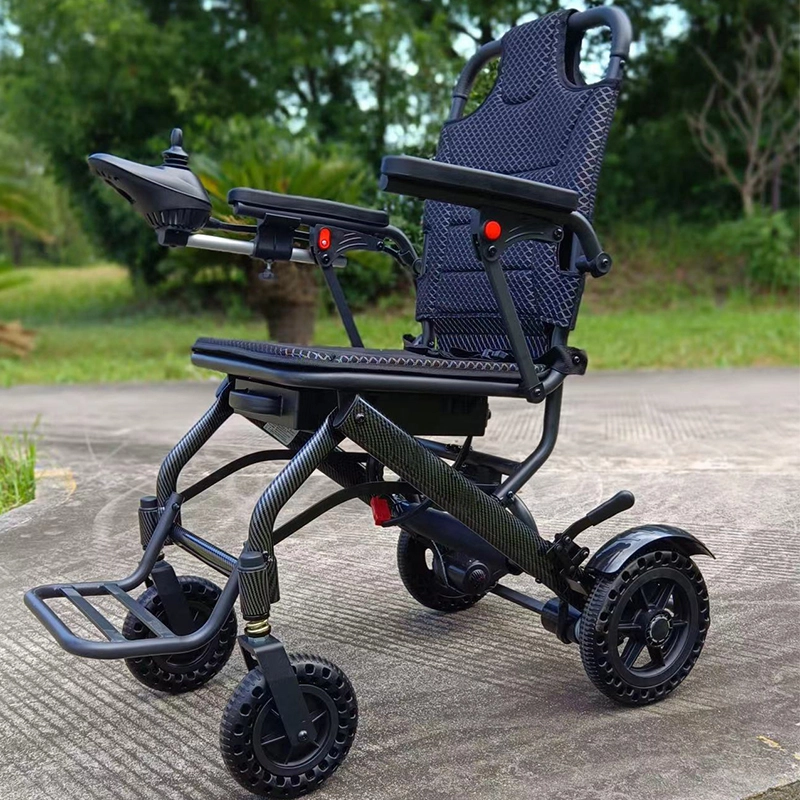
What Makes a Folding Electric Wheelchair “Lightweight” for Travel
Not every wheelchair that calls itself lightweight earns that label. Stand in a parking lot with a trunk to load and no one to help — you’ll know the difference fast.
The industry has a working threshold: ≤25 kg (55 lbs). Go above that line and you’re no longer in travel-light territory. You’re hauling a compact standard power chair with a folding frame bolted on. Most product pages won’t tell you that. The distinction matters.
The practical checklist for a travel-grade lightweight power chair:
Weight: ≤33 lbs (best-in-class) / 35–55 lbs (strong second tier)
Fold time: 5 seconds or under
Battery: removable lithium-ion, airline-compliant
Range: 10–15 miles minimum; 20+ miles for extended day trips
Capacity: 220–300 lbs standard; 300+ lbs is a standout spec at this weight class
Frame: aluminum for value, carbon fiber for minimum lift weight
Weight is the headline. Fold speed, frame material, and battery removability are what decide whether a collapsible electric wheelchair for disabled and senior travelers holds up once the trip gets complicated.
Airline Travel With a Folding Electric Wheelchair: Rules, Requirements & Tips
Gate agents have seen it happen — a traveler shows up with a power wheelchair, no paperwork, battery specs unknown, and the airline never notified. What follows is never quick and never pleasant.
Flying with a folding electric lightweight wheelchair is doable. But the rules are strict, and there’s little room for mistakes. Know the details before you walk into the terminal.
What the FAA Actually Requires
The FAA requires airlines to accept battery-powered mobility devices. What it doesn’t control is where that device gets stored. Based on aircraft size, available storage space, and airline policy, your chair may ride in the cabin, go as checked baggage, or end up in cargo.
On aircraft with 100 or more seats, airlines must offer priority cabin stowage for one folding wheelchair — first-come, first-served. Some carriers use a seat-strapping method. In those cases, two wheelchairs can fit in the cabin if requested, as long as no other passengers get displaced.
Cabin storage is the best outcome. It cuts handling risk by a wide margin. But it depends on available space and isn’t guaranteed.
The Battery Rule That Decides Everything
Most of the trouble around electric wheelchair airline approved travel comes down to one number: 300Wh.
That’s the cut-off. Airlines accept lithium-ion batteries at or below 300Wh under standard policies. Go above that and the rules change fast. Your battery needs to be:
Removable from the chair frame
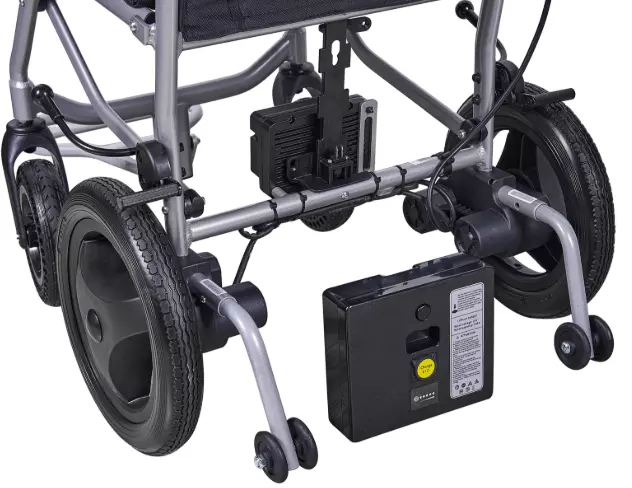
Protected against short circuit (terminal caps, original packaging, or a rigid case)
Labeled — attach something like “Lithium Ion Battery – Under 300Wh” right on the battery
The airline may check your chair into cargo. At that point, they’ll ask for battery removal. The battery then travels with you in the cabin as carry-on. Print the manufacturer’s disconnection and reconnection instructions. Attach them to the chair. Ground crew will follow written instructions — they won’t assume anything.
What “Airline Approved” Actually Means
Manufacturers label a chair as electric wheelchair airline approved to signal it meets common acceptance standards:
Foldable, compact frame
Removable lithium battery rated under 300Wh
Folded dimensions that fit within standard storage limits
Weight in the 25–50 lb range for travel-class models
The Short Version
Call ahead. Carry your documents. Keep the battery under 300Wh and make sure it’s removable. Label everything. Get there early.
This isn’t excessive caution — it’s the difference between boarding without a hitch and standing at the gate for forty minutes while everyone waits. The chair handles the physical travel. You handle the paperwork. Cover both, and there’s very little a power wheelchair travel itinerary can’t manage.
Compact Folding Design: How It Transforms Your Entire Travel Experience
The 15-Second Variable That Changes Every Itinerary
Fold time sounds like a minor spec. It isn’t.
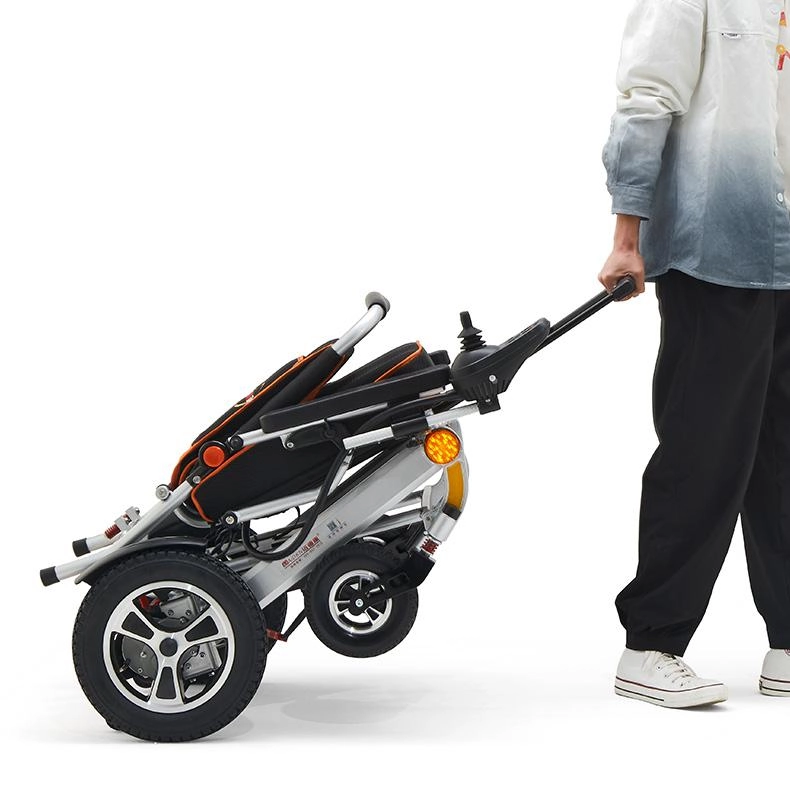
Most quality motorized wheelchair folding frame designs reach a full fold in under 15 seconds. Some automated models close in 8 to 12 seconds with one button press. New users tend to take 30–60 seconds. With practice, most people lock it under 15 seconds every time.
Add it up across a full travel day: six to eight folds covering hotel departures, rideshare pickups, restaurant stops, and venue entries. At 15 seconds per fold, that’s around two minutes of total effort. A non-folding chair is a different story — footrest removal, rearranged seating, careful positioning — each load-in takes 3 to 5 minutes. Eight of those: up to 40 minutes lost, plus a real chance the driver won’t stick around.
At a crowded transit gate or a busy attraction turnstile, accessible lanes are often closed or rerouted far out of the way. A folded chair at 13 inches wide passes straight through a standard 21–24 inch gate like carry-on luggage. No detour. No staff needed. Just through, and moving.
That’s the real case for electric wheelchair portability features built around folding design. Not convenience as a soft selling point — but time recovered, trips completed, and barriers that stop other chairs cold.
Battery Performance & Range: Powering Full-Day Travel Adventures
Twenty miles. That’s the number that separates a good day of travel from a cut-short one.
Most travel-grade folding electric wheelchairs run lithium-ion packs rated between 10–20 Ah at 24V — which puts you in the 240–480 Wh range. At typical sightseeing speeds of 4–6 mph across flat ground, that gives you a real-world range of 15–25 miles per charge. Enough for a full museum circuit, a waterfront promenade, a long afternoon in a foreign market. The kind of day you planned for.
But the spec sheet doesn’t account for your trip. It accounts for an ideal one.
What Really Drains the Battery
Three variables will eat your range before you notice:
Body weight and load. Industry testing shows that carrying more than 100 kg total — rider plus bags, plus any add-ons — pulls real-world range down to 60–80% of the advertised figure.
Terrain. Flat pavement is the manufacturer’s best friend. A sustained incline above 5% can consume the same energy as 2–3 km of flat road per kilometer climbed.
Cold weather. Below 5°C, lithium-ion chemistry slows down. Expect a 20–25% range reduction before you’ve covered a single block.
The 50% Rule and Midday Top-Ups
Set your turnaround point at 50% battery. Hit half charge, and you’ve used your outbound allowance. The return leg — unexpected detours, the inevitable “one more block” — runs on what’s left.
Midday charging closes that gap fast. A standard 100W charger plugged in during a restaurant lunch or a café stop adds 2–4 miles of range per hour. Most hotels, visitor centers, and restaurant waiting areas will say yes. Ask directly and keep it simple. Some staff will offer a plug before you finish the sentence.
Overnight Charging: The Habit That Makes It Simple
A travel-class electric wheelchair battery takes 4–8 hours to go from near-empty to full. Plug in at the hotel on arrival. Wake up to 100%. The math works in your favor — eight hours of sleep, eight hours of charging, and a full day ready at the door.
On longer trips with uncertain outlet access, bring a 100W portable power station or a car inverter. One hour of charging during a road transfer can recover enough range to make a real difference.
ECO Mode: The Reserve You Didn’t Know You Had
Most lightweight power chairs for seniors and travel users include a low-speed or ECO setting. Use it. Tests on comparable lithium-powered devices show ECO mode extends range by 30–60% compared to full speed. At 3–4 mph instead of 6 mph, that gap closes fast. The difference between rolling back to the hotel on your own power — and calling for help two blocks short — often comes down to that one mode switch.
The battery isn’t your limitation. An unplanned battery is.
Independent Mobility for Seniors & Disabled Travelers: Real Freedom on the Road
Every seasoned traveler with mobility challenges knows this moment. You stand at the edge of an 800-meter airport concourse, do the math, and walk away from the trip.
A lightweight power chair for seniors changes that calculation. Not by making travel easier. By making it possible again.
The Control Problem Nobody Talks About
Independence starts with the joystick.
Single-hand joystick systems fix this. Around 48–60% of power wheelchair users have one dominant functional arm — from stroke, shoulder injury, or partial paralysis. For them, a switchable left/right joystick isn’t a convenience feature. It’s the whole product.
The result is real. Users who once needed caregiver help for 100% of their journey can now manage 70–90% of flat terrain — airport gates, museum floors, hotel pathways — on their own.
Solo Folding Is a Real Skill, and This Chair Supports It
Most seniors in good health can lift 10–15% of their body weight on a sustained basis. Short bursts push that to 30%. So a 65 kg person can handle a 12–15 kg folded chair into a car boot — alone, without strain.
The design has to meet that reality. Here’s what good engineering looks like:
Folded handles at 70–90 cm height let you drag the chair from a standing position
Rear wheels at 7–8 inches roll across uneven station floors without catching
Audible lock feedback — a clear click — confirms the fold is complete. Not assumed. Confirmed.
This matters most for users with reduced vision or cognition. You hear the click. You know it’s done. You move on.
Conclusion
Travel was never meant to be a privilege. It belongs to everyone — including those with mobility challenges. The right folding electric lightweight wheelchair proves that point without question.
Compact foldable power wheelchairs have closed the gap between limitation and freedom. That’s the clear takeaway from everything covered here. Airline-compliant batteries, sub-20kg frames that fold in seconds, all-day range that keeps going past the hotel lobby — these aren’t luxury features anymore. They’re the baseline for independent travel.
You’ve done the research. You know what matters.
The next step is straightforward. Find the chair that fits your journey — your body, your routes, your life. Head to gracemedy.com and browse the full range of travel-ready electric wheelchairs for seniors and disabled travelers. Grace Medy manufactures and exports a wide variety of wheelchairs, offering a comprehensive range of models.
Discounts are available for bulk purchases!