
Choosing between a folding wheelchair and a rigid wheelchair goes beyond personal preference. This decision shapes your safety, comfort, and budget over months or years of use. Yet most buyers make this choice based on little more than a vague idea — “rigid frames are stronger” or “folding ones are more convenient.” The truth is more layered than that.
Frame materials, structural design, and real-world usage patterns all determine how long each type holds up.
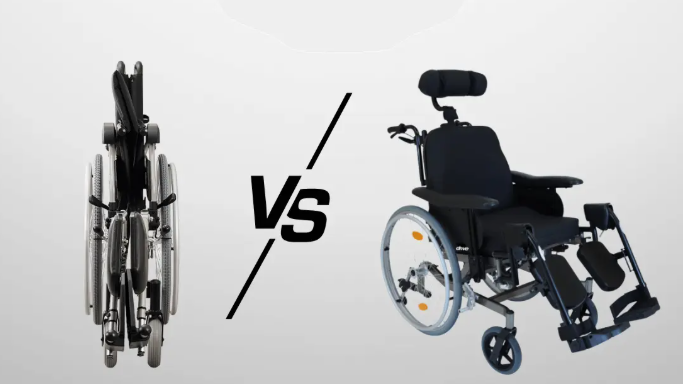
Folding Wheelchair Vs Rigid Wheelchair: Which Is More Durable?
Rigid wheelchairs win on durability. The engineering makes this clear.
It comes down to one fundamental difference: moving parts. A typical folding wheelchair has 6–10 moving components — cross-brace pivot bushings, hinge pins, folding back canes, locking mechanisms, and seat rail interfaces. A rigid frame has 1–3 removable components, maximum. Every extra joint is a potential failure point. Every fold cycle adds stress to those points. That stress builds over time.
otion Composites backs this up. They note that fewer moving parts add “an added component of durability” beyond weight savings alone.
What Makes a Wheelchair Durable? (Key Durability Factors Explained)
Durability isn’t a single feature — it’s a system. That system breaks down into four measurable variables: materials, structural design, load capacity, and how hard the chair gets used.
Get all four right, and a wheelchair lasts a decade. Get one wrong, and you’re looking at repairs or replacement far sooner than you planned.
Frame Material Is the Foundation
Your wheelchair frame’s material sets its baseline strength, weight, and resistance to fatigue. There are four main options on the market today. They are not equal.
Aluminum is the most common choice in lightweight manual wheelchairs.
Titanium takes that further. Its tensile strength reaches 900 MPa, and its density is just 4.5 g/cm³. Titanium frames handle high-frequency use better than aluminum over the long run.
Carbon fiber is the newest option, and the data is compelling. One fatigue comparison study found that carbon fiber wheelchair frames showed a higher fatigue factor than both aluminum and titanium under identical cyclic load conditions.
Steel handles heavy-duty and bariatric applications.
Structural Design and Weld Quality
Material tells only half the story. How that material is shaped and joined determines how long the frame survives.
Rigid frames concentrate stress at fixed, predictable locations — the axle plate, caster housing, and side frame junctions. Fewer joints mean fewer potential failure points. The structure stays continuous under load. Folding cross-brace frames spread stress across more locations. Every hinge, pivot bushing, and locking interface is a spot where fatigue builds up. More components in the system means more places it can wear down.
This isn’t about which design is “better” in isolation. It’s about failure probability over time. With equal materials and manufacturing quality, folding frames carry more potential failure points. That gap grows the harder the chair is used.
Weld quality shapes everything else. Thin-wall aluminum and titanium tubing build up residual stress and micro-cracks at weld heat-affected zones. These are the most common spots for fatigue failure in real-world use. High-durability chairs tackle this through:
Continuous ring welds with minimal start/stop points
Post-weld surface finishing to cut stress concentrations
Reinforcement plates or sleeves at high-stress nodes (axle mounts, front fork connections, cross-brace pivot points)
Factories that invest in ultrasonic weld inspection and certified welding procedures produce frames with longer service lives. You can’t see it as a buyer, but it makes a real difference.
Load Capacity and the Safety Margin Rule
Weight capacity ratings are a floor, not a target. The standard engineering recommendation is to choose a wheelchair rated for at least 10–20% more than the user’s actual body weight. That buffer extends fatigue life and cuts the stress buildup on welds and structural joints over years of use.
Usage Intensity Determines Real-World Lifespan
The same wheelchair holds up very differently based on how it’s used.
|
Usage Pattern |
Typical Frame Lifespan |
|---|---|
|
Light indoor/occasional use |
5–7+ years (standard aluminum) |
|
All-day use, smooth surfaces |
4–6 years (folding), 7–10 years (rigid titanium/aluminum) |
|
High-intensity use (curb drops, travel, outdoor terrain) |
3–5 years (folding), 5–10 years (rigid high-grade frame) |
Frequent air travel adds its own stress category: baggage handling. Chairs get thrown, stacked, and dropped in cargo holds. Travel folding chairs compensate with increased tube diameter, thicker wall stock, reinforced cross-braces, and impact-resistant fork designs. Still, the repeated abuse of regular travel shortens lifespan compared to controlled indoor use.
The practical takeaway: start your durability evaluation with the material, weld engineering, component count, and how closely the frame’s load rating matches your actual use pattern — not the brand. Those four factors predict longevity better than any marketing claim.
Rigid Wheelchair Durability: Structural Advantages & Real-World Performance
Rigid wheelchairs aren’t just built differently — durability is built into the frame structure itself. That’s a real advantage.
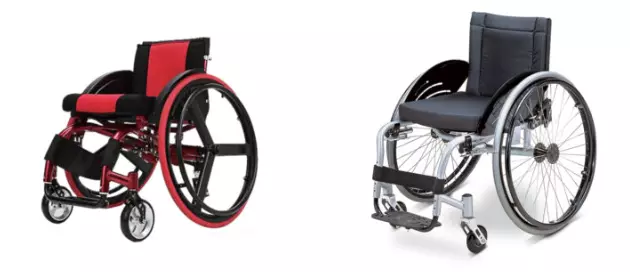
The One-Piece Frame Advantage
The core durability strength of a rigid wheelchair comes from its welded, one-piece frame. There’s no central hinge. No cross-brace pivot. The load you put into the frame travels through one continuous structure — not through a chain of pivot points and locking mechanisms.
That matters. Every micro-movement at a joint creates a stress cycle. Remove the joints, and you remove the cycles.
Rigid frames carry only a handful of moving components — a quick-release rear axle, folding footrests, and sometimes a folding backrest. That’s it. Compare that to a folding cross-brace frame, and the structural simplicity stands out fast. Fewer connection points means:
Fewer spots where fatigue builds up
Fewer areas that loosen over time
Far fewer maintenance intervals to manage
Propulsion Efficiency and What It Tells You About Fatigue Load
Here’s something most durability comparisons miss: rolling resistance.
Rigid frames have lower rolling resistance than folding frames. Grace Medy and independent research both confirm this. In concrete-surface testing, rigid ultralight wheelchairs beat folding ultralight models by more than 5% in propulsion efficiency — the user covers the same distance with less force applied.
This matters for durability, not just comfort. Folding frames flex at their cross-brace and hinge points during each push cycle. That micro-movement absorbs some propulsion energy. It also generates low-amplitude, high-frequency local stress cycles at those joints. Rigid frames don’t have those joints. The energy goes into forward motion. The frame bends less. The fatigue load across the tubing stays lower.
The trade-off: that stress doesn’t disappear. It shifts to the weld zones — the axle plate, front fork junction, and main side frame connections. Those are the real durability hot spots on a rigid chair.
Folding Wheelchair Durability: How Modern Designs Are Closing the Gap
Folding wheelchairs have a reputation — fragile, short-lived, a compromise. That reputation was earned. But it was earned by a previous generation of chairs.
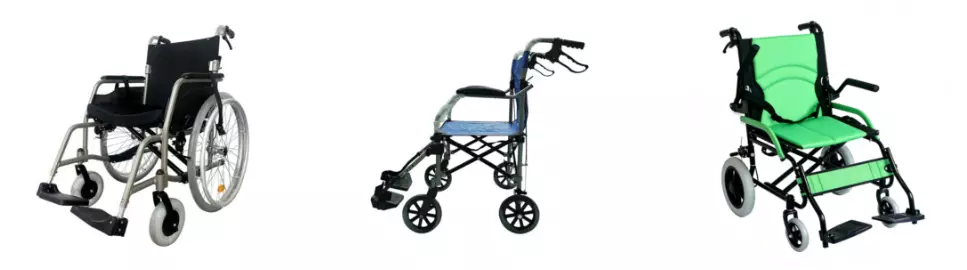
Legacy hospital-grade folding wheelchairs used mild steel X-braces with riveted joints, stamped hinge plates, and non-serviceable bushings. Those designs had real structural problems:
Cross-brace pivot holes would ovalize after 50,000–100,000 fold/load cycles, creating 10–20 mm of lateral play at the footplate.
Seat rail hinges cracked at weld heat-affected zones after 2–3 years for users around 90–100 kg under urban daily use.
Caster journal tubes deformed, triggering caster flutter above 4 km/h.
These weren’t edge cases. They were predictable failure patterns built into the design.
Traditional durability testing made things worse. Standard hospital-grade chairs were validated to basic ISO 7176 cycle counts — around 200,000 double-drum cycles — but active-use specs push well beyond 400,000. The result was a class of chairs tested for light use but deployed in far heavier conditions. That mismatch is where the “rigid frames last 2–3× longer” reputation came from.
Modern ultralight folding chairs are a different category.
Higher-Grade Materials Changed the Baseline
The shift from mild steel to 6000- and 7000-series aluminum rewrote the durability equation. Mild steel yields at 250 MPa. Modern heat-treated aluminum alloys hit 275–500 MPa yield strength — with wall thicknesses down to 1.2–1.6 mm. That cuts complete chair weights to 10–13 kg, down from the old 18–22 kg range.
That’s not just lighter. Heat-treated and gusseted aluminum alloy is more resilient under cyclic loading — the kind of stress that destroys X-brace joints over time.
Engineering the Failure Points Away
Material upgrades matter. But modern folding chairs made their biggest durability gains by rethinking where loads travel and what happens as parts wear out.
Older X-brace designs routed loads through stamped-steel hinge plates and mid-span cross members — the spots most vulnerable to bending fatigue. Modern ultralight frames route primary loads through large-diameter side frames and reinforced pivot clusters. That keeps off-axis bending away from the X-brace mid-span.
Some high-end designs go further. They use two-piece, boxed cross-braces with internal stops that block over-extension. This eliminates the mid-span fracture mode that plagued older stamped-steel designs.
Then there’s the shift to replaceable components. This single design decision does more for long-term service life than almost anything else.
Rigid vs Folding Wheelchair: Head-to-Head Durability Comparison Table
Every data point tells the same story. Here’s the full picture in one place.
|
Dimension |
Rigid Wheelchair |
Folding Wheelchair |
Durability Winner |
|---|---|---|---|
|
Moving parts |
1–3 removable components |
6–10 joints, hinges, pivot points |
Rigid |
|
Frame stiffness |
Fixed, continuous structure |
Flexes at cross-brace and fold points |
Rigid |
|
Wear points / failure risk |
Low — fewer joints, fewer failure sites |
Higher — folding mechanisms loosen over time |
Rigid |
|
Daily-use performance |
Built for long-term, high-frequency use |
Better suited to occasional or travel use |
Rigid |
|
Maintenance frequency |
Minimal — focus on wheels and bearings |
Folding mechanisms need inspection each month |
Rigid |
|
Material options |
Titanium, carbon fiber, high-grade aluminum |
Aluminum and steel; ultralight folding exists |
Rigid (high-end designs) |
|
Propulsion efficiency |
Higher — less energy lost through flex |
More energy loss at brace flex points |
Rigid |
|
Heavy daily use suitability |
Strong — ideal for active, full-time users |
Limited — mechanisms wear down faster under heavy use |
Rigid |
|
Transport convenience |
Bulkier — rear wheels removable on some models |
Folds down tight enough to fit in a car trunk |
Folding |
|
Typical frame lifespan |
5–10+ years (maintained, quality build) |
3–8 years (quality folding); 1–3 years (entry-level) |
Rigid |
What the Table Doesn’t Show You
One research finding is worth a closer look. A PubMed study compared 12 aluminum ultralight rigid frames against titanium ultralight rigid frames. The result: no significant performance difference between the two materials across standardized tests — except overall frame length. The study pointed to tire pressure, tube-wall thickness, and tube manufacturing quality as the real durability drivers.
That shifts the whole comparison. The frame label matters less than how well it’s built.
Here’s the key takeaway: a premium folding chair can outlast a budget rigid frame. A well-built folding ultralight with solid bushings and a high-grade aluminum cross-brace will hold up longer than a cheap rigid frame welded at low tolerances. The rigid design still wins on mechanical endurance — removing fold joints cuts out a major failure source. But build quality is the deciding factor, not the category name.
Conclusion
The folding vs. rigid wheelchair debate comes down to one thing: how users live their life.
Rigid frames hold a real structural edge. Fewer moving parts, better energy transfer, and a longer lifespan under heavy, high-demand use. That’s hard to beat. Cross-brace folding wheelchairs have closed the gap, though — especially for users who put portability first without giving up reliability.
Browse the Gracemedy wheelchair catalog to compare specs, materials, and weight capacities side by side. Find the frame built to match your life — not someone else’s.