
How Much Does A Manual Wheelchair Cost? (2026 Price Guide)
Here’s the honest truth: manual wheelchair prices cover a wide range. You’ll find options from $100 for a bare-bones secondhand model all the way up to $7,000 for a high-precision all-terrain chair built to professional standards.
What you pay comes down to what you need. Below is a clear breakdown of where prices land in 2026.
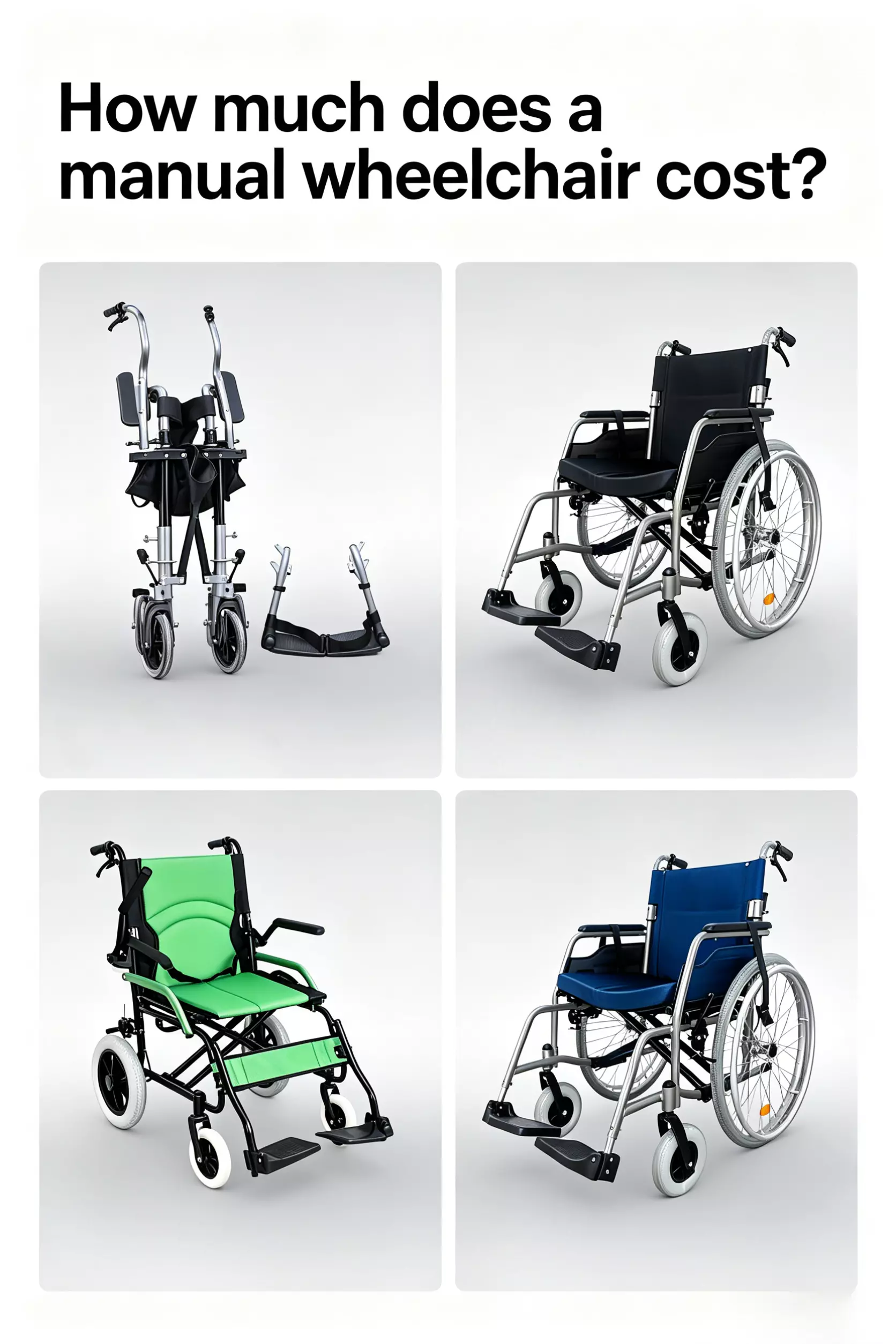
Manual Wheelchair Cost at a Glance (2026 Price Summary Table)
Nine types of manual wheelchairs. Nine very different price points. The table below gives you the clearest picture of the 2026 market — all in one place.
|
Type |
Price Range |
What You’re Getting |
|---|---|---|
|
Basic / Standard |
$100 – $500 |
Reliable everyday use; most basic models fall between $100–$300 |
|
Lightweight Manual |
$500 – $800 |
Easier to push and lift; under-20-lb models sit at the higher end |
|
Transport (Caregiver-Pushed) |
$150 – $450 |
Compact, ultra-light; designed for seniors on the go |
|
Heavy-Duty (300+ lbs capacity) |
$500 – $2,500 |
Reinforced frames, wider seats, built for real load demands |
|
Entry-Level Custom |
$1,000 – $2,000 |
Adjusted seat width, armrests — expect ~$200 per customization change |
|
Ultralight / Sport |
$2,000 – $5,000+ |
Titanium or carbon fiber frames; often 25–40% premium over standard custom |
|
All-Terrain |
$2,995 – $5,800 |
GRIT Freedom Chair runs $2,995–$5,495; Hippocampe hits $4,036–$5,800 |
|
Full Custom |
$1,000 – $15,000+ |
Biomechanical design with seating systems adding $500–$2,000 |
What Factors Affect the Price of a Manual Wheelchair?
Seven hundred dollars. Three hundred dollars. Four thousand dollars. Three wheelchairs, all listed online as “manual,” all doing the same basic job. The price gap isn’t random. It comes from very specific decisions made in engineering and fitting — decisions that stack up fast once you know what to look for.
Here’s what’s driving the numbers.
Frame Material: The Single Biggest Price Driver
The material a wheelchair is built from shapes its cost — and your day-to-day experience — more than almost anything else.
Steel frames are the entry point. They’re heavy, durable, and affordable. Most basic models in the $150–$300 range use steel. They get the job done. But they’re harder to load into a car, and that weight becomes a real problem for both users and caregivers over time.
Aluminum frames shift things. They’re lighter, corrosion-resistant, and easier to push. These are standard in mid-range chairs priced between $700 and $1,500. Less chair weight means less physical strain on a daily basis. That difference adds up.
Titanium is where the engineering gets serious. Titanium frames are lighter than aluminum, stronger than steel, and built to last for decades. They cost more — $800 to $2,000 and up for the frame alone. For a long-term full-time user, that cost makes sense. For someone recovering from a six-week surgery, it doesn’t.
Weight Capacity: Heavier Users, Higher Costs
A standard manual wheelchair is built for users up to around 250–265 lbs. Push past that limit, and the chair needs a completely different build.
Heavy-duty and bariatric models — built for 300 lbs and above — need reinforced frames, wider seat widths, and stronger cross-braces. The engineering costs money. So does the manufacturing. Standard models in this category start around $300–$600. Purpose-built bariatric chairs with high weight capacity can reach $2,500 or higher.
This isn’t upselling. It’s physics.
Ergonomic Design and Customization
A chair that fits badly isn’t just uncomfortable — it causes real health problems. Pressure sores. Poor posture. Joint strain. That’s why ergonomics matter, and why they raise the price.
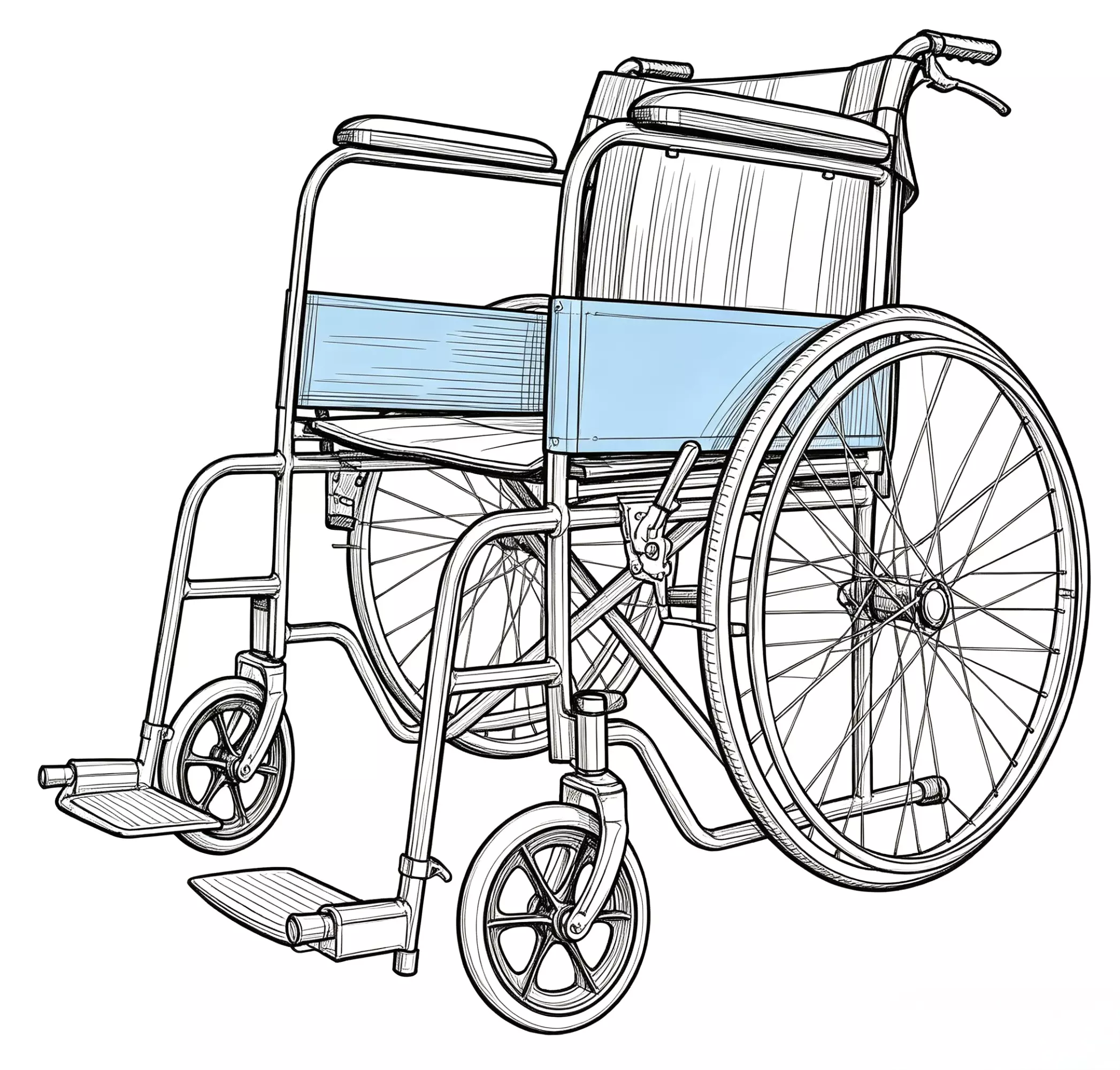
For casual users, adjustable footrests and a basic contoured seat are enough. Full-time wheelchair users need more:
Lumbar support systems — built into the chair or added as a separate part
Tilt-in-space recline — lets you shift your weight without leaving the chair
Pressure-relief cushioning — essential for skin health during long hours of sitting
Pediatric and sports-specific fitting — custom geometry built around the user’s body
Specialized seating and custom modifications can add $1,000–$5,000 to the base price. A premium manual chair built for an active user can cost as much as a basic power wheelchair. Not because it has a motor, but because of the precision engineering behind it.
Portability Features
Not everyone needs a high-performance frame. But plenty of people need a chair that travels well.
Quick-release wheels, folding frames, and compact dimensions for air travel all cost more to design and build. They also solve a real problem. For families who travel often, or users who commute by public transit, a $600–$800 folding lightweight wheelchair is worth the extra cost over a cheaper, bulkier model.
Travel bags and removable armrests fall into this category too. Small additions. They add up.
Add-Ons and Accessories
This is where buyers get surprised most. The chair price is the starting point — not the total.
Gel or air cushions alone run $100–$500, depending on the system. Headrests, seat belts, anti-tip devices, and custom armrests all add to the final cost. The more specific the user’s needs, the longer that list grows.
Build this into your budget from the start. Don’t discover it at checkout.
The Market Context
The global manual wheelchair market was valued at $3.14 billion in 2023. It’s projected to reach $5.27 billion by 2030 — a 6.9% CAGR. Advanced materials like carbon fiber and titanium are driving that growth. They boost both durability and portability. These materials are moving into mid-range pricing, but premium options still carry premium prices.
The bottom line: you’re not paying for a brand name. You’re paying for material science, fit precision, weight engineering, and the features that match your real life. Once you see it that way, the price tags make a lot more sense.
Frequently Asked Questions About Manual Wheelchair Costs
Real questions from real people — the ones you’d type into Google at 11pm trying to figure out how to afford the right chair.
What is the average cost of a manual wheelchair?
The average manual wheelchair costs around $475. That number needs context, though. What you pay depends on what you need.
A basic steel-frame wheelchair from a pharmacy or big-box store? Closer to $100–$300. A lightweight aluminum wheelchair model that folds into your car trunk without straining your back? Expect $500–$800. A titanium ultralight built for active, everyday use? You’re looking at $2,000–$5,000.
The $475 average is a useful starting point for budgeting. It’s not a ceiling.
Is renting a manual wheelchair cheaper than buying one?
For short-term needs — post-surgery recovery, a temporary injury, traveling with a family member — renting makes more financial sense than buying.
Rental rates run:
– $15–$20 per day
– $50–$100 per week
– $100–$200 per month
Say you need a chair for six weeks of recovery and nothing more. Renting costs a few hundred dollars. Buying a comparable model costs five times that. The math is simple.
Will a heavier person pay more for a wheelchair?
Almost always, yes. Heavy-duty models built for users over 300 lbs need reinforced frames, wider seat dimensions, and stronger structural components. That extra engineering raises the cost. Prices land in the $500–$2,500 range, compared to $100–$500 for standard-capacity chairs.
It’s not a surcharge. It’s a different product built to a different standard.
Conclusion
Buying a manual wheelchair doesn’t have to feel overwhelming. You just need to know what you’re looking for. Eyeing an affordable folding wheelchair under $300? Or investing in a lightweight manual wheelchair that fits your lifestyle? Either way, the right choice comes down to three things:
Your mobility needs
Your budget
Your insurance coverage
Here’s a key fact: Medicare Part B can cover up to 80% of an approved wheelchair’s cost. That changes the numbers in a big way. Options range from basic transport wheelchairs to ultralight frames built for precision. There’s something solid at every price point.