
Pediatric Wheelchair Guide: Features, Sizes, And Benefits
Children grow fast — and the right pediatric wheelchair needs to keep up.
This guide covers what matters most when choosing pediatric mobility equipment: sizing charts, key features, and why a well-fitted chair affects more than just movement. Parents researching for the first time will find clear, practical answers here. Therapists building a care plan will too.

What Is a Pediatric Wheelchair (And How It Differs from Adult Models)
A pediatric wheelchair is not a smaller version of an adult chair.
Children’s bodies have different proportions. They grow at a rapid pace. Their postural needs change as their muscles and spine develop. A chair built around adult dimensions — even a compact one — misses all of these realities. That’s why pediatric-specific design exists, and why it makes a real difference.
The Differences That Matter Most
Seat width and fit
Adult wheelchairs are built for adult hips. Pediatric models start narrower — between 10 and 14 inches — and many adjust as the child grows. A seat that’s too wide creates friction, pushes the child into poor posture, and raises the risk of pressure sores. Fit here isn’t a comfort preference. It’s a clinical concern.
Weight and frame
Most pediatric wheelchairs weigh around 10 kg. Parents lift these chairs in and out of cars, up steps, and through doorways every day. A lighter frame is a practical necessity — not a bonus feature.
Load capacity and stability
Standard pediatric wheelchair models support up to 25 kg. Wheelchairs built for older children, teenagers, or kids with spastic conditions can handle up to 50 kg. These models use reinforced frames that stay stable during sudden movements.
Growth adjustability
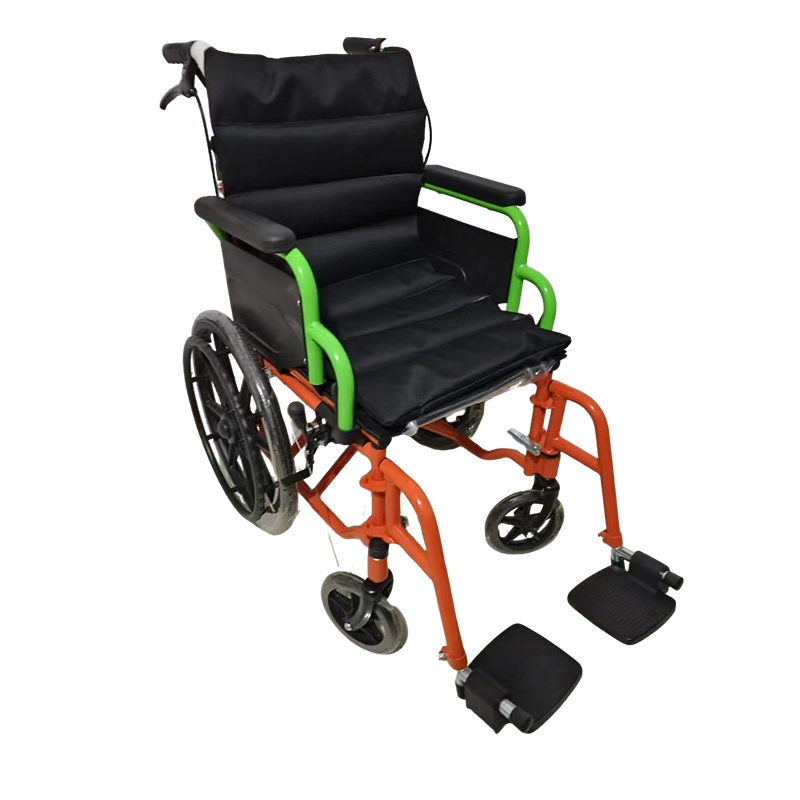
This is the feature that sets a pediatric wheelchair apart from everything else. You can adjust the seat depth, width, and back height as the child grows. Many systems cover one to three years of growth before you need a replacement. Adult chairs don’t need this. Children’s chairs do — full stop.
Postural support
Pediatric models come standard with breathable seats, adjustable torso supports, and ergonomic backrests. This is especially critical for children with cerebral palsy, spina bifida, or muscular dystrophy. In these cases, spinal alignment has a direct impact on long-term development.
The bottom line: pediatric mobility equipment is built from the ground up for growing bodies, active lives, and specific medical needs. Scaling down an adult chair doesn’t cut it — and for a child, that gap shapes far more than just their seating position.
4 Types of Pediatric Wheelchairs
Four categories. That’s it. Learn how each one is built and who it’s made for. The whole market gets a lot less overwhelming after that.
Side-by-Side Comparison
|
Type |
Frame Weight |
Age Range |
Key Limitation |
|---|---|---|---|
|
Standard Manual |
Moderate (steel) |
Under 6 or 6+ |
Limited growth adjustability |
|
Ultralightweight Manual |
Low (aluminum/titanium) |
4+ (active) |
Less built-in postural support |
|
Powered |
Higher |
Limited-strength users |
Battery life, transport logistics |
|
Tilt / Specialty |
Variable (folding options) |
0–13+ |
Heavier for everyday travel |
Key Features to Look for in a Pediatric Wheelchair
Adjustability That Grows With Child
Children outgrow things fast — shoes, backpacks, car seats. A pediatric wheelchair needs to keep pace. It shouldn’t need a full replacement every year.
The best adaptive wheelchairs for kids build adjustability right into the frame. Look for:
Seat width — expandable seat pans that shift as hips develop (10 to 20 inches across models)
Seat depth — an adjustable range of 4 to 8 inches covers most growth spurts
Footrest height — moves up as legs lengthen
Backrest height and angle — critical for spinal support as posture changes
The standard is clear: a well-designed pediatric wheelchair should serve your child for two to five years without a structural replacement. That window matters — for your child’s continuity of care and your family’s budget.
Tilt and Postural Positioning
Kids who sit through school, therapy, and mealtimes need tilt-in-space. It’s not a luxury. It’s a medical necessity.
Tilt systems spread pressure across the body. They do this without changing the hip or knee angle. That protects skin health, supports digestion, and keeps the spine aligned.
Add the right postural support accessories — trunk belts, anti-decubitus cushions, adjustable headrests — and you have a seating system that stops deformity from developing. Not just one that manages it after the fact.
Wheels, Frames, and Real-World Maneuverability
A lightweight pediatric wheelchair opens up possibilities — for the child pushing it and the caregiver lifting it.
Aluminum and titanium frames cut resistance on manual models. The target: propulsion effort should stay below 20% of the child’s body weight for independent use to work.
Power wheelchair controls go well beyond joysticks. Straw controls, adaptive switches, and head arrays give independent mobility to children with very limited motor function. Some children start as young as 18 months and learn within two to four weeks.
Transfer and Handling Details
Small details add up across a long day. Flip-back armrests, swing-away footrests, and easy-reach wheel locks make transfers faster and safer. Look for adjustment levers and screws a caregiver can work fast — on days when time is short and energy is low.
For children with spasticity or higher body weight, a stable frame during transfers isn’t optional. A chair that tips or shifts under load creates real risk. Not just inconvenience.
Pediatric Wheelchair Size Chart by Age & Condition
Numbers matter here — and getting them wrong costs more than money. A seat just two inches too wide changes how a child holds their spine, where pressure builds, and whether they can reach their wheels at all. This chart gives you the concrete reference points you need before any appointment, any phone call, any order.
How to Take the Right Measurements
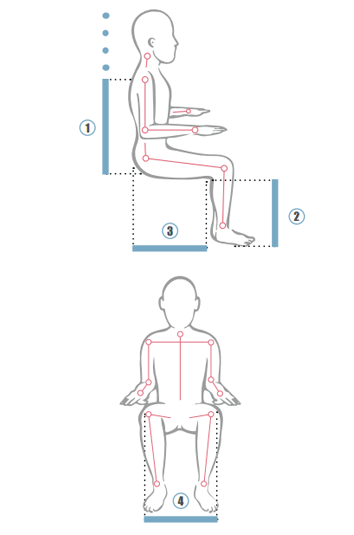
Four measurements. That’s all a proper fit requires — but each one has to be done right.
Seat width — Measure across the pelvis at hip height, from outside thigh to outside thigh. Add nothing. That number is your starting seat width.
Seat depth — Draw an imaginary line from the back and extend it forward to about two fingers above the back of the knee. That gap protects circulation.
Lower leg length — Knee hollow to the bottom of the shoe sole. The footrest should hold the leg at a 90° angle. Not close to 90°. Precisely 90°.
Back height — Measure from the seat surface to the top of the head. If the chair includes a headrest, measure to the lower edge of the shoulder blade instead.
Write these four numbers down. Bring them to every fitting.
Size Reference by Age Group
|
Age Group |
Typical Seat Width |
Typical Seat Depth |
What to Prioritize |
|---|---|---|---|
|
18 months – 5 years |
12″ |
12″ |
Ultra-lightweight frame; custom fit |
|
6 – 12 years |
12″ – 14″ |
12″ – 14″ |
Adjustable depth and footplate |
|
13 – 17 years |
16″ – 18″ |
14″ – 16″ |
Near-adult proportions; growth room |
A useful fact for younger children: a seat that fits well at age 2 often works until age 5. Early childhood growth is slower than most parents expect. A well-fitted chair from the start gets more years of use out of it.
Required growth accommodation by age:
– Under 12: Frame must allow at least 3 inches of growth in both seat width and depth
– 13–17: Minimum 2 inches of growth in both directions
– 18 and over: At least 1 inch in depth, 2 inches in width
6 Core Benefits of a Well-Fitted Pediatric Wheelchair
The right wheelchair doesn’t just move a child — it changes what their days look like, what they reach for, who they become.
Here are six real things a well-fitted chair does.
1. It Opens Up Independent Movement
A well-fitted chair lets a child get around school hallways, backyards, and grocery stores on their own terms. Powered models go even further — covering distances that would wear out a child using manual propulsion. That freedom matters beyond convenience. Research links self-directed mobility to stronger language skills, spatial reasoning, and social development. Kids who move on their own schedule build skills that kids who wait to be pushed simply don’t.
2. It Protects the Spine — Before Problems Start
Good positioning is about prevention, not reaction. Adjustable backrests, trunk supports, and well-designed cushions keep the spine upright and stop scoliosis before it starts. Tilt systems spread pressure across long sitting hours. The result? Fewer pressure sores, better circulation, and less strain on the muscles and bones over time.
3. It Builds Confidence and Belonging
Parents notice one clear change after a proper fit: their child shows up with more confidence. More willing to join in. More ready to speak up and start things. A child who can keep pace with peers at recess isn’t just there in body — they’re there in spirit too. That difference shapes friendships, self-esteem, and emotional health in ways that stay with a child for years.
4. It Supports Physical Development
Good seating builds core strength, supports bone density, and helps lung function. Adjustable footrests keep legs at the right angle. Lightweight, easy-to-handle frames let children push themselves and use their bodies — rather than struggle against their own equipment.
5. It Sharpens Thinking and Social Growth
Mobile children — especially those given powered mobility as young as 18 months — explore more and learn faster. Studies show real gains in decision-making, body awareness, and emotional control. The earlier a child can move on their own, the more their mind develops alongside their body.
6. It Grows With the Child
Growth-friendly designs, modular frames, and adjustable seating mean one chair can serve a child for three to five years. Insurance covers a replacement every five years, or sooner with documented changes in the child’s needs. A well-fitted chair isn’t a one-time fix — it’s a lasting investment in a child’s comfort, growth, and quality of life.
Conclusion
Choosing a wheelchair for your child is more than a medical decision. It shapes their independence, confidence, and quality of life. The right fit matters. The right features matter. And knowing the difference between a chair that functions and one that supports your child’s growth? That matters most of all.
You’ve learned the sizing principles, the feature comparisons, and the condition-specific guidance. Use that knowledge as you take the next step. You don’t have to figure this out alone.
Browse our full range of pediatric mobility equipment at Gracemedy. Every product is chosen with growing kids in mind. Not sure which option fits your child best? Reach out — our team is ready to help you find the chair that feels less like a medical device, and more like a little bit of freedom.