Sourcing electric wheelchairs from a China OEM factory can cut your unit costs by 40–60% compared to buying through distributors. But you need to know what you’re negotiating before that saving becomes real.
Most overseas buyers waste weeks chasing vague quotes. They hit unexpected MOQ walls. They find hidden customization fees after samples are approved.
This guide cuts through all of that.
Here’s what you’ll get:
A clear breakdown of how power wheelchair OEM manufacturer pricing works at the factory level
What minimum order quantities look like across different supplier tiers
What’s customizable under a private label or ODM arrangement — and what isn’t
Walk into your next supplier conversation with clarity, leverage, and a realistic budget in hand.
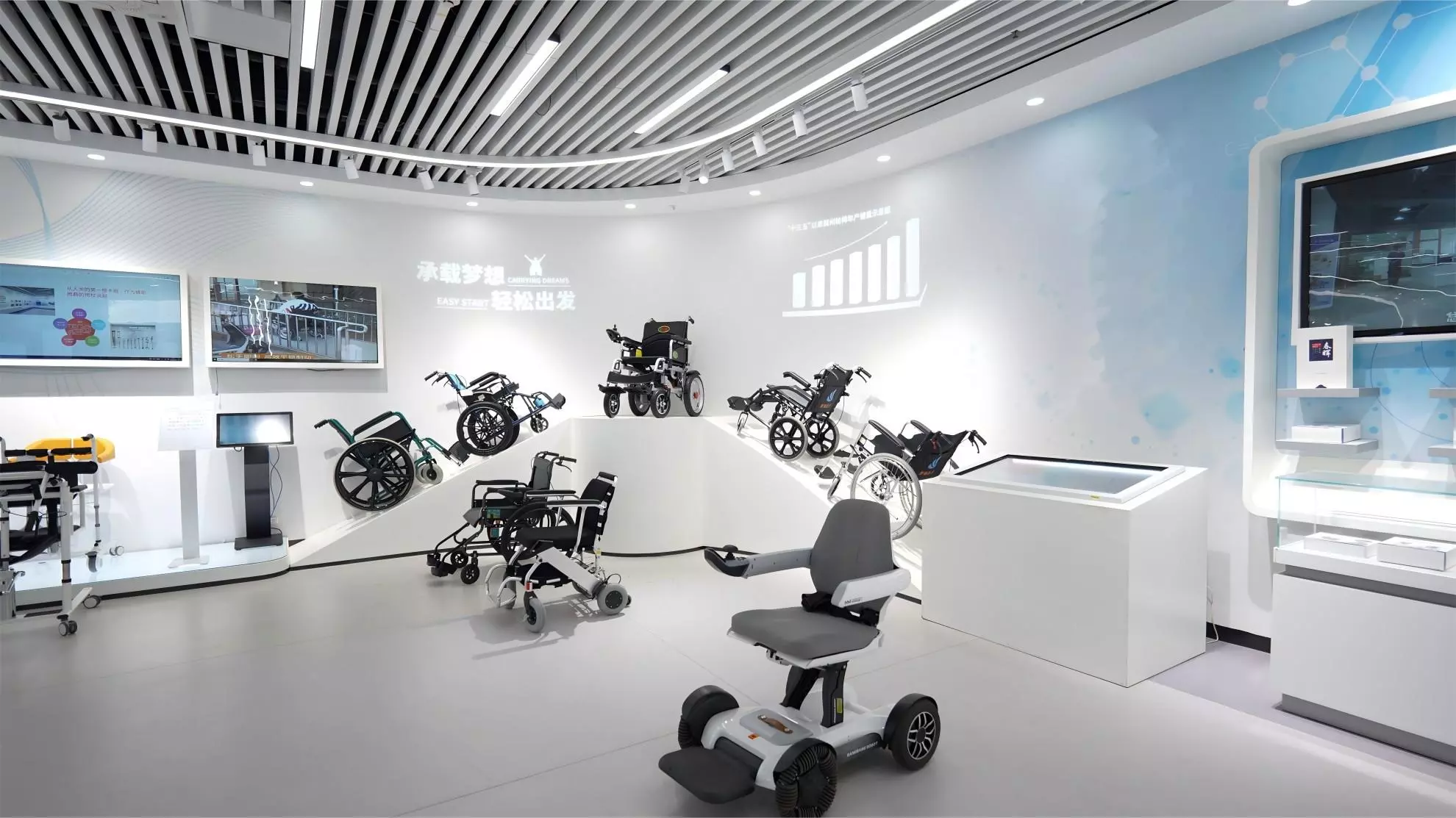
Electric Wheelchair Factory In China: OEM Pricing & MOQ Explained
Factory-direct pricing from China isn’t a single number — it’s a spectrum. Where you land depends on which supplier tier you’re talking to.
Here’s the real picture, based on actual factory benchmarks across Hebei, Guangdong, and Zhejiang:
|
Tier |
Price Range |
MOQ |
Best For |
|---|---|---|---|
|
Low-Cost |
$280–$350 |
1–10 pcs |
E-commerce, entry-level resellers |
|
Mid-Range |
$360–$550 |
5–20 pcs |
Distributors, rehab centers |
|
Premium |
$690–$1,100 |
10–50 pcs |
Hospitals, bariatric, off-road |
A few data points worth knowing:
Guangzhou Topmedi ships in 10–15 days. MOQ starts at just 5 units. They run 15,000+ units per year out of a 5,000㎡ facility.
Hebei Grace Medy is a strong pick for lightweight OEM builds. Units stay under 15kg, use aluminum alloy frames, and start at $300 with a 20-piece MOQ.
Hebei Evenice builds 250W–500W brushless motor models with Mecanum omni-directional wheels. Price range is $450–$1,100, and MOQ is just 10 pcs. That’s solid engineering at a low entry point.
Most mid-tier OEM factories hold CE and ISO certifications, back their products with a standard 1-year warranty, and send samples within 5–7 days.
On customization — logo, color, and packaging come standard. Every factory on this list handles those without issue. Motor and controller-level customization is a different story. That matters if you’re building a true private label product, not just putting your name on a stock unit.
The bottom line? Your MOQ and price point are negotiable. But you need to know the benchmarks before you start the conversation.
Why Source Electric Wheelchairs from a China OEM Factory?
The numbers speak for themselves. China holds 60% of global wheelchair market share. Production output hit 2.1 million units back in 2020. The global wheelchair market reached $4.9 billion in 2021 — and electric models are pushing most of that growth. Over 70 Chinese manufacturers are already building products for major European and American brands today.
That’s not a trend. That’s infrastructure.
The Real Cost Advantage
Here’s what this means for your bottom line. Going factory-direct in China cuts procurement costs by 20–30% compared to trading companies. That gap gets bigger as your volume grows. Middlemen don’t add value to your supply chain. They add margin to your invoice.
Automated production lines in Chinese factories boost efficiency by 25% over manual processes. Suppliers running 5,000+ units per year carry the scale to offer tiered pricing that rewards bulk OEM orders. That pricing structure makes a real difference to your landed cost.
Customization That Goes Beyond a Logo
Factory-level OEM in China isn’t just putting your branding on a stock unit. Top manufacturers support full product-level customization:
Programmable electric control systems
Aluminum and carbon-fiber frame variants
Pediatric and reclining configurations
Intelligent navigation and sensor integration
Regional hubs in Zhejiang, Guangdong, and Jiangsu run complete local supply chains. Precision welding, CNC machining, battery cells, and motor components are all close together. That tight integration cuts lead times fast.
Compliance Is Already Built In
Top-tier factories hold ISO 13485, CE, and FDA 510(k) certifications. You don’t manage compliance risk from zero. You step into a certified manufacturing process that’s already in place. For medical device importers, that distinction carries real weight during regulatory approvals in your home market.
The fundamentals here are strong. The real question is which factory tier fits your volume, your spec, and your timeline.
Electric Wheelchair OEM Pricing Structure: What You Pay at the Factory Gate
Factory gate pricing looks simple at first. Then you see the quotation sheet — and the number there rarely matches what you end up paying.
Here’s what the price tiers look like at the source.
FOB Factory Gate Price Tiers
|
Tier |
FOB Price Range |
Key Specs |
MOQ |
|---|---|---|---|
|
Economy |
$200–$400 |
Steel frame, brushed 250W motor, lead-acid battery (10–15km range) |
50+ units |
|
Mid-Range |
$350–$650 |
Aluminum alloy, brushless 350W dual motors, lithium 24V/10Ah (15–20km) |
20–50 units |
|
Premium |
$450–$600 |
Aviation-grade aluminum, 400W+ brushless, lithium 24V/15Ah+ (20km+), CE/ISO certified |
Flexible |
|
High-End OEM |
$800–$1,100 |
Carbon fiber composites, 500W+ motors, 24V/20Ah lithium, custom controllers |
100+ units |
Most European and North American distributors land in the mid-range tier. It strikes the right balance of specs, compliance readiness, and import economics.
The Four Variables That Move Your Price
Four technical specs drive most of your unit cost difference. Know these before you negotiate:
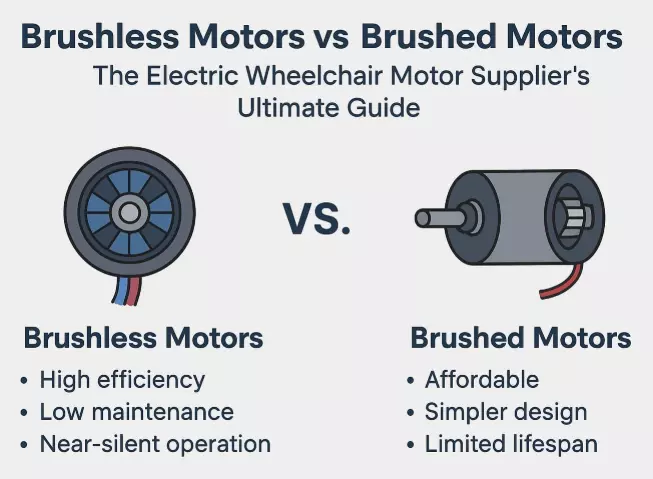
Motor type — Brushed motors are the baseline. Upgrading to brushless adds $50–$100 per unit (+15–25%).
Battery chemistry — Lead-acid is cheap but heavy. Moving to lithium (24V/15–20Ah) adds $80–$150 per unit. You also get the 20km+ range that European buyers expect.
Frame material — Steel is base pricing. Aluminum alloy adds $40–$70. Carbon fiber composites push costs up by $200+ per unit.
Controller brand — Generic PWM controllers come included. Branded smart controllers like PG Drives add $30–$60 per unit.
Your True Landed Cost: A Real-World Example
Here’s what a mid-range OEM unit costs by the time it reaches a European market customer:
|
Cost Item |
Range (USD/unit) |
|---|---|
|
FOB Factory Gate |
$450–$600 |
|
Ocean Freight |
$80–$150 |
|
Duties & Customs Clearance |
$60–$120 |
|
Local Last-Mile Logistics |
$50–$100 |
|
Warranty Reserve |
$30–$60 |
|
Distributor Margin (25–45%) |
$150–$350 |
|
Estimated Landed Total |
$920–$1,540 |
That’s a wide range. It shows why the factory gate number is just the starting point — not the final answer.
How to Verify You’re Talking to a Factory, Not a Trader
Checks before you go deep into negotiation:
Request direct factory contact — WeChat or email from manufacturing staff, not a sales intermediary.
Volume works in your favor too. Factory-direct pricing drops 10% at 100 units compared to a 20-unit order. That volume ladder is real — and it’s your leverage.
MOQ Explained: Minimum Order Quantities by Supplier Tier and Model Type
MOQ isn’t just a number on a quotation sheet. It’s a negotiation signal. Read it right, and it tells you exactly what kind of supplier you’re dealing with.
Here’s what most sourcing guides miss: MOQ in electric wheelchair manufacturing isn’t uniform. It shifts based on supplier tier, model complexity, and your customization needs. Get this wrong, and you end up with a profitable first order — or dead inventory sitting in a warehouse.
How MOQ Breaks Down by Supplier Tier
Each supplier tier runs on a different minimum threshold. Here’s what each one looks like in practice:
|
Supplier Tier |
MOQ Range |
Unit Price Impact |
Best Fit |
|---|---|---|---|
|
Flexible/Startup Factories |
1–10 units |
Higher per-unit cost |
First-time importers, validation orders |
|
Mid-Tier OEM Manufacturers |
20–50 units |
Moderate discount unlocked |
Distributors, rehab suppliers |
|
High-Volume OEM Factories |
100–500+ units |
10–20% savings vs. small orders |
Large retailers, hospital procurement |
The rule holds across Chinese manufacturing: the higher your MOQ commitment, the lower your per-unit cost. Factories running 250W–500W brushless motor models — the ones serious distributors want — need a minimum of 10–20 units to justify production scheduling. Push above 100 units, and the per-unit price drops in a way you’ll notice on your landed cost sheet.
Standard Models vs. Custom Builds: Two Very Different MOQ Worlds
This is where most first-time buyers get caught off guard.
Standard off-shelf models — foldable lightweight frames, stock motor configs, standard colorways — carry the lowest MOQ thresholds. You’re looking at 1–20 units with no tooling fees. The production line is already set up. You’re just filling a slot.
Custom OEM builds work differently. Modify frame geometry, controller firmware, or battery configuration, and you’ve triggered setup costs. That changes the MOQ math completely:
Logo + packaging only: MOQ 20–50 units. Low barrier. Most factories handle this without issue.
Color and seat customization: MOQ climbs to 50–100 units, plus a 10–20% setup fee.
Structural or motor-level customization: MOQ pushes to 100–500+ units to spread tooling costs across the run. Tooling alone costs $5,000–$10,000 — you need the volume to make those numbers work.
The core logic here: custom complexity drives batch minimums. It’s not arbitrary. A custom paint or frame change needs a dedicated production run — that covers dyeing, CNC setup, and quality validation. The factory isn’t making things hard. They’re protecting their cost structure, and that’s a reasonable position.
How to Negotiate MOQ with Chinese Electric Wheelchair Factories
The MOQ on a factory’s quotation sheet is not a wall. It’s an opening position.
Most buyers treat it like a fixed rule. Smart buyers treat it like the first move in a negotiation. The gap between those two approaches can be 200 units of dead inventory — or a supply chain partnership that grows.
Here’s how to play it.
Lead with a Price Premium, Not a Volume Argument
Factories set MOQs to protect one thing: margin. So give it to them a different way.
Offer a 10–15% unit price increase in exchange for a lower quantity commitment. The math is simple. A factory quoting 500 units at $1.00 each will often accept 300 units at $1.25 — their production economics stay intact. You cut upfront capital risk. They protect their floor margin. Both sides can live with that.
This works well for foldable electric wheelchair manufacturers and lighter customization builds where tooling costs are already covered.
Standardize Your Spec to Lower the Barrier
Custom electronics and non-standard frame shapes push MOQs up fast. So if your launch order doesn’t need deep structural changes, spec your unit around what the factory already produces:
Standard 350W–400W brushless motors
Off-shelf 24V/10Ah or 24V/15Ah lithium battery configurations
Existing frame molds with logo and color changes only
This approach — common in lightweight electric wheelchair OEM orders — keeps your MOQ in the 20–50 unit range. Plus, it removes tooling fees from the table.
Electric Wheelchair OEM Customization: What Can Be Customized
Here’s how the customization stack breaks down — from easy wins to engineering-heavy requests.
Surface-Level Customization: High Impact, Low Friction
Three things every serious electric wheelchair private label buyer should lock down first:
Logo and branding — Applied to frames, upholstery, and controllers. Strong brand recognition, low complexity. Most factories handle this without a dedicated production run.
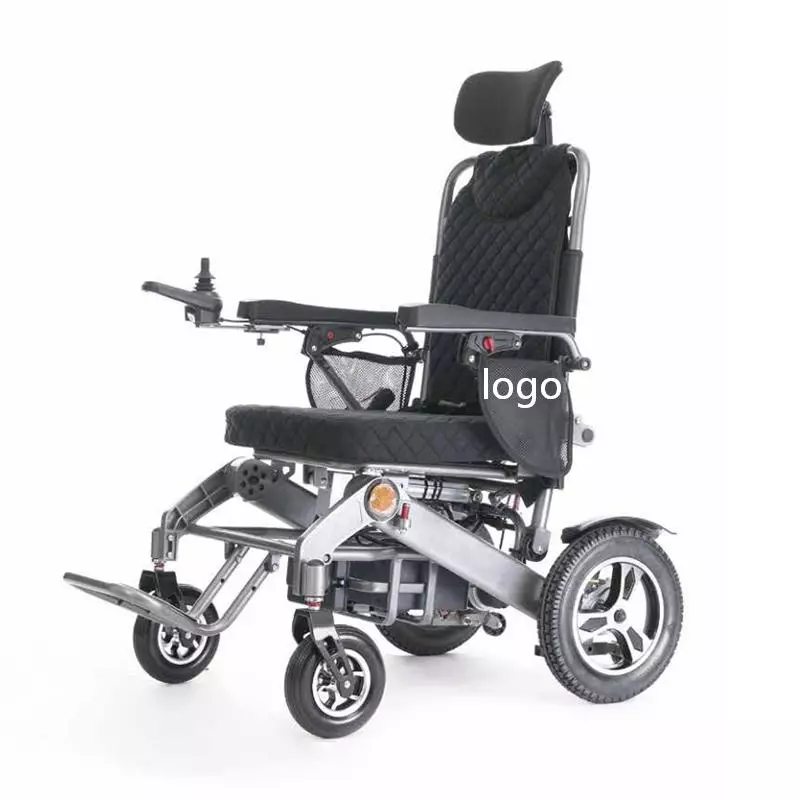
Color schemes — Custom frame finishes, seat cushion colors, and upholstery variants.
Packaging and documentation — Branded boxes, inserts, and multi-language instruction manuals. Standard practice for any factory supplying European or North American markets.
These won’t move your MOQ needle. No tooling fees either. Start here.
Technical Customization: Where Real Differentiation Happens
This is the layer that separates a power wheelchair OEM manufacturer from a label-and-ship operation. Four variables matter most:
Motor configuration — Adjustable power and torque for specific terrain profiles. Indoor smooth-surface models are built very differently from outdoor or rough-terrain versions.
Controller options — Joystick, touchpad, head control, and responsive joystick systems are all options.
Battery capacity — Modular lithium-ion packs with smart charging. The best setups let users swap batteries without replacing the full unit. That’s a real win for end-users and your after-sales support model.
Frame material and seating — Aluminum alloy or carbon fiber frames with custom seat widths for bariatric configurations. You can get adjustable backrests, footrest angles, and detachable pressure-relief cushions at the factory level.
Full ODM: Maximum Differentiation, Higher Commitment
Full wheelchair ODM supplier work — modifying frame geometry or building proprietary control firmware — carries an industry-standard 20–50% cost premium over basic OEM. That premium buys you real market differentiation.
One quick reference before you finalize your spec:
|
Customization Type |
Market Impact |
Complexity |
|---|---|---|
|
Logo + Branding |
Strong brand recognition |
Low |
|
Feature Modifications |
Targeted user appeal |
Moderate |
|
Full ODM Frame |
Maximum differentiation |
High |
Before you commit to a customization depth, verify four things from your supplier: ISO/CE/FDA certification status, spare parts availability, hardware and software customization depth, and OEM/ODM flexibility in their production schedule. Those four checkpoints tell you whether a factory can deliver — or just quote.
Conclusion
Sourcing electric wheelchairs from a China OEM factory isn’t complicated. You just need to ask the right questions and know the right numbers to expect.
You now have both.
Here’s what working with a qualified power wheelchair OEM manufacturer in China gives you:
Factory-direct pricing that cuts out the middleman
Flexible MOQ structures that fit where you are right now
Deep customization options for private label brands or existing product lines
They work with your needs — not the other way around.
The gap between a costly mistake and a profitable partnership comes down to one thing: starting the conversation with clarity.
So don’t sit on this.
Request a product catalog. Share your target specs. Get a formal quote. One inquiry today cuts through weeks of back-and-forth. You walk away with a clear, actionable proposal — and your electric wheelchair bulk order moves fast toward market.