
How To Choose A Wheelchair Cushion: Foam Vs Gel Vs Air
Three things drive this decision more than anything else: your pressure sore risk level, how many hours a day you’re in the wheelchair, and how much maintenance you’re willing to do.
Start there. Everything else follows.
Match Your Risk Level to the Right Material
Low risk — choose foam.
You have intact sensation, no history of ulcers, and sit 6 hours or less per day. Foam is lighter (often under 1.5 kg) and cheaper ($50–$150). It asks almost nothing from you in terms of upkeep. Rotate it every few months. Do a hand-compression check once a year. Done.
Moderate risk — choose gel.
You have reduced sensation and longer sitting hours (6–10+ per day). You still need a stable base for transfers and posture. Gel cushions ($150–$300) give you noticeably better pressure redistribution under your ischial tuberosities — the two bony points that take the hardest hit. The trade-off: they run heavier (2–4 kg). You’ll also need to knead the cushion each week to keep the gel spread out.
High risk — choose air.
No sensation, spinal cord injury, or a past history of pressure sores — air is the right call. Air cushions ($300–$500+) deliver the best pressure relief of the three. They do require a daily inflation check. Skip it, and you create the exact problem you were trying to prevent.
Why the Right Wheelchair Cushion Matters More Than You Think
Between 25% and 66% of different types of wheelchair users develop pressure sores at some point. That number isn’t a worst-case scenario — it’s the documented range across clinical studies. Most of those cases trace back to the same root cause: a cushion that wasn’t matched to the person sitting on it.
This isn’t about comfort. It’s about tissue damage that starts below the skin surface — before any redness shows up.
What’s at Stake
Pressure above 32 mmHg cuts off blood flow through capillary tissue. That’s the point where damage begins. A cushion that piles load onto your ischial tuberosities — instead of spreading it across your thighs and sacrum — holds that pressure in place for hours.
Foam Wheelchair Cushions: Who They’re Best For
Foam gets a bad reputation it doesn’t fully deserve — but it also gets credit it sometimes doesn’t earn.
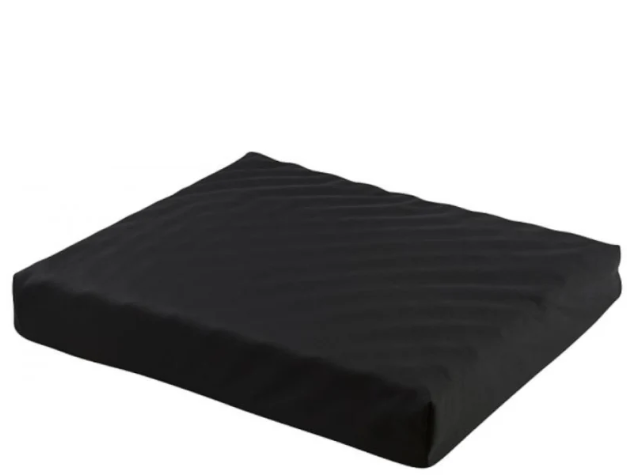
Here’s the honest version: foam is a solid solution for the right person. It’s light, affordable, and ready to use the moment you sit down. A wheelchair user with intact sensation who moves on their own and sits for a few hours a day? Foam does the job well.
The real problem is people grabbing foam because it’s cheap and easy — not because it fits their needs.
The User Foam Serves Well
Foam cushions work best when three conditions are true at once:
You have good sensation. You can feel pressure building and shift your weight on your own — no reminder needed.
You sit 1–4 hours per day, or your wheelchair use is part-time rather than full-time.
You have no history of pressure sores. No prior skin breakdown, no major sensory loss, no circulation concerns that call for serious pressure redistribution.
That profile? Foam delivers real value. It absorbs vibration, cuts friction against the seat pan, and supports basic posture — at a fraction of what gel or air systems cost. Entry-level foam starts around $25. Well-built memory foam models with contoured surfaces and waterproof covers can reach $600. Most users with low-to-moderate needs land in the $50–$150 range.
The One Thing That Slowly Undermines Foam Cushions
Foam compresses. It loses its spring over time. An old, flattened cushion can look fine from the outside — but it may create the same dangerous pressure points as sitting on the bare seat pan.
Try this simple hand test: press your palm down through the top surface. Feel the seat pan before your hand sinks more than a few centimeters? The cushion has lost its protective ability. Replace it.
Foam works well as a backup cushion — kept on hand for days when a gel or air cushion needs maintenance. But it shouldn’t be the long-term default for high-risk users.
Gel Wheelchair Cushions: The Middle-Ground Option Explained
Gel cushions exist because foam has a ceiling — and for a lot of wheelchair users, that ceiling is too low.
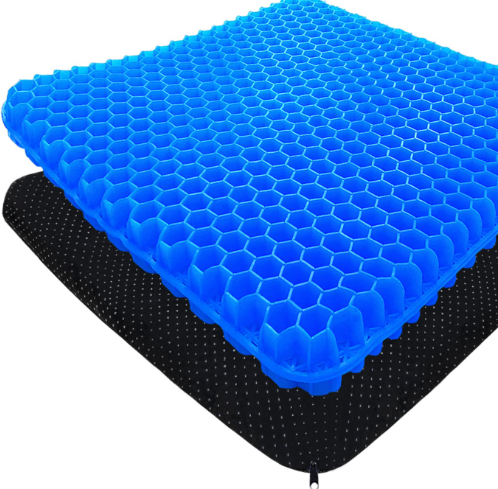
The core idea behind gel is simple: the material flows. You sit down, and the gel shifts sideways under your weight. Your pelvis sinks until pressure spreads across a wider surface. Load stops stacking onto your ischial tuberosities — the two bony points that take the hardest impact — and spreads outward instead. That’s not a marketing claim. It’s a basic mechanical property of fluid dynamics applied to your body’s contact zone.
Put numbers to it: standard foam cushions can produce localized peak pressures of 80–150 mmHg at the sit bones. Gel or gel-foam hybrids reduce those peaks by 20–40% in pressure-mapping tests. Clinical benchmarks set the danger threshold at 32 mmHg sustained over time. The gap matters.
Who Gel Serves Best
Gel and gel-foam cushions are built for a specific user profile:
Reduced but not absent sensation — you have some feedback, but it’s not enough to catch pressure buildup before it becomes a problem
Sitting 6–12 hours per day — long-duration use where foam fatigue becomes a real risk
Moderate pressure ulcer risk — no active wound, but a history that calls for serious prevention
Pelvic obliquity or mild scoliosis — contoured gel-foam designs handle uneven loading that plain foam ignores
The Maintenance Gel Cushions Need — and What Happens When You Skip It
Gel isn’t maintenance-free. It’s lower-maintenance than air, but it has failure modes foam doesn’t.
The most common problems:
Gel migration
Bladder leaks
Gel hardening
What to do about it:
Run a quick visual and touch check weekly
Do a full inspection — feel for lumps, hard zones, uneven gel distribution — at least monthly
Keep the cushion away from heat sources (car trunks count)
Position the cushion the right way every time so gel pools line up with your ischials, not your thighs
Plan for replacement every 12 months as a high-use daily sitter — sooner if you’re heavier or do frequent transfers
Air Wheelchair Cushions: Maximum Pressure Relief for High-Risk Users
Air cushions sit at the far end of the pressure-relief spectrum — and they belong there for a reason.
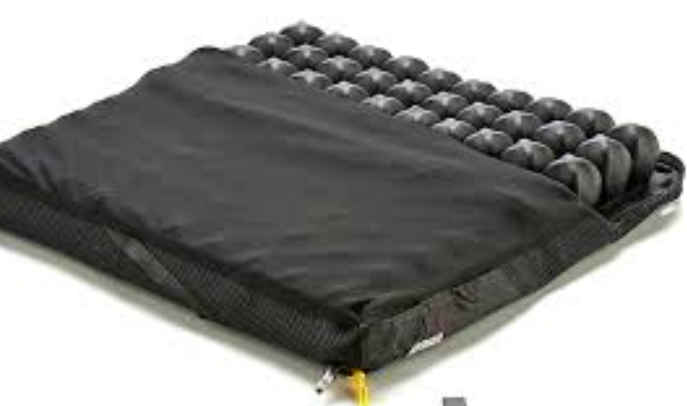
Foam has limits. Gel migration is a real clinical problem. That’s where air systems take over. The physics work differently from anything else in this category. Interconnected air cells respond to your body in real time. Sit down, and high-pressure zones push air sideways into lower-pressure cells. The load spreads out. Your ischial tuberosities stop taking the full hit.
Who Needs an Air Cushion
The user profile here is specific. These situations put you in the air-cushion category — it’s not an upgrade, it’s the baseline:
-
Spinal cord injury (SCI) or complete sensory loss — no internal feedback to catch pressure buildup before it becomes a wound
-
Active pressure sore or documented history of ulcers at the ischials, sacrum, or greater trochanter
-
Long-duration medical sitting — chemotherapy, dialysis, post-surgical recovery — where hours in the chair aren’t optional
-
Elderly users with fragile skin and limited mobility — both pressure and shear need to drop a lot
PURAP, one of the more tested fluid-air hybrid systems, reports over 25,000 users relying on it for pressure sore prevention and management. That’s not a niche product. It reflects a population whose risk level puts standard materials out of reach.
How Air Cells Work Under Your Body
Most air cushions use interconnected chambers. Shift your weight or lean forward, and air moves between cells in real time — pulling pressure away from your highest-risk contact points. This constant redistribution is what separates air from gel. Gel adjusts once at first contact, then drifts to the edges. Air keeps moving with you.
The Maintenance Tradeoff You Can’t Ignore
Air cushions need daily attention. Not much — but it has to happen.
Daily inflation check before sitting (the finger-insert method takes under 30 seconds)
Puncture risk is real: sharp edges, pet claws, and rough surfaces can breach cells. One damaged cell means reduced height in that zone, which puts concentrated pressure right where you don’t want it
Travel complications: high-profile multi-cell cushions are bulky. Add a hand pump and repair kit, and you’re carrying more than most users expect
High-profile interconnected designs sink deeper and spread pressure hard — right for extreme-risk users or heavier individuals. Low-profile versions give up some pressure relief for better side stability. Those suit more active wheelchair users who transfer often or push on their own.
Users with cognitive impairments, or older adults who can’t manage daily self-checks, need caregiver support — it’s a required part of the system, not an add-on. The cushion reaches its clinical potential only when someone checks the pressure on a set schedule.
For the right person, that’s a fair trade. A spinal cord injury patient with no sensation below the waist gets the strongest pressure protection outside a clinical bed — for a 30-second check each day. That’s a small price.
Foam vs Gel vs Air: Side-by-Side Comparison Table
Three materials. One seat. The outcome depends on which you pick — and the differences are sharp.
The table below covers six dimensions that matter for clinical decisions: pressure relief, weight, cost, maintenance, heat management, and lifespan. Numbers are based on typical medical-grade products tested in the 60–90 kg body weight range.
|
Foam |
Gel |
Air |
Hybrid (Gel+Foam / Air+Foam) |
|
|---|---|---|---|---|
|
Peak pressure at ischials |
7–13 kPa |
5–10 kPa |
4–8 kPa |
4–9 kPa |
|
Weight (40×40 cm) |
0.4–1.3 kg |
0.9–3.0 kg |
0.3–1.0 kg |
0.8–2.5 kg |
|
Price range |
$20–$250 |
$50–$400 |
$50–$700+ |
$100–$700 |
|
Maintenance load |
Low (1–2/5) |
Moderate (2–3/5) |
High (3–4/5) |
Moderate (3/5) |
|
Heat & moisture control |
2–4/5 |
3–4/5 |
3–5/5 |
4/5 |
|
Functional lifespan |
1–5 years |
3–5 years |
5+ years |
3–5 years |
Conclusion
The right wheelchair cushion isn’t a luxury. It’s a decision that shapes your skin health, your posture, and your quality of life — every single day.
Here’s a quick breakdown of each material:
Foam works well for lighter users on a budget who don’t sit for long periods
Gel gives you solid pressure redistribution with very little upkeep
Air delivers the highest pressure relief — the go-to choice for anyone at serious risk of pressure sores
No single material is the right fit for everyone. The best pressure relief wheelchair cushion is the one that matches your body, your routine, and your risk level.