
Choosing the wrong electric wheelchair doesn’t just cost you money — it costs you independence. Hundreds of models flood the market, each claiming to be the “best.” It’s easy to get buried in spec sheets and sales pitches without ever finding the chair that fits your life.
Tight hallways at home, rough outdoor terrain, or caring for a loved one — the right power wheelchair features separate genuine freedom from constant frustration.
This guide breaks down every critical factor:
Electric wheelchair weight capacity
Battery life
Seat dimensions
Drive systems
You’ll walk away with a clear, confident, informed decision — the first time.
How To Choose An Electric Wheelchair?
Six key factors determine whether an electric wheelchair works for your life — or against it.
Weight capacity comes first. Standard models handle 250–300 lbs. Heavy-duty chairs go up to 450–600 lbs. Some specialized units reach 1,000 lbs. Get this wrong, and nothing else matters.
Match the chair type to your environment:
Portable/travel models fold down to as light as 33 lbs — built for errands, airports, and tight spaces
Heavy-duty chairs come with all-terrain tires. They handle outdoor paths and uneven ground well
Indoor models prioritize a tight turning radius over raw power
Hybrid designs handle both worlds without major compromise
Battery range, seat size, and drive setup all factor in. So does price — entry-level models start low, while advanced tech can run $6,000–$30,000+. Each detail shapes the final choice.
The smartest move? Book an in-person evaluation with an Assistive Technology Professional. Do this before you buy.
Step 1: Assess Your Daily Usage Environment (Indoor vs. Outdoor)
Where you spend your day determines which chair you should buy.
Your primary environment cuts out more wrong choices than any other factor. Before comparing battery specs or price tags, answer one question: will this chair live inside your home, outside in the real world, or both?

Indoor environments punish the wrong chair fast. Standard doorways measure 32–36 inches wide. A chair with a wide turning radius clips walls, jams in hallways, and turns bathrooms into a daily obstacle course. For indoor use, prioritize:
Tight turning radius (under 24 inches for true maneuverability)
Compact seat width to clear doorframes with room to spare
Mid-wheel drive — puts the pivot point under your body, giving you the tightest turn possible in tight spaces
Outdoor use needs a different machine. Gravel paths, grass, cracked sidewalks, and slopes expose every weak point a lightweight indoor chair has. Look for:
All-terrain tires with suspension to absorb uneven ground
Higher ground clearance to handle curbs and surface transitions
IP-rated weather resistance for rain or wet conditions
Most users don’t realize how often they switch between indoor and outdoor environments. A hybrid indoor-outdoor electric wheelchair handles both without cutting corners — that makes it the practical choice for mixed use.
Get this step right first. Everything else builds on it.
Step 2: Choose the Right Type — Portable, Full-Size, or Heavy-Duty?
Three categories. One right answer for your situation. Pick the wrong one and you’ll spend the next two years fighting your own wheelchair.
Here’s how they break down:
|
Category |
Best For |
Chair Weight |
Battery Range |
Price Range |
|---|---|---|---|---|
|
Portable/Travel |
Travelers, seniors, urban use |
30–84 lbs |
15–20 km/charge |
$900–$2,500 |
|
Full-Size/Standard |
Daily home + outdoor use |
51–77 lbs |
15–25 km/charge |
$1,500–$4,000+ |
|
Heavy-Duty |
Users 300+ lbs, rough terrain |
75–106 lbs |
20–25 km/charge |
$2,500–$4,000+ |
Step 3: Match Weight Capacity to the User’s Body Weight
Weight capacity isn’t a spec you round down on.
The industry standard is clear. Your chair’s rated capacity should exceed the user’s total loaded weight by at least 20–30%. That means body weight plus clothing, a bag, or anything else you carry. Use the 80% rule in practice: a chair rated at 300 lbs has a real safe threshold closer to 240 lbs.
Skip that buffer, and the consequences are measurable:
Battery range drops 20–40% under excess load
Braking distance extends 30–50% — a direct safety hazard
Motor temperature spikes out of normal range into burnout territory
Component lifespan shrinks by 40–60%, and your warranty becomes void
Here’s how electric wheelchair weight capacity breaks down by tier:
|
Capacity Tier |
Rated Capacity |
Best For |
|---|---|---|
|
Standard |
250–300 lbs |
Average adults, home use |
|
Heavy-Duty |
330–450 lbs |
Larger users, outdoor terrain |
|
Bariatric |
500–600+ lbs |
High-demand, specialized needs |
Calculate your total loaded weight before you shop. That number — not your body weight alone — is what the motor, frame, and battery are working against each day.
Step 4: Evaluate Battery Life and Range for Your Daily Routine
Battery specs lie. The number on the box assumes flat ground, perfect temperature, and an average-weight rider. Your real life involves none of those things.
Here’s the practical rule: real-world range = 70–80% of the advertised figure. A chair rated for 25 km delivers 17–20 km on a typical day. Plan around that number, not the marketing one.
|
Feature |
Lithium-Ion |
Lead-Acid |
|---|---|---|
|
Weight |
10–20 kg |
30–50 kg |
|
Charge Time |
2–4 hours |
8–12 hours |
|
Cycle Life |
2,000–6,000 cycles |
300–500 cycles |
|
Airline Compliant |
Yes (removable, <100Wh) |
No |
Lead-acid batteries are heavier, slower to charge, and wear out far sooner. There’s no real competition.
To find the right battery, run this calculation before you buy:
-
Measure your average distance per day
-
Divide it by 0.75 — that’s your minimum rated range requirement
-
Take that number and multiply by 0.7 to cover terrain, body weight, and temperature shifts
One simple habit stretches battery lifespan a lot: charge to 80–90% per day instead of 100%. That single change can double your total cycle count over the chair’s lifetime. It costs you nothing and adds years to the battery.
Step 5: Get the Seat Dimensions Right — Comfort Is Non-Negotiable
A seat one inch too narrow creates pressure sores. Two inches too shallow throws your posture forward and damages your spine over time. These aren’t edge cases — they’re what happens when people skip this step.
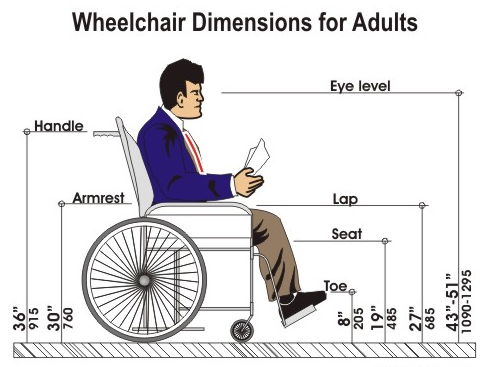
Electric wheelchair seat width and depth aren’t comfort preferences. They’re medical measurements. Get them wrong and you’re looking at skin breakdown, chronic pain, and a chair you abandon within six months.
Here’s how to measure before you buy:
Seat Width
Measure your hip width at its widest point while seated. Add 1–2 inches on each side for clearance. That’s your minimum seat width.
Too narrow compresses soft tissue
Too wide forces you to reach for the armrests — and that throws your entire upper body out of alignment
Seat Depth
This one trips up most buyers:
-
Sit in a straight-backed chair with feet flat on the floor and knees at 90°
-
Measure from your lower back to the back of your knee
-
Subtract 2 inches from that number
The result is your ideal seat depth — 15–20 inches (38–50 cm) for most adults. That range gives full thigh support without putting pressure on your calf. Pressure on the calf cuts off circulation. That’s not a small problem.
Why Seat Width Affects Indoor Navigation
Seat width determines real-world clearance too. Standard doorways run 32–36 inches. A wider seat doesn’t just mean less comfort — it means getting stuck. Factor your seat width into every doorway and hallway in your home before you finalize a model.
Measure once. It saves you from returning a chair — and from weeks of preventable discomfort.
Step 6: Understand Drive Configurations — Front, Mid, and Rear-Wheel Drive
Where your drive wheels sit changes everything about how the chair moves.
This single spec — often buried on page three of a product listing — determines your electric wheelchair turning radius, terrain performance, and whether you can get through a narrow kitchen without hitting the cabinets. Most buyers skip right past it. Don’t.
There are three configurations. Each one fits a different lifestyle.
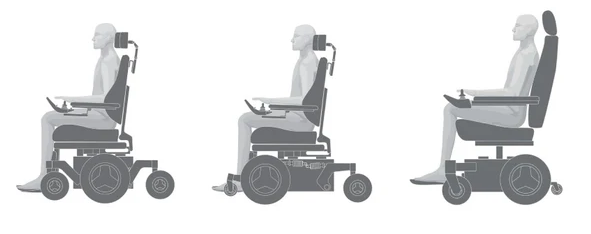
|
Configuration |
Turning Radius |
Best Environment |
Key Advantage |
|---|---|---|---|
|
Front-Wheel Drive (FWD) |
Good |
Outdoor/uneven terrain |
Rolls over obstacles with ease |
|
Mid-Wheel Drive (MWD) |
Tightest (true 360°) |
Indoor/narrow spaces |
Pivot point sits under the rider |
|
Rear-Wheel Drive (RWD) |
Average |
Outdoor/high speed |
Straight-line stability |
Match your drive config to your control system too.
Step 7: Set a Realistic Budget and Understand Pricing Tiers
The sticker price is just one part of what you’ll pay.
Electric wheelchairs fall into four tiers. Each one offers a different level of function:
|
Tier |
Price Range |
Weight Capacity |
Battery Range |
|---|---|---|---|
|
Entry-Level |
$1,000–$2,500 |
250 lbs |
Limited |
|
Mid-Range |
$2,500–$6,000 |
300 lbs |
Basic |
|
High-End |
$6,000–$15,000 |
400 lbs |
10–15 miles |
|
Custom |
$15,000–$30,000+ |
500+ lbs |
20+ miles |
Look past the purchase price. Think about what ownership costs you over time.
Battery replacement runs $150–$400 every 12–18 months.
Annual maintenance adds another $200–$500.
Over five years, that totals $1,800–$5,000+ on top of your upfront cost.
Not ready to commit? Rentals run $150–$400/month and include maintenance. Medicare also covers 13 months of rental as a path toward purchase. Check that option before you buy outright.
A smart budget split looks like this: 60% on the device, 20% on maintenance, 20% as a backup fund. That cushion keeps one repair bill from throwing off your entire plan.
Step 8: Safety Features You Should Never Compromise On
A chair that moves you is useless if it isn’t safe. These are the features that protect you — and the ones you cannot afford to skip.
Speed Control You Can’t Override
Your chair’s top speed should be capped at 25 km/h by design — not by a setting you can toggle off. Compliant motors cut power at that threshold. No overrides. That limit must be tamper-proof. No decoder, no app, no workaround should raise it. A seller advertising a speed unlock feature? Walk away.
Battery and Charger Authentication
Mismatched chargers are the leading cause of electric wheelchair fires. Safety standards now require mutual recognition between battery and charger. The battery charges only when it identifies an approved, paired unit. Before you buy, confirm this pairing system is built in. It’s not a premium feature. It’s a baseline requirement.
Fire Resistance and Material Limits
Plastic burns fast and releases toxic gas. Compliant chairs keep plastic components below 5.5% of total vehicle weight. Every material touching the battery, wiring, or electrical components must pass flame retardancy standards. Ask for documentation. A manufacturer who can’t provide it — that’s your answer right there.
Real-Time Battery Monitoring
Battery temperature problems during charging cause fires. Most go undetected until it’s too late. Quality chairs include thermal monitoring that alerts you when voltage, current, or temperature goes outside normal range. For caregivers, this isn’t optional — full stop.
Conclusion
The right electric wheelchair isn’t the most expensive one. It’s the one that fits your life.
Map your environment. Match your weight capacity. Pin down the battery range you need. Once those boxes are checked, the choice gets clear fast. The right chair stops feeling like a medical device. It starts feeling like freedom.
Browse the Grace Medy wheelchair catalog to compare models side by side.
The best electric wheelchair is the one you’ll want to use.