
Complete Operating Room Equipment List for Hospitals
Setting up an operating room requires more than buying a surgical table and a set of lights. Hospitals need the right equipment for patient positioning, anesthesia, monitoring, surgery, emergency care, and infection control. Every item should support a clear purpose and work safely with the other equipment in the room.
A complete operating room equipment list helps hospital managers, medical equipment buyers, and distributors plan purchases, compare suppliers, and control costs. It also reduces the risk of missing essential items during installation. The exact list depends on the hospital’s size, surgical specialties, patient volume, and local regulations. This guide covers the main equipment categories that hospitals should consider when building or upgrading a surgical suite.
Core Operating Room Equipment
The operating table, surgical lights, and instrument tables form the foundation of a functional operating room. These items support the surgical team throughout a procedure, so hospitals should evaluate their quality, ease of use, and compatibility with other devices before making a purchase.
An operating table supports the patient and allows the surgical team to adjust the patient’s position. Common options include manual, hydraulic, and electric models. Electric operating tables offer convenient adjustments to height, backrest, and table tilt. Hospitals should check the table’s safe working load, mattress comfort, movement range, locking system, and ease of cleaning. A radiolucent tabletop is useful for procedures that require X-ray imaging.
Surgical lights provide clear illumination of the surgical area. LED surgical lights are widely used because they offer a long service life, adjustable brightness, and lower heat output than many older lighting systems. Buyers should check light intensity, color rendering, shadow control, arm movement, and sterile handle design. A mobile surgical light can also provide extra lighting or serve smaller procedure rooms.
Instrument tables and medical carts help keep surgical instruments and supplies organized. Stainless steel tables are popular because they are durable and easy to clean. Adjustable height, smooth surfaces, and locking casters improve daily use. Hospitals may also need Mayo stands, IV stands, stools, kick buckets, waste bins, and patient transfer stretchers.

Hospitals planning a new surgical suite can review the available operating room equipment to understand how these products fit into a complete room setup. Grace Medy supplies operating room equipment, including surgical tables and LED surgical light, for hospitals and medical equipment distributors. Buyers can compare product configurations based on their room layout, budget, and intended procedures.
Anesthesia and Patient Monitoring Equipment
Anesthesia equipment helps the medical team deliver anesthetic gases or medicines and support a patient’s breathing during surgery. A typical setup includes an anesthesia machine, ventilator, breathing circuits, gas supply connections, and an anesthesia workstation. The exact configuration depends on the types of procedures performed and the hospital’s clinical requirements.
Airway management equipment is another essential part of the setup. Laryngoscopes, endotracheal tubes, face masks, airway devices, and suction equipment help trained professionals manage a patient’s airway. Hospitals should keep suitable adult and pediatric sizes where these patient groups are treated. Backup equipment should be available, clearly organized, and checked regularly.
Patient monitors allow the surgical team to follow important signs throughout a procedure. A standard multiparameter monitor commonly displays heart rate, blood pressure, blood oxygen saturation, respiratory rate, and temperature. Capnography, which measures carbon dioxide in exhaled air, is also important during many procedures involving general anesthesia.
Hospitals should select monitors based on the patients they treat and the procedures they perform. Check the screen readability, alarm settings, available monitoring parameters, sensor compatibility, and battery backup. Staff should also confirm that the equipment can connect to other systems if the hospital needs central monitoring or electronic patient records.
Anesthesia carts and emergency airway carts help keep medicines, accessories, and airway supplies within reach. Drawers should be clearly labeled, and essential items should remain easy to find. Routine checks can identify missing supplies, damaged cables, low batteries, and expired disposable products before the equipment is needed.
Surgical Instruments and Procedure-Specific Equipment
Surgical instruments vary according to the operation. A general surgery room needs basic instruments such as scalpels, scissors, forceps, clamps, needle holders, and retractors. These tools help the surgical team cut tissue, control bleeding, hold tissue, and close wounds. Hospitals should build instrument sets around the procedures performed rather than purchase every available instrument.
Orthopedic surgery may require bone drills, saws, retractors, specialized instrument sets, and compatible implant systems. Gynecological procedures may need speculums, uterine instruments, and laparoscopic equipment. Minimally invasive surgery often requires cameras, scopes, monitors, light sources, and dedicated instruments. Hospitals that perform cardiac, neurological, or other complex procedures may need additional specialized systems.
Electrosurgical units are used to cut tissue or control bleeding with electrical energy. Depending on the procedure, hospitals may also need bipolar instruments, vessel-sealing devices, and surgical smoke evacuation systems. Buyers should confirm that accessories are compatible with the selected equipment and that staff can operate the systems safely.
Suction equipment removes blood and other fluids from the surgical area. Hospitals should check suction performance, collection containers, filters, tubing, and overflow protection. Patient warming devices and fluid warmers can support temperature management during longer procedures or operations with significant blood loss.
For procedures that require imaging, a mobile C-arm, ultrasound system, endoscopy tower, or surgical microscope may also be necessary. These devices are not required in every operating room. A hospital should assess its surgical specialties and expected case volume before investing in high-cost imaging equipment.
Sterilization, Infection Control, and Operating Room Support
Sterile instruments and a clean working environment are essential to safe surgery. Hospitals need a reliable process for cleaning, inspecting, packaging, sterilizing, and storing reusable instruments. Depending on the facility’s layout and workload, the equipment may be located in a central sterile processing department rather than inside the operating room itself.
Common sterilization equipment includes steam autoclaves, instrument washers, ultrasonic cleaners, sterilization containers, and storage cabinets. The correct combination depends on the instruments being processed and the manufacturer’s instructions. Not every instrument can tolerate the same cleaning method or sterilization cycle.
Hospitals should also provide suitable instrument trays, chemical indicators, packaging materials, and tracking labels. Each sterilization load needs the required checks and records. Staff must follow the approved process for confirming that instruments are ready for use. Sterile supplies should be stored in a clean, dry area that protects the packaging from damage.
Environmental systems are equally important. Operating rooms need suitable ventilation, temperature and humidity control, medical gas supplies, and dependable suction connections. The room design should support the applicable local building, electrical safety, and infection-control requirements. Medical gas outlets must be correctly identified, and backup arrangements should be considered for critical services.
Waste containers, sharps containers, hand hygiene supplies, and suitable cleaning products help staff maintain a safe working environment. Equipment surfaces should be easy to wipe down, and the room layout should allow cleaning teams to reach important areas. Buyers should check the cleaning instructions for each device before purchasing it.
Emergency Equipment and Patient Safety
Emergency equipment must be ready for use in every operating room. Even a well-planned procedure can involve sudden changes in a patient’s condition. A defibrillator, emergency trolley, manual resuscitation bag, oxygen supply, suction device, and emergency airway supplies help trained staff respond quickly.
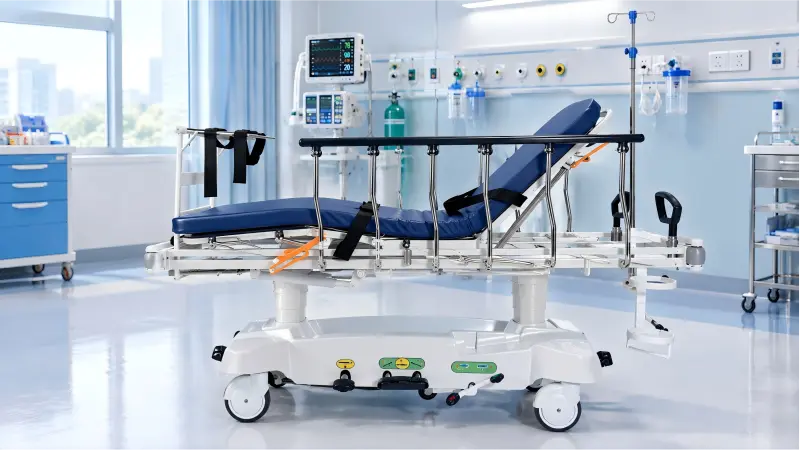
An emergency trolley should contain the medicines and supplies required by the hospital’s approved emergency protocol. Its contents should be clearly arranged and suitable for the patient population. Adult, pediatric, and neonatal supplies should be available wherever those patients are treated. The trolley should be checked at the intervals set by hospital policy, with missing items replaced promptly.
Patient positioning and pressure protection also deserve attention. Positioning pads, arm supports, straps, and suitable mattresses help maintain the required position during surgery. Hospitals should choose accessories that fit the operating table and support the procedures performed. Staff should inspect these items for wear, damage, and cleaning difficulties.
Electrical safety and equipment maintenance are part of the same process. Power cables, plugs, batteries, wheels, brakes, and control panels should be checked according to the manufacturer’s instructions. Preventive maintenance records help biomedical engineering teams track service needs and reduce unexpected equipment failures.
How to Build a Practical Operating Room Equipment Procurement List
A complete equipment list should be based on the hospital’s actual needs, not simply on the number of products available in a supplier’s catalog. Start by confirming the number of operating rooms, the types of surgery performed, expected patient volume, and plans for future expansion. Then separate essential equipment from specialty items that can be shared between rooms.
The following table provides a starting point for procurement planning.
|
Equipment category |
Main items to include |
Key purchasing considerations |
|---|---|---|
|
Core equipment |
Operating table, surgical lights, instrument tables, medical carts |
Load capacity, adjustment range, light quality, cleaning |
|
Anesthesia and monitoring |
Anesthesia machine, ventilator, patient monitor, airway equipment |
Patient needs, alarms, compatibility, backup support |
|
Surgical equipment |
Instrument sets, electrosurgical unit, suction device |
Procedure type, accessories, ease of maintenance |
|
Imaging and visualization |
C-arm, ultrasound, endoscopy tower, surgical microscope |
Clinical need, room space, system compatibility |
|
Sterilization and infection control |
Autoclave, washer, sterilization containers, waste bins |
Processing capacity, cleaning method, applicable standards |
|
Emergency and patient support |
Defibrillator, emergency trolley, warming device, positioning pads |
Readiness, patient safety, routine checks |
Before requesting quotations, prepare a specification sheet that includes the required quantity, technical requirements, accessories, applicable certifications, warranty, installation needs, and delivery schedule. Ask suppliers to identify exactly what is included in each quotation. A low equipment price may not include all the accessories, training, or service support required for daily use.
Hospitals should also compare the total cost of ownership. Purchase price is only one part of the budget. Spare parts, disposable accessories, maintenance, staff training, and expected service life can affect long-term costs. Confirm the availability of replacement parts and technical support before choosing a supplier.
Grace Medy can help hospitals and medical equipment distributors explore operating room products, including surgical lights and operating tables, as part of their equipment sourcing plans. Buyers should share their required specifications, quantities, destination market, and intended use to help suppliers prepare a suitable quotation.
Conclusion
A complete operating room equipment list for hospitals should cover core surgical equipment, anesthesia and monitoring systems, instruments, sterilization, emergency response, and patient safety. The right combination depends on the hospital’s procedures, room layout, budget, and local requirements.
Careful planning helps hospitals avoid missing essential items, reduce unnecessary purchases, and make equipment easier to use and maintain. Before placing an order, verify product specifications, compatibility, certification requirements, delivery arrangements, and after-sales support. A clear procurement list gives the hospital and its suppliers a shared basis for preparing a safe, practical, and cost-effective operating room.