
Key Factors To Consider When Selecting Surgical Lights
Choosing the right surgical light is an important decision for every hospital. Surgeons need clear, stable light to see the surgical area and identify small changes in tissue color. A suitable light should also reduce shadows, control heat, and allow easy adjustment during an operation. For hospital buyers, the challenge is to compare products without focusing on one impressive number. Brightness alone cannot show the full quality of a surgical light. This guide explains the main factors to consider, from light quality and safety to installation, maintenance, and long-term cost.
Light Intensity, Field Size, and Shadow Control
The first factor is illumination. It is measured in lux and shows how much light reaches a surface. Many surgical lights offer adjustable output, often within a range of around 40,000 to 160,000 lux. The right setting depends on the procedure, the depth of the surgical area, and the surgeon’s preference. A higher output can help in deep or narrow areas, but maximum brightness is not always necessary. Buyers should check the full adjustment range and confirm that the light remains stable at different settings.
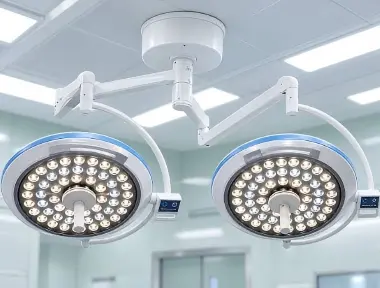
The size and shape of the light field are also important. A very bright center does not help enough if the edges become too dark. Look for even illumination across the working area and enough depth to support different surgical positions. Good surgical lighting systems should also reduce shadows caused by the surgeon’s hands, head, and instruments. Many LED surgical lights use several light sources that send light from different angles. Their beams overlap, helping maintain visibility when part of the light is blocked. Ask the supplier for test results and, if possible, arrange a product demonstration. Check the light at different angles and brightness levels instead of relying only on claims such as “shadowless.”
Color Accuracy and Adjustable Color Temperature
Brightness is only one part of good surgical lighting. Surgeons also need to see tissue colors clearly. Blood vessels, skin, muscle, and other tissues can have similar shades, so poor color reproduction may make visual checks more difficult. The Color Rendering Index, or CRI, is a common measure of how accurately a light shows colors. Many medical LED lights offer a CRI of 90 or higher, and some models provide a CRI of 95 or above. Buyers should review the manufacturer’s test data rather than choosing a product based on a single number.
For more detailed comparison, ask about the R9 value. It shows how well a light displays strong red colors, which are important in the surgical field. Color temperature is another factor to consider. It is measured in kelvin (K) and describes whether the light appears warmer or cooler. Adjustable color temperature gives the surgical team more choice. Some lights offer settings between about 3,500K and 5,000K, while other models provide a wider range. The best setting depends on the clinical task and the team’s preference. Before purchasing, check whether the color remains consistent as brightness changes.
Hospitals should compare LED surgical lights under similar conditions. Different test distances and settings can affect the results, so suppliers should explain how their measurements were taken. A practical demonstration can help staff judge color quality, glare, and visual comfort. This is especially useful for hospitals that perform different types of surgery and need lighting that can adapt to several working conditions.
Heat, Patient Safety, and LED Technology
Heat is another key factor. Surgical lights operate close to the patient and surgical team, sometimes for several hours. Excessive heat can cause discomfort and may contribute to drying of exposed tissue. Traditional halogen lights generally produce more unwanted heat than modern LED systems. LED technology can provide strong illumination with lower heat output and longer light-source life. These benefits can reduce routine maintenance and improve comfort during long procedures. However, LED does not mean heat-free. Buyers should still check the actual heat and irradiance data for each model.
Ask suppliers for information on irradiance, temperature rise, and the relevant safety standards for the intended market. Irradiance describes the radiant energy reaching a surface and is commonly measured in watts per square meter. The applicable limits and test conditions should be confirmed in the manufacturer’s documentation. If the operating room uses two lightheads, ask how their performance is assessed when both beams overlap. Two lights aimed at the same area may create a different combined heat load from one light used alone. Follow the product instructions for safe positioning and brightness settings.
For buyers comparing LED surgical lights vs. halogen surgical lights, it is useful to consider the full service period, not just the purchase price. LED lights often have a rated service life of tens of thousands of hours, depending on the model and operating conditions. A longer rated life can reduce light-source replacement, but other components may still need service. Check the warranty, spare-part supply, maintenance requirements, and technical support before making a decision.
Mounting, Handling, and Operating Room Requirements
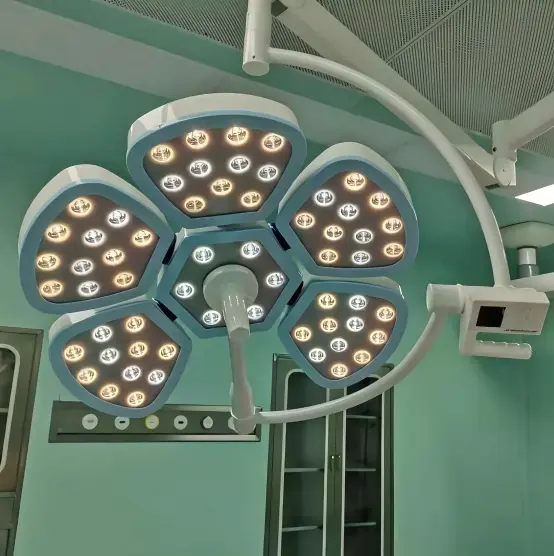
The installation type should match the hospital’s layout and daily needs. Ceiling-mounted surgical lights are common in permanent operating rooms. They can keep floor space clear and allow the team to position the light over the operating table. Mobile surgical lights offer more flexibility. They may suit facilities that need to move lighting between rooms or use a space for different purposes. Before choosing either type, review the room dimensions, ceiling height, power supply, and equipment layout. A ceiling-mounted model may require professional installation and a suitable support structure.
Ease of movement matters just as much as installation. The lighthead should move smoothly, stay in the selected position, and allow staff to adjust the beam without unnecessary effort. Check the balance of the suspension arm and whether the light can reach the required positions around the operating table. A loose arm or difficult handle can slow adjustments during a procedure. Buyers should also review the handle design. Removable sterilizable handles or suitable disposable covers can help the team maintain cleaning and infection-control routines. Confirm the correct cleaning method and sterilization limits for each component.
Some hospitals also need cameras, monitors, or other operating-room equipment connected to the lighting system. If these features are required, confirm compatibility before ordering. Ask about the camera option, video connections, control panels, and any additional installation needs. A simple system may be enough for a standard operating room, while a facility that records procedures may need more features. Compare only the functions that support the hospital’s actual workflow. This helps avoid paying for features that staff will rarely use.
How to Compare Surgical Light Suppliers and Total Cost
A good purchasing decision considers more than the initial price. Hospitals should calculate the expected cost of installation, electricity, routine maintenance, replacement parts, and service over the product’s working life. A low-cost light may become more expensive if parts are hard to obtain or repairs take too long. Ask each supplier for a written quotation with a clear list of included accessories, warranty terms, delivery arrangements, and installation support. Check that the offered model meets the requirements of the destination market and the hospital’s procurement rules.
It is also helpful to compare products using the same checklist. The table below gives buyers a simple starting point.
|
Factor |
What Buyers Should Check |
|---|---|
|
Illumination |
Adjustable lux range, even light field, and sufficient depth |
|
Shadow control |
Performance when hands or instruments block part of the light |
|
Color quality |
CRI, R9 data where available, and adjustable color temperature |
|
Heat and safety |
Irradiance data, temperature performance, and applicable compliance documents |
|
Installation |
Ceiling support, room height, mobile base, and power requirements |
|
Handling and hygiene |
Smooth movement, stable positioning, and sterilizable handle options |
|
Service and cost |
Warranty, spare parts, maintenance, delivery, and installation costs |
Hospitals and distributors looking for a surgical light supplier should request product specifications and relevant test documents before making a final choice. It is useful to ask the supplier to explain any figures that are unclear and to demonstrate the light in practical conditions. Buyers can also review the available mobile surgical light and dual-head LED surgical light options to understand how different configurations may suit their facilities. Grace Medy is a surgical light supplier offering LED surgical lighting options for hospitals and medical equipment distributors. Buyers should confirm the configuration, specifications, certification documents, and available services for the selected model.
Product Demonstration and Final Checklist
A product demonstration helps the purchasing team check features that are difficult to judge from a catalogue. Ask the supplier to show how the lighthead moves, how quickly the brightness can be adjusted, and whether the selected position stays stable. Test the light at different brightness settings and positions. Review how well it handles shadows and whether the controls are easy to understand. If camera integration or special accessories are required, check those functions during the demonstration as well.
Before placing an order, confirm the final specifications in writing. Make sure the chosen model meets the hospital’s clinical needs, room layout, safety requirements, and budget. Check the warranty and after-sales arrangements, and confirm which accessories are included. A careful review at this stage can reduce installation problems and help the hospital plan future maintenance.
Conclusion
Selecting surgical lights requires a balance of light quality, safety, ease of use, and long-term value. Buyers should check illumination and shadow control first, then review color accuracy, heat performance, mounting options, and cleaning requirements. Installation needs, warranty coverage, spare parts, and supplier support also deserve attention. The best choice is not always the brightest or cheapest model. It is the one that meets the operating room’s needs and provides reliable performance over time. By comparing specifications under clear conditions and asking suppliers for supporting documents, hospitals can make a more informed purchasing decision.