
Between the manufacturer’s cost sheet and the retail tag, a big chunk of your procurement budget disappears. For medical equipment distributors, rehabilitation centers, and bulk buyers sourcing economic manual wheelchairs — that gap is avoidable.
This economic manual wheelchair factory price guide gives you transparent pricing data across steel and aluminum frame models.
Comparing your first OEM wheelchair supplier? This puts you in a stronger position. Renegotiating an existing contract? The numbers and insights here give you real leverage before your next conversation starts.
Economic Manual Wheelchair Factory Price Ranges by Frame Material
Frame material is the single biggest variable in your factory quote. Know this before you negotiate — it stops you from overpaying.
Here’s how pricing breaks down across the four main materials used in economic manual wheelchair production.
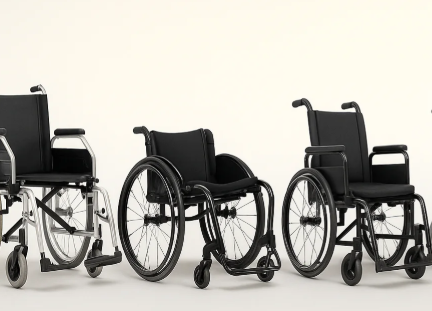
Steel Frame: The Budget Baseline
Steel rules the entry-level segment for good reason. It’s cheap to source, easy to weld, and produced across many established supply chains.
Factory price range: $100–$500
Basic foldable steel frame models — the kind hospitals and care facilities order in bulk — land between $100 and $300 at the factory level. Heavy-duty models with reinforced crossbars push closer to $500. For transport chairs and standard hospital-grade units, steel is the go-to cost anchor.
Aluminum Frame: The Performance-Value Crossover
Aluminum costs more upfront. But that extra cost pays off. You get lower shipping weight, corrosion resistance, and more customization options. These factors add real value in bulk purchasing.
Factory price range: $200–$800
Chinese manufacturers producing foldable aluminum economy models can quote as low as $77–$86 per unit at a minimum order of 20 boxes. That number catches most first-time buyers off guard. Anodized finishes, adjustable footrests, and lightweight frames come standard at this price tier — not as add-ons.
Titanium and Carbon Fiber: Beyond the Economy Segment
Both materials perform at a high level. Neither fits a budget procurement plan.
Titanium: $1,100–$3,500 factory range — ultralight and durable, but most standard medical funding programs don’t cover it
Carbon fiber: $2,100–$5,500 — built for load-specific strength and custom applications, not volume buying
Material cost differential over steel baseline:
|
Frame Material |
Factory Price Range |
Premium Over Steel |
|---|---|---|
|
Steel |
$100–$500 |
— |
|
Aluminum |
$200–$800 |
+$500–$2,000 |
|
Titanium |
$1,100–$3,500 |
+$1,000–$3,000 |
|
Carbon Fiber |
$2,100–$5,500 |
+$2,000–$5,000 |
For most distributors, rehabilitation centers, and NGO buyers on fixed budgets, steel and aluminum are the practical buying range. At the right order volume, aluminum gives you the stronger long-term value.
Manual Wheelchair Factory Price Breakdown: What You’re Paying For
Factory pricing isn’t just a number. It’s a story — built from materials, labor, customization depth, and the economics of scale. Buyers who understand that story negotiate from a position of strength. Those who don’t tend to accept the first quote they get.
The Hidden Markup Built Into Every Unit
Most suppliers won’t bring this up: manual wheelchairs carry an average 40% markup at the factory level. That markup runs even higher on low-price models. So on a $300 basic steel unit, the actual manufacturing cost sits closer to $180–$210.
Buying direct from the factory cuts more than a few dollars off your price. You remove an entire margin layer that would otherwise go into a distributor’s operating costs. That’s real money back in your procurement budget.
Add-Ons That Inflate Your Quote Fast
Factory quotes expand quickly at the line-item level. A few additions that look reasonable on their own can push your per-unit cost up fast:
Elevating leg rests: +$200–$600 per pair — useful for medical needs, but not required for every end user
Standing frame integration: +$3,000–$6,000 — needs reinforced structural parts throughout the frame
Custom packaging and handling: +$100–$300 per shipment
What Factory Pricing Looks Like in Practice
The price gap between a $129 transport chair and a $2,999 precision manual isn’t random. It reflects material grade, frame geometry, weight engineering, and how much customization the design supports. Each step up the price ladder is a deliberate trade-off — not a premium added for its own sake.
For cost-focused manual wheelchair procurement, the practical sweet spot sits between $100 and $800. That’s where factory direct pricing, bulk order discounts, and OEM partnerships give you the strongest value. You get what your buyers need — without paying for features they don’t.
Key Factors That Affect Manual Wheelchair Factory Pricing
Six variables. That’s what separates a $150 factory quote from an $800 one — not quality alone, not brand prestige, not where the chair was built. Know those six variables and you get a fair price. Miss them and you fund a supplier’s margin.
Weight Engineering: The Cost of Every Gram Removed
Lighter chairs cost more to make. Not because materials are expensive — but because low weight requires precision that standard production lines can’t deliver at low cost.
For budget-focused buyers, this is the key point: don’t pay for weight engineering your end users don’t need.
Adjustability: Where Functional Features Add Up
A fixed-frame wheelchair is simple to build. An adjustable one is not.
Each moving joint — seat height, backrest angle, balance point — needs extra components, tighter tolerances, and more assembly time. That cost feeds straight into the factory price.
The rule is simple. Every adjustment point you add to a spec sheet raises your per-unit cost. So audit your end-user requirements before you lock in the feature list.
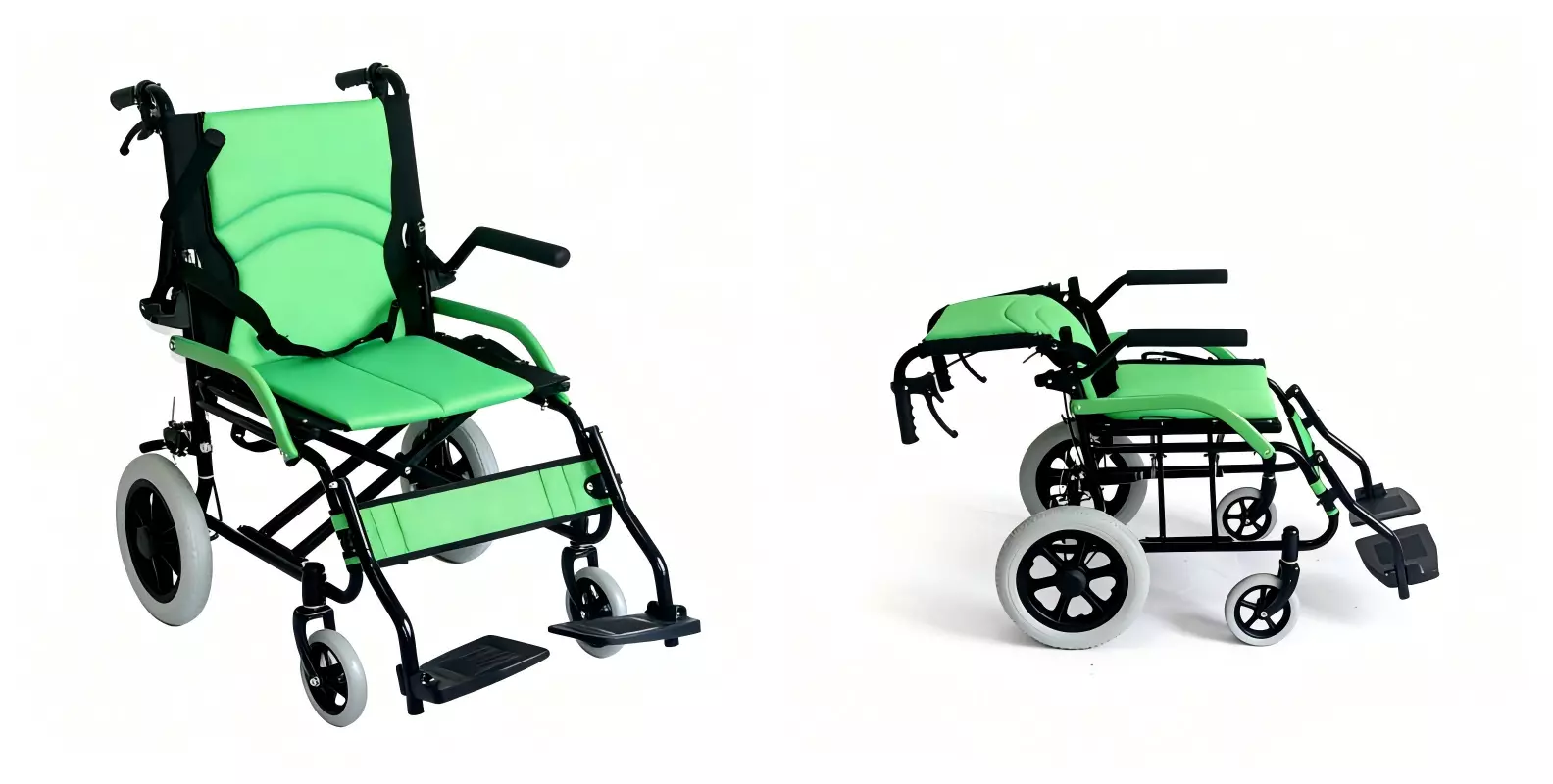
Frame Design Type: Folding vs. Rigid
Frame design drives both price and performance. Most buyers underestimate how much.
|
Design Type |
Starting Factory Price |
Trade-Off |
|---|---|---|
|
Rigid fixed-frame |
Higher |
Best push efficiency, minimal flex |
|
Adjustable rigid |
Premium |
Personalization over time |
|
Folding/transport |
$150–$300 |
Storage convenience, lower propulsion efficiency |
Folding wheelchair models dominate bulk procurement for good reason — lower entry price, simpler logistics. But the mechanical parts (hinges, locking mechanisms, crossbrace systems) mean cheap folding chairs carry more hidden failure points than the price tag suggests.
Customization Depth: The Fastest Way to Expand a Quote
Standard configs from a direct manufacturer start around $200. That baseline moves fast.
Custom seat widths, branded upholstery, specialized footrest configs, headrests, positioning belts — each one adds a separate line to the production cost sheet. Buyers ordering for NGO programs or institutional contracts often come in with a long feature checklist built from clinical needs. That checklist is valid. The real skill is knowing which features drive the most cost, so you can prioritize instead of accepting a bloated quote as-is.
Dealer Markup Layered Over Factory Cost
This factor doesn’t start at the factory — but it shapes the price you end up paying if you’re not buying direct.
Volume shifts this. Large orders unlock wholesale discount tiers that shrink the markup. That makes bulk direct purchasing the strongest cost-control tool available to institutional buyers.
Component Specifications: Drive Wheels, Casters, and Surface Performance
The frame gets most of the attention. The rolling components often set the actual cost.
Drive wheel load ratings, caster diameter, bearing quality, and surface compatibility all need equivalency testing for premium builds. A chair built for outdoor terrain — larger rear wheels, sealed caster bearings — costs more to produce than a basic indoor transport model, even with identical frame materials.
How to Source Affordable Manual Wheelchairs from the Factory: A Step-by-Step Buying Guide
Most procurement mistakes happen before the first email goes out. Buyers contact factories with no fixed specs, no certification checklist, and no clear volume target — then wonder why the quote comes back inflated or the samples fall short. The steps below fix that.
Step 1: Lock In Your Requirements Before You Reach Out
Factories quote what you give them. Vague requests produce vague pricing. Vague pricing rounds up in the supplier’s favor — every time.
Before contacting any manufacturer, define these clearly:
Chair type: standard folding, transport, heavy-duty, or lightweight aluminum
Target quantity: your initial order and your projected reorder volume
Feature priorities: fixed footrests vs. removable, standard seat width vs. custom, basic upholstery vs. branded
A clean spec sheet is your leverage. The more specific you are, the less room a factory has to pad the quote.
Step 2: Request Physical Samples — Not Just Catalog Photos
A spec sheet tells you what a chair is supposed to be. A sample tells you what it is in reality.
Most reputable manufacturers will send samples before you commit to bulk. Use them. Check weld quality at the frame joints. Test the fold-and-unfold resistance. Sit in the chair and feel where the upholstery tension sits. Problems that are invisible in a product photo show up fast once the chair is in your hands.
Step 3: Verify Credentials — the Non-Negotiable List
A factory can claim anything on a quotation sheet. Certifications are harder to fake.
Ask for documentation on:
ISO 13485 — medical device quality management systems
CE and FDA compliance — required for most regulated markets
RoHS — materials restriction compliance, critical for EU distribution
Step 4: Evaluate Production Capacity Against Your Demand
A factory that handles your first order of 100 units may struggle with a reorder of 500 on short notice. Ask about capacity allocation upfront. The best factories reserve production slots for repeat buyers. That removes lead time uncertainty — and lead time uncertainty is what kills procurement timelines.
Step 5: Negotiate Terms, Not Just Price
Factory-direct buying opens up more than unit price negotiation. Push on:
Payment structure: deposit-and-balance splits that protect your cash flow
MOQ flexibility: pilot batch options before full commitment
OEM/ODM terms: branding rights, spec modification scope, prototyping timelines
High MOQs blocking you? Combine orders with affiliated buyers. Or start with standard models to build the relationship first, then move into customization once trust is in place.
Why Source Your Economic Manual Wheelchairs From Grace Medy
Fifteen years of manufacturing leaves marks. You see it in process discipline, in supply chain depth, and in a delivery record that only comes from years of getting it right.
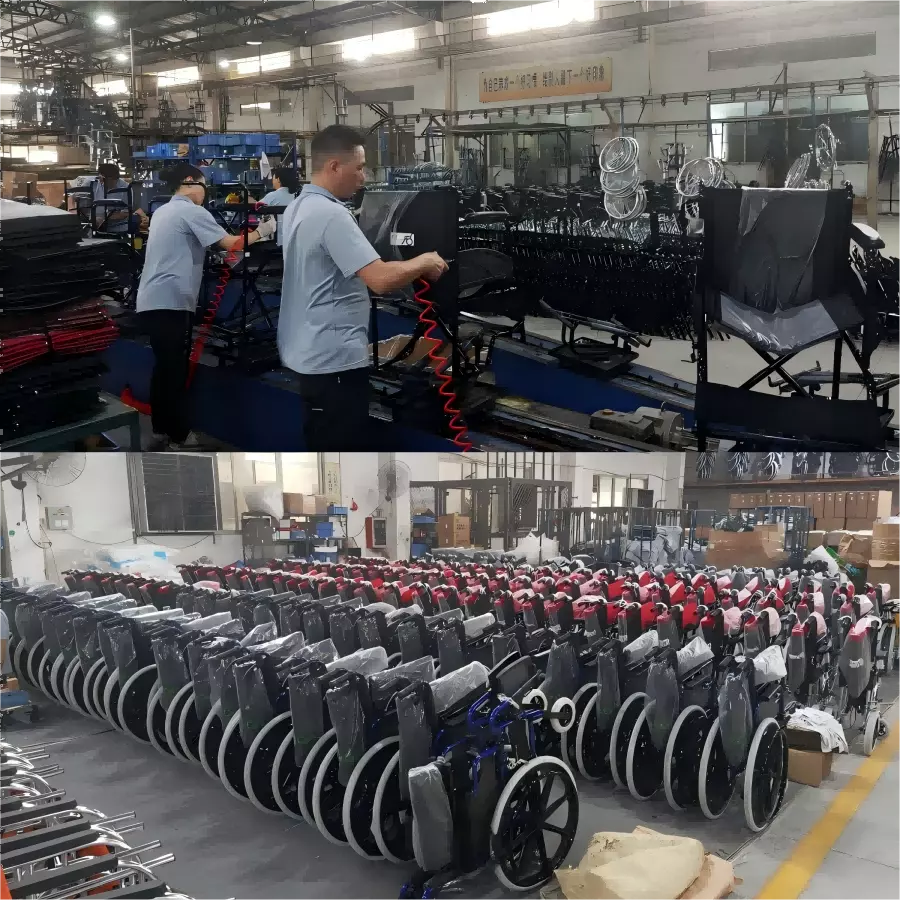
We’ve been building medical equipment in Hebei, China since 2009. One hour from Beijing. Research, production, and export all run under one roof. That setup matters — especially if you’ve dealt with brokers quoting factory prices they don’t control.
The numbers are clear: $45.90–$59.90 per unit on economic manual wheelchairs. That range covers:
Folding aluminum frames
Lightweight folding models wheelchair
Pediatric configurations wheelchair
A 5.0 review score and 100% on-time delivery across bulk orders backs that price with proof.
Most mass producers can’t offer real spec flexibility. We do. Our standard catalog comes with a full customization layer underneath. Hospitals and rehabilitation centers don’t need a second vendor either — our product range covers hospital beds, nursing beds, walking aids, and rehabilitation equipment.
For procurement teams juggling multiple suppliers, that cuts overhead. For NGO buyers and institutional purchasers working with fixed budgets, it means a quote that fits — not one that blows the limit.
Factory direct. Certified. Delivered on time. That’s the case for sourcing with us — no padding required.
Conclusion
The math is simple: every dollar you overpay to a middleman is a dollar that could fund another unit, another patient, another procurement cycle.
Sourcing steel frame manual wheelchairs for bulk distribution? Or checking aluminum models for an OEM partnership? The factory-direct advantage is real. The price gap between what you’ve been quoted and what manufacturers charge is often wider than you’d think.
You now have the framework. Understand the cost drivers. Know your MOQ leverage. Come to the table informed. That’s how serious buyers negotiate — and that’s what this economic manual wheelchair factory price guide was built to help you do.
The next move is yours. Request a custom quote from Grace Medy’s production team today. Bring your specs, your volume, and your questions. We’ll bring the numbers.
Transparent pricing. Factory-direct value. Built for buyers who mean business.