Who Discovered The Importance Of Sterilizing Surgical Rooms And Equipment
Who Discovered The Importance Of Sterilizing Surgical Rooms And Equipment?This is how antiseptic surgery history unfolded: not through one lone genius, but through a messy, fascinating chain of stubborn doctors, ignored warnings, and hard-won evidence. It runs from Ignaz Semmelweis handwashing experiments that were dismissed as absurd, to the germ theory breakthroughs that finally proved them right. These are the men and the moments behind why we sterilize anything at all.
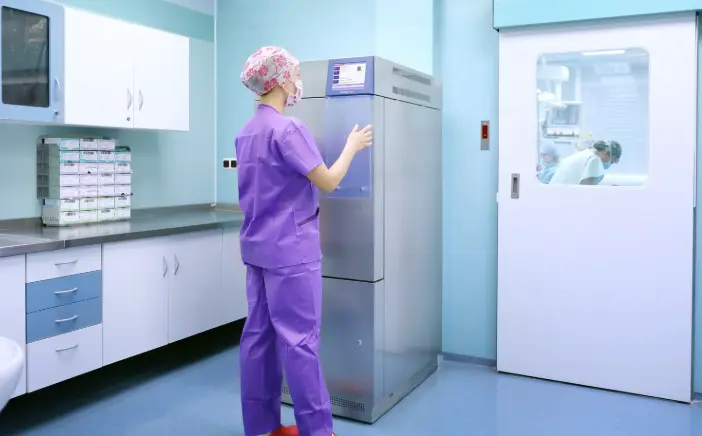
Life Before Sterilization: The Era of Deadly Surgery
Mid‑19th century hospitals were extremely dangerous. 40–50% of surgery patients died from post‑operative infection or sepsis. Amputation mortality reached 60%, and nearly all such wounds became infected. During the 1870 Siege of Paris, almost every amputation patient died.
Childbirth was also deadly. Vienna General Hospital’s first maternity clinic had a maternal death rate of 9.92% from 1841‑1846, far higher than its second clinic. In England and Wales (1870‑1890), 1 in 20 mothers died in hospital births, many from infection. A Paris hospital lost nearly 1/5 of delivering mothers between 1861 and 1864.
Doctors blamed disease on “miasma” (bad air), not unwashed hands. Many patients survived surgery but died from infection days later, and no one understood why.
Ignaz Semmelweis: The First Proof That Cleanliness Saves Lives (1846)
One young doctor in Vienna noticed something that everyone else had walked right past.
Ignaz Semmelweis worked at Vienna General Hospital, where two maternity clinics sat side by side. The First Clinic was staffed by doctors and medical students. The Second Clinic was run by midwives.
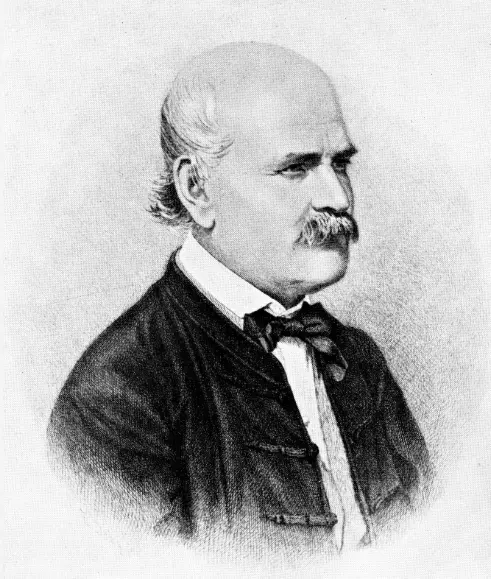
Semmelweis dug for the difference. He found the reason. Medical students often went straight from performing autopsies to examining laboring women. Midwives never touched a cadaver.
He suspected something invisible was traveling on those hands. He called these particles “cadaverous particles.” Soap wasn’t enough, he reasoned, because the smell of death lingered even after washing. So in 1847, he ordered staff to scrub with a chlorinated lime solution before touching patients.
The results were staggering. Mortality in the First Division fell from 18.27% to 1.27%. By March and August of 1848, not a single woman died in his division during childbirth.
He didn’t know about germs, and he didn’t need to. The data spoke for itself. But his colleagues heard an accusation that they were killing their patients. They rejected him. His mental health unraveled. He was committed to an asylum in July 1865 and died just two weeks later, at 47, largely unheard.
Louis Pasteur: Germ Theory That Changed Medicine Forever (1860s)
France, meanwhile, had a chemist asking a different question. Louis Pasteur wasn’t studying hospitals — he was trying to figure out why wine and milk soured. What he found in his lab would answer the question Semmelweis died without proving.
For centuries, people believed in “spontaneous generation,” the idea that living organisms could appear out of nowhere in decaying matter. Pasteur set out to test this, and in 1860, he designed an experiment so elegant it’s still taught in classrooms today.
He boiled nutrient-rich liquids inside swan-neck flasks, curved so dust could drift in but tiny particles couldn’t settle into the liquid. For months, nothing grew. But the moment he tilted the flask and let atmospheric dust touch the liquid, microbes appeared within 2–3 days.
He presented this work to the Academy of Sciences in 1860–1861, then formalized it in his 1861 memoir. By 1864, he’d publicly defended his conclusion: air itself wasn’t the problem. Airborne dust carried invisible living organisms, and those organisms caused spoilage.
Wounds weren’t rotting from bad luck or bad air. Real, living germs, traveling on hands, instruments, dressings, and dust itself, were contaminating them. For the first time, infection had a mechanism doctors could test, fight, and prevent.
Joseph Lister: The Father of Antiseptic Surgery (1865-1867)
A Scottish surgeon read Pasteur’s work and had a thought nobody else quite connected: if invisible organisms spoiled wine, maybe they were spoiling wounds too.
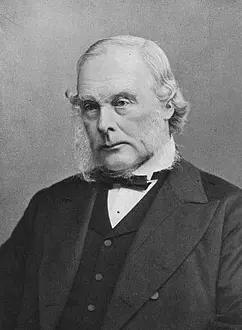
Joseph Lister was working at Glasgow Royal Infirmary when he came across Pasteur’s germ theory. He put the pieces together fast. If living microbes caused fermentation and decay, they were behind the gangrene and pus filling his surgical wards too. So starting in 1865, he began testing a chemical known to kill microorganisms: carbolic acid, also called phenol.
His method took shape in stages. He mixed a 5% carbolic acid solution with 95% water and used it to irrigate wounds directly. Instruments got soaked in it. Bandages and dressings were treated with it. He even had assistants spray a fine carbolic mist through the air of the operating theater itself, hoping to knock down airborne contamination before it ever reached the patient.
His first real test came on August 12, 1865. An 11-year-old boy named James Greenlees arrived with a compound fracture, an injury that almost always meant amputation or death from infection back then. Lister treated the wound with carbolic acid instead. The boy kept his leg. He survived.
Between 1865 and 1867, Lister treated 11 compound fracture cases using this method. Nine healed without infection. Only one required amputation, and one patient died from secondary hemorrhage, unrelated to sepsis. By 1867, he’d refined the approach further: wounds were washed with the solution, then sealed under a carbolic-soaked antiseptic dressing after suturing.
The numbers he later published were hard to argue with. In his 1864–1866 amputation cases, before antiseptic technique, roughly 35 amputations resulted in 16 deaths, close to a 46% mortality rate. From 1867 to 1870, after implementing carbolic acid, 40 amputations produced just 6 deaths, about 15%. Some of his earlier records from 1861–1865 put sepsis deaths even higher, near 45–50% of cases.
In 1867, Lister reported something remarkable to the British Medical Association. His two wards at Glasgow Royal Infirmary, once among the unhealthiest in the entire surgical system, had gone nine consecutive months without a single case of pyaemia, hospital gangrene, or erysipelas. That March, he published his findings in The Lancet, laying out the foundation of modern surgical infection prevention.
This is the moment the germ theory became a working system. Pasteur had explained why wounds rotted. Lister built the actual protocol around it, sterilizing the wound, the instruments, the dressings, and the air itself.
Resistance from the Medical Establishment
It was skepticism, and a lot of it. Many surgeons still believed sepsis came from bad air or poor ward conditions. Lister’s carbolic acid method didn’t help his case either. It smelled harsh, irritated skin, and demanded a level of procedural discipline most operating theaters weren’t used to.
Acceptance came slowly, case by case, ward by ward. As Lister’s mortality data kept holding up and other surgeons began replicating his results, the resistance softened. By the 1870s, his techniques had spread across Europe. By the 1880s, they’d crossed the Atlantic into North America, becoming the backbone of modern aseptic technique.
From Antisepsis to True Sterilization: The Rise of Heat-Based Methods (1880s-1890s)
Carbolic acid could kill germs already present, but it couldn’t guarantee an instrument was completely free of them before surgery even began. That distinction—chemical suppression versus total elimination—is what pushed medicine from antisepsis toward true sterilization of medical equipment.
In 1881, Robert Koch, Georg Gaffky, and Friedrich Loeffler published research on steam’s effect on bacteria, describing one of the first “steam-heating” devices: a metal cylinder with heated water at the base, its vapor rising to surround materials on a shelf above. That same year, Koch and Gustav Wolffhügel pushed dry heat as another option. Hot air worked fine on metal and glass, but steam’s moist heat penetrated faster and killed more reliably, especially on dressings and fabric.
The Autoclave Arrives in the Operating Room
The underlying technology wasn’t new. Denis Papin had built a pressurized “steam digester” back in 1679. Charles Chamberland, working in Pasteur’s lab, adapted that same pressure-vessel concept for lab sterilization in 1879. Sealed pressure raised water’s boiling point, allowing steam to reach 121–134°C, hot enough to destroy even bacterial spores.
Ernst von Bergmann brought this into hospitals in Berlin in 1885, becoming the first to sterilize surgical instruments with steam. By 1886, his team was steam-treating dressings, gowns, and surgical towels too, everything came out damp, but sterile. Commercial steam sterilization systems followed in 1889. By 1892, most large hospitals across the U.S. and Europe had adopted steam sterilization, with Sprague pressure sterilizers so widespread in America they were sold back to Europe.
This is the real turning point in operating room hygiene history: surgery stopped relying on chemicals to reduce risk and started demanding verifiable, complete sterility instead.
Modern Sterilization Technologies for Heat-Sensitive Equipment (1930s-1980s)
Steam had a blind spot. It couldn’t touch anything that melted, warped, or short-circuited under 121–134°C heat—flexible endoscopes, optical instruments, plastic devices. Ethylene oxide changed that.
Charles-Adolphe Wurtz first produced EO in 1859, but Paul M. Gross and Lawrence F. Dixon patented it as a sterilizing agent in the late 1930s. By the 1940s, hospitals were using it. From the 1950s through the 1990s, EO became the standard low-temperature method for heat-sensitive and moisture-sensitive equipment—plastic instruments, long narrow-channel devices, flexible scopes. It penetrated well and didn’t damage materials. The downsides: long cycles, high costs, environmental and safety concerns. CDC records show that until around 1995, EO sterilizers typically ran on a 12% EO / 88% CFC gas mixture.
That trade-off drove researchers to look for something faster and cleaner—which set the stage for the next chemical breakthrough.
Who Really Discovered the Importance of Sterilization? Debunking the “Single Hero” Myth
Textbooks love a tidy story. One genius, one lightbulb moment, one name to memorize for the test. The real history of who discovered the importance of sterilizing surgical rooms and equipment doesn’t fit that format. It was a relay race, with each runner handing off a piece the last one couldn’t finish alone.
Semmelweis went first. His chlorinated lime experiments proved, with hard numbers, that a simple hygiene habit could stop women from dying. But he never understood why it worked. He didn’t know germs existed. He just knew the data didn’t lie.
Pasteur picked up that unanswered question years later. His swan-neck flask experiments gave the world germ theory, finally explaining the invisible mechanism behind decay and infection. Suddenly, Semmelweis’s instincts made scientific sense.
Then came Lister, who read Pasteur’s work and asked why germs that spoil wine wouldn’t also spoil wounds. His carbolic acid protocol turned that theory into a working surgical system. This is why he’s remembered as the father of antiseptic surgery, not the inventor of sterilization itself.
Joseph Lister’s application of germ theory was about suppressing microbes already present, not guaranteeing complete elimination. True sterilization of medical equipment, built on heat, pressure, and verified sterility, came later as engineers refined steam-based systems. Lister started the conversation. He didn’t finish the technology.
Conclusion
Next time you walk into a hospital, or watch a surgeon scrub in, remember that this ritual exists because people fought for it, sometimes at great personal cost. The history of operating room hygiene is a reminder that good medicine is never accidental.
If this story moved you, share it. Talk about it. And if you’re evaluating sterilization equipment or protocols today, let this history be your reminder of just how much is riding on getting it right.