
An equipment mistake in the operating room creates budget headaches and patient safety risks. Procurement teams face dozens of vital signs monitors, conflicting anesthesia specs, and regional certification requirements. Finding real clinical value requires technical comparison.
Here is the data behind intraoperative monitoring devices—multi-parameter monitors, capnography systems, surgical displays, and C-arm imaging. You get the technical parameters, compliance standards, and configuration scenarios that matter for a new suite or a legacy upgrade. We also included the specs to ask suppliers for, a procurement checklist to compare vendors, and the specific mistakes to avoid.
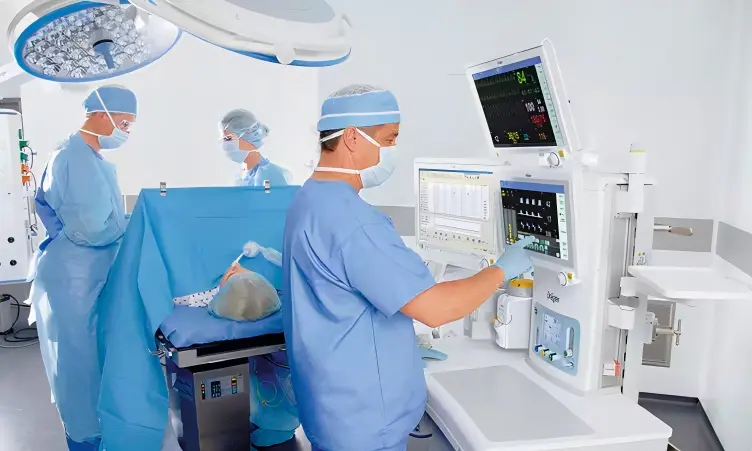
Multi-Parameter Patient Monitor: Core Vital Signs Equipment for the OR
Operating rooms need real-time data on the patient’s body. The multi-parameter monitor stays in the anesthesiologist’s sightline to provide it.
Six parameters form the baseline for OR and ICU settings: ECG, respiration (RESP), non-invasive blood pressure (NIBP), SpO₂, pulse rate (PR), and temperature (TEMP).
Surgical settings require EtCO₂ monitoring (35–45 mmHg normal range) to catch ventilation problems before they escalate.
How the Major Brands Compare
Mindray’s uMEC120 packages standard ECG/RESP/NIBP/SpO₂/TEMP with optional IBP and EtCO₂. It includes a lithium battery for 12 hours of continuous monitoring, supporting patient transfers between the OR and recovery without losing data.
Philips IntelliVue MX/M series units feature dual temperature channels and 2–4 IBP lines as standard equipment. They include clinical decision support tools like ST-segment analysis, QT monitoring, and trend tracking.
GE’s CARESCAPE Bx/Mx series operates the same interface across the OR and ICU. These units support 3/5/12-lead ECG, multi-channel IBP, and anesthesia gas analysis.
OR vs. ICU: The Hardware Differences
|
Factor |
ICU Monitor |
OR/Anesthesia Monitor |
|---|---|---|
|
Primary focus |
Long-term organ function tracking |
Perioperative safety, real-time alarms |
|
IBP channels |
2–4 typical |
2–4, high-end requires minimum 2 |
|
Gas monitoring |
EtCO₂ optional |
EtCO₂ nearly standard |
|
Monitoring duration |
24/7, multi-day trends |
1–10 hours per case |
|
China price range |
¥20,000–80,000/unit |
¥50,000–200,000/unit |
The price gap comes from the gas modules and BIS capabilities required by OR units.
Anesthesia Monitoring System: Technical Breakdown
Anesthesia machines handle drug delivery and gas flow. EEG dept
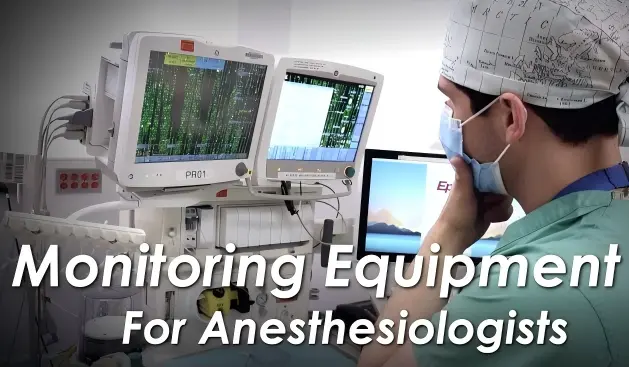
h monitors measure consciousness. You need both to be configured correctly.
Anesthesia machine core parameters:
– O₂ concentration range: 21–100%, accuracy ±(1–2)%
– Circuit pressure: 0–100 cmH₂O, over-pressure alarm at 40–60 cmH₂O
– P_ETCO₂: mandatory post-intubation monitoring, paired with respiratory rate and tidal volume
EEG/BIS depth monitoring
Hong Kong College of Anaesthesiologists guidelines require brain-effect monitoring for patients under total intravenous anesthesia with muscle relaxants. Specify these technical metrics:
Sampling frequency ≥ 128 Hz
Processing delay ≤ 10 seconds (slower systems hinder real-time drug titration)
Index update cycle: 1–5 seconds
EMG interference suppression and motion artifact alarms
Target BIS index during maintenance remains at 40–60. A climb past 60–70 during emergence signals readiness to taper the anesthetic and assess extubation.
Case-specific configuration
Intubated general anesthesia requires P_ETCO₂ (0–80 mmHg), urine output monitoring, and continuous temperature tracking. Regional and neuraxial cases prioritize NIBP. Hypotension from sympathetic blockade requires tightening NIBP measurement intervals to 2–3 minutes instead of the standard 2–5 minutes.
Capnography Monitor: End-Tidal CO₂ in Sedative Surgery
SpO₂ readings lag behind actual ventilation changes. When a sedated patient is on supplemental oxygen, depressed breathing can hide behind normal oxygen levels for several minutes. The ASA classifies PETCO₂ as a basic monitoring parameter alongside blood pressure, ECG, SpO₂, and temperature. For procedural sedation—endoscopy, bronchoscopy, and minimally invasive interventions—capnography serves as the standard.
Standard Sedation Configuration
Combine a multi-parameter monitor with a capnography module. For non-intubated sedation, sidestream sampling via a nasal cannula works best. Look for these specs:
Measurement range: 0–150 mmHg CO₂
Accuracy: ±2 mmHg
Response time: under 200 ms
Sampling flow: 50–200 mL/min (avoiding higher flows to maintain patient comfort)
Disposable CO₂ nasal cannulas: ¥15–40 per unit in Chinese public hospitals
Calibration interval: annual, requiring verification of self-check and auto-zero support
Surgical Displays: 4K/8K Technical Parameters
Surgeons need sharp visual details mid-procedure. The specifications of surgical displays determine clarity and response speed.
Resolution baseline
4K UHD delivers 3840×2160 (8.3 million pixels). High-end OR integrators specify 4K as the default for new builds. A typical setup uses a 55″ 4K panel with a 1209.6×680.4mm active display area. 8K resolution hits 7680×4320 (33.2 million pixels) and remains reserved for robotic platforms or high-volume interventional centers, matching the 40–60% UHD adoption rate in broadcast markets.
Latency
For laparoscopic and endoscopic work, total system latency must stay in the 10–20ms range. Eye-hand coordination suffers if delays exceed this. Verify these metrics:
Signal processing delay: under 1 frame (≤16.7ms at 60Hz)
Refresh rate: 60Hz minimum, 120Hz for 3D or high-speed endoscopy
Dedicated “surgical mode”: disables visual noise reduction and motion compensation to prevent added frames
End-to-end delay test report: SDI/HDMI input to screen showing ≤20ms
Compliance and structural requirements
Surgical displays follow IEC 60601-1 Ed.3.x (GB 4943.1-2011 and GB 17625.1-2012/GB/T 9254.1-2021 in China). Check for these hardware features:
Reinforced or double insulation on patient-contact and accessible metal parts
Protective earthing verified with continuity testing
Front screen rating ≥IP45, full housing IP20–IP42. The 55″ reference unit meets IP20 overall with IP45 on the front panel
Fanless design using metal housing, heat pipes, and heat sinks to stop dust and aerosolized fluid intake
Interfaces
12G-SDI: 12Gbit/s per channel for 4K 60p. Four channels support 8K input. Specify at least 4 input/loop-out ports
HDMI 2.0: 18Gbit/s, 4K 60Hz 4:4:4, HDCP-compliant, BT.709/BT.2020 color space
DisplayPort 1.2+: includes multi-stream transport for multi-screen arrangements
VESA mounts: 400×400, 400×200, or 300×300mm with a safety factor ≥4 on ceiling-arm load ratings
DICOM Part 14 and color accuracy
Displays used for intraoperative decisions must track the Grayscale Standard Function (GSDF) within ≤10% deviation. Add these specs to your RFP: peak brightness 350–400 cd/m², working brightness ≥250–300 cd/m², contrast ≥1000:1, uniformity ≥80–90%. Include 10-bit color depth and HDR (PQ/HLG) support. A 31.5″ 4K/8K monitor with 1.07 billion colors sets a strong comparison benchmark.
8K for robotic surgery
8K medical displays cost two to three times more than 4K units. The investment targets high-magnification cardiothoracic, urologic, and neurosurgical procedures. The extra resolution and 10-bit HDR sharpen tissue perfusion details and microvasculature, reducing misjudgment risks. Standard laparoscopic cases do not require 8K. Complex robotic platforms with high complication risks do.
C-Arm Fluoroscopy System: Configuration Guide
Real-time image guidance drives orthopedic and spine cases. The C-arm specifications dictate the safety and scope of your OR procedures.
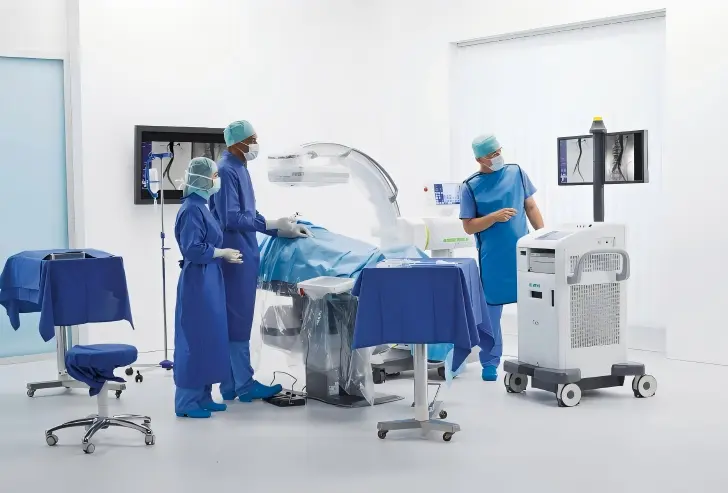
Hybrid OR Configuration Benchmarks
Include these specifications in your hybrid OR RFP for orthopedic, spine, and cardiovascular interventions:
|
Parameter |
Benchmark |
|---|---|
|
Detector size |
30×30 cm or 30×40 cm |
|
Center resolution |
≥2.0 lp/mm (≥2.5 lp/mm for advanced configs) |
|
X-ray tube power |
≥15–25 kW |
|
Rotational range |
≥135° |
|
Lateral tilt |
±20°–30° |
|
Vertical lift travel |
40–50 cm |
|
Bedside clearance |
≤15–20 cm |
Mobile flat-panel C-arms fit orthopedic and spine hybrid ORs. Fixed large-format vascular C-arms, either floor-mounted or ceiling-suspended, handle cardiovascular and structural heart interventions.
Integration with 4K Surgical Displays
A C-arm must feed clean video to the display wall. The connection outputs 1080p60 or 2K digital video via DVI or SDI through a matrix switcher. It upscales to 4K UHD (3840×2160) on 32″–55″ surgical monitors featuring ≥400–700 cd/m² brightness and ≥1000:1 contrast.
End-to-end latency must remain under 100 ms to ensure visual feedback matches the surgeon’s hand movements during live navigation.
Set up a split-screen layout displaying real-time fluoroscopy, pre-op CT/MR, and the navigation interface. Bony structures on the 4K display must stay within ≤3% dimensional error for length and angle measurements. Verify that continuous 30 fps fluoroscopy runs without stutter or motion blur.
Practical Setup Notes
Schedule C-arm cases in advance to arrange lead protection and room layout.
Use larger operating rooms. C-arms share space with anesthesia machines, monitors, and the surgical table.
Select mobile stands with fine braking. Vibration during fluoroscopy degrades the image.
Use image stitching for spine and long-bone cases to build a panoramic view across multiple segments for alignment measurements.
OR Equipment Procurement Checklist
A general surgery OR costs 900,000 RMB to equip. A robotic surgery suite requires 12 million RMB. Procurement teams must define the clinical scenario to allocate budgets accurately.
Budget Baselines
China’s national OR standards list 70 equipment categories across three tiers: 22 items in Level A, 19 in Level B, and 29 in Level C. Level A includes electric operating tables, LED shadowless lights, anesthesia machines, patient monitors, electrosurgical workstations, infusion pumps, and information systems.
|
OR Type |
Typical Equipment Investment |
|---|---|
|
General Surgery OR |
800k–1.5M RMB per room |
|
Endoscopy OR |
1.5–3.0M RMB per room |
|
Robotic Surgery OR |
12–23M RMB per room |
|
Hybrid OR (incl. DSA) |
15–30M RMB per room |
A general surgery room allocates 200k–300k RMB for mid-tier electric tables, 250k–400k for anesthesia machines, 100k–200k for monitoring, and 80k–150k for lighting. Any single item priced over 1 million RMB, such as a mobile C-arm or surgical microscope, triggers mandatory centralized procurement.
Endoscopy rooms need dedicated video towers. A 4K/3D configuration requires 800k–1.5 million RMB, plus a CO₂ insufflator and washing equipment.
A surgical robot costs 10–20 million RMB. Support infrastructure like imaging integration and anesthesia modules adds 1–3 million RMB to the suite.
Hybrid OR costs separate the imaging system from the operational hardware. A fixed DSA system requires 8–15 million RMB. High-end mobile C-arms cost 1.5–4 million RMB. The table, anesthesia, navigation, and video integration add 3–6 million RMB.
Compatibility Checks
Verify that new equipment mounts properly on existing ceiling pendants and boom systems. Require the supplier to submit these details:
Mechanical parameters: Weight, mounting dimensions, and floor or ceiling positions. Cross-check these with the active pendant’s rated load and power module slot count.
Power interfaces: Standard AC220V 50Hz support, maximum power draw, and socket availability. Ask for a load calculation report.
Gas and suction interfaces: O₂, AIR, and VAC terminal types. Specify required adapters in the accessories sheet.
Video system: HDMI, SDI, DVI, or IP stream formats. Confirm 1080p and 4K resolution support and bi-directional control.
Information system: HL7, DICOM, and TCP-IP interfaces. Ensure end-to-end video routing latency stays under 200ms.
Require a detailed integration plan listing signal topology and bandwidth constraints. Score these elements as technical criteria in the RFP.
Score After-Sales Support Quantitatively
Service guarantees need metrics. Include these requirements in your bid documents:
Spare Parts
– Regional warehouses must stock ≥90% of critical parts with ≤24 hour response times.
– Enforce transparent pricing structures capping annual increases at 5%.
– Secure parts supply for the 10-year lifecycle of the equipment.
OEM Technical Support
– Require manufacturer authorization and a minimum of 2 certified engineers per supplier.
– Mandate remote diagnostic platforms available for 8-hour workdays or 24/7.
– Specify software patches and feature updates at least twice a year.
Response Time
– Telephone triage within ≤2 hours. On-site dispatch within ≤24 hours for tier-one cities and ≤48 hours for remote areas.
– Mandate preventive maintenance ≥2 times per year with a 100% completion rate.
– Cap the Mean Time To Repair (MTTR) for key systems at ≤8 hours.
Weight after-sales support at 20%–30% of the technical segment to properly evaluate lifecycle costs.
Typical OR Application Scenarios
Configuration logic changes based on the clinical scenario. Overspending and under-equipping both stem from misjudging the room type.
Standard general surgery OR. Requires a 4.5m ceiling height, a 2.9–3.0m clear height, and Class III cleanroom standards maintaining 25+ air changes per hour. Dual LED lights output 120,000–160,000 lx each with a CRI ≥95 to provide 100,000 lx of field illumination. The setup includes a primary multi-parameter monitor and a secondary anesthesia monitor tracking ECG, NIBP, SpO₂, RESP, TEMP, EtCO₂, and ≥2 IBP channels. Displays must measure ≥15 inches and store over 72 hours of trend data. Bedside gas covers two O₂, two suction, and one to two compressed air terminals.
IV sedation without intubation (endoscopy, day surgery). The setup requires ECG, continuous SpO₂ sampling at ≥1Hz with alarms below 92%, NIBP cycling every 3–5 minutes, and capnography testing ranges from 0–150mmHg at ±2mmHg accuracy. Adding capnography drops unrecognized hypoventilation events from 30% to under 5% and reduces respiratory complications by 30–40% compared to using SpO₂ alone. This setup shrinks PACU recovery time by 10–20%.
Hybrid OR with C-arm. Requires 1,500–2,000mm of bed-to-gantry clearance. Configuration includes 2 to 4 wall-mounted 55–65 inch 4K monitors pushing ≥500 cd/m² brightness. Fluoroscopy operates at 7.5–15 fps with ±30–45° angulations to feed split-screen comparisons of live and pre-op imaging.
Robotic platforms. 8K visual workflows operate at 7680×4320 pixels relying on 50–60 fps. This requires 48 Gbit/s bandwidth, handled through dedicated IP video or 12G-SDI aggregation.
Procurement Pitfall Guide
Skipping the certification chain. Price quotes missing licenses, SDS/COA, or transport qualifications create liability. Keep hazardous-material documents for 3 years and require physical paperwork.
Testing connectivity without testing failover. A working wired connection does not guarantee an automatic switchover to Wi-Fi when unplugged. Test this on-site. Disconnect the network cable mid-transmission, confirm the switch to wireless, and reconnect to verify recovery. Make the vendor export timestamped alarm logs to prove no data dropped.
Accepting vague criteria. Confirm the exact model, brand, technical scope, and warranty terms match the contract, the delivery notes, and the physical unit. Add photos and parameters to the contract.
First-batch orders without retained samples. Keep a sample from the first batch of any new supplier order so you can check future shipments against the baseline quality.
When vetting Grace Medy or any vendor, ask if their platform supports dual-mode connection with automatic failover. Check the maximum device count per platform and test how alarm data exports. Ask for case studies that show deployment timelines and exact device counts.
Gracemedy’s engineering team supports hospitals working with tight budgets and strict compliance rules. We supply core operating room equipment. You will find operating tables, surgical lights, medical pendants, and patient monitors in our catalog. Each product is built to fit your existing OR setup.
Contact Gracemedy to discuss your equipment needs.