
Analysis of the Global Surgical Table Market
The global surgical table market is changing as hospitals perform more surgeries and upgrade their operating rooms.
Surgical tables are no longer viewed as simple equipment. Hospitals now look for tables that are easy to operate, stable, flexible, and suitable for different types of surgery.
Electric operating tables are becoming more common. Tables that work with X-ray and C-arm systems are also gaining attention. At the same time, hospitals in developing markets are looking for reliable products at a reasonable price.
For medical equipment manufacturers, distributors, and hospital procurement teams, these changes create both opportunities and challenges.
This article provides a simple overview of the global surgical table market, including market growth, product trends, regional demand, major suppliers, and future opportunities.
Global Surgical Table Market Size and Growth
Market research reports do not always give the same market size.
This is because different reports may include different products. Some count only standard operating tables. Others also include electric tables, imaging-compatible tables, orthopedic tables, and other special models.
Based on the range of estimates in the original market research, the global surgical table market was around USD 1.5 billion in 2025. Most forecasts expect steady growth over the next several years.
The exact number is less important than the overall direction.
The market is growing because hospitals need more operating rooms, existing tables need replacement, and medical teams want more flexible equipment.
Why Is the Market Growing?
Several factors are supporting demand for surgical tables.
More surgical procedures mean more operating rooms need suitable tables. Aging populations are also increasing demand for orthopedic, cardiac, and other procedures. At the same time, many hospitals are replacing older equipment with electric and more flexible models.
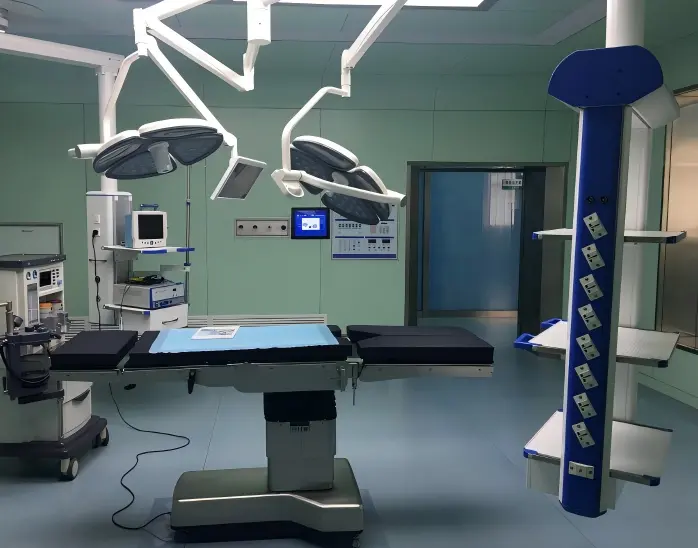
Key Trends in the Surgical Table Market
The market is moving from basic tables toward products that offer easier positioning and better support for modern surgery.
Growing Demand for Electric Surgical Tables
Electric surgical tables are becoming an important part of the market.
With an electric system, medical staff can adjust the table using a control panel or hand control. This can make height and position changes easier during surgery.
Electric tables are especially useful in hospitals that perform many different types of procedures.
More Demand for Imaging-Compatible Tables
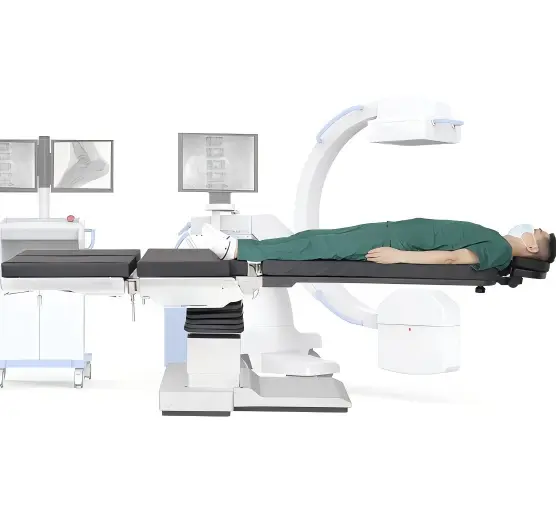
Some procedures use X-ray or C-arm equipment during surgery.
In these cases, the table needs to allow imaging equipment to work around or through the tabletop.
This has increased interest in radiolucent surgical tables and tables designed for C-arm use. The original market analysis also identifies image-compatible tables as one of the faster-growing areas of the market.
More Flexible Table Designs
Hospitals want equipment that can support different procedures.
A general operating table may be used for several departments. Special accessories can then be added when needed.
This can be more practical than buying a completely different table for every type of surgery.
Market Segmentation by Surgical Table Type
The surgical table market includes several product types.
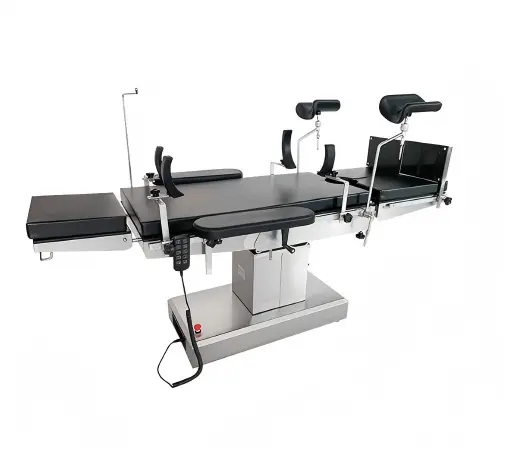
Electric tables are widely used because they offer convenient positioning. Hydraulic tables are still important in markets where simple operation, strong support, and cost control are major concerns.
Imaging-compatible tables are also gaining attention because of the growing use of C-arm and other imaging equipment.
Orthopedic and specialty tables serve hospitals that need specific positioning for procedures such as orthopedic, spinal, or trauma surgery.
The market data in the original article shows that electric and powered tables have a strong position, while hydraulic tables continue to serve hospitals that focus on reliability and cost.
Major Surgical Table Manufacturers
The global market includes large medical equipment companies as well as smaller manufacturers and OEM suppliers.
Large international companies such as STERIS, Stryker, Getinge, Baxter, and Mizuho OSI have strong positions in different parts of the market. Some focus on general surgery, while others are stronger in orthopedic, imaging, or complete operating room solutions.
There are also many manufacturers competing mainly on price, customization, and delivery speed.
These suppliers are important in developing markets where hospitals may not need the most expensive premium table.
For distributors, this creates more sourcing choices.
Premium and Mid-Range Suppliers
Premium manufacturers often focus on advanced features, large hospitals, and complete operating room systems.
Mid-range manufacturers usually focus on practical functions, reliable construction, and competitive prices.
For many hospitals and distributors, a mid-range operating table manufacturer may offer a better balance between price and performance.
Grace Medy is one example of a supplier serving the international market with surgical tables and other medical equipment. For buyers, its products can be compared with other manufacturers based on functions, price, customization, and service rather than brand name alone.
Regional Analysis of the Global Surgical Table Market
Demand is different from one region to another.
North America
North America is one of the important markets for surgical tables.
Hospitals in this region often have higher budgets and place strong focus on equipment performance, safety, service, and integration with other operating room systems.
Demand is also supported by hospital upgrades and the use of more advanced operating room equipment.
Europe
Europe is another mature market.
Hospitals often look for durable equipment, good energy use, easy cleaning, and compliance with local medical device requirements.
There is also interest in flexible operating room solutions that can support different surgical departments.
Asia-Pacific
Asia-Pacific is one of the most interesting regions for future market growth.
The original market analysis points to infrastructure investment, new hospitals, and medical tourism as important factors supporting demand in the region.
Countries in Southeast Asia and other developing markets are increasing their healthcare investment.
This creates opportunities for manufacturers that can offer reliable surgical tables at competitive prices.
Middle East
The Middle East also offers opportunities because of new hospital projects and healthcare investment.
Large projects may require complete operating room solutions, while smaller hospitals may only need individual operating tables.
For suppliers, understanding the buyer’s project size is therefore important.
What Is Driving Surgical Table Demand?
The growth of the market is closely connected with changes in healthcare.
More people need surgery as populations grow older. Orthopedic and other procedures are also becoming more common.
At the same time, hospitals are upgrading older operating rooms.
Many older tables still work, but they may not provide the positioning range or imaging support required by newer procedures.
Hospitals may therefore replace old tables with electric or imaging-compatible models.
Another factor is the growth of outpatient surgery centers.
These facilities need reliable equipment but often have tighter budgets than large hospitals.
This creates demand for practical surgical tables that offer important functions without unnecessary features.
What Challenges Does the Surgical Table Market Face?
Market growth does not mean every manufacturer will succeed.
Price is one major challenge.
High-end surgical tables can be expensive, and hospitals also need to consider installation, maintenance, spare parts, and staff training.
Regulatory requirements can also make international sales more difficult.
Manufacturers selling to different countries may need different documents and product approvals.
Another challenge is after-sales service.
A surgical table is used regularly. If it stops working, it can affect the hospital’s daily schedule.
This means buyers often care about spare parts and technical support as much as the initial purchase price.
Emerging Opportunities in the Surgical Table Market
New hospital projects offer strong opportunities for surgical table suppliers.
Southeast Asia, the Middle East, and other developing markets are investing in new hospitals and operating rooms.
These projects may need general surgical tables, orthopedic tables, electric tables, and imaging-compatible models.
The original analysis also notes that mid-range electric tables may have strong volume potential in developing markets, while premium imaging and specialty tables are better suited to hospitals with more complex surgical needs.
This creates space for different types of manufacturers.
A supplier does not always need to compete with premium brands on advanced technology.
In many markets, hospitals want a simple combination:
reasonable price + reliable quality + useful functions + good service.
What Should Buyers Look for in a Surgical Table?
Hospital buyers should compare more than product appearance.
The most important factors are the table’s main functions, load capacity, movement range, accessories, ease of cleaning, spare parts, warranty, and supplier support.
Buyers should also consider the type of surgery performed in the hospital.
A general hospital may need a flexible operating table. An orthopedic center may need a table with special accessories. A hospital that often uses a C-arm may need an imaging-compatible design.
The right product is therefore not always the most expensive one.
It is the table that matches the hospital’s real needs.
The Future of the Global Surgical Table Market
The future market is likely to focus on flexibility, easier operation, and better support for modern surgery.
Electric tables will continue to gain attention because they make table positioning easier.
Imaging-compatible tables should also see continued demand as image-guided procedures become more common.
Hospitals are also looking for equipment that can work well with other operating room systems.
This means future operating tables will not only need to support the patient. They will also need to fit into a wider operating room workflow.
For manufacturers, this creates a clear direction: products should be practical, easy to use, reliable, and suitable for different markets.
Conclusion
The global surgical table market is growing steadily.
The main reasons are higher surgical demand, aging populations, hospital upgrades, and the increasing use of electric and imaging-compatible equipment.
North America and Europe remain important mature markets, while Asia-Pacific and the Middle East offer strong opportunities for future growth.
The competitive landscape is also changing.
Large international companies continue to lead the premium segment, while mid-range manufacturers and OEM suppliers compete through competitive pricing, customization, and faster delivery.
For hospitals and distributors, the best strategy is not simply to choose the cheapest or most advanced table.
Instead, buyers should compare the product’s functions, price, quality, certifications, spare parts, and after-sales support.
Grace Medy is one of the suppliers that can be considered when comparing international surgical table manufacturers, particularly for buyers looking at practical products, OEM/ODM options, and competitive sourcing.
The future of the market will belong to suppliers that can offer a good balance of quality, function, price, and service.