
Where To Buy High-Quality Surgical Operating Room Lights Directly
Buying surgical operating room lights directly from a manufacturer can help hospitals, medical equipment distributors, and project buyers manage costs and communicate with the production team more easily. It also gives buyers a clearer view of product specifications, quality checks, delivery schedules, and after-sales support.
However, not every supplier that claims to be a manufacturer owns a factory or controls the full production process. A low price alone does not prove good quality. Buyers need to check the company, compare product details, and confirm the documents before placing an order.
This guide explains where to buy high-quality surgical operating room lights directly, how to compare suppliers, and what to check before confirming a purchase.
Why Buy Surgical Operating Room Lights Directly?
Direct purchasing can reduce extra steps in the supply chain. Buyers can discuss product details with the manufacturer instead of passing every question through a reseller. This can be useful for hospitals, distributors, and contractors handling several operating rooms.
Price is one important reason to buy directly. However, the final cost depends on the model, light head design, mounting type, optional camera, packaging, shipping, and local installation needs. Ask for a detailed quotation instead of relying on a general price range.
Direct contact also helps with product selection. For example, a hospital may need a ceiling-mounted light for a new operating room, while a smaller clinic may prefer a mobile model. The factory should explain the available options and help confirm whether the selected model fits the project.
Another benefit is clearer communication about spare parts and warranty terms. Buyers can ask which parts are available, how technical problems are handled, and how long replacement parts may take to arrive.
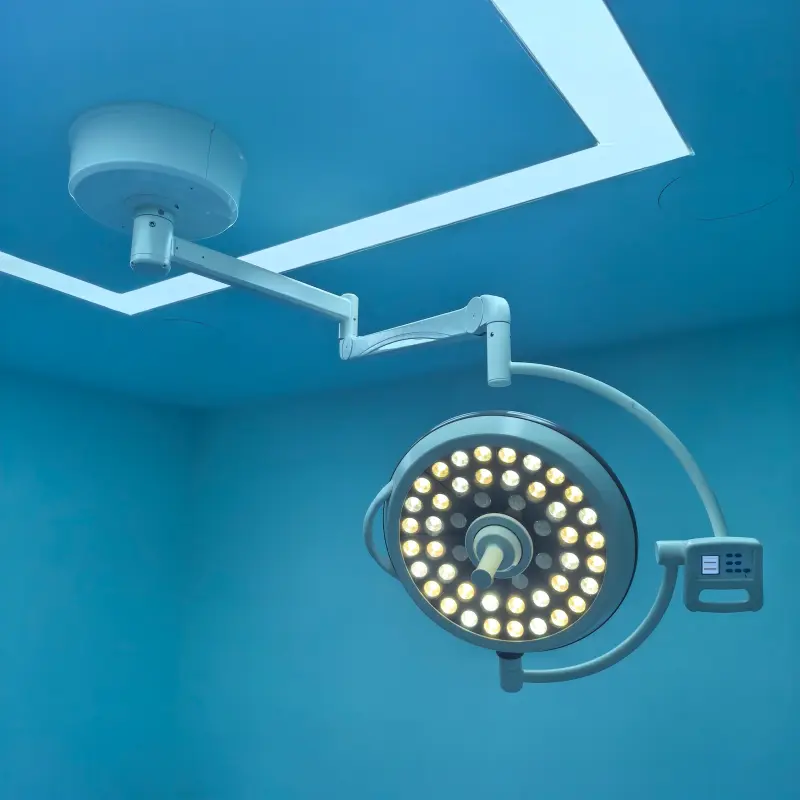
Where Can You Find Direct Surgical Light Manufacturers?
There are several ways to find suppliers. Each option needs careful checking before you make a decision.
Manufacturer websites are a useful starting point. Search for terms such as LED Surgical Lights, Ceiling-Mounted Surgical Lights, or Mobile Surgical Lights. A reliable website should show product photos, model details, technical specifications, and company information. Look for a factory address and clear contact details as well.
Medical equipment trade shows give buyers a chance to inspect products in person. You can test the movement of the light head, review the control panel, and ask questions about production and service. If a supplier claims to manufacture the product, ask whether you can visit the factory or arrange a live factory video call.
B2B sourcing platforms can help you compare several suppliers quickly. Use them to build a shortlist, not as proof of manufacturing ability. Some listings belong to trading companies, so ask who makes the exact model and whose name appears on the product documents.
You can also request referrals from local medical equipment distributors or hospital project contractors. Their experience may help you understand delivery, installation, and service quality in your target market.
How to Check If a Supplier Is a Real Manufacturer
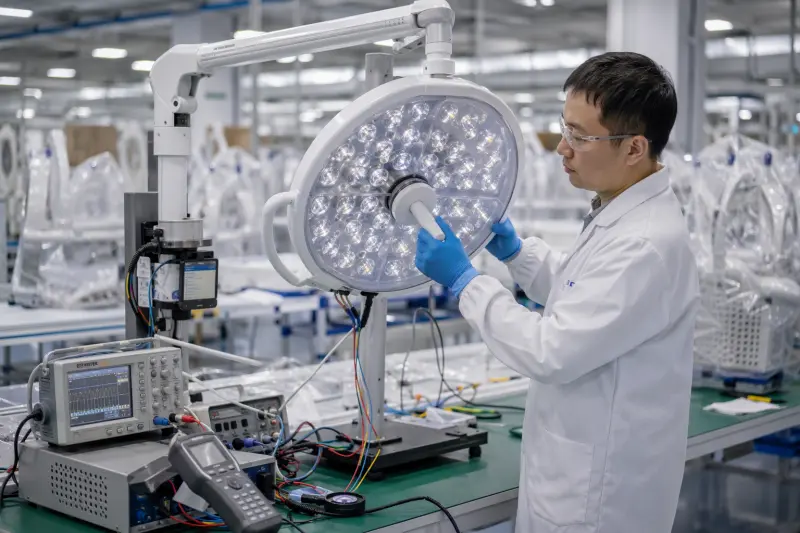
Before comparing quotations, confirm who will produce the surgical light. Ask for the factory address, production photos, assembly videos, and a live video tour. If possible, arrange a third-party factory inspection.
Review the product catalog carefully. Does the company offer different configurations, such as single-head, double-head, ceiling-mounted, and mobile surgical lights? Can its team explain the differences between the models? Clear answers are a useful sign of product knowledge.
Ask how the factory checks its products before shipment. A suitable quality process may include inspection of the light head, control functions, arm movement, electrical safety, and packaging. Request records that match the model you plan to buy.
Also check the company’s experience with export orders. Ask whether it has supplied your country or similar markets, and whether it understands your local import and registration requirements.
A trading company is not always a poor choice. It may offer useful local service or a wider product range. The key is to understand its role and compare the total value, rather than assuming every direct factory purchase is automatically better.
Compare Surgical Light Specifications Before Buying
A good surgical light should provide suitable brightness, clear tissue color, stable positioning, and easy control. The correct specifications depend on the procedures and operating room design.
Illuminance is measured in lux. Different models offer different output ranges, so compare the actual figures listed for each model. Ask whether brightness can be adjusted and request test data for the product under consideration.
Color rendering is another important point. It describes how naturally the light shows colors. A higher color rendering index can help medical staff see tissue colors more clearly. Check the manufacturer’s stated CRI and ask for supporting technical data instead of relying on marketing terms such as “natural light.”
Also review color temperature, light field size, illumination depth, shadow control, and heat performance. These details affect how the light works in daily use. The supplier should explain the specifications in plain language and provide the official data sheet.
LED life is worth checking too. A long rated service life can reduce the need for frequent light-source replacement, but it does not mean every component will last for the same period. Ask about maintenance needs and the availability of replacement parts.
For more product information, add a link to Shadowless Surgical Lights or Adjustable Color Temperature Surgical Lights.
Choose the Right Mounting Type
The mounting type should match the room layout, ceiling structure, and daily workflow.
Ceiling-mounted surgical lights are common in operating rooms with suitable ceiling support. They can keep floor space clear and allow staff to move equipment around the operating table. Before ordering, confirm ceiling height, mounting dimensions, load requirements, and the installation plan.
Mobile surgical lights use a wheeled base. They can be moved between suitable rooms and may suit clinics or facilities that need flexible lighting. Check the stability of the base, wheel brakes, battery options if available, and the time required for charging.
Wall-mounted models may suit rooms with limited ceiling options or specific lighting needs. Buyers should confirm the required wall support and the working range before placing an order.
Single-head and double-head models also serve different needs. A double-head system can provide light from two directions, but it requires enough space and suitable mounting support. Ask the supplier to recommend a configuration based on your room plan, not only on the product price.
Check Certifications and Product Documents
Certification requirements depend on the destination country and the exact product. Do not assume that one certificate covers every model or every market.
Ask the supplier which regulatory documents apply to the surgical light you plan to import. Depending on the market and product, these may include CE-related documents, an applicable declaration of conformity, quality management records, and electrical safety or electromagnetic compatibility test reports.
ISO 13485 relates to quality management systems for medical devices. It is useful to review, but it should not be treated as proof that every product meets every local requirement.
For European orders, confirm the applicable medical device rules and documentation. For the United States, ask which FDA requirements apply to the product and its intended use. Registration, listing, clearance, and approval are different concepts, so ask the supplier to explain its exact status. Verify key records with the relevant issuing body or regulator where possible.
The model name, manufacturer, certificate details, and product documents should match. If the supplier cannot explain a mismatch, pause the order until the issue is resolved.
Compare Suppliers, Prices, and Warranty Terms
Do not compare suppliers by price alone. Make sure each quotation covers the same configuration and service level.
For a fair comparison, request the product model, mounting type, number of light heads, main specifications, included accessories, packaging, lead time, warranty, and spare-part policy. If you need a camera or other optional equipment, ask for separate prices.
Ask each supplier to quote different order quantities. A sample, a small trial order, and a larger project order may have different unit prices and production schedules. Confirm the minimum order quantity and whether custom branding is available.
Warranty terms need special attention. Ask how long the warranty lasts, which components it covers, and whether labor, freight, or on-site service are included. Get the agreed terms in writing. Do not rely only on a statement on a website or in a sales message.
Grace Medy supplies surgical lights for medical equipment buyers and can be contacted to discuss available models and project requirements. Buyers should request the current specification sheet, applicable documents, written warranty terms, and a quotation for the exact configuration they need.
Understand Production, Shipping, and After-Sales Support
Before paying a deposit, ask for a clear order schedule. It should cover specification confirmation, production, quality inspection, packaging, and shipment. The lead time may change with order size, customization, and component availability, so confirm the schedule in writing.
Clarify the delivery terms as well. EXW, FOB, CIF, and DDP assign different responsibilities and costs to the buyer and seller. Make sure the quotation states which charges are included and which remain your responsibility.
For ceiling-mounted models, discuss installation early. Ask whether the supplier provides installation drawings, mounting information, and remote technical support. Confirm who will handle local installation and final checks.
After-sales support matters throughout the product’s service life. Ask how to report a fault, how the technical team responds, and how spare parts are ordered. For overseas buyers, clear communication and a practical parts supply plan can be just as important as the initial price.
A Simple Checklist Before You Place an Order
Before confirming your purchase, make sure you have checked the supplier’s identity, the exact model, the technical specifications, and the documents required for your market. Confirm the price breakdown, minimum order quantity, lead time, shipping terms, warranty, and spare-part availability.
For a large hospital project, consider starting with a sample or a small trial order if practical. Review the product and paperwork before moving to a larger purchase. For ceiling-mounted systems, confirm the room measurements and installation requirements before production begins.
The best supplier is not always the one with the lowest quotation. Look for a company that can explain its products clearly, provide matching documents, follow an agreed schedule, and support you after delivery.
Conclusion
Buying high-quality surgical operating room lights directly from a manufacturer can improve price transparency and give buyers more direct communication with the production team. The best results come from careful supplier checks, clear specifications, and written agreements.
Start by comparing suitable Surgical Light Manufacturers. Then request a model-specific quotation, verify the required documents, and confirm warranty and delivery terms before paying a deposit.
A careful process helps hospitals, distributors, and project buyers choose surgical lighting that fits their needs and supports reliable long-term use.