
Manual for Operating Room Table Parts and Functions
An operating room table is an important part of every surgical room. It supports the patient and helps the medical team find the right position for each procedure. A modern table can adjust its height, tilt, back section, and leg section. Some models also move the tabletop forward and backward to support medical imaging. Understanding the main operating room table parts helps hospital staff use the equipment correctly and helps buyers compare different models. This manual explains the main parts, common functions, control systems, and accessories of a surgical table. It also covers basic checks that should take place before use. The exact design and available functions depend on the model, so staff should always follow the manufacturer’s instructions and the hospital’s safety procedures.
Main Parts of an Operating Room Table
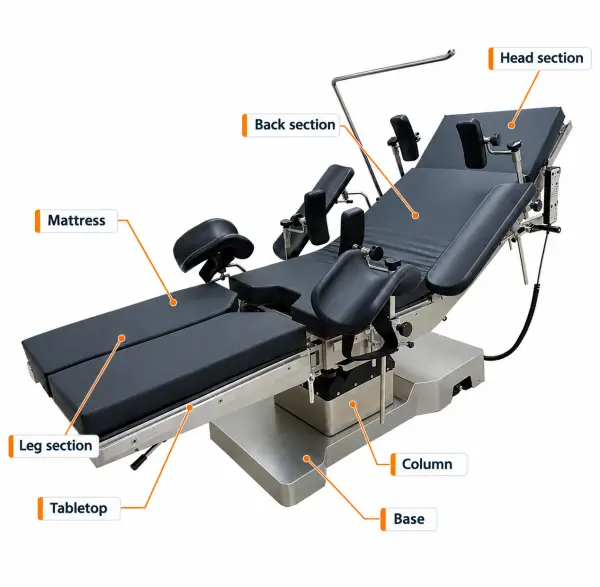
Most operating tables have a tabletop, a supporting column, a base, a mattress, and a control system. Each part has a clear purpose. Together, they help the table support the patient and provide stable positioning during surgery.
The tabletop is the surface where the patient lies. It is often divided into several sections, including the head section, back section, seat section, and leg section. These sections can be adjusted to support different patient positions. Some tables use materials that allow X-ray images to pass through selected areas. This feature is useful for procedures that require a C-arm or other imaging equipment. Buyers looking for a radiolucent operating table should check the imaging area, tabletop material, and available movement before choosing a model.
The column connects the tabletop to the base. It supports the patient’s weight and controls important movements, such as raising and lowering the table. The base provides a stable foundation and may include wheels for movement around the operating room. Brakes or locking systems help keep the table in place during use. The mattress provides support and helps protect the patient’s skin from pressure. It should fit the tabletop correctly, stay in position during adjustments, and allow proper cleaning.
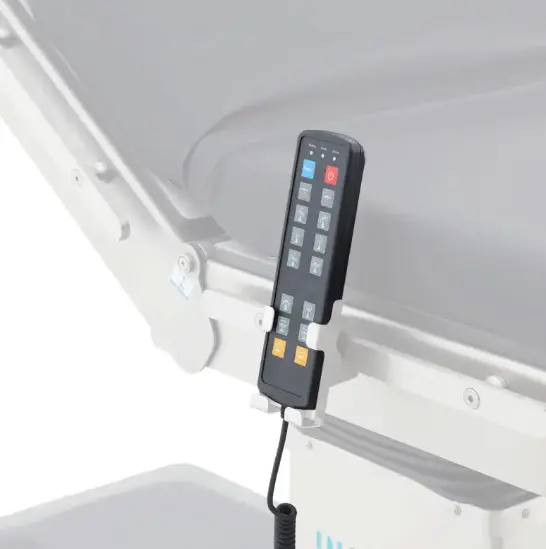
The control system allows staff to adjust the table. Depending on the model, it may include a hand controller, foot control, or buttons on the table itself. Some models use electric motors, while others use hydraulic systems. Each design has its own operating method. Before using a new surgical operating table, staff should learn the location of the controls, understand the movement limits, and know how to stop movement safely.
Main Operating Table Functions and Their Uses
Operating tables provide several adjustment functions to help the surgical team reach the treatment area. The most common function is height adjustment. Raising or lowering the table helps the team work at a suitable level and supports patient transfer. The table should be placed at the correct height before the patient is moved onto it, following the hospital’s transfer procedure.
The back section can rise or lower to support the upper body. This function helps create different positions for specific procedures. The leg sections may also move independently or together, depending on the design. Removable or split leg sections can provide better access during certain procedures. Always confirm that each section is locked correctly before placing weight on it.
Tilt functions allow the entire tabletop to angle in different directions. Trendelenburg tilts the patient’s head lower than the feet, while reverse Trendelenburg raises the head above the feet. These positions may be used for different surgical approaches, depending on the procedure and the patient’s condition. Lateral tilt angles the table to the left or right. It can help the team reach areas that are difficult to access with a level tabletop.
Some electric operating tables also provide a flex or reflex function. This changes the angle between sections of the tabletop and can help position the patient’s body for selected procedures. Longitudinal translation moves the tabletop along its length. This can help position the patient for imaging without moving the entire table base.
Not every operating table includes all these functions. Buyers should compare the required movements, adjustment range, safe working load, and imaging needs of their intended departments. A table for general surgery may have different requirements from one used for orthopedic procedures or advanced imaging.
Control Systems and Safety Features
The operating table control system should be easy for trained staff to understand. A hand controller is commonly used to raise or lower the table and adjust its position. Some models also provide a foot control, which allows staff to operate selected functions without using their hands. The available controls vary by product, so users should check the control labels and operating instructions before starting.
Electric tables need a suitable power supply and may include a backup battery. The battery can support selected functions during a power interruption, depending on the model. Staff should know how to check the battery status and what movements remain available if the main power supply fails. Hydraulic models work differently and may use manual controls or a hydraulic pump to adjust the table.
Safety features can include brakes, movement limits, overload protection, and an emergency stop. These features help reduce the risk of unwanted movement, but they do not replace correct operation. Before moving the tabletop, staff should confirm that the patient is secure and that tubes, cables, instruments, and nearby equipment will not become trapped.
A basic check should take place before every procedure. Confirm that the table is clean, the mattress is secure, the base is locked, and the required movements work correctly. Check the controller and power connections for visible damage. Listen for unusual noise and watch for uneven movement. If a function does not work as expected, stop using the table and report the problem according to hospital procedure. Do not try to repair electrical or hydraulic parts without proper training and authorization.
Operating Table Accessories and Correct Installation
Accessories help adapt an operating table to different procedures. Common options include armboards, head supports, leg holders, stirrups, shoulder supports, anesthesia screens, and traction attachments. The required accessories depend on the type of surgery and the patient position. Some are supplied with the table, while others must be ordered separately.
Side rails and clamps connect many accessories to the table. Their dimensions and locking designs can differ between models. A clamp that fits one table may not fit another securely. Buyers should confirm compatibility with the exact table model instead of relying only on a general claim that an accessory is universal. The accessory’s load rating and the manufacturer’s instructions are also important.
Before installation, inspect the rail, clamp, pins, and locking handle. Clean the contact areas according to the approved cleaning procedure. Fit the accessory in the correct direction and engage the lock fully. Apply a firm manual check to confirm that it does not slide or rotate. If it moves, remove it and check the fitting rather than trying to hold it in place by hand.
Patient positioning also requires care. Staff should use suitable padding and supports to reduce pressure on the skin and nerves. Safety straps should be used as directed, without placing unnecessary pressure on the chest or restricting breathing. The team should check the patient’s position, pressure points, lines, and accessory locks after every major adjustment. For more guidance on accessory compatibility, review the recommendations for operating room table clamps and confirm the correct fittings with the equipment supplier.
How to Choose and Maintain the Right Operating Table
Hospitals and medical equipment distributors should select an operating table according to its intended use. Start by identifying the departments that will use it, the procedures performed, and the required patient positions. Then compare the safe working load, available adjustments, tabletop dimensions, imaging compatibility, accessories, and control options. These details are more useful than comparing purchase prices alone.
An electric five-function carbon fiber operating table may suit facilities that need powered positioning and imaging support. Other hospitals may prefer a different configuration based on their budget, workflow, and maintenance resources. Ask suppliers to confirm the exact functions and specifications of the proposed model. Also review the warranty, spare parts availability, service support, and applicable product documentation.
Grace Medy is an operating table manufacturer serving hospitals and medical equipment distributors. Its product range includes electric operating tables designed for different surgical needs. Buyers can discuss the required functions, accessories, and market requirements before requesting a quotation. Product specifications should be confirmed for the exact model selected.
Routine maintenance helps keep the table in good working condition. Follow the manufacturer’s recommended schedule for inspection, cleaning, battery checks, and servicing. Check the brakes, tabletop sections, locks, mattress, controls, and power cables. Keep a record of inspections and repairs so the equipment team can track recurring problems. If the table shows unusual movement, damage, or a control fault, remove it from service until an authorized person confirms that it is safe to use.
Conclusion
Understanding operating room table parts and functions helps medical staff use the equipment correctly and helps buyers select a suitable model. The tabletop supports the patient, the column and base provide stability, the control system adjusts the position, and accessories help the team prepare for different procedures.
Before each operation, staff should check the table, confirm that the required functions work, secure the accessories, and make sure the patient is properly supported. Regular maintenance and correct training are also essential for reliable use. By comparing specifications, safety features, and after-sales support, hospitals can choose an operating table that meets their needs and supports daily operating room work.