
Standard Operating Room Table Dimensions Overview
Choosing the right operating room table starts with understanding its dimensions. Table length, width, height, and weight capacity all affect how the surgical team works. The table must also fit the room, allow enough space for medical equipment, and support the positions needed for different procedures.
However, there is no single size that fits every operating room. A general surgery department may need a standard table, while orthopedic or spine surgery may require a longer tabletop and better access for imaging equipment. Hospitals must also consider patient comfort, accessories, and room layout before placing an order.
This guide explains standard operating room table dimensions, common size ranges, and the key points buyers should check before purchasing a surgical table.
What Are Standard Operating Room Table Dimensions?
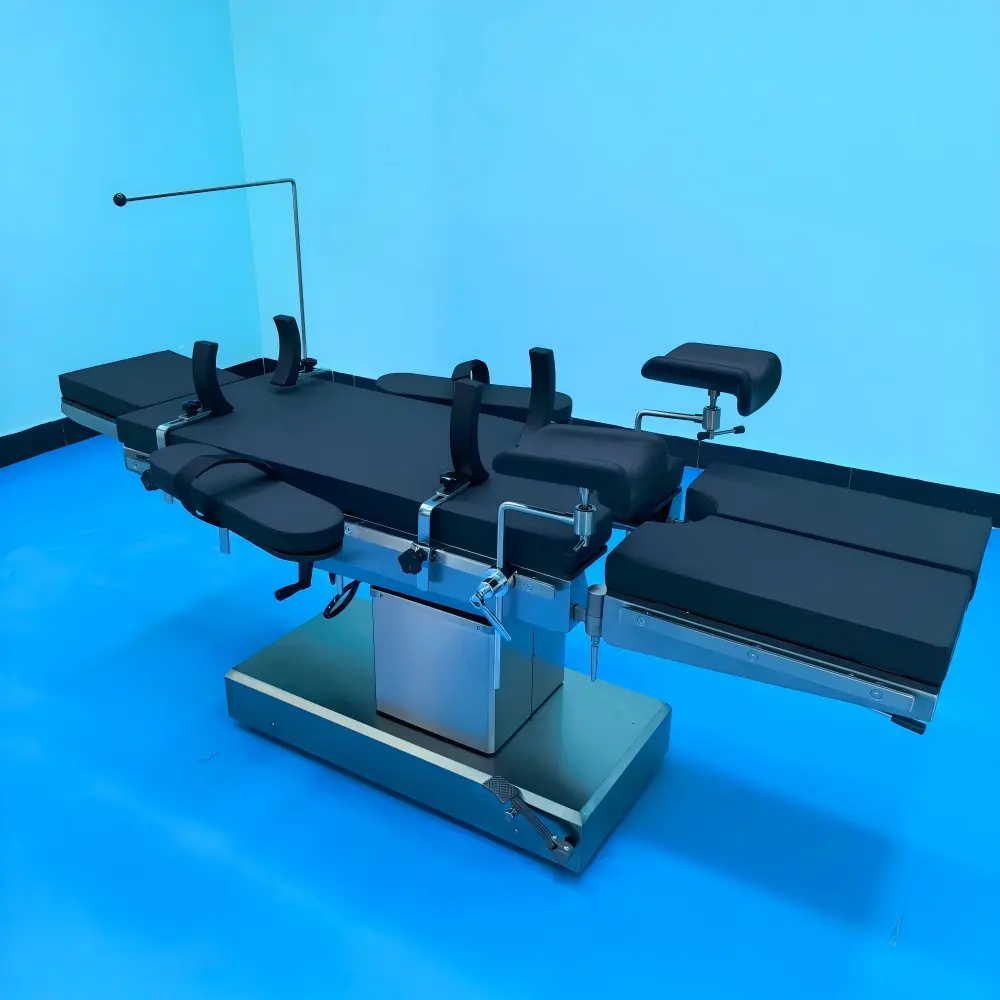
Most general-purpose surgical tables have a tabletop around 190–210 cm long and 50–60 cm wide. Some specialty models are longer or wider. The full size also changes after side rails, width extensions, and other accessories are added.
The table height is another important measurement. Many models offer an adjustable range of roughly 55–115 cm, although the exact range depends on the design. A lower position can help with patient transfers and procedures that require close access. A higher position can support the working needs of standing surgical teams.
These figures are useful starting points, not fixed industry rules. Always check the dimensions of the exact model in the manufacturer’s technical sheet.
|
Main measurement |
Common range |
Why it matters |
|---|---|---|
|
Tabletop length |
190–210 cm for many general-purpose models |
Supports the patient and allows the required positioning |
|
Tabletop width |
50–60 cm |
Affects patient support and access for staff and equipment |
|
Adjustable height |
About 55–115 cm |
Helps staff set a suitable working height |
|
Longitudinal slide |
Model-dependent; some offer around 45 cm total travel |
Helps position the patient for imaging procedures |
|
Weight capacity |
Depends on the table and its position |
Determines the approved load during use |
Tabletop Length and Width: What Should Buyers Choose?
Tabletop length affects how well the table supports patients of different sizes and how much room is available for positioning accessories. A length of around 200–210 cm may suit many general surgery needs. Longer tables or extension systems can be useful for orthopedic procedures, spine surgery, and cases that require special supports.
Width matters just as much. A narrower tabletop can leave more space around the patient for staff and imaging equipment. A wider tabletop may provide additional support for larger patients. The right choice depends on the procedures performed and the table’s approved configuration.
Remember that the tabletop width is not always the same as the overall width. Side rails and attachments may extend beyond the table surface. This can affect room access, staff movement, and the space available for a C-arm.
Buyers comparing Surgical Operating Tables should request both the tabletop measurements and the full outside dimensions. Ask for measurements with side rails fitted and with any planned width extensions attached.
Adjustable Height and Working Space
An adjustable operating table allows the team to set a suitable height for each procedure. A low position may help with patient transfers and procedures that require close access. A higher position may suit operations where the surgical team needs more working space.
The table’s height range should fit both the room and the needs of the staff. Check the minimum and maximum height in the product specification. Confirm whether the measurement includes the mattress, as this can change the final working height.
Also consider the table base. A large base may affect foot space and the position of nearby equipment. A low table does not automatically offer better access if the base blocks the surgeon or other staff.
If your hospital needs frequent height changes, compare the adjustment controls and movement range of different Electric Surgical Tables. For rooms that need a simple system, a hydraulic model may also be suitable. The best option depends on the required functions, budget, and maintenance plan.
Weight Capacity: Check More Than One Number
Weight capacity is one of the most important operating table specifications. Buyers should not rely on a single headline figure without checking how the table was tested.
Some tables have different approved load limits for different positions. The permitted load may change if the tabletop is tilted, fully adjusted, or moved along its length. The limit can also depend on the accessories fitted to the table.
For this reason, ask the manufacturer to confirm the approved patient weight for the exact model and intended position. Check whether the stated capacity includes the effects of extensions and positioning accessories. Do not assume a table’s maximum static load is safe for every movement.
Hospitals treating larger patients should consider dedicated Bariatric Surgical Tables. These models may offer a reinforced frame, a wider support surface, and a higher approved load rating. The team should also check stability, patient transfer needs, and the safe use of accessories.
The final choice should follow the manufacturer’s instructions and the hospital’s clinical requirements, rather than a general weight estimate.
Dimensions for General Surgery and Specialty Procedures
A standard operating table can support many common procedures, but some departments need additional features.
General surgery: A tabletop around 200–210 cm long and 50–60 cm wide may suit many routine procedures. Adjustable height and back sections help staff position patients for different operations. Buyers should confirm that the table supports the required tilt and patient positions.
Orthopedic surgery: Hip, knee, and trauma procedures may require traction equipment, leg supports, or other attachments. A longer platform or a compatible extension can provide the space needed. Check the approved load limits with the traction equipment installed.
Spine and imaging procedures: These cases may require a tabletop that allows imaging equipment to move around the patient. A radiolucent section helps X-ray images pass through the table with less obstruction. The usable imaging area and longitudinal slide range are especially important.
Gynecology and urology: These procedures may require adjustable leg supports and suitable access to the lower body. Check whether the table can support the required position and whether the accessories are included or sold separately.
For specialized requirements, buyers can compare Orthopedic Operating Tables and C-Arm Compatible Surgical Tables. Always confirm that the table, accessories, and imaging equipment work together as planned.
Longitudinal Slide and Imaging Clearance
Some operating tables allow the tabletop to move lengthwise. This feature is often called a longitudinal slide. It can help staff position the patient for imaging without moving the entire table.
The total slide distance varies by model. A table with around 45 cm of total travel may be suitable for certain imaging tasks, but the required range depends on the procedure and equipment. Ask for the movement distance in each direction instead of relying only on the total figure.
A long slide range is not the only factor to consider. The usable imaging area, table material, base design, and approved load during movement also matter. Check whether the table can maintain the positions your team needs at the end of its slide range.
Before ordering, measure the planned space for the C-arm and other equipment. Confirm that the equipment can move around the table without hitting the base, column, accessories, or nearby furniture.
Operating Room Space and Table Clearance
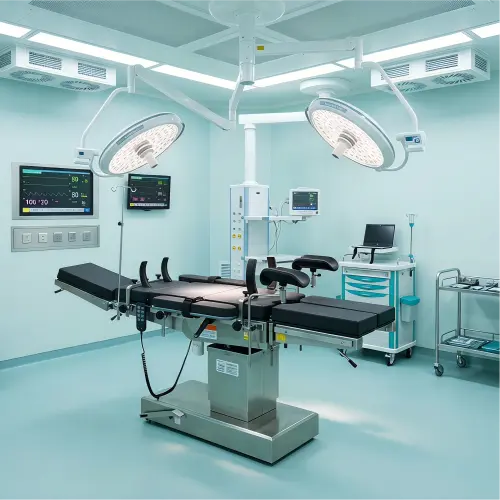
A table can fit inside a room and still leave too little working space. The room plan should include the table’s full outside dimensions, accessories, and the movement of nearby equipment.
Measure doorways and transport routes before delivery. Consider corridors, corners, elevators, and the space needed to move the table into the operating room. If the table uses removable extensions, confirm its dimensions in both transport and working configurations.
The head end also needs enough space for anesthesia equipment and staff. Side rails, arm supports, leg holders, and other attachments can increase the table’s overall width. A C-arm needs enough room to move around the patient, so check its full movement path rather than only its parked position.
Hospitals planning a new operating room should request a layout drawing from the equipment supplier. The drawing should show the table, its base, the planned accessories, and the main equipment around it. A physical layout check before installation can help prevent avoidable space problems.
How to Compare Operating Table Specifications
Product catalogs can make different tables look similar, but their dimensions and approved functions may differ. Compare each model using the same set of measurements.
Ask each supplier for the tabletop length and width, overall width with side rails, minimum and maximum height, weight capacity, and available slide range. If the table is intended for imaging, request details about the radiolucent area and compatibility with the planned equipment.
You should also confirm which accessories are included in the price. Leg supports, arm boards, extension sections, and other items may be optional. Their dimensions can affect the available space around the patient.
Grace Medy is a surgical table supplier that buyers can contact to discuss available models, product dimensions, and project requirements. Ask for the technical sheet of the exact model, together with its approved load ratings, available accessories, and warranty terms.
For a wider product comparison, explore Surgical Table Manufacturer and Surgical Table Accessories. Use the same checklist for every supplier so you can compare the products fairly.
Final Checklist Before Purchasing
Before confirming an order, compare the table’s size with your operating room plan. Check the tabletop length and width, adjustable height, load rating, slide range, and required patient positions. Include side rails and accessories in the measurements.
Confirm that the table suits the procedures your department performs. For imaging work, check the usable imaging area and C-arm clearance. For specialized procedures, verify that the required supports and extensions are compatible with the selected model.
Finally, request a complete quotation, technical sheet, warranty details, delivery schedule, and information about spare parts. If possible, arrange a product demonstration before placing a large order.
Conclusion
Standard operating room table dimensions provide a useful starting point, but the right table depends on the procedure, patient needs, and available room space. Tabletop length, width, height, weight capacity, and imaging clearance all deserve careful review.
Compare the full working configuration rather than the bare table alone. Confirm the manufacturer’s specifications, check accessory compatibility, and plan the room layout before ordering. These steps can help hospitals choose an operating room table that fits their daily work and supports safe, practical use over time.