
Why Surgical Operating Room Lights With LED Are Better Than Halogen
Modern operating rooms need bright, clear, and reliable lighting. Surgeons must see small details, recognize tissue colors, and work without constant changes to the light position. Traditional halogen lights have served hospitals for many years. However, LED surgical lights now offer several practical advantages, including lower heat output, longer service life, better energy efficiency, and more flexible lighting control.
For hospital buyers, the choice is not only about brightness. It is also about maintenance, operating costs, staff comfort, and the needs of different surgical departments. Understanding the differences between LED and halogen technology helps hospitals choose the right surgical operating room lights for long-term use.
LED vs. Halogen Surgical Lights: What Is the Difference?
Halogen surgical lights use a heated filament to produce light. They can provide strong illumination, but much of the energy they use becomes heat. The bulbs also have a limited service life, so hospitals need to plan for regular replacement.
LED surgical lights use light-emitting diodes instead of heated filaments. They can produce bright light with less energy and lower unwanted radiant heat. Many models also offer adjustable brightness and color temperature. These features help the surgical team adapt the light to different procedures and working conditions.
The table below shows the main differences buyers should consider. Actual performance depends on the product design, model, and test conditions, so hospitals should compare verified specifications rather than relying on general claims.
|
Feature |
LED Surgical Lights |
Halogen Surgical Lights |
|---|---|---|
|
Energy use |
Usually lower for similar lighting output |
Usually higher |
|
Heat at the surgical field |
Generally lower radiant heat |
Generally higher radiant heat |
|
Light source life |
Often 30,000–60,000 rated hours, depending on the model |
Commonly around 1,000–2,000 hours per bulb |
|
Color temperature |
Often adjustable |
Usually less flexible |
|
Shadow control |
Multiple light sources can reduce shadows |
Performance depends on reflector and lighthead design |
|
Maintenance |
Fewer routine light-source replacements |
More frequent bulb replacement |
|
Initial purchase price |
Often higher |
Often lower |
For hospitals planning a new operating room or replacing older equipment, LED is usually the more practical long-term choice. Halogen may still appeal to facilities with a limited initial budget and existing equipment that remains in good working condition. However, the purchase price should not be the only factor in the decision.
Lower Heat Output Helps Create a More Comfortable Surgical Environment
Heat is one of the most important differences between LED and halogen surgical lighting. Halogen bulbs operate at high temperatures and produce infrared radiation. Some of this energy reaches the surgical field, adding unwanted heat to an area that already requires careful temperature control.
LED light sources generally produce less infrared radiation toward the illuminated area. They still generate heat inside the lighthead, so a well-designed cooling system remains important. The result is not a heat-free operating room, but a lighting system that can reduce the radiant heat reaching the patient and surgical team.
This difference can matter during long procedures. Surgeons and nurses often work directly beneath overhead lights for extended periods. Lower radiant heat can improve comfort and reduce one source of unwanted warming around the surgical field. It can also help the hospital manage the room’s cooling demand, although actual savings depend on the whole HVAC system and the lighting installation.
Hospitals should look beyond a product description that simply says “low heat.” Ask suppliers for measured irradiance data, the test distance, and the applicable safety information. These details provide a better basis for comparing different models.
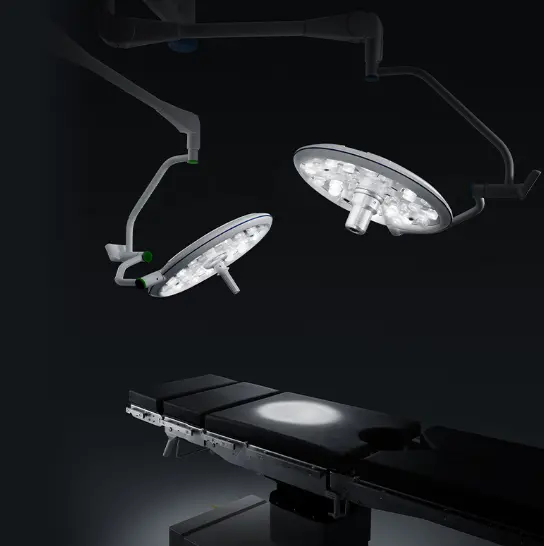
When reviewing LED surgical lights, buyers should compare both light output and heat performance. High brightness is useful, but it should not come at the cost of excessive heat or poor control. A balanced design supports the needs of the surgical team and the operating environment.
Better Color Control and Clearer Views of the Surgical Field
Good surgical lighting must do more than make the area bright. It should help surgeons see differences in tissue color and detail. Blood, muscle, fat, and other tissues can have similar shades, so the quality of the light matters during many procedures.
Halogen lights can provide useful color quality, but their color appearance may become warmer as the bulb is dimmed. This can change how the surgical field looks. LED systems can offer more stable color output and adjustable color temperature, depending on their design. Some models allow the team to select a setting that suits the procedure and personal preference.
Color temperature is measured in kelvin (K). It describes whether the light appears warmer or cooler; it does not directly measure brightness. A lower value tends to look warmer, while a higher value tends to look cooler. The right setting depends on the light’s design and the clinical application.
Color rendering is another factor to review. The color rendering index (CRI) indicates how accurately a light source shows colors compared with a reference source. A higher CRI can be useful, but it should not be the only measure of quality. Buyers should also review the manufacturer’s color data, including deep-red color performance where available, and check the results under the conditions specified for the product.
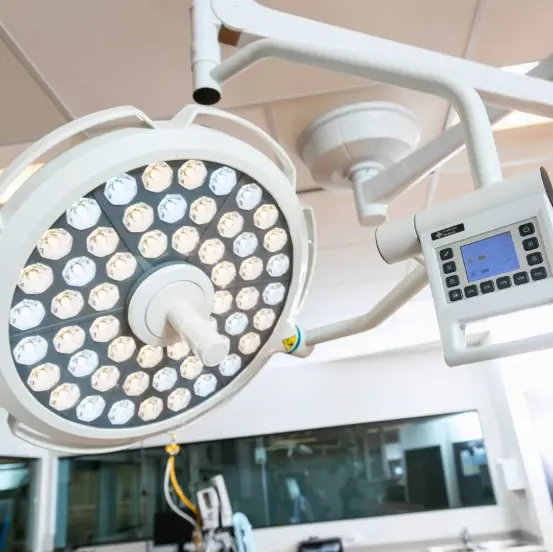
Modern operating room lights may also offer adjustable brightness, different color settings, and several light-field options. These controls give the surgical team more flexibility across different procedures. Hospitals comparing medical surgical lights should check whether the available controls are easy to use, whether the light remains stable at lower brightness, and whether the settings meet the needs of the department.
Better Shadow Control and More Reliable Daily Operation
A surgeon’s head, hands, and instruments can block light from reaching part of the surgical field. This creates shadows that make it harder to see the target area. Good surgical lighting is designed to reduce these shadows and maintain useful illumination as the team changes position.
Many LED surgical lights use multiple light sources arranged around the lighthead. Their beams overlap at the target area. If one beam is blocked, light from other directions can still reach the field. This arrangement can reduce shadows caused by hands and instruments.
However, LED technology alone does not guarantee shadowless performance. The number and position of the light sources, the shape of the lighthead, the optical design, and the working distance all affect the result. Buyers should ask for measured shadow-dilution performance and compare products under similar test conditions. It is also useful to check how well the light works in deep cavities and during situations where more than one person blocks the beam.
A practical demonstration is often more useful than a long list of marketing claims. Ask the supplier to show the light at different positions and brightness levels. Check whether the lighthead is easy to move, stays in place after adjustment, and allows the team to direct light without unnecessary effort.
LED lights also offer a clear maintenance advantage. A halogen bulb may need replacement after a relatively short period of use. Frequent changes require spare bulbs, technician time, and checks to confirm that the light works correctly after servicing. A failed bulb can also interrupt normal room preparation or require an alternative light source.
LED modules are designed to operate for much longer periods. Many products have rated light-source lives of tens of thousands of hours, although this does not mean every part of the fixture will last equally long. Drivers, control panels, suspension arms, and other components may still need inspection or repair.
For procurement teams, a longer light-source life can reduce routine replacements and make maintenance easier to plan. Before buying, confirm the warranty, availability of spare parts, service response time, and whether individual components can be replaced. These details are important for hospitals, distributors, and medical equipment projects that need dependable after-sales support.
How to Choose the Right LED Surgical Lights for Your Hospital
LED surgical lights often have a higher purchase price than halogen models. The best way to compare them is to consider the total cost over the expected service period. Include the initial price, electricity use, replacement bulbs or modules, maintenance labor, warranty coverage, and the cost of any installation work.
The savings will vary between hospitals. A busy operating room that uses its lights for many hours each day may benefit more from lower energy use and fewer light-source replacements than a facility with occasional use. Buyers should use their own operating hours and local electricity prices to estimate potential savings rather than relying on a universal payback claim.
Before selecting a supplier, review the illuminance level, light-field diameter, color rendering, adjustable color temperature, shadow control, heat and irradiance data, and relevant regulatory documentation. Confirm that the product meets the requirements of the intended market and the hospital’s own purchasing standards. Also check the ceiling mounting requirements, room layout, lighthead movement, sterile handle design, and cleaning instructions.
Hospitals should consider the complete operating-room setup, too. The surgical light must work well with the operating table, ceiling height, medical equipment, and the movements of the clinical team. A good purchasing decision balances light quality, ease of use, service support, and long-term value.
For hospitals and distributors sourcing surgical lighting, Grace Medy supplies surgical lights and hospital equipment for different healthcare settings. Buyers can discuss the intended application, required configuration, and market requirements with the supplier before requesting a quotation. Product specifications and available options should be confirmed for each model.
Conclusion
LED surgical operating room lights offer clear advantages over traditional halogen lights. They generally use less energy, produce less unwanted radiant heat, provide longer light-source life, and offer more options for brightness and color control. Multi-source designs can also help reduce shadows around the surgical field.
Halogen lights may still suit some existing installations or projects with strict upfront budgets. However, hospitals planning a new operating room or upgrading older equipment should compare the full cost of ownership and the verified performance of each system.
The right choice depends on the procedures performed, the hours of daily use, the room design, and the level of service support available. By checking specifications, testing the light in realistic conditions, and comparing maintenance needs, hospital buyers can select a surgical lighting system that supports clear visibility and dependable daily operation.
For more information, explore LED surgical lights and heat performance and review the specifications of each model before making a final purchasing decision.