
Buying Adjustable Color Temperature Surgical Lights For Surgeons
Clear lighting is essential in every operating room. Surgeons need to see tissue colors, blood vessels, and small details during an operation. Poor lighting can make these details harder to recognize. The right surgical light helps provide a clear view of the surgical area.
Adjustable color temperature surgical lights offer an extra level of control. They allow the surgical team to change the light from a warmer white to a cooler white. This helps staff choose a setting that suits the procedure and their viewing needs.
However, color temperature is only one part of a good surgical lighting system. Buyers should also compare brightness, color accuracy, shadow reduction, heat control, and light positioning.
This guide explains the main features to consider before buying adjustable color temperature surgical lights. It is designed for hospital purchasing teams, medical equipment distributors, and healthcare project managers.
What Is Adjustable Color Temperature?
Color temperature describes the appearance of white light. It is measured in Kelvin (K). A lower value usually gives the light a warmer, more yellow appearance. A higher value creates a cooler, more blue-white appearance.
For example, a surgical light with a range of 3,000K to 6,700K gives users a wide choice of settings. They can adjust the light to suit the working environment and the type of tissue they need to see.
A warmer setting may provide a softer visual appearance. A neutral setting offers a balanced white light. A cooler setting can create a different contrast between tissue colors.
There is no single setting that works best for every operation. The right choice depends on the procedure, the surgeon’s preference, and the light’s color accuracy. Adjustable color temperature gives the team more flexibility than a light with only one fixed setting.
Why Color Temperature Matters During Surgery
Different tissues have different colors. Surgeons may need to distinguish blood vessels, muscle, fat, and skin during the same procedure. A suitable light setting helps them view these details clearly.
A warmer setting can give the surgical field a softer appearance. A neutral white setting may provide a balanced view of different tissue types. A cooler setting can change the contrast between yellowish fat and red muscle.
However, changing color temperature does not automatically improve every detail. The light must also reproduce colors accurately. A poor-quality light may make tissue look different from its natural appearance, even if its color temperature can be adjusted.
This is why buyers should assess color temperature together with the Color Rendering Index (CRI). They should also ask for product data and, where possible, arrange a live demonstration.
For hospitals with several surgical departments, adjustable color temperature can be especially useful. One lighting system may support different viewing preferences across general surgery, orthopedics, gynecology, and other procedures.
Choose the Right Color Temperature Range
Not every hospital needs the widest possible color temperature range. Buyers should first consider the procedures performed in the operating room.
A range of around 3,500K to 5,000K can suit many general surgical applications. It offers warm and neutral settings without requiring staff to manage an extremely wide range.
A wider range, such as 3,000K to 6,700K, provides more adjustment options. It may suit hospitals with several surgical specialties or teams that prefer different lighting settings.
The important point is to compare the complete product specification. A wide range alone does not guarantee good lighting. The system should also offer suitable brightness, strong color accuracy, and stable output across its adjustment range.
Ask suppliers to demonstrate several settings using a tissue model or another suitable test object. Check whether red, yellow, and pale colors remain clear as the setting changes. The light should also maintain consistent performance without unwanted color differences across the illuminated area.
Check Color Accuracy Before Buying
Color accuracy is one of the most important features of shadowless surgical light. Surgeons need to see tissue colors clearly, so the light should reproduce colors as naturally as possible.
The Color Rendering Index, or CRI, is a common measure of color rendering. A higher CRI generally indicates better color reproduction. Many surgical light buyers look for models with a CRI of 90 or above. Some models offer a CRI of 95 or higher.
However, CRI does not tell the whole story. The way a light shows strong red colors can also matter. Buyers should request supporting color performance data rather than relying on a single CRI figure.
It is also important to check the color performance at different temperature settings. A product may offer a wide adjustment range, but buyers should confirm that color accuracy remains suitable across that range.
For procurement teams, clear test reports are more useful than general claims in a brochure. Ask the supplier to provide the technical specifications for the exact model being quoted.
Compare Brightness and Light Coverage
Brightness is another key factor. Surgical light brightness is commonly measured in lux. Many surgical lights offer adjustable central illuminance within a range of approximately 40,000 to 160,000 lux, depending on the model and applicable requirements.
The right brightness depends on the procedure and the working conditions. Higher brightness is not always better. Excessive light can cause glare and visual discomfort, especially if the surface reflects a large amount of light.
Buyers should also check how evenly the light covers the surgical field. A light with a high central lux value may still provide uneven coverage around the edges.
Light field diameter and illumination depth help explain how the light performs across the working area. These details are particularly important for procedures that involve deeper surgical sites.
Ask suppliers for measured performance data and confirm the conditions used for testing. If possible, test the light at a realistic working distance. This provides a clearer picture of how the product may perform in the operating room.
Choose Between Single-Head and Dual-Head Systems
The number of light heads affects coverage, positioning, and room setup. A single-head surgical light can be suitable for smaller operating rooms and procedures that do not require extensive lighting from several directions.
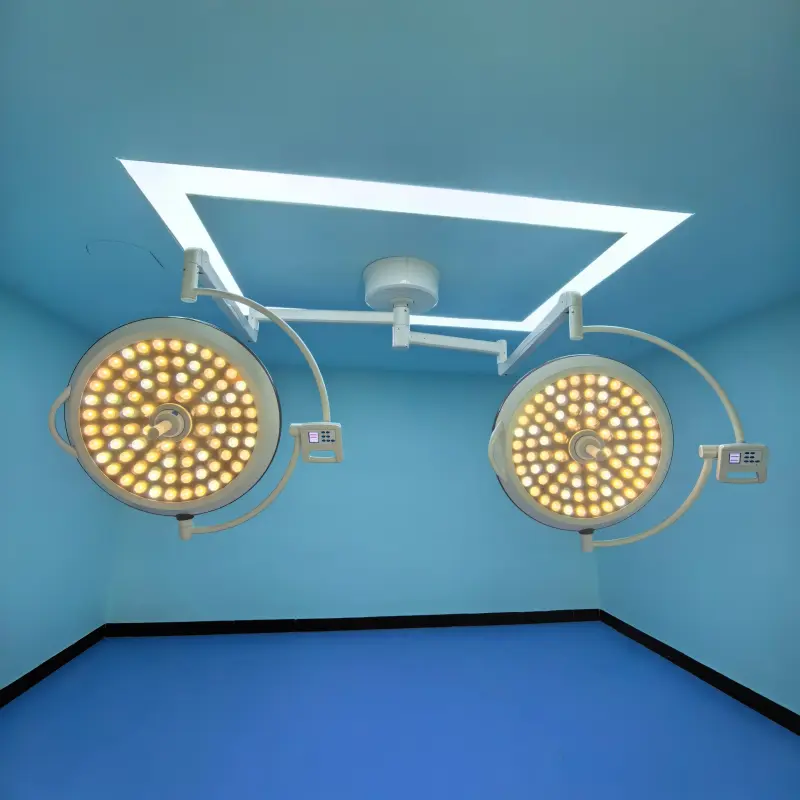
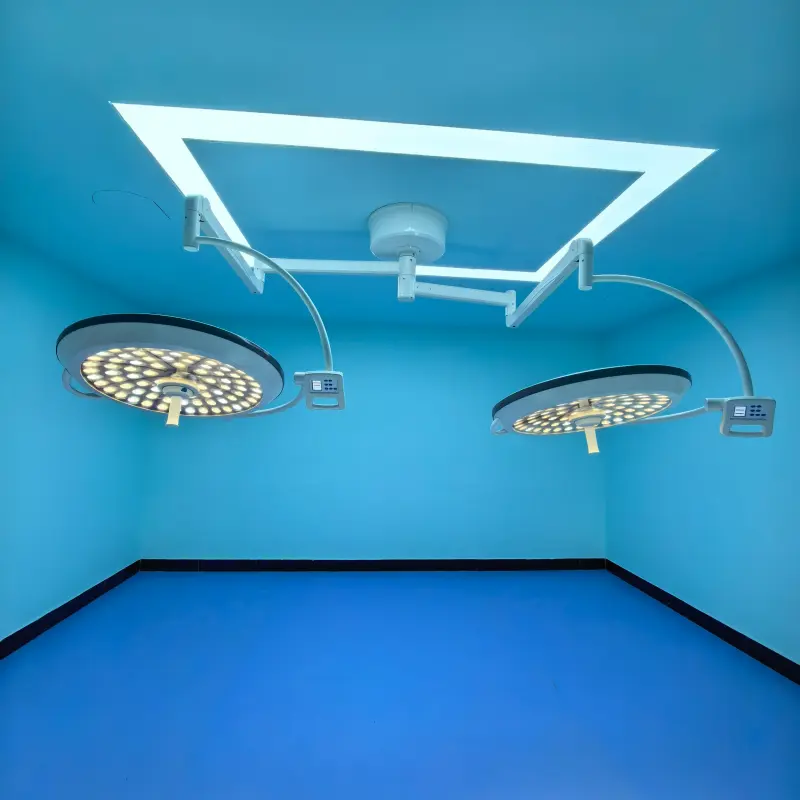
A dual-head surgical light provides two adjustable light sources. Staff can position the heads separately to improve coverage and reduce shadows caused by the surgeon’s head, hands, or instruments.
This configuration may be useful in operating rooms that handle a wider range of procedures. Each head can be directed toward the surgical field, helping maintain illumination as the team’s position changes.
The decision should match the hospital’s actual needs. A single-head model may be sufficient for a small procedure room. A larger operating room may benefit from a dual-head system with a wider range of adjustment.
Buyers should also confirm ceiling support, installation space, arm movement, and electrical requirements before ordering a ceiling-mounted model.
Consider Controls and Ease of Use
Adjustable color temperature is most useful if staff can change the settings easily. A complicated control system may slow adjustments and increase training needs.
Some surgical lights use buttons or a control panel. Others provide controls through a sterile handle or a separate interface. The available options depend on the model.
Before purchasing, check how users adjust brightness and color temperature. The controls should be easy to understand, and the light head should move smoothly into the required position.
Also ask whether the ceiling-mounted surgical light offers preset settings. These can help staff return to familiar lighting conditions without making repeated adjustments.
A live demonstration is valuable at this stage. Ask the supplier to show how the light moves, how settings change, and how the controls are cleaned. Confirm that the operating method fits the hospital’s daily workflow.
Check Heat Control and Maintenance Needs
Surgical lights should provide clear illumination without creating unnecessary heat around the surgical field. LED surgical lights generally produce less heat in the light beam than traditional halogen models. However, their electronic parts still generate heat and need proper control.
Ask the supplier for product-specific information about heat output and the recommended operating conditions. Avoid relying only on broad claims such as “low heat” or “high efficiency.”
Maintenance is equally important. Hospitals should check the expected LED service life, cleaning instructions, warranty, and availability of replacement parts. Ceiling-mounted systems may also need regular checks of their support arms and moving joints.
For mobile surgical lights, buyers should review wheel brakes, battery capacity, charging time, and battery replacement requirements. These details affect how easily the light can move between rooms and remain ready for use.
Review Certifications and Supplier Support
Product specifications should be supported by clear documentation. Buyers should request the documents that apply to their market and the exact model they plan to purchase.
Depending on the destination market, relevant documentation may include electrical safety test reports, applicable medical device conformity documents, and quality management certificates. Buyers should verify their requirements with the relevant regulatory authority or procurement team.
Do not assume that a certificate for one model automatically covers every model from the same supplier. Check the model number, manufacturer details, and document validity.
Grace Medy is a surgical light supplier offering LED surgical lighting options for healthcare facilities and medical equipment distributors. Buyers can request product specifications and discuss the required lighting configuration before placing an order.
For bulk purchasing, also confirm lead time, packaging, warranty terms, spare parts, and after-sales support. Clear communication before shipment helps reduce misunderstandings about product features and delivery requirements.
Conclusion
Buying adjustable color temperature surgical lights requires more than choosing the widest temperature range or the highest brightness value. Hospitals should compare color accuracy, illuminance, light coverage, heat control, adjustment options, and installation needs.
The best model is the one that fits the hospital’s procedures and daily workflow. A live demonstration and complete technical documents can help buyers make a more informed decision.
For hospital purchasing teams and medical equipment distributors, working with a reliable supplier also helps clarify product configuration, delivery, and after-sales support. A careful comparison can support a practical choice for the operating room.