
Defining What Is a Surgical Bed for Medical Staff
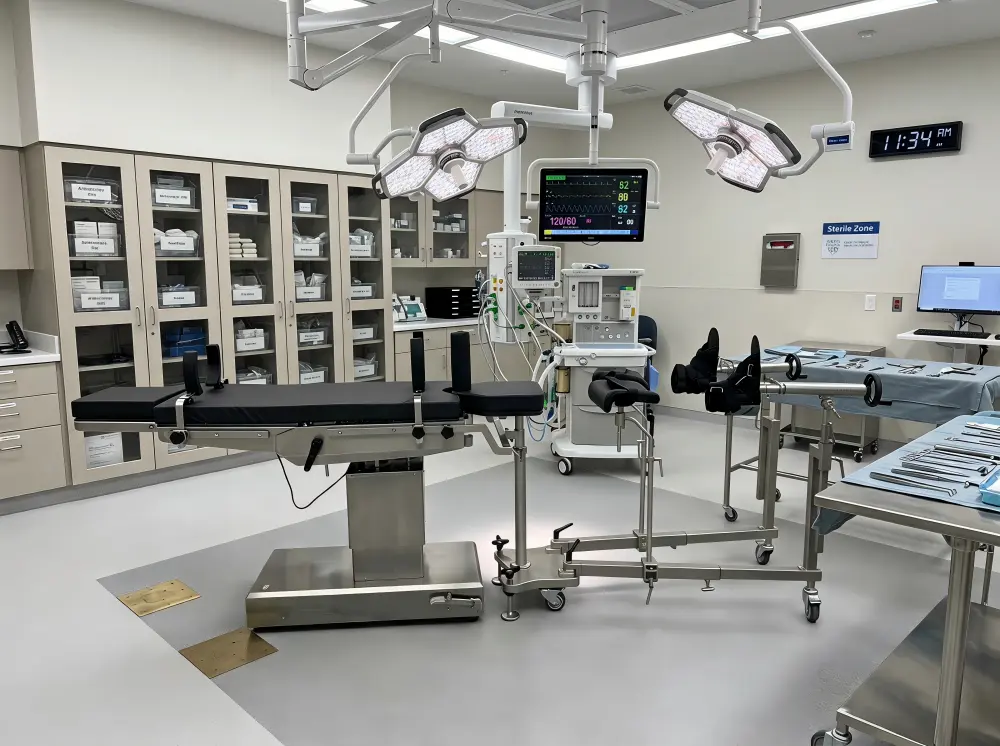
What is a surgical bed for medical staff? When you walk into an operating room, you will see many types of medical equipment. Surgical lights, monitors, anesthesia equipment, and surgical instruments all play important roles.
But one piece of equipment supports the patient throughout the entire procedure: the surgical bed.
So, what is a surgical bed?
A surgical bed, also called an operating table or surgical table, is a special medical table used to support and position a patient during surgery. Unlike a normal hospital bed, it can be adjusted in different ways. This helps medical staff place the patient in the right position and gives surgeons better access to the treatment area.
For medical staff and hospital buyers, understanding the basic functions of a surgical bed can make it easier to choose the right equipment.
What Is a Surgical Bed?
A surgical bed is a special table designed for use in an operating room.
Its main job is to support the patient and keep the patient in a suitable position during surgery. The table can usually be raised, lowered, tilted, or adjusted in different sections.
You may see several names for this type of equipment:
Surgical bed
Surgical table
Operating table
Operating room table
Operation table
OT table
These names can be different from one country or supplier to another. In most cases, they refer to the same basic type of equipment.
The term surgical table is common in medical equipment catalogs. The term operating table is also widely used when people search for this type of product.
A surgical bed is not simply a bed with more functions. It is designed around the needs of the operating room.
What Does a Surgical Bed Do?
During surgery, the patient’s position can affect how easily the medical team can work.
For example, some procedures require the patient to lie flat. Other procedures may require the upper body to be raised or the whole table to be tilted.
A surgical bed helps medical staff make these changes.
The main functions are:
Support the patient’s body during surgery.
Adjust the patient’s position.
Give surgeons better access to the treatment area.
Keep the patient stable during the procedure.
Work with other operating room equipment.
Support different surgical accessories.
The exact functions depend on the model.
Some basic surgical tables are designed for common procedures. More advanced models may offer more movement options and support special procedures.
Surgical Bed vs. Hospital Bed
A surgical bed and a hospital bed may look similar at first. However, they are designed for very different purposes.
A hospital bed is mainly used for patient care, rest, recovery, and nursing. A surgical bed is designed for procedures in an operating room.
Purpose
A hospital bed focuses on patient comfort and daily care.
A surgical table focuses on patient positioning and access during surgery.
Adjustment
Most hospital beds allow basic adjustments, such as raising the backrest or changing the bed height.
An operating table normally provides more positioning options. The table may be raised, lowered, tilted, or adjusted in different sections.
Stability
A surgical table needs to stay stable during an operation.
A hospital bed is often moved around the ward. It is designed for patient transport and daily care.
Operating room use
Surgical tables are designed to work with operating room equipment and accessories.
Some models can also be used with imaging equipment such as a C-arm.
This is why a standard hospital bed should not be treated as a replacement for an operating table.
Main Parts of a Surgical Table
Although surgical tables come in different designs, most models have several basic parts.
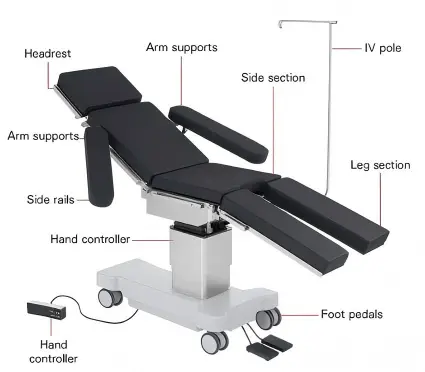
Tabletop
The tabletop is the part where the patient lies.
It is usually divided into different sections. These may include the head, back, seat, and leg sections.
The sections can be adjusted to create different patient positions.
A good tabletop should also be easy to clean because it is used in the operating room.
Base
The base supports the entire table.
A strong base helps keep the table stable when the patient is being positioned.
Many surgical tables use materials that can handle regular cleaning and use in a medical environment.
Column
The column connects the tabletop to the base.
It supports the table and controls some of its main movements.
On an electric surgical table, motors are used to control these movements.
Mattress
The mattress provides support for the patient.
It should fit the tabletop correctly and stay in place during movement.
It should also be easy to clean and maintain.
Control system
The control system allows staff to adjust the table.
Depending on the model, the table may be controlled by a hand control, foot control, or other control device.
The controls should be easy to understand so that staff can adjust the table quickly.
Electric Surgical Table vs. Hydraulic Surgical Table
One common question from medical equipment buyers is the difference between electric and hydraulic surgical tables.
The main difference is how the table is adjusted.
Electric surgical table
An electric surgical table uses motors to control its movements.
Depending on the model, staff may be able to adjust the height, back section, leg section, and table angle with a control device.
Electric models are often easy to operate because staff can make adjustments by pressing buttons.
Hydraulic surgical table
A hydraulic surgical table uses a hydraulic system to control movement.
Hydraulic models can provide smooth table movement and stable positioning.
The best choice depends on the hospital’s needs, budget, maintenance plan, and preferred operating method.
When comparing products, do not focus only on whether the table is electric or hydraulic. Check the actual functions and specifications of the table.
Common Types of Surgical Tables
Different operating rooms may need different types of surgical tables.
A general hospital may prefer a flexible table that can be used for many procedures. A specialist department may need a table with special positioning or accessories.
General surgical table
A general surgical table is designed for a wide range of procedures.
It may be used for general surgery, gynecology, urology, ENT procedures, and other common operations.
This type can be a practical choice for hospitals that need one table for different departments.
Orthopedic surgical table
Orthopedic procedures often require special patient positioning.
An orthopedic table may support accessories for leg positioning or traction.
It can be used for procedures involving the hip, knee, leg, and other parts of the body.
Gynecological surgical table
A gynecological surgical table is designed to provide suitable access to the pelvic area.
Leg supports and other accessories can help staff place the patient in the required position.
Urology surgical table
Urology procedures may require special positioning and good access to the treatment area.
A suitable table can also work with imaging equipment when needed.
Neurosurgery table
Neurosurgery requires careful patient positioning.
Tables used for these procedures may provide more precise positioning and support for the head.
Radiolucent surgical table
Some surgical procedures require X-ray or C-arm imaging.
A radiolucent surgical table is designed to allow imaging equipment to work through the tabletop.
This can help medical staff obtain images without moving the patient unnecessarily.
Surgical Table Accessories
Accessories can make an operating table suitable for different procedures.
Common accessories include:
Arm boards
Leg holders
Stirrups
Head supports
Shoulder supports
Foot plates
Anesthesia screens
Traction devices
Not every surgical table includes the same accessories.
When purchasing a table, ask the supplier which accessories are included and which are optional.
This can help hospitals avoid unexpected costs after purchase.
What Should Medical Staff Check Before Using a Surgical Bed?
Before surgery, medical staff should make sure that the table is ready for use.
A simple check can include:
Make sure the table is clean.
Check that the mattress is correctly placed.
Test the required table movements.
Check that the brakes are working.
Make sure the required accessories are available.
Check that the power supply is ready for electric models.
Make sure the patient is properly supported.
These basic checks can help prevent delays and make the operating room workflow smoother.
Medical staff should always follow the hospital’s own equipment and safety procedures.
How to Choose the Right Surgical Bed
For hospitals and medical equipment distributors, choosing a surgical bed should start with the actual needs of the operating room.
Before purchasing, consider the following questions:
What procedures will the table support?
If the table will be used for many types of surgery, a general operating table may be the best choice.
If the hospital performs many orthopedic procedures, special accessories may be more important.
If the operating room often uses a C-arm, a radiolucent table may be more suitable.
What functions are needed?
Make a list of the functions that medical staff actually use.
These may include:
Height adjustment
Backrest adjustment
Leg adjustment
Table tilt
Trendelenburg position
Reverse Trendelenburg position
Longitudinal movement
A clear list makes it easier to compare different models.
What is the load capacity?
Always check the manufacturer’s stated load capacity.
The table should be suitable for the patients and equipment used during surgery.
Is it easy to clean?
Operating rooms require regular cleaning.
The table surface should be smooth and easy to wipe down.
A removable mattress can also make cleaning easier.
What support does the supplier provide?
A surgical table is a long-term investment.
Before placing an order, ask about warranty, spare parts, technical support, installation, and after-sales service.
A reliable supplier can be just as important as the product itself.
Surgical Tables and Other Operating Room Equipment
A surgical table does not work alone.
It is part of a complete operating room.
The table needs to work well with surgical lights, anesthesia equipment, monitors, and other equipment.
For example, the height and position of the operating table can affect how easily the surgical team uses the surgical lights.
The same is true when the operating table is used with imaging equipment.
This is why hospitals should consider the complete operating room setup instead of looking at the table as a separate product.
How Does an Operating Table Work?
Surgical Bed FAQ
Is a surgical bed the same as an operating table?
In most medical equipment catalogs, yes. Surgical bed, surgical table, and operating table are commonly used to describe the table used to support and position a patient during surgery.
Can a hospital bed be used as an operating table?
A standard hospital bed is not designed for surgery. It does not normally provide the same positioning, stability, and accessory options as a surgical table.
What is an electric surgical table?
An electric surgical table uses electric motors to control table movements. The exact functions depend on the model.
What is a hydraulic surgical table?
A hydraulic surgical table uses a hydraulic system to adjust the table position.
What is a radiolucent surgical table?
A radiolucent surgical table is designed to work with imaging equipment such as X-ray or C-arm systems.
What accessories can be used with an operating table?
Common accessories include arm boards, leg holders, head supports, stirrups, anesthesia screens, and traction devices.
Conclusion
A surgical bed is much more than a place for a patient to lie down.
It is an important part of the operating room. It supports the patient, helps medical staff adjust the patient’s position, and gives surgeons better access during a procedure.
The main differences between a surgical table and a hospital bed are their purpose, adjustment functions, stability, and ability to work with operating room equipment.
When choosing an operating table, hospitals should focus on the procedures they perform, the functions they need, the table’s load capacity, accessories, cleaning requirements, and supplier support.
For hospitals, distributors, and medical equipment buyers, working with an experienced surgical table manufacturer can also make product selection easier.
The right surgical table should provide the functions your medical team needs without adding unnecessary complexity. A simple, stable, and suitable operating table can become a reliable part of the operating room for many years.