
Evaluating The Stability And Load Capacity Of An Operating Table
An operating table must support the patient safely throughout a surgical procedure. It also needs to remain stable as the medical team adjusts the height, changes the table angle, or moves the tabletop. For hospitals and medical equipment distributors, checking these features is an important part of choosing the right equipment. A table with a high weight rating is not always the safest choice if its base, locking system, or moving parts cannot provide stable support.
When comparing an operating table, buyers should look beyond the maximum load shown in a product brochure. The actual performance depends on the table design, patient position, accessories, and movement range. This guide explains how to evaluate operating table load capacity, stability, safety testing, and long-term reliability in simple terms. It also covers the main questions buyers should ask manufacturers before placing an order.
Understanding Operating Table Load Capacity
Load capacity is one of the first specifications to check when purchasing a surgical table. However, buyers need to understand what the stated weight limit actually means. Some specifications focus on the maximum patient weight, while others refer to the safe working load under defined conditions. These figures should not be treated as the same value without confirmation from the manufacturer.
The safe working load refers to the load that the table is designed to support during its intended use. Depending on the manufacturer’s definition, the assessment may include the patient, mattress, positioning supports, and other accessories. Arm boards, headrests, leg supports, and special surgical attachments can all add weight. Buyers should confirm which items are included in the published rating and whether different table positions have separate limits.
For example, a table rated for a 300 kg safe working load should not automatically be assumed to support a 300 kg patient plus every accessory. The exact usable patient weight depends on the product’s instructions and rated configuration. Hospitals should also consider the types of procedures they perform and the patient groups they serve.
A useful starting point is to compare the operating table specifications with the hospital’s daily requirements. Ask the supplier for the rated load in the normal position, at maximum height, and during important movements such as tilting and tabletop sliding. If the hospital performs orthopedic or bariatric surgery, confirm that the selected model supports the required patient weight and positioning equipment. Clear answers help buyers avoid choosing a table based on a single attractive number.
Key Factors That Affect Operating Table Stability
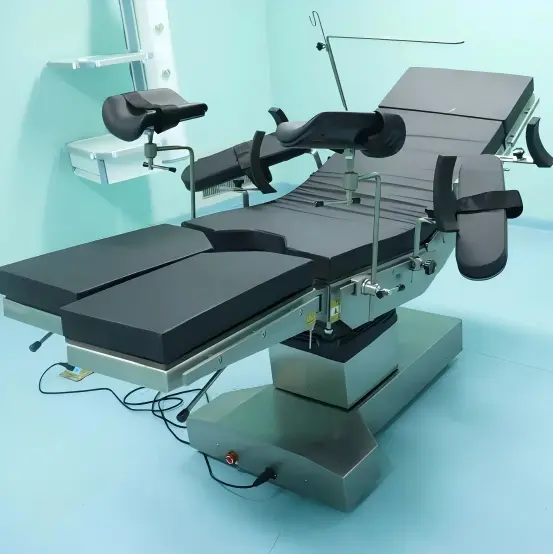
Stability depends on how the table supports weight and keeps its balance. The base, column, tabletop frame, and locking system all contribute to safe performance. If one part is weak, loose, or poorly designed, the whole table may become less stable during use.
The base is especially important because it supports the main structure. A well-designed base provides a firm foundation and helps prevent tipping as the patient changes position. Buyers should examine the base width, overall construction, and the position of the support column. A wider support area can improve stability, but the complete design and the table’s intended use must also be considered.
The support column carries the tabletop and allows the table to rise or lower. It should hold the selected height without unexpected movement. During an inspection, check whether the tabletop shakes, drops, or slowly changes position under the approved load. Unusual movement may indicate a design issue, a worn part, or a maintenance problem.
The caster and brake system also deserves attention. Mobile operating tables need to move smoothly during setup and remain firmly in place during surgery. Check whether the brakes engage fully and whether the table moves after the brakes are locked. The floor surface can affect performance, so the table should be assessed under conditions appropriate to its intended use.
Tabletop movement creates another challenge. Raising the back section, adjusting the leg section, or sliding the tabletop can change how the patient’s weight is distributed. A stable table should support its rated load in the positions approved by the manufacturer. Buyers should review the operating table parts and functions to understand how different sections and adjustment systems affect everyday operation.
Testing Load Capacity And Safety Performance
A product brochure provides useful information, but it cannot replace proper testing. Manufacturers should have documented procedures to check whether the operating table can support its declared load and work as intended. These tests help identify problems such as excessive movement, structural damage, weak locking systems, or failure during adjustment.
The international standard IEC 60601-2-46 covers basic safety and essential performance requirements for medical operating tables. Its requirements include checks related to mechanical strength and stability. Under a specified static overload test, the table is tested at 2.2 times its safe working load in the normal position and at maximum height. The test includes measurements of deformation and a further check after the load is removed and reapplied. This is a controlled test requirement, not permission to overload a table during normal clinical use. Read more about IEC 60601-2-46.
Buyers should also ask how the manufacturer checks table stability in different positions. A useful test program considers the approved load, maximum height, tabletop adjustment, and the distribution of weight across the surface. Mobile models need appropriate checks of the wheels and brakes. Electric models also require checks of their movement controls and lifting systems.
Before purchasing, request the technical specifications and relevant test reports for the exact model being offered. Confirm that the documents match the product configuration, including important accessories. If the table will be sold in another country, ask which product registrations, conformity documents, and local requirements apply to that market. A certificate or test report should be checked for its scope rather than accepted simply because it carries a familiar name.
Comparing Different Operating Table Designs
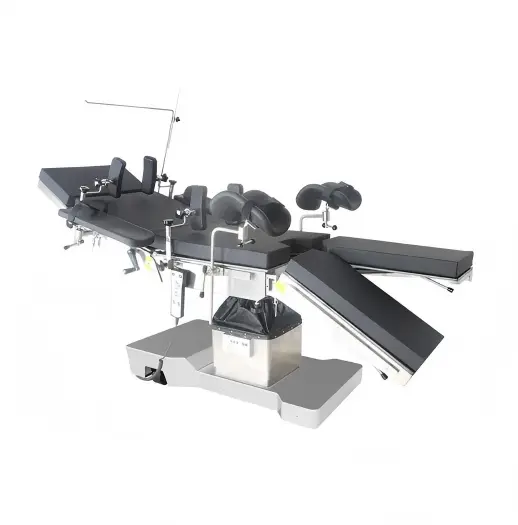
Operating tables use different systems to adjust height and position. Hydraulic, electric, and electro-hydraulic models can all be suitable, but their performance depends on the specific design and intended use. Buyers should compare their load ratings, stability, control systems, maintenance needs, and available service support.
|
Operating table type |
Main features |
What buyers should check |
|---|---|---|
|
Hydraulic operating table |
Uses hydraulic power for height and position adjustments |
Load rating during lifting and tilting, fluid leaks, and height holding |
|
Uses electric motors for controlled movement |
Motor performance, movement under rated load, controls, and backup power if provided |
|
|
Combines electrical controls with hydraulic movement |
Load capacity in different positions, hydraulic condition, and electrical safety |
|
|
Mobile operating table |
Uses wheels for movement around the operating room |
Brake performance, wheel condition, base stability, and approved load during use |
|
Fixed-base operating table |
Designed for a stable installation |
Base attachment, structural support, and stability under the intended load |
The figures in a product comparison should always come from the specifications of the actual models being considered. There is no single load range that applies to every table in a category. A table with a higher advertised capacity may have a different limit during certain movements or in a special patient position.
Hospitals should also consider the procedures the table will support. General surgery may require a different combination of movements and accessories from orthopedic surgery. Imaging procedures may need a tabletop that allows suitable access for a C-arm. The electric operating table provides a useful starting point for comparing available configurations and product options.
Long-Term Maintenance And Practical Buying Checks
A table that passes its original safety tests still needs regular inspection. Repeated use can wear down moving parts, loosen connections, reduce brake performance, or affect hydraulic and electric systems. These changes may not be obvious during a quick visual check, so hospitals should follow the manufacturer’s maintenance schedule and record inspection results.
Before use, trained staff should check the brakes, controls, tabletop locks, and visible parts for damage. They should also confirm that the table moves correctly and holds its position as described in the instructions. Any unusual noise, unexpected movement, fluid leak, or damaged locking part should be reported and handled according to the hospital’s safety procedures. Equipment should not be used if a suspected fault could affect safe operation.
During procurement, buyers should ask about spare parts, warranty coverage, maintenance support, and the expected service process. A supplier should be able to explain the rated load, available positions, compatible accessories, and the documents provided with the selected model. For international distributors, it is also useful to confirm whether product configurations can meet local market requirements.
Grace Medy is an operating table manufacturer serving hospitals and medical equipment distributors with different operating table options. Buyers can discuss the required load capacity, adjustment functions, tabletop materials, and accessories before selecting a model. The key is to match the product specifications to the real needs of the facility rather than choosing by price or maximum load alone.
Conclusion
Evaluating the stability and load capacity of an operating table requires more than checking a single number on a specification sheet. Buyers need to understand the safe working load, confirm how accessories affect the total load, and review the table’s stability during approved movements. The base, support column, tabletop structure, and locking system all play an important role in reliable performance.
Testing and maintenance are equally important. Ask for model-specific safety documents, review the applicable standards, and confirm how the manufacturer checks load capacity and stability. After installation, follow the recommended inspection and maintenance schedule to help preserve safe performance over time.
For hospitals and distributors, the best choice is an operating table that meets the facility’s patient needs, supports its planned procedures, and comes with clear technical documentation and dependable service. Grace Medy can help buyers compare operating table configurations and specifications for their purchasing requirements. Review the details carefully before making a final decision, and prioritize verified safety performance over an advertised load rating alone.