Finding the Most Reliable Surgical Operating Room Lights Brand
Choosing a reliable surgical operating room lights brand is an important decision for hospitals, surgical centers, and medical equipment distributors. Good lighting helps surgeons see tissue clearly, identify color differences, and work with greater confidence. A poor lighting system can create distracting shadows, uneven brightness, and extra maintenance costs. However, the most expensive brand is not always the best choice for every project. Buyers need to compare product performance, safety documents, installation needs, and after-sales support. This guide compares leading surgical light brands and explains how to choose a supplier that meets your clinical and budget requirements.
What Makes a Surgical Operating Room Light Reliable?
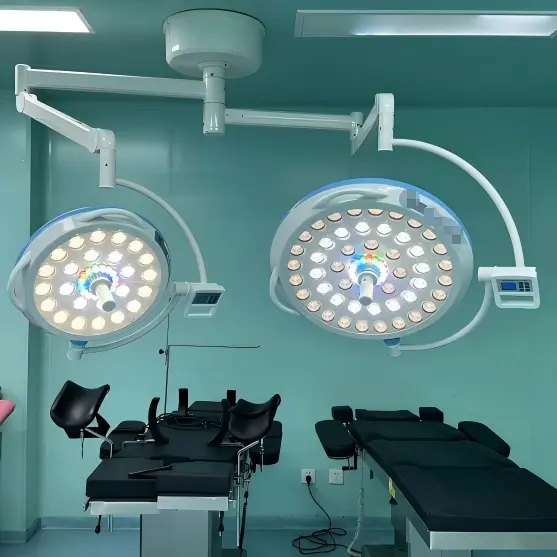
A reliable surgical light should provide stable brightness, clear color, and effective shadow reduction throughout a procedure. LED surgical lights are widely used because they offer long service life and lower heat output than many older lighting systems. However, buyers should not judge a product by its maximum lux rating alone. They should also review the light field size, illumination depth, color rendering, and performance when the surgeon’s head or hands block part of the beam.
Color accuracy is another important factor. A high color rendering index (CRI) helps the surgical team distinguish tissue colors more clearly. Adjustable color temperature can also help staff select a suitable light appearance for different procedures. For larger operating rooms, a dual-head system may provide better coverage from different angles than a single-head model. Buyers should request the full technical specifications and test reports for the exact model under consideration.
Before placing an order, check whether the supplier can provide relevant product safety and performance documentation. ISO 13485 relates to a medical device quality management system; it does not prove that every product model has passed every required test. Depending on the target market, buyers may need to review IEC 60601 test reports, IEC 60601-2-41 requirements, applicable CE documentation, and relevant local registration requirements. For the US market, verify the product’s regulatory status through the appropriate FDA records. Always match documents to the manufacturer, product model, and intended market.
Top Surgical Operating Room Lights Brands Compared
Several established brands offer surgical lighting systems for hospitals and surgical centers. Their products differ in features, integration options, service networks, and purchasing costs. The best choice depends on the project rather than brand recognition alone.
|
Brand |
Main strengths |
Suitable buyers |
What to check |
|---|---|---|---|
|
STERIS |
Advanced LED lighting, shadow control, camera options, and configurable systems |
Large hospitals, surgical centers, and complex operating rooms |
Model-specific specifications, installation needs, service contracts, and spare parts |
|
Dräger |
Surgical lighting options with camera and operating room integration features |
Hospitals planning coordinated operating room equipment |
Product configuration, compatibility, local technical support, and certification documents |
|
Getinge / Maquet |
Surgical lights designed for clear visibility, color accuracy, and reduced shadows |
Hospitals upgrading established surgical departments |
Model availability, service coverage, technical documentation, and lifecycle costs |
|
Sunoptic Surgical |
Portable surgical lighting, headlights, and light-source solutions |
Clinics, outpatient facilities, and users needing focused or mobile illumination |
Battery life, mobility, accessories, and the specific application |
|
Grace Medy |
LED surgical lights, single-head and dual-head options, mobile models, and OEM/ODM customization |
Importers, distributors, private hospitals, and bulk procurement projects |
Exact model performance, applicable certifications, warranty terms, and local registration needs |
STERIS offers several surgical lighting systems with options such as adaptive lighting and integrated cameras. Dräger provides configurable surgical lights designed for operating room workflows. Getinge’s Maquet range focuses on surgical visibility, shadow reduction, and lighting features for different clinical needs. Sunoptic is particularly relevant for buyers looking for portable lighting, surgical headlights, and related illumination equipment. These brands serve different needs, so buyers should compare the specific product ranges rather than assume that every model has the same features.
Grace Medy is a surgical light supplier offering LED surgical lighting products and OEM/ODM options for international buyers. Its range includes single-head surgical lights, dual-head surgical lights, and mobile surgical lights. This can be worth evaluating for distributors and projects that need product customization or competitive factory quotations. Buyers should confirm technical performance, documentation, delivery terms, and after-sales arrangements for each proposed model before making a decision.
How to Compare Performance, Safety, and Installation
A useful comparison starts with the actual operating requirements. A busy general hospital may need ceiling-mounted, dual-head lighting with camera integration. A smaller surgical center may need a simpler configuration that provides suitable illumination without unnecessary accessories. A mobile surgical light can be useful where fixed ceiling installation is difficult or where equipment must move between rooms. Choosing the right type first helps prevent overspending on features that the facility will rarely use.
Next, compare the technical data in a consistent format. Central illuminance, measured in lux, indicates how much light reaches the center of the operating field under stated test conditions. The measurement distance matters, so make sure all suppliers report their figures in a comparable way. Also compare light field size, adjustable brightness, color temperature, CRI, shadow reduction, and LED service-life claims. Ask whether the stated lifespan refers to LED performance under a defined test method, and request supporting documents where available.
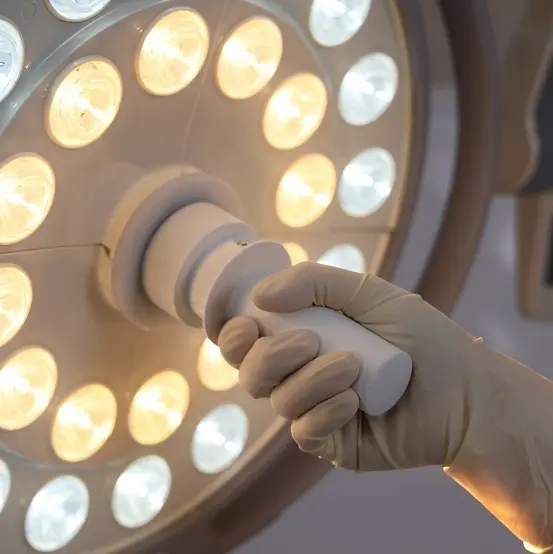
Installation and cleaning also deserve attention. Ceiling-mounted systems need suitable structural support, correct mounting height, and enough arm movement to position the light above the surgical field. The light head should be easy to position and should remain stable after adjustment. Smooth surfaces and removable sterilizable handles can help staff follow cleaning and infection-control procedures. For systems with cameras or monitors, check cable routing, control compatibility, and the space required for the complete installation.
Buyers should also review the applicable requirements for their country before comparing quotations. A certificate logo on a brochure is not enough. Request the relevant declaration, report, or registration information, and confirm that it applies to the exact model being offered. This step is especially important for importers who sell medical equipment in more than one market.
Price, Warranty, and After-Sales Support
The purchase price is only one part of the total cost of a surgical lighting system. A complete quotation may include the light heads, suspension arms, mounting parts, camera, monitor holder, packaging, freight, installation, training, and spare parts. Two offers may appear similar but include very different equipment. Ask each supplier to list the same items separately so you can compare the full package.
Warranty terms and maintenance support also affect long-term value. Check how long the warranty lasts, which parts it covers, and whether labor or international shipping is included. Ask how quickly the supplier can respond to a technical problem and how replacement parts will reach your facility. For overseas buyers, the location of spare parts and the availability of local service partners can be just as important as the original price.
Before committing to a large order, request product manuals, maintenance instructions, a spare-parts list, and references from comparable installations where available. If practical, arrange a product demonstration or evaluate a sample unit. Check the movement of the arms, stability of the light head, control response, and ease of handle removal. A written agreement should define delivery dates, warranty coverage, documentation, and responsibilities if the delivered product does not match the approved specifications.
How to Choose the Right Supplier for Your Project
The most reliable brand is the one that meets your clinical needs, legal requirements, budget, and service expectations. Large hospitals with complex operating room projects may prefer established brands with integrated equipment options and a suitable service network. Smaller facilities may prioritize simple operation, easier installation, and manageable maintenance costs. Distributors and importers may place more weight on product range, customization, minimum order quantities, stable supply, and export documentation.
Create a shortlist of two or three suppliers and send each one the same request for quotation (RFQ). Include the intended use, mounting type, number of light heads, desired brightness, camera requirements, destination country, expected quantity, and delivery schedule. Ask each supplier to provide a model-specific specification sheet, relevant compliance documents, warranty details, lead time, and spare-parts information. Compare the responses against the same requirements rather than relying on sales claims.
For a fair evaluation, score technical performance, regulatory documentation, total cost, after-sales support, and delivery reliability. Do not select a supplier solely because it offers the highest lux rating or the lowest price. A well-matched system with clear documentation and dependable support can offer better long-term value than a more expensive model with features your team does not need.
Grace Medy can be included in the shortlist for buyers seeking LED operating room lights, OEM/ODM customization, and direct supplier quotations. Review the available surgical lights product range and request details for the specific configuration you need. As with any supplier, confirm the product’s compliance documents, performance data, warranty, and service arrangements before placing an order.
Conclusion
Finding the most reliable surgical operating room lights brand requires more than comparing names and prices. Buyers should assess illumination quality, color accuracy, shadow reduction, safety documentation, installation requirements, and long-term support. STERIS, Dräger, Getinge, and Sunoptic each offer options for particular clinical needs, while Grace Medy is another supplier to evaluate for LED lighting and customized procurement projects. The right decision comes from matching verified product information to your facility’s requirements. Request comparable quotations, check the documents carefully, and confirm service terms before signing the purchase agreement.
Frequently Asked Questions
What is the most important feature of a surgical operating room light?
There is no single feature that determines reliability. Brightness, color accuracy, shadow reduction, stable positioning, and compliance with applicable safety requirements should be considered together.
Are LED surgical light a good choice for hospitals?
LED systems are widely used because they can offer long service life, adjustable lighting options, and lower heat output than many older systems. Actual performance depends on the model and its design.
Should buyers choose a famous brand or an OEM supplier?
Both can be suitable. Compare the exact product specifications, documentation, service coverage, warranty, and total cost. OEM suppliers should meet the same relevant requirements for the intended market.
What documents should be requested before ordering?
Request the model-specific technical data, applicable safety and performance reports, relevant conformity documents, user and maintenance manuals, warranty terms, and information required for registration in the destination country.