
What are operating room equipments and its uses? Walk into an operating room for the first time and the machines, cables, and stainless-steel trays stack up so thick it can feel overwhelming. Then you see the logic behind them.
This guide walks through operating room equipment the way surgical teams actually encounter it — chronologically, from preoperative setup through anesthesia, active surgery, and postoperative recovery. You’ll see what each device looks like, who operates it, and when it comes into play, whether you’re studying for clinical rotations, drafting a procurement budget, or benchmarking product lines.
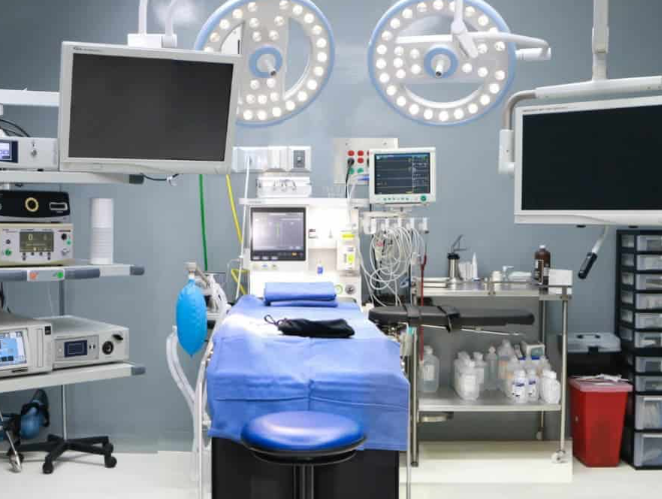
operating room equipments and its uses
Operating Room Equipment Classification Quick-Reference Table
Five buckets. That’s all you need to sort every device in this guide. Whether you’re a nursing student cramming for finals or a procurement officer building a spec sheet, this table maps function to category so you’re not hunting through paragraphs to find what you need.
| Category | What Belongs Here | Examples |
|---|---|---|
| Monitoring | Devices tracking vitals during surgery | Patient monitoring system, multiparameter monitors |
| Anesthesia & Airway | Airway management, gas delivery, ventilation | Anesthesia machine, ventilators, airway support units |
| Surgical Operation | Direct-contact instruments used on the patient | Surgical instruments, operating table, electrosurgical unit, retractors, clip appliers |
| Sterilization & Infection Control | Everything keeping the field sterile | Sterilization equipment, autoclaves, surgical drapes and gowns |
| Illumination & Imaging | Visibility and real-time imaging | Surgical lights, C-arm imaging equipment |
Suction devices — surgical suction machine and vacuum-operated units — straddle two lanes here, functioning as both surgical support and infection-control tools depending on the procedure.
India’s CDSCO regulatory framework offers another lens worth knowing if you’re in procurement or manufacturing. Their Operation Theatre device list covers 27 devices, and most fall into Class A, the lowest risk tier — think operation tables, surgical light systems, and portable suction units. That classification matters for import documentation and compliance paperwork, not just clinical use.
OR Setup Type Also Shapes the List
Not every OR needs the same gear. Integrated ORs combine core systems into one networked package. Hybrid ORs bolt on imaging capability — this is where your C-arm and fixed imaging systems earn their space. Digital ORs push further, emphasizing IT-enabled, networked equipment across the board. Know which type you’re planning for before you finalize a purchase order — it changes the whole equipment math.
Preoperative Preparation: Operating Table and Patient Positioning Equipment
The operating table anchors the entire room. Nothing moves until it’s positioned, adjusted, and locked. A standard general surgical table measures 83.2 in (2111 mm) long, 21.6 in (548 mm) wide, with a height range of 22–45 in (559–1140 mm). It tilts 45° Trendelenburg, 45° reverse Trendelenburg, ±25° lateral, and flexes 130°/90° at the hips.
Load capacity depends on the movement type. One documented model handles 1200 lb (544 kg) for vertical adjustments alone, dropping to 700 lb (318 kg) once full tabletop articulation and slide are engaged. Procurement specs call for 316/316L stainless steel frames, electro-hydraulic controls, at least 5 articulated sections, and a minimum patient capacity of 200 kg across all positions.
Positioning Equipment and Accessories
Circulating nurses and surgical techs handle positioning before the patient is prepped. AORN guidance covers six standard positions: supine, Trendelenburg/reverse Trendelenburg, lithotomy, sitting/semi-sitting, lateral, and prone. Each demands specific hardware — gel positioners, tabletop pads, and memory foam mattresses guard against skin shear and nerve injury.
Lithotomy setups need stirrups with even height and padding around the foot and ankle, keeping limbs clear of leg-holder posts. Safety straps go about 2 in (5 cm) above the knee, over a sheet — never direct skin contact — and shouldn’t restrict perfusion once fastened.
Preoperative Preparation: Surgical Lights and Visualization Systems
Light quality decides what a surgeon can see — and what gets missed. Surgical lights today rarely stand alone. They ship as integrated visualization packages that bundle lightheads, in-light HD cameras, monitor arms, displays, and equipment-management components. STERIS sells this as the Alyon system — 56 LEDs, 160,000 lux max central illuminance, CRI up to 98, R9 up to 97, 60,000+ hour lifespan, IP54-rated. Grace Medy’s bundles cameras, lights, routers, and displays into one connected setup.
The circulating nurse positions and angles the lighthead before draping, aiming for the 20–25 cm field diameter most systems specify. IEC 60601-2-41 sets the compliance bar: 40,000–160,000 lux, color temperature between 3,000K–6,700K, irradiance capped at 700 W/m². Procurement teams shortlisting fixtures should prioritize CRI ≥95, published R9 values, and camera/display integration. That’s the difference between adequate and premium visualization during the actual procedure.
Anesthesia Stage: Anesthesia Machine, Ventilator, and Gas Delivery System
Anesthesiologists work from a single integrated unit. The anesthesia workstation combines the gas supply machine, mechanical ventilator, breathing circuit, CO2 absorber, vaporizer, scavenging system, and monitoring subsystem into one platform.
Gas arrives two ways: central pipeline delivering oxygen, nitrous oxide, and medical air at roughly 400 kPa (50–55 psi), or backup size E cylinders connected through pin-index and DISS couplings. That coupling design stops the wrong gas from entering the wrong port.
Standards demand more than flow. Workstations need integrated, prioritized alarms, continuous breathing pressure and exhaled CO2 monitoring, plus battery backup for at least 30 minutes. An emergency oxygen flush of 30–70 L/min, bypassing the vaporizer entirely, handles sudden desaturation. Low-flow anesthesia runs as low as 0.3–0.5 L/min fresh gas, and some units handle minimal-flow settings near 700 mL.
Anesthesia Stage: Airway Management and Anesthesia Accessories
Securing an airway is a four-level ladder: Level 1 mask ventilation, Level 2 extraglottic airway, Level 3 endotracheal tube placement, Level 4 translaryngeal or transtracheal access when nothing else works.
Every workstation needs face masks, extraglottic devices, direct laryngoscopy blades, video laryngoscope alternatives to the standard Macintosh, and translaryngeal ventilation tools sitting within arm’s reach — no exceptions.
What’s in the Airway Kit
A typical kit includes 8 Guedel oral airways, Miller blades sized 0–4, Macintosh blades 1–4, adult and pediatric Magill forceps, cuffed and uncuffed endotracheal tubes, nasopharyngeal airways in 20/24/28/32 Fr, a 10 mL syringe, tube introducer, and stylette.
Difficult-airway carts add resuscitation bags, Yankauer suction, and layered face-mask and supraglottic sizes. Laryngeal mask airways are the essential rescue device here.
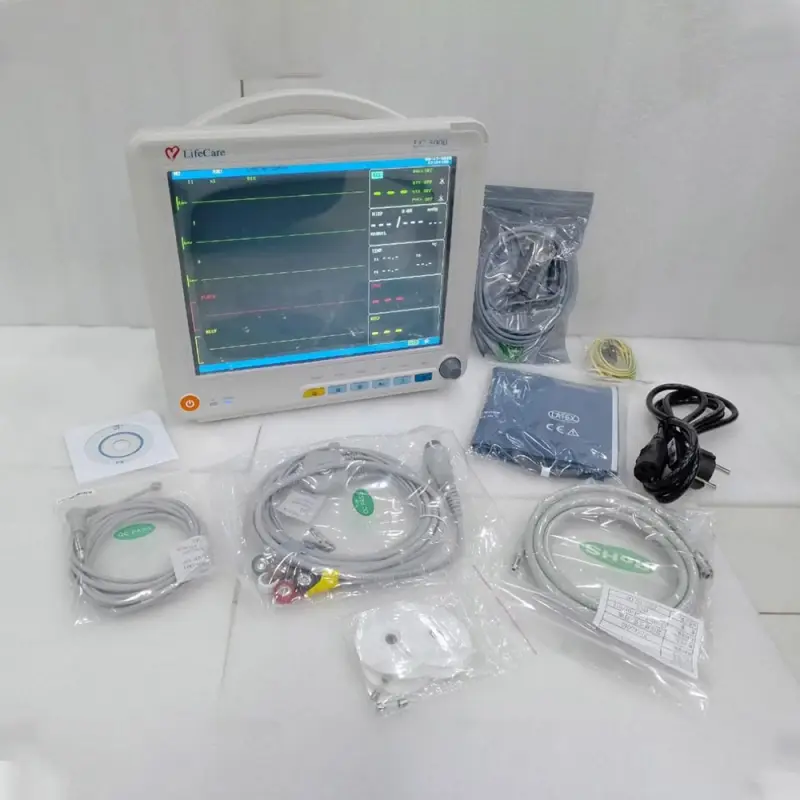
Patient Monitoring System and ECG Equipment
Once the anesthesiologist induces, eyes shift to the monitor screen. That’s where the patient monitoring system takes over, tracking vitals nobody can afford to miss. A standard OR/ICU multifunction monitor packs two or more physiological monitoring units into one device, governed by IEC 80601-2-49:2020. ECG monitoring follows its own standard — IEC 60601-2-27 — which covers hospital and transport use, not the consumer monitors sold for home wear.
Electrosurgical Unit and Surgical Smoke Evacuator
Every electrosurgical cut releases plume. That plume carries chemicals, viral particles, and carcinogens — invisible, but real. NFPA 99 addresses this directly: capture surgical smoke as close to the point of generation as possible, whether through a dedicated exhaust system, a point-of-use evacuator, or a medical-surgical vacuum fitted with HEPA/ULPA plus gas-phase filtration.
NIOSH sets the performance bar at 100–150 fpm capture velocity at the inlet nozzle. AORN-aligned guidance pushes it further — position the capture device within 2 inches of the surgical site.
Surgical Suction Machine and Fluid Management Equipment
Blood pools fast in an open field. A surgical suction machine clears it before it obscures the view, pulling blood, tissue debris, and irrigation fluid. General OR aspirator lines deliver up to 750 mmHg of vacuum at 150 LPM flow. Procedure-specific fluid management consoles do more than suck — they also manage distention and fluid deficit.
C-Arm Imaging Equipment and Radiolucent Tables
Bone and vascular procedures demand real-time X-ray, and that means the operating table itself has to get out of the way. C-arm imaging equipment needs a carbon-fiber tabletop underneath it, not standard steel — metal blocks the beam.
Surgical Boom, Endoscopy Tower, and Video Displays
Cables used to snake across OR floors — trip hazards, infection risks, clutter. Booms solved that by lifting everything overhead. STERIS builds single- and dual-arm systems in fixed-height and adjustable configurations, keeping the sterile field clear while surgeons still reach what they need. A typical ceiling pendant carries 270 kg, rotates 340°, extends via 1100 mm + 825 mm arms, and adjusts column height 600–1000 mm. Ondal’s ceiling units go further, piping gas, power, and data into surgery, endoscopy, anesthesia, ICU, and interventional rooms.
Display booms handle the screens: 15–24 inch monitors, 2.5–6.5 kg load, 200° horizontal rotation, 900 mm lift range. The DB27SF, a 27-inch Full HD panel, was built specifically for tight OR footprints.
Endoscopy Towers
Towers bundle processor, camera, light source, insufflator, and recorder into one rolling unit.
Postoperative Monitoring and Emergency Resuscitation Equipment
The surgery ends. The risk doesn’t. PACU staff run a core set: oxygen supply, suction machine, ECG monitor, pulse oximeter, non-invasive blood pressure cuff, thermometer, plus direct visual or camera observation. Higher-acuity bays add pressure transducers, dual/triple waveform displays, EtCO2 monitors, and core temperature probes.
One institutional recovery-room checklist specs 8 oxygen units, 8 BP monitors, 8 pulse oximeters, 8 ECG monitors, 4 suction machines, plus one resuscitation/CPR provision, which works out to roughly a 2:1 monitoring-to-suction ratio. Post-anesthesia stations demand at least 1 suction device per 3 monitoring bays, alongside oxygen, air, and vacuum lines.
The crash trolley carries a defibrillator with cardioversion, CPR drugs, IV fluids, pressure infusers, and airway gear: bag-valve-masks, laryngoscopes, ET tubes, bronchoscope.
Sterilization and Postoperative Reprocessing Operating room Equipment
Instruments don’t get reused until they’ve been through a gauntlet. Steam sterilizers and autoclaves handle the bulk of heat-tolerant surgical instruments, the method most major guidelines prefer. Heat-sensitive devices go through low-temperature sterilization instead—hydrogen peroxide plasma, VHP, or ethylene oxide systems. Washer-disinfectors, ultrasonic cleaners, and drying cabinets run before any of that, stripping bioburden off used trays.
The sterility assurance level target for terminally sterilized devices is SAL 10⁻⁶. Compliance covers ISO 17665-1 for steam validation, ISO 11607-1 for packaging, ANSI/AAMI ST79 for comprehensive steam sterilization, and ANSI/AAMI ST58 for chemical and high-level disinfection.
Printable Operating Room Equipment List for Procurement and Training
Thirty-seven line items separate a fully equipped OR from a room full of guesswork. That’s the number government OT requirement lists use as the minimum for suite readiness, and it’s what you should build a spec sheet around. Below is a consolidated checklist you can pull into a spreadsheet, laminate for the wall, or hand to a new hire on day one.
Standard Operating Room Equipment Checklist (4-Column Format)
| Item | Required Spec / Minimum Model | Qty per OR | Applicable Procedure Type |
|---|---|---|---|
| Anesthesia machine + circuits | CO2 and agent monitoring | 1 | All general anesthesia cases |
| Patient monitor | SpO2, EtCO2, BP, ECG, temp | 1 | All monitored procedures |
| OR table + accessories | Stirrups, positioners, straps | 1 | Position-specific (lithotomy, prone, lateral) |
| Ceiling operating lights | Double-dome | 2 | All procedures |
| Surgical suction | Electrical, 750 mmHg | 1–2 | Open and laparoscopic |
| Laryngoscope | 5-blade LED set | 1 | Airway management |
| LMA / difficult-airway trolley | Sized inventory | 1 | Anesthesia induction |
| Defibrillator/AED | Manual + AED, ECG-capable | 1 | Emergency response |
| Electrosurgical unit | Bipolar diathermy | 1 | Cutting/coagulation cases |
| Smoke evacuator | ULPA-filtered | 1 | Electrosurgery/laser cases |
| C-arm | Radiolucent table compatible | 1 (shared) | Ortho, vascular, spine |
| Autoclave | ~20 L/cycle flash unit | 1 | Instrument turnaround |
| Blood/patient warmer | Warming air unit | 1 | Long/high-blood-loss cases |
| Crash cart + drugs trolley | Fully stocked | 1 | All ORs |
| Oxygen cylinder backup | D-type, minimum 1 full | 1 per OR | Central gas failure |
| Trolleys/Mayo stand/kick bucket/waste bins | Standard set | Multiple | All procedures |
Add a training column for each row to track inspection status, in-service date, and competency sign-off. That same table works as a procurement spec, a teaching handout, and a compliance audit trail.
Conclusion
Walk through any operating room and every device has a purpose, a position, and a precise moment when it becomes indispensable. From the anesthesia machine that opens the procedure to the sterilization equipment that closes the loop, each piece belongs to a workflow, not a shelf.
Whether you’re a new OR nurse memorizing equipment zones, a procurement manager building a budget, or a manufacturer benchmarking your product line, understanding how these tools work together — not just their names — separates textbook knowledge from clinical readiness.