
New Operating Table For Sale Listings
Finding the right new operating table for sale can be difficult for hospitals, distributors, and medical equipment buyers. Many listings look similar at first. The real differences are often in table movement, imaging access, load capacity, certification, and available accessories. Price also varies by configuration and order quantity. This guide reviews the main new operating table options from Grace Medy and explains what buyers should check before placing an order.

New Operating Table Models Available For Sale
Grace Medy offers several types of operating tables for different surgical needs. The range includes electric, electro-hydraulic, and multifunctional models. Buyers can choose a basic configuration or request additional features based on their department.
Two models are useful starting points for comparison. They cover different needs and price levels.
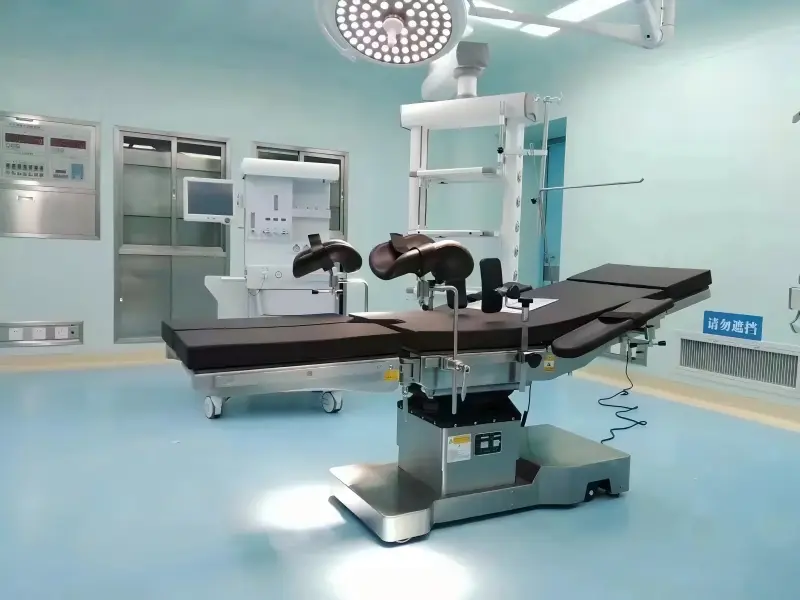
Ultra Low Electro Hydraulic Operating Table
The Ultra Low Electro Hydraulic Operating Table is designed for procedures that need flexible positioning and good imaging access. Its height can be adjusted from about 550 mm to 950 mm. The table measures around 2150 mm long and 550 mm wide.
The electro-hydraulic system supports smooth table movement. It can be useful for hospitals that want powered adjustment without choosing a fully electric table.
The table also supports longitudinal movement. This gives a C-arm more room to reach the surgical area. An optional carbon fiber tabletop is available for facilities with frequent imaging needs.
A dual controller and safety lock add convenience during surgery. A one-key reset function can also help return the table to a basic position after a procedure.
This model can suit neurosurgery, ophthalmology, orthopedic procedures, and other operations that need flexible table positioning.
Electric Five Function Carbon Fiber Operating Table
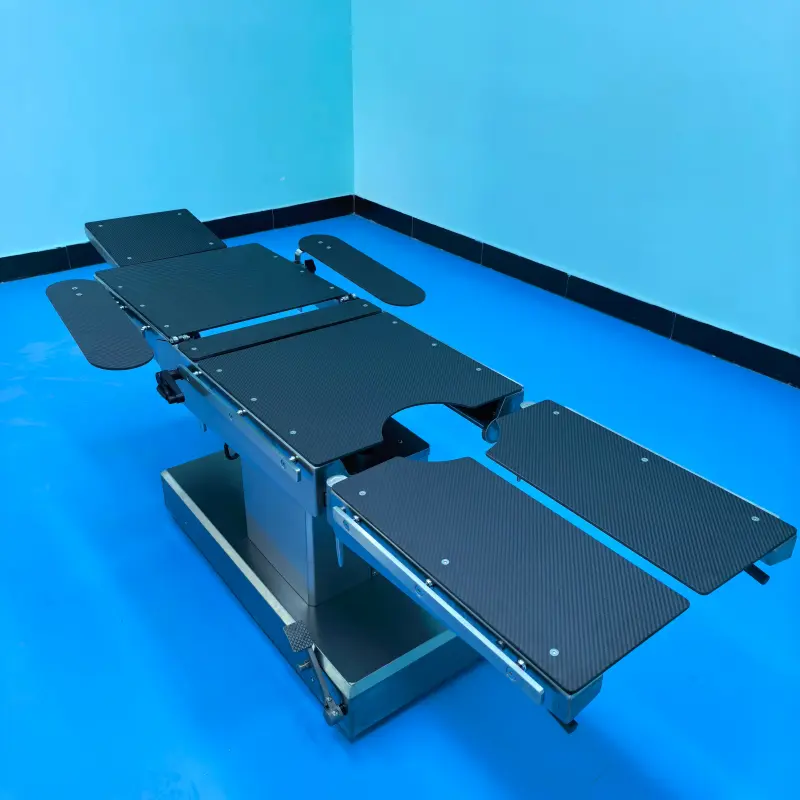
The Electric Five Function Carbon Fiber Operating Table is a higher-capacity option. It has a load capacity of at least 300 kg. It is suitable for hospitals that need one table for several types of surgery.
The tabletop uses an X-ray transparent material. A carbon fiber option is available for regular imaging work. Electric push-rod control provides smooth movement and easy adjustment.
The table also has a rechargeable battery. The battery can keep the table working during a temporary power failure. This is an important feature for busy operating rooms.
The table uses 304 stainless steel on the exterior. Its base uses a 2.5 mm steel plate. These materials are designed for regular hospital use.
This model can support thoracic, abdominal, urology, proctology, and general surgery. Buyers looking for a multifunctional operating table can consider this type of configuration.
Which Type Should You Choose?
The right table depends on how it will be used.
An electro-hydraulic model can be a practical choice for hospitals that need powered movement and flexible positioning. A fully electric model may be better for departments that adjust the table frequently.
A multifunctional model is useful for hospitals with a mixed surgical caseload. It can support several departments without requiring a separate table for every procedure.
For specialty departments, buyers should also compare the table with orthopedic operating tables, gynecological operating tables, or other specialty models before making a final decision.
What A New Operating Table Should Offer
A new operating table should match the work done in the operating room. Price is important, but it should not be the only factor.
Table Movement And Positioning
Electric and electro-hydraulic tables offer easier positioning than fully manual models. The main movements usually include height adjustment, backrest movement, leg section movement, Trendelenburg, reverse Trendelenburg, and lateral tilt.
Some models also offer flex or kidney bridge functions. These features can help with abdominal, kidney, and spine procedures.
A wider movement range gives the surgical team more options. Still, buyers should focus on the movements they actually need. More functions do not always mean a better purchase.
For hospitals with several surgical departments, an electric operating table can offer a good balance between flexibility and daily convenience.
Imaging Compatibility
Imaging access is another key point. Spine, orthopedic, and other procedures may use a mobile C-arm.
The tabletop should allow the imaging system to reach the surgical area. Longitudinal movement is especially useful. It allows the table to move without constantly changing the patient’s position.
Buyers should ask for the exact radiolucent area. They should also confirm whether the table supports the C-arm systems used in their hospital.
If imaging is a major part of your surgical workflow, compare the table with radiolucent operating tables before requesting a final quotation.
Load Capacity
Load capacity should also match the hospital’s patient needs. A table with a higher load rating provides more flexibility for different patients and procedures.
Do not look at the maximum number alone. Ask whether the stated capacity applies to normal use, tilted positions, or special table movements.
For general surgery, many hospitals look for a table in the 250–300 kg range or higher. Orthopedic, trauma, and bariatric procedures may require a higher rating.
The load rating should also include the effect of accessories. Traction systems, supports, frames, and other equipment add weight to the table.
Battery And Power Backup
Battery backup is an important feature of electric operating tables. A temporary power failure should not stop the team from adjusting the table.
Ask for the battery voltage and capacity. More importantly, ask how many table movements the battery can support after a full charge.
A supplier should also explain how the table behaves during a power failure. Buyers need to know whether the table can still be moved to a safe position.
New Operating Table Price And What Affects It
The price of a new operating table can vary greatly. A basic model may cost less than a fully equipped electric table. Carbon fiber tabletops, higher load capacity, battery systems, and extra accessories can increase the final price.
Public listings may show a general price range, but B2B medical equipment pricing is often different. Quantity, configuration, destination, and shipping terms all affect the final cost.
For this reason, buyers should not compare two prices without checking the specifications behind them.
A low-priced table may have fewer functions. It may also use a simpler tabletop or offer fewer accessories. A higher-priced model may include more positioning functions and stronger imaging support.
Grace Medy provides operating table configurations for different hospital and distributor requirements. Buyers can request a quotation based on the exact model and configuration they need.
For a more complete procurement plan, it is also useful to compare the table with other hospital operating room equipment before placing a larger order.
CE And FDA Certification: What Should Buyers Check?
Certification is an important part of international medical equipment purchasing. Buyers should ask the supplier for the documents that apply to the model being purchased.
CE documentation is commonly requested by buyers in many international markets. FDA-related documentation may also be requested by buyers serving the United States.
Do not assume that every model from the same supplier has exactly the same documents. Certification and registration can depend on the product, market, and sales arrangement.
Ask for the certificate or declaration that applies to the exact operating table model. Check the product name, model number, manufacturer information, and validity of the document.
It is also useful to ask about the manufacturer’s quality management system. Buyers can review medical equipment certifications and supporting documents before making a purchase.
How To Choose The Right Operating Table
The best operating table is not always the most expensive model. It is the model that fits the department’s daily work.
Start with the main surgical procedures. A general surgery department may need a multifunctional table. An orthopedic department may need stronger imaging support and a higher load capacity. A spine department may need a long radiolucent area and good longitudinal movement.
Also consider how often the table will be used. A busy hospital operating room may benefit from an electric model with battery backup. A smaller facility may prefer a simpler electro-hydraulic configuration.
Before requesting a quote, buyers should confirm these four areas:
-
Surgical use: List the main procedures and departments.
-
Technical needs: Confirm load capacity, table movement, imaging access, and battery performance.
-
Accessories: Check compatibility with headrests, traction systems, arm supports, leg supports, and other equipment.
-
Documents: Request certification, product specifications, warranty information, and installation details.
This short checklist can prevent many purchasing problems. It also gives the supplier enough information to recommend a suitable configuration.
[Image 2 – Suggested image: Close-up of the electric control system, tabletop, and adjustable sections of an operating table]
New Or Used Operating Table: Which Is Better?
Used equipment may look attractive because of its lower purchase price. However, the lower price does not always mean lower total cost.
An older operating table may need replacement batteries, wheels, motors, cushions, or control parts. Some accessories may also be difficult to find.
Warranty coverage is another concern. A new table normally comes with clearer warranty terms and manufacturer support.
New equipment also gives buyers more control over the configuration. The hospital can select the required functions and accessories before shipment.
For hospitals planning long-term use, a new table can provide more predictable maintenance and support. This is especially important for operating rooms that depend on the table every day.
Buyers should also compare the available hospital furniture and other operating room equipment from the same supplier. Buying several products from one source may simplify communication, shipping, and after-sales service.
Buying From A Direct Operating Table Supplier
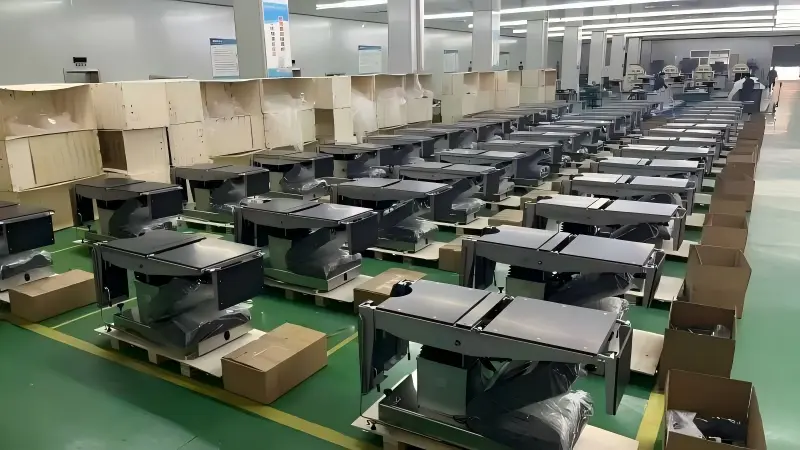
Buying directly from a manufacturer can provide more configuration choices. It can also make communication easier for large orders or OEM projects.
A direct supplier can discuss table dimensions, functions, materials, accessories, packaging, and documentation with the buyer. Distributors can also request configurations that match their local market.
Grace Medy supplies operating tables for hospitals, distributors, and medical equipment buyers. Its product range covers different table types and configurations.
Buyers should still compare suppliers carefully. Check product specifications, certification documents, warranty terms, lead time, packaging, and after-sales support.
Do not choose a supplier based only on the lowest quotation. The table needs to work reliably after it arrives at the hospital.
What To Include In Your Quote Request
A clear quote request can save time for both the buyer and supplier. You do not need a long document. Basic information is usually enough to start.
Tell the supplier your department or main use. Include the expected quantity and delivery country. State whether you need C-arm compatibility, carbon fiber, battery backup, or special positioning functions.
If you are a distributor, also mention whether you need OEM branding or a customized configuration.
The supplier can then recommend suitable models instead of sending a long list of unrelated products.
You can also ask for product photos, technical specifications, certification documents, warranty terms, packing details, and estimated lead time.
Conclusion
Choosing from new operating table for sale listings is easier with a clear buying process. Start with your surgical needs. Then compare table movement, imaging access, load capacity, battery backup, certification, and accessories.
Electric operating tables are a good choice for hospitals that need frequent and precise adjustments. Electro-hydraulic models can offer a practical balance between function and cost. Multifunctional operating tables can support several departments with one platform.
A new operating table also provides clearer warranty and after-sales support than many used options. For hospitals and distributors, these factors can be just as important as the initial price.
If you are comparing new operating tables for your hospital or distribution business, prepare your required functions and quantity first. Then request a detailed quotation based on the exact configuration you need.